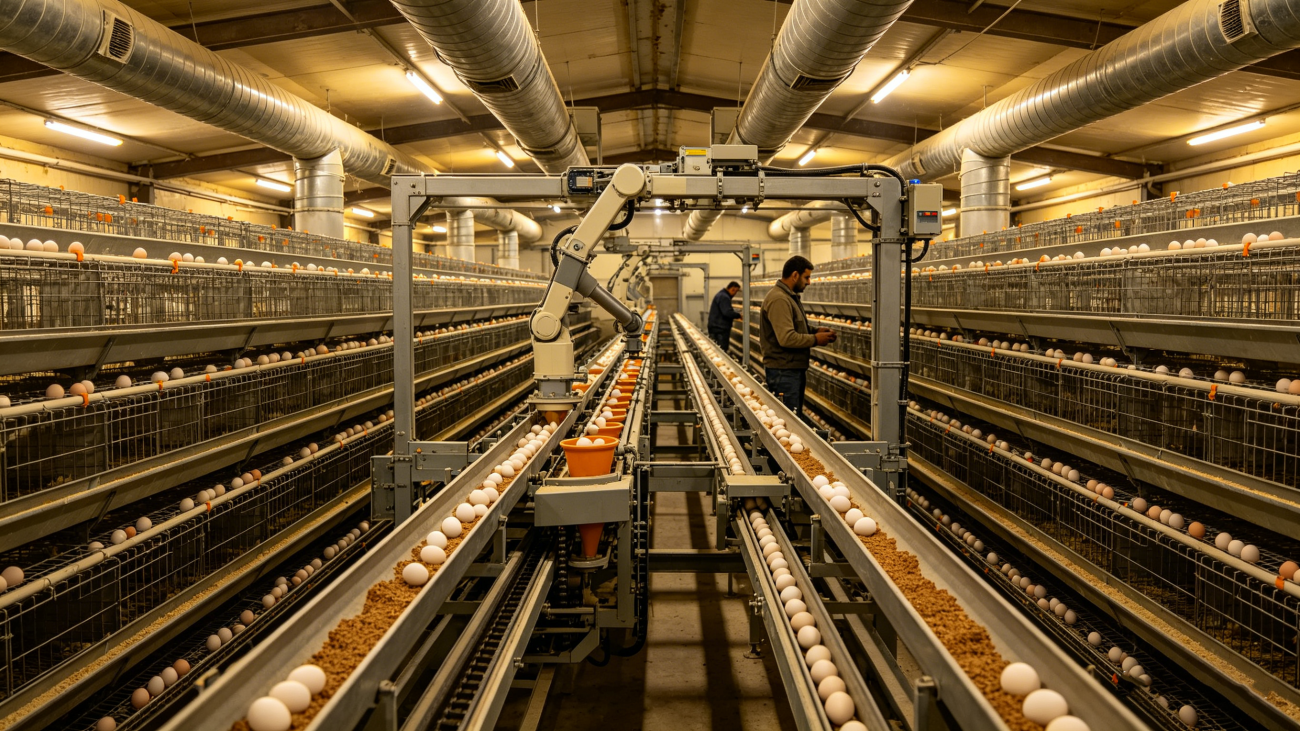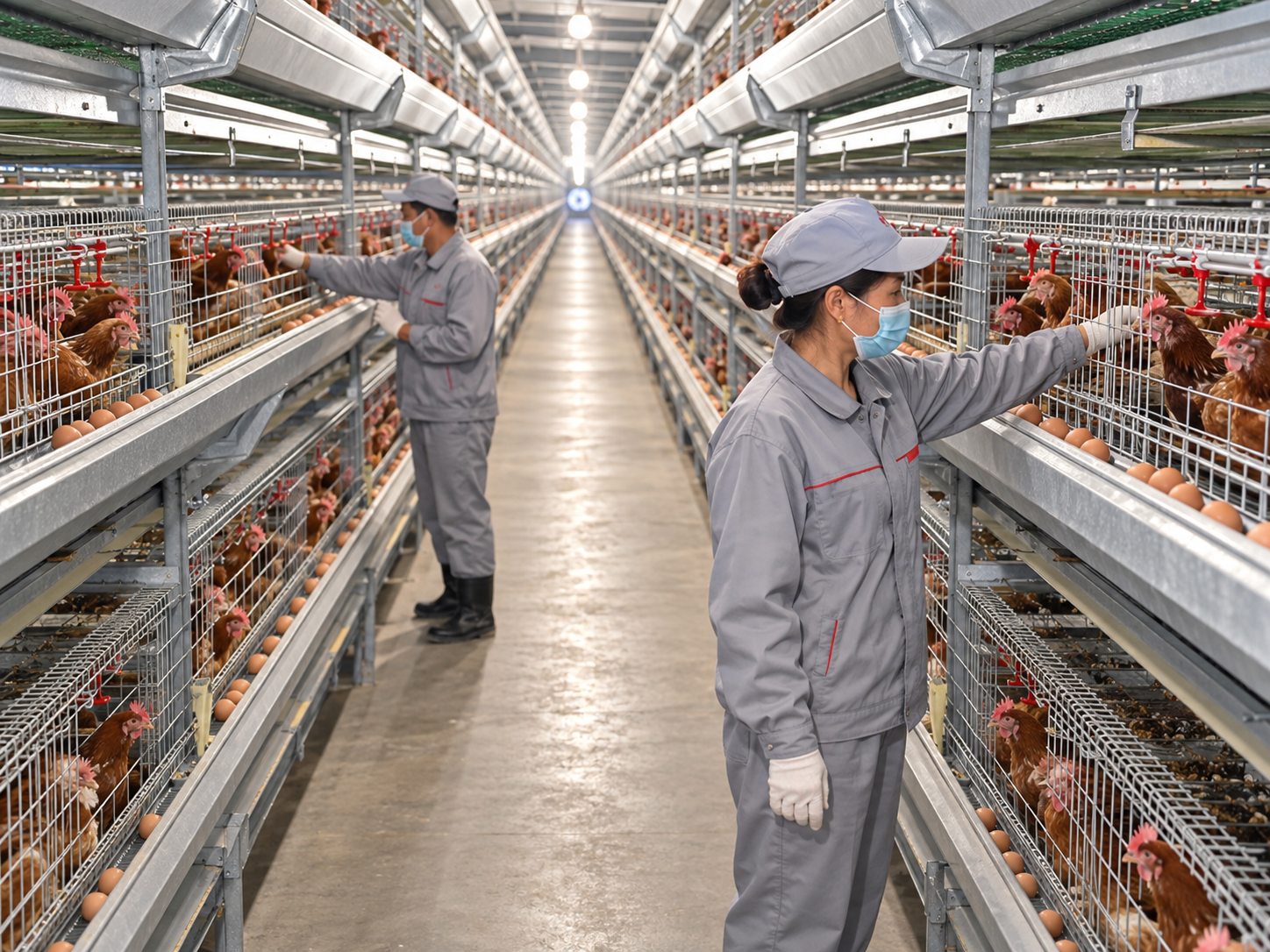
蛋鸡笼养系统可以简化养鸡场的管理,但并不会自动提高养鸡场的盈利能力。
我们已经看到了事情的正反两面。
有些农场在自动化方面投入了过多的资金。另一些农场则试图在初期节省成本,结果却发现每天都要花费大量人力进行喂养、收集鸡蛋和处理粪便。
这两种情况都不算罕见。
因此,在讨论蛋鸡笼养的优点和缺点时,有用的问题不仅仅是笼养是好还是坏。
就是这个:
这种笼养系统是否适合您实际建造的农场?
鸡舍尺寸、饲养容量、人工成本、通风、电力、粪便处理以及未来的扩建计划都至关重要。有时,其中一个因素就足以改变整个设备方案。
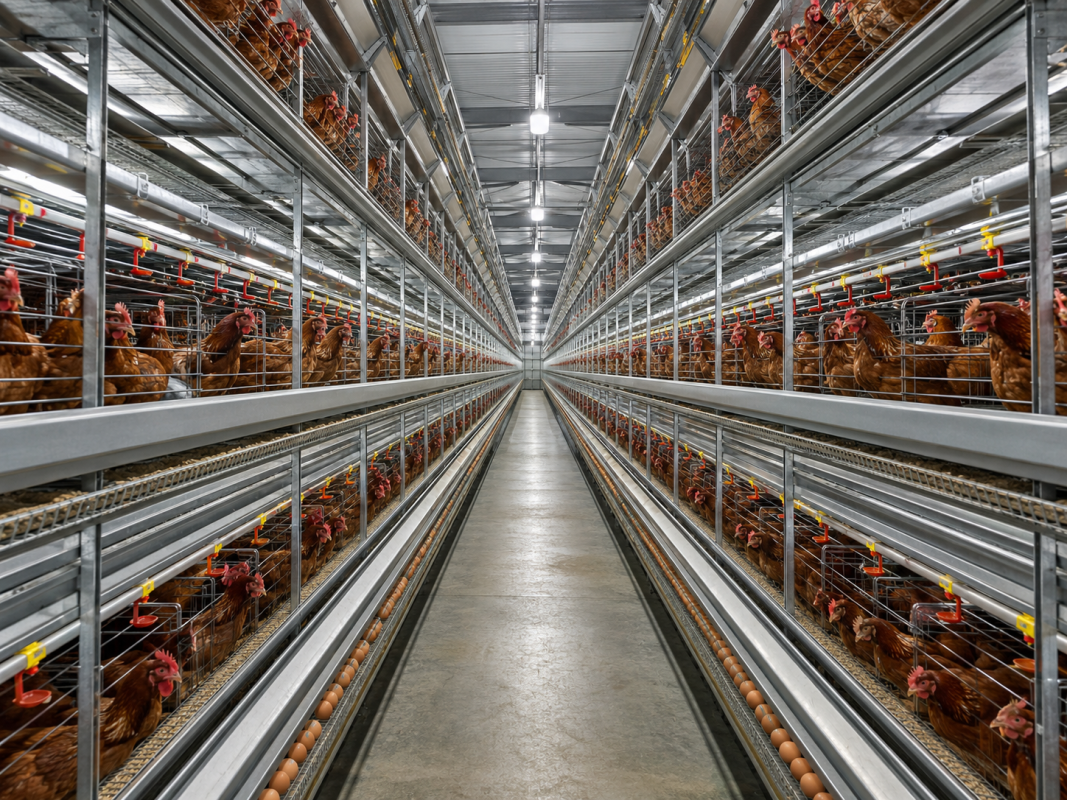
为什么商业农场使用蛋鸡笼养系统
较高的饲养密度通常是人们首先提到的优势。
这很重要,尤其是在多层养殖系统中。但对于商业蛋鸡养殖场来说,更大的好处往往更简单:更好地控制日常工作。
饲料可以沿着笼架输送。饮水管线更容易检查。鸡蛋可以用传送带收集。粪便可以定期清理,而不是留在鸡舍内。
饲养5000只鸟,人工操作或许还能应付。
当图层数达到 3 万层、5 万层或 10 万层时,同样的工作就变成了日常管理问题。
因此,广州广兴家禽设备集团通常不会将笼子作为孤立的产品进行讨论。
好的鸡笼也救不了设计糟糕的鸡舍。
如果通风太弱,粪便没有合适的去处,或者工人无法接触设备进行维护,那么农场仍然难以运作。
这听起来显而易见。然而,在实际项目中,这些细节往往会被过晚地考虑。
A型蛋鸡笼对许多养殖场来说仍然适用
人们普遍认为 H 型笼子是“现代的”,而 A 型笼子是“旧的”。
我们认为这不是选择设备的有效方法。
A型蛋鸡笼仍然是一个非常实用的选择,特别是对于使用现有鸡舍或逐步发展其业务的农场而言。
该结构相对开放,可以与不同级别的自动化相结合。
农场主最初可能会采用自动饮水器和简单的喂料系统。如果农场规模扩大,之后可以再引入鸡蛋收集或其他自动化设备。
对于某些项目而言,这比从一开始就购买最先进的自动化系统更划算。

现有的家禽舍需要的不只是禽只数量统计。
这就是实际布局有时会变得尴尬的地方。
客户可能会告诉我们:
“我的鸡舍长100米,宽12米。我想养5万只蛋鸡。”
这些信息足够开始挑选笼子了。
它不是。
我们还需要知道内部高度、立柱位置、通道要求、通风方式以及喂料和粪便处理设备的运行位置。
我们见过一些布局,在纸面上看起来完全合理,但一旦加上实际的立柱位置和维护空间,就会失去一整排笼子。
在这个阶段改变笼舍布置通常比改变建筑物要容易。
因此,广兴通常会在推荐最终的A 型蛋鸡笼养系统和自动化水平之前,先检查鸡舍。
何时选择H型层笼?
An H-type layer cage system uses the height of the poultry house more efficiently and is often better suited to intensive commercial farms.
But once the project moves toward H-type cages, equipment selection becomes more interconnected.
You cannot just ask how many birds fit in one row.
You also have to ask:
How will feed reach every tier?
How will manure leave the building?
How will eggs move from the cage rows to the egg room?
Can the ventilation system handle the full stocking capacity?
And one question that is sometimes ignored until rather late: what happens if the power goes out?
For larger farms, these are not side issues.
Guangxing can integrate H-type cages with automatic feeding, nipple drinking, manure belts, egg collection and poultry-house environmental control.
In multi-house projects, egg lines can also connect to an automatic central egg collection system before moving to grading or packing equipment.
At this point, the project is no longer about buying cages.
It is about making feed, birds, eggs, manure, air and workers move through the farm without getting in each other’s way.
That is the part buyers sometimes underestimate.

The Main Disadvantages of Layer Cage Systems
The first disadvantage is easy to see: initial investment.
Cages are only one part of the cost.
Automatic feeding, drinking lines, manure belts, egg conveyors, motors, controls and ventilation equipment all add to the project budget.
Still, choosing the lowest quotation can be misleading.
A cheaper system may need more labor every day. A more automated system costs more initially but may reduce repetitive work over many years.
There is no honest formula saying one option is always more profitable.
Local labor cost matters. Electricity matters. Maintenance ability matters. Farm size matters.
More automation also means more dependence on electricity
This is particularly important for enclosed poultry houses.
Feeders, manure belts, egg conveyors, fans and controllers may all depend on power.
If the local grid is unreliable, backup power should be part of the farm design from the beginning.
A stopped egg conveyor is inconvenient.
A ventilation failure in a heavily stocked closed house is a much bigger problem.
For farms in hot climates, we would rather discuss this before the cage layout is finalized than after the equipment has already been ordered.
Manure Handling Is Easy to Underestimate
Buyers naturally spend a lot of time comparing cage structure, wire quality and feeding equipment.
Manure usually gets less attention.
Until the birds arrive.
Every bird produces manure every day. Once the farm reaches commercial scale, removing it from underneath the cages is only half the job.
You still need to decide where it goes next.
Will it be stored?
Dried?
Composted?
Transported away?
Used as fertilizer?
A manure belt can move manure out of an H-type cage system, but it does not solve the entire manure-management problem.
For larger poultry projects, Guangxing also supplies manure conveying and treatment equipment. Planning this route early usually makes the farm much easier to manage later.
It is not the most exciting part of a poultry project, but operators notice very quickly when it has been designed badly.
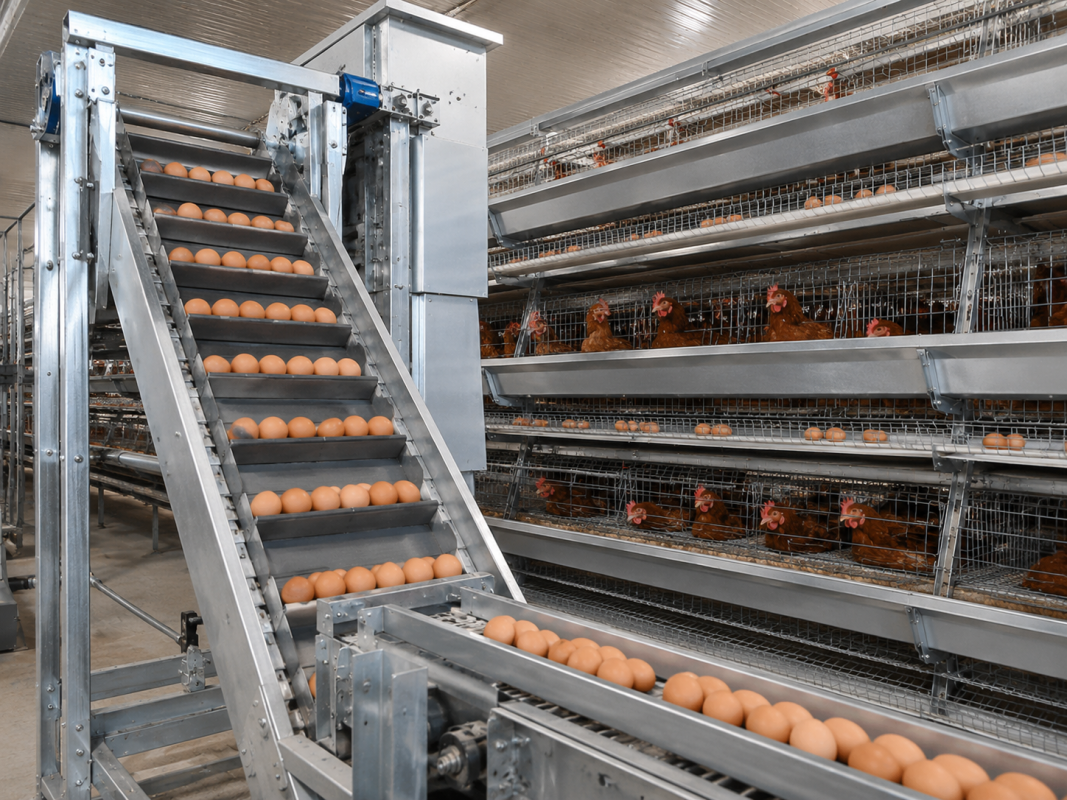
A-Type vs H-Type Layer Cages: Which One Should You Choose?
There is no fixed flock size at which every farm should move from A-type to H-type cages.
A 30,000-layer farm with high labor costs and very limited building space may benefit from H-type cages.
Another 30,000-layer farm may already have a suitable wide poultry house, affordable labor and a tighter equipment budget. A-type cages may make more sense there.
A simple comparison can help:
| Project Factor | A-Type Layer Cage | H-Type Layer Cage |
|---|---|---|
| Initial investment | Usually lower | Usually higher |
| Space utilization | Moderate | Higher |
| Existing-house renovation | More flexible | Requires careful planning |
| Automation level | Flexible | Usually higher |
| Manure removal | Several options | Commonly manure belts |
| Egg collection | Manual or automatic | Usually automatic |
| Typical application | Small to medium commercial farms | Medium to large intensive farms |
Use this as a starting point, not as a purchasing rule.
The actual poultry house and operating model matter more.
What We Learned from Larger Poultry Projects
As poultry farms become larger, one lesson becomes difficult to ignore:
Individual equipment cannot be planned separately.
Feed needs to come into the house.
Eggs and manure need to leave it.
Workers need access.
Air has to move through the building.
Equipment also needs enough space to be cleaned, repaired and maintained.
In Guangxing’s commercial projects, we therefore look at cage systems together with feeding, drinking, manure removal, egg collection and environmental control.
The Guiyang Agricultural Investment layer project is a good example.
The farming area was connected with automatic egg conveying and downstream egg handling equipment. At that scale, automation was not simply there to replace one manual job.
The bigger objective was to create a smoother production flow between the poultry houses and the egg-handling area.
This is a much more useful way to think about automation.
Not “How many machines can I install?”
But:
Where does the product move next?
What Information Should You Prepare Before Requesting a Cage Layout?
A message saying “I need cages for 50,000 layers” is a useful start.
But a supplier still needs more information to prepare a layout that means something.
We normally want to know:
- target layer capacity;
- poultry-house length, width and internal height;
- country and local climate;
- whether the house is open, semi-open or closed;
- local power conditions;
- preferred automation level;
- manure-handling plan;
- whether future expansion is expected.
For an existing house, photos, drawings and column positions are especially useful.
对于一个新项目来说,同时设计鸡舍和鸡笼布局通常可以避免以后出现更多妥协。
蛋鸡笼值得投资吗?
对于许多商业养鸡场来说,是的。
但原因不仅仅是笼子能容纳更多的鸟。
精心设计的蛋鸡笼养系统可以使喂食、饮水、粪便清理和鸡蛋收集更加可预测,减少重复性劳动,并更好地利用鸡舍空间。
缺点也确实存在。
更高的自动化程度需要更多的资金、更可靠的电力供应和更好的维护。较高的禽类养殖密度也会对通风和环境控制系统提出更高的要求。
所以,更好的问题不是:
“我应该购买蛋鸡笼吗?”
这是:
“哪种笼养系统适合这个农场?”
如果您计划新建蛋鸡养殖场或升级现有鸡舍,广州广兴家禽设备集团可以根据您鸡舍的实际尺寸、鸡群容量和所需的自动化水平来制定笼舍布局。
请告知我们您的养禽规模、所在国家/地区、鸡舍尺寸以及任何可用的图纸或照片。我们将据此综合考虑笼具布置、喂食、饮水、粪便清理、鸡蛋收集和通风等问题。
通常来说,这样做比先从产品目录中选择一个笼子,然后再想办法让农场围绕它进行改造要安全得多。