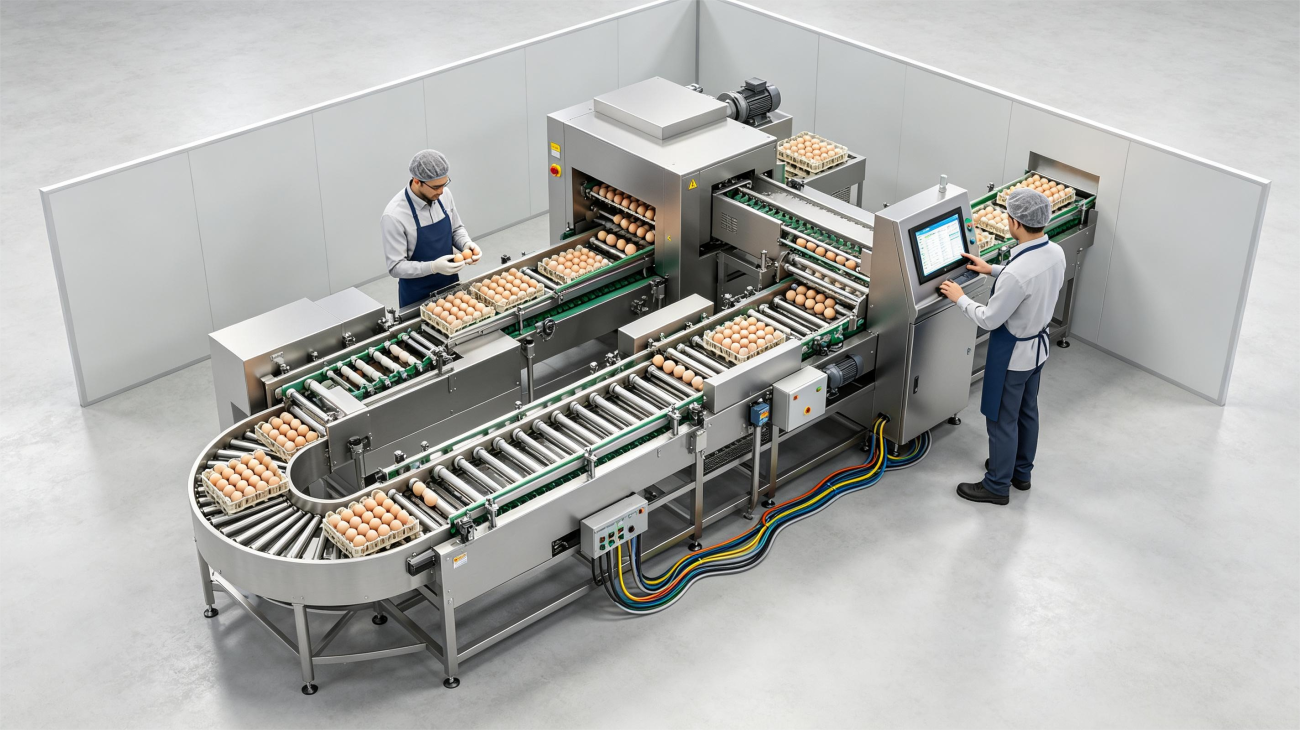
Finding poultry cage equipment manufacturers in Turkmenistan is not as straightforward as sourcing equipment in China, Türkiye or Western Europe.
Turkmenistan already has commercial poultry production, but detailed English-language information about local cage manufacturers is still limited.
For a real farm project, a long supplier list is not very useful if none of those companies can work from your poultry house dimensions, climate and operating requirements.
What matters is whether the supplier can turn those conditions into a workable equipment layout.
Turkmenistan Already Has Large Commercial Poultry Projects
The scale of poultry farming in Turkmenistan should not be underestimated.
On September 15, 2026, the State News Agency of Turkmenistan reported that the Nurly meýdan poultry complex in Balkan velayat operates production facilities covering around 50 hectares.
The complex includes capacity for approximately 16 million eggs per year, an 8,000-tonne annual chicken-processing facility, a hatchery producing 14 million chicks, and a feed mill with annual capacity of 72,000 tonnes.
External source: State News Agency of Turkmenistan – Nurly meýdan Poultry Complex
Turkmenistan’s State Committee on Statistics also reported that national egg production in 2025 increased by 8% compared with 2024.
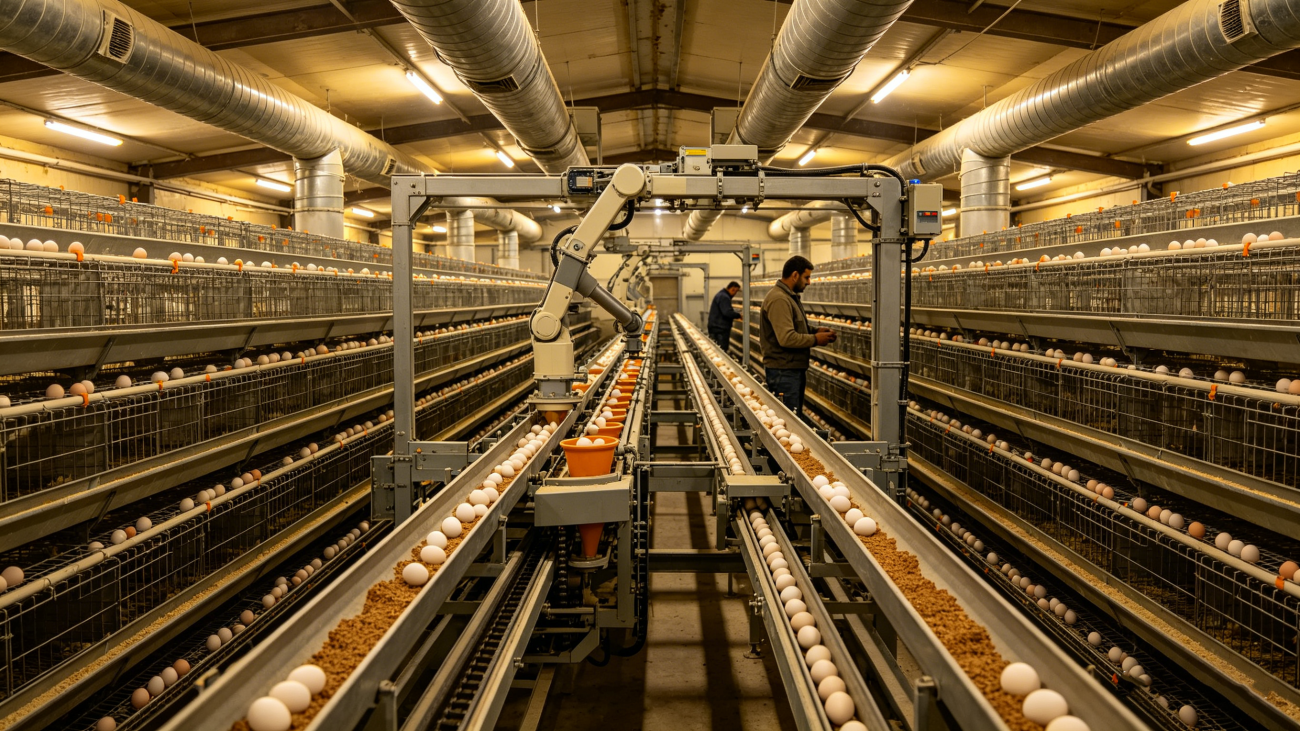
Projects at this scale clearly need more than basic cage structures. Feeding, drinking, ventilation, egg handling and manure removal all have to work together.
That is an important point when comparing equipment suppliers.

Is Poultry Equipment Being Imported Into Turkmenistan?
Yes.
World Bank WITS data for HS 843629 — Poultry-keeping machinery, n.e.s. shows that reported exports to Turkmenistan in 2024 included approximately US$224,050 from Türkiye and US$26,820 from China.
These figures do not represent the total size of Turkmenistan’s poultry equipment market.
HS 843629 covers only one customs category. A complete poultry project may also include ventilation equipment, feed silos, electrical controls, egg-processing machinery and other equipment classified elsewhere.
What the data does confirm is simple: Turkmenistan is already importing poultry-keeping machinery from international suppliers.
For buyers, sourcing directly from an overseas manufacturer is therefore not unusual.
Which Manufacturers Have Verifiable Turkmenistan Experience?
Online supplier lists need some caution.
A company may appear in search results because it exports to Central Asia. That does not automatically mean it has completed a poultry project in Turkmenistan.
Two suppliers have relatively clear public references.
FSE Grup
FSE Grup, based in Türkiye, lists a Layer Poultry Facility in Turkmenistan, Project Year 2020 on its own project-reference page.
Its turnkey poultry work covers cage systems, automatic feeding and drinking, ventilation, environmental control and waste management.
That makes FSE Grup a useful reference for buyers looking at integrated poultry-house equipment rather than cages alone.
Asisan Poultry
Asisan Poultry also publicly states that it has supplied spare parts and carried out turnkey facility installation in Turkmenistan.
Its product range includes layer and broiler cage systems, chick cages, feed plants and incubation equipment.
Both companies are useful references when comparing Turkish suppliers.
It is also worth comparing Chinese manufacturers, especially when factory-direct sourcing and a wider equipment package are priorities.
Match Equipment Specifications to Turkmenistan’s Climate
This is where a generic cage quotation can become risky.
World Bank climate information describes Turkmenistan as having hot, dry and long summers. Average temperatures are around 27–29°C from June to August, while temperatures in the hottest areas can occasionally approach 50°C.
Strong winds and dust are also part of the local operating environment.
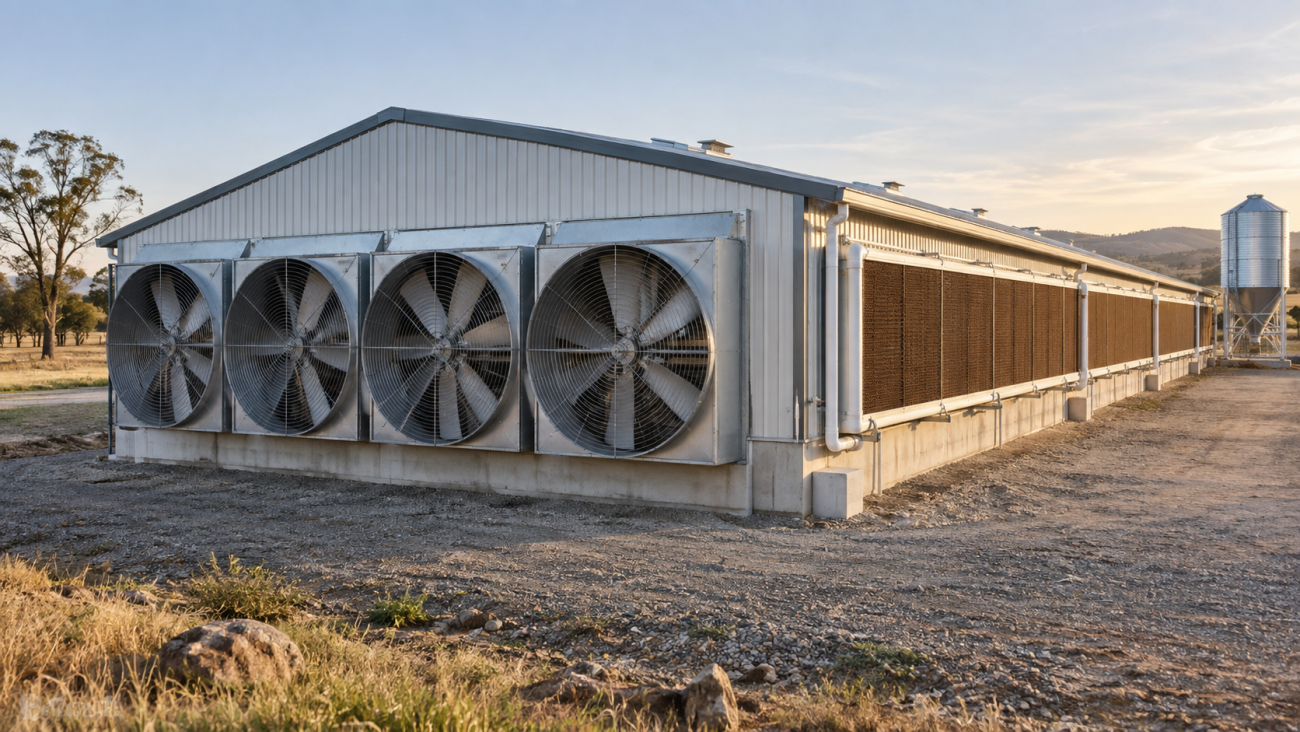
For a commercial poultry house, those conditions directly affect ventilation, cooling and electrical equipment.
A high-density house needs enough airflow for summer operation. Motors, sensors and control cabinets also need to cope with heat and dust.
Winter conditions should not be ignored either. Reducing ventilation too aggressively during cold periods can create moisture and ammonia problems inside the house.
This is why bird capacity alone is not enough for a final quotation.
A supplier should also ask about the project location, poultry house dimensions, ventilation concept and available power.
A-Frame or H-Type? Start With the Farm
Guangxing manufactures both A-frame layer cage systems and H-Type automatic layer cage systems.
The A-frame system uses a stepped layout and can be combined with automatic feeding, nipple drinking, egg collection and manure removal.
The H-Type system uses vertically stacked cage rows and is generally considered for commercial farms that need higher capacity within the poultry house and closer integration of automation.
Because Guangxing manufactures both systems, the recommendation can start from the farm conditions rather than from a fixed product preference.
For a Turkmenistan project, we would first look at the house width and clear height, target capacity, required automation level, available labor, ventilation conditions and future expansion plan.
A farm with sufficient building area and a moderate automation requirement may find an A-frame system practical.
A larger project trying to use poultry-house space more intensively may be better suited to an H-Type configuration.
The building conditions should lead to the cage configuration—not the other way around.

Compare Supply Scope Before Comparing Price
Two poultry equipment quotations can look similar while covering completely different scopes.
One supplier may quote only cages and nipple drinking.
Another may include cages, automatic feeding, egg collection, manure belts and controls.
Naturally, the second quotation will be higher.
But it may also represent a much more complete poultry house.
The same applies to ventilation, feed silos, control cabinets, spare motors, installation supervision and commissioning.
Before comparing the final price, check what is actually included.
For an imported project, missing equipment can be particularly inconvenient. A component that would have been simple to include during production may become expensive to source and transport separately later.
Egg Collection and Environmental Control Are Not Afterthoughts
A cage row is only one part of the production flow.
Eggs have to leave the house.
Manure has to leave the cage area.
Fresh air has to reach the birds.
Feed has to arrive every day.
If these systems are designed separately, their routes can easily conflict.
For larger farms, Guangxing can configure automatic egg collection systems for individual poultry houses or central collection arrangements serving several houses.
That means the egg room, conveyor route and future grading or packing area should be considered when the poultry house layout is prepared.
Ventilation should be treated the same way.
Guangxing’s poultry-house environmental control equipment can coordinate ventilation, cooling and other automatic equipment, but a control system cannot fix a poor physical layout.
The airflow route still has to make sense first.
Why Consider Guangxing for a Poultry Project in Turkmenistan?
Guangxing is a Chinese poultry equipment manufacturer serving commercial farms in overseas markets.
We do not present ourselves as a local Turkmenistan supplier or claim completed projects in the country without documented records.
What Guangxing can offer is factory-direct manufacturing and the ability to coordinate several poultry-house systems around one layout.
The company was established in 1988, made its first overseas shipment in 1990, and has supplied equipment to more than 50 countries and regions.
Its poultry equipment range includes:
A-frame and H-Type layer cage systems, feeding, drinking, egg collection, manure removal, ventilation and environmental control.
The value here is not simply having more products in a catalogue.
It means the cage layout, feed route, egg collection, manure discharge and environmental-control system can be discussed as parts of the same project.
One useful reference is Guangxing’s Qingzhen commercial layer project in Guizhou, China.
Designed for approximately 300,000 layers, the project includes four layer houses, two pullet houses, egg processing and manure-treatment facilities. Guangxing supplied automatic feeding, drinking, egg collection, manure removal, ventilation, cooling and environmental-control systems.
A farm in Turkmenistan would obviously need a different design because the climate, power conditions and logistics are different.
But the engineering approach remains useful:
understand the farm first, then configure the equipment.

Logistics and Spare Parts Should Be Discussed Early
Turkmenistan is landlocked, although it has access to the Caspian Sea. Delivery planning therefore deserves attention before production is completed.
The quotation should clearly define the Incoterm, delivery point, estimated shipping volume and responsibility for inland transportation.
Packing also matters.
Cage frames, wire mesh, motors, sensors and electrical cabinets require different handling.
Spare parts should be discussed at the same time.
Waiting for an international shipment because of a small motor, sensor or mechanical component can cost much more than preparing a sensible spare-parts package with the original order.
For an overseas poultry project, this is part of the equipment decision—not something to consider only after the farm starts running.
What Should You Send for a Quotation?
For a preliminary proposal, Guangxing normally needs the planned bird capacity, poultry house dimensions, clear internal height, project location, local voltage and required automation level.
If drawings or a simple farm layout are already available, send them as well.
Future expansion is also worth mentioning.
A project starting at 50,000 layers but eventually expanding to 100,000 may need a different feed-storage plan, electrical capacity, egg collection route and manure-handling arrangement from the beginning.
With this information, Guangxing can prepare a preliminary cage layout and equipment configuration instead of simply sending another generic price per cage.
For a poultry project in Turkmenistan, that is a better place to start.
Send the farm conditions first. Choose the cage system second.