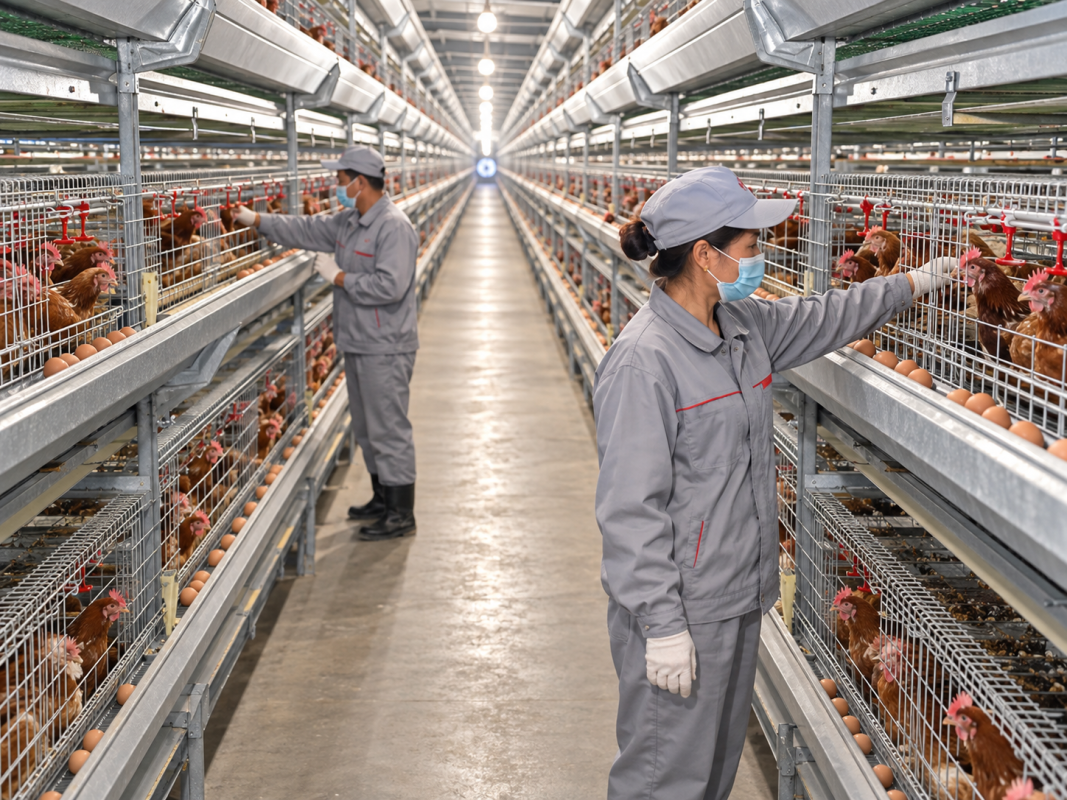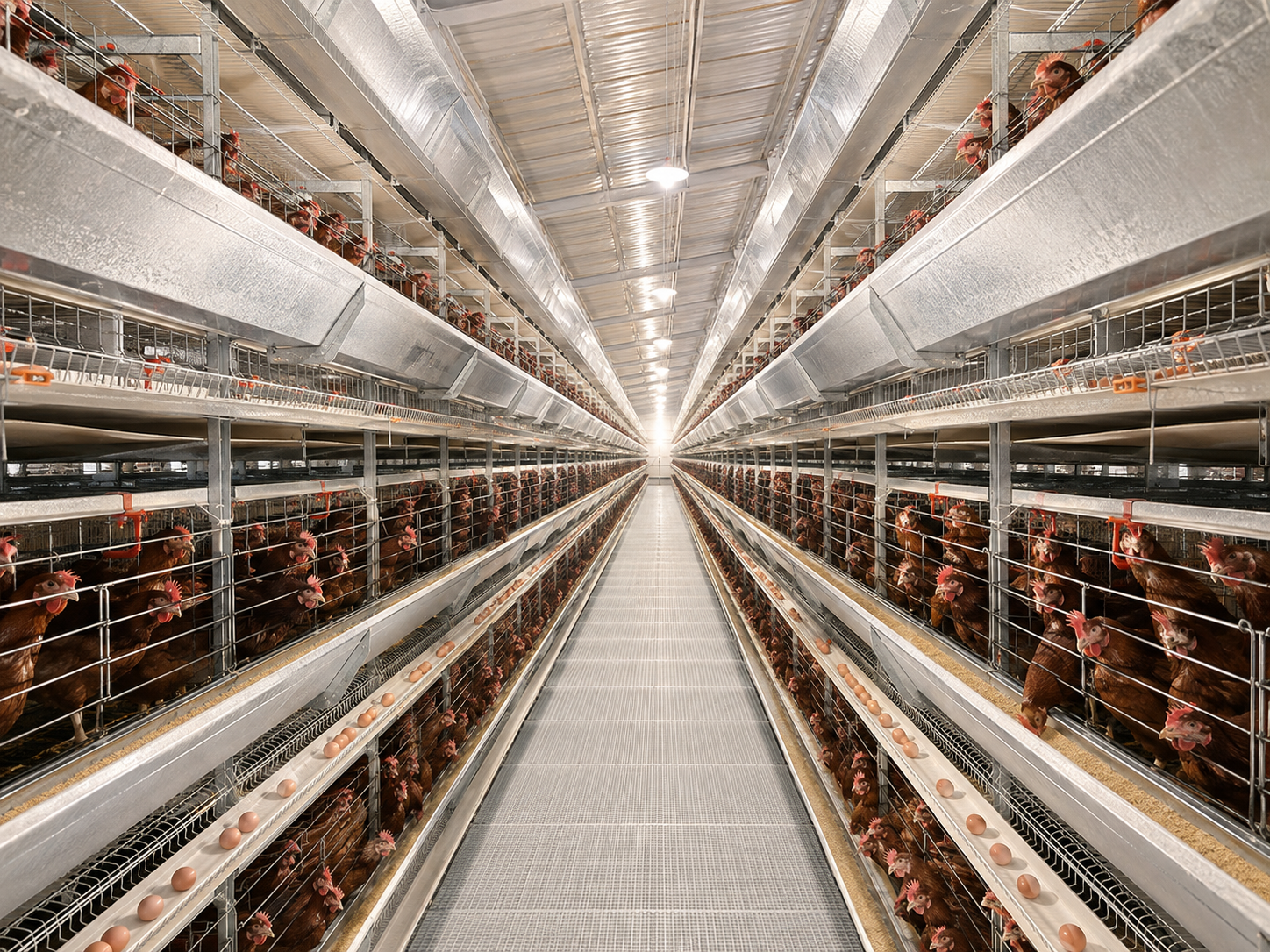
If you are planning a new layer or broiler farm in Japan, buying cages, feeding lines and ventilation equipment from different suppliers may appear to reduce the initial investment.
However, in actual poultry projects, many problems do not come from one machine. They appear where different systems connect.
The poultry house width affects the cage layout. Cage capacity affects ventilation. The manure removal system influences the service corridor. Egg collection determines the location of the egg room. Motors, fans and control cabinets also need to match local electrical conditions.
For this reason, when I discuss a Japanese poultry project with a buyer, I normally recommend starting with the complete farm layout, rather than choosing a cage model first.
A reliable turnkey poultry farm should work as one coordinated production system.
、  、
、
What Does a Turnkey Poultry Farm Project Actually Include?
A turnkey poultry project means much more than supplying cages and several automatic machines.
For a new commercial poultry farm, the complete project may include:
- Farm layout planning
- Poultry house design
- Layer or broiler equipment
- Feeding systems
- Drinking systems
- Egg collection
- Manure removal
- Ventilation and cooling
- Lighting
- Environmental control
- Electrical control
- Equipment installation
- Commissioning
- Operator training
- Spare parts and after-sales support
You can review a typical turnkey poultry farm project solution to see how these systems connect within one project.
From an engineering point of view, the important question is not simply:
“Can this supplier provide poultry cages?”
A better question is:
“Who will solve the problem if the poultry house dimensions, cage layout, ventilation system and manure system do not match?”
This question becomes especially important when a supplier manufactures the equipment overseas and ships it to Japan for installation.
Why Poultry Farm Design in Japan Requires Different Engineering Decisions
A poultry house that works well in another country may not suit a Japanese project without adjustment.
Before I finalize the equipment layout, I would first check several local conditions.
Snow, Wind and Structural Conditions
Japan has significant regional differences in climate and building conditions.
A poultry house in Hokkaido does not face the same snow conditions as one in southern Japan. Coastal projects may also require additional protection against strong winds, moisture and corrosion.
Before finalizing a steel poultry house, the project team should confirm:
- Farm location
- Local snow load
- Wind conditions
- Seismic requirements
- Ground and foundation conditions
- Local building approval requirements
For this reason, I would not recommend using a so-called “standard poultry house drawing” without checking the actual project location.
The project engineer should review the structural calculations according to applicable Japanese requirements. When local regulations require additional approval, qualified professionals in Japan should also confirm the final design.
Check the Electrical Frequency Before Manufacturing
This looks like a small technical detail, but ignoring it can cause large problems later.
Japan uses both 50 Hz and 60 Hz electricity, depending on the region.
Before manufacturing motors, fans, reducers and electrical control systems, the supplier should confirm:
- Voltage
- Phase
- Frequency
These specifications affect feeding motors, manure removal drives, ventilation fans and control panels.
Confirming these parameters during the design stage is much easier than modifying motors or control systems after the equipment arrives in Japan.
Biosecurity Should Influence the Farm Layout
You should not treat biosecurity as something to add after construction.
Japan maintains strict poultry health management requirements, while continuing avian influenza risks make farm layout even more important.
When we plan a commercial poultry farm, we normally check whether the following routes cross each other:
- Personnel movement
- Feed delivery trucks
- Egg transportation
- Manure transportation
- Dead bird removal
- Equipment maintenance
- Disinfection routes
A good layout should separate clean and dirty areas as much as practical.
In other words, biosecurity is not only a farm management issue. It is also an engineering and layout issue.
Choosing the Right Poultry Equipment for a Japanese Farm
There is no single poultry equipment configuration that suits every Japanese project.
The correct system depends on bird capacity, poultry house dimensions, labor availability, automation requirements, budget and future expansion plans.
A-Type Layer Cage or H-Type Layer Cage?
For layer projects, buyers often ask whether they should choose A-type or H-type cages.
My answer is normally simple:
Start with your farm conditions, not with the cage name.
An A-frame layer cage system can be practical for:
- Small and medium layer farms
- Existing poultry house renovation
- Projects with limited initial budgets
- Farms that do not require a very high automation level
- Operations where simple maintenance remains important
For a relatively small renovation project, a highly automated multi-tier cage system may not always provide the best investment result.
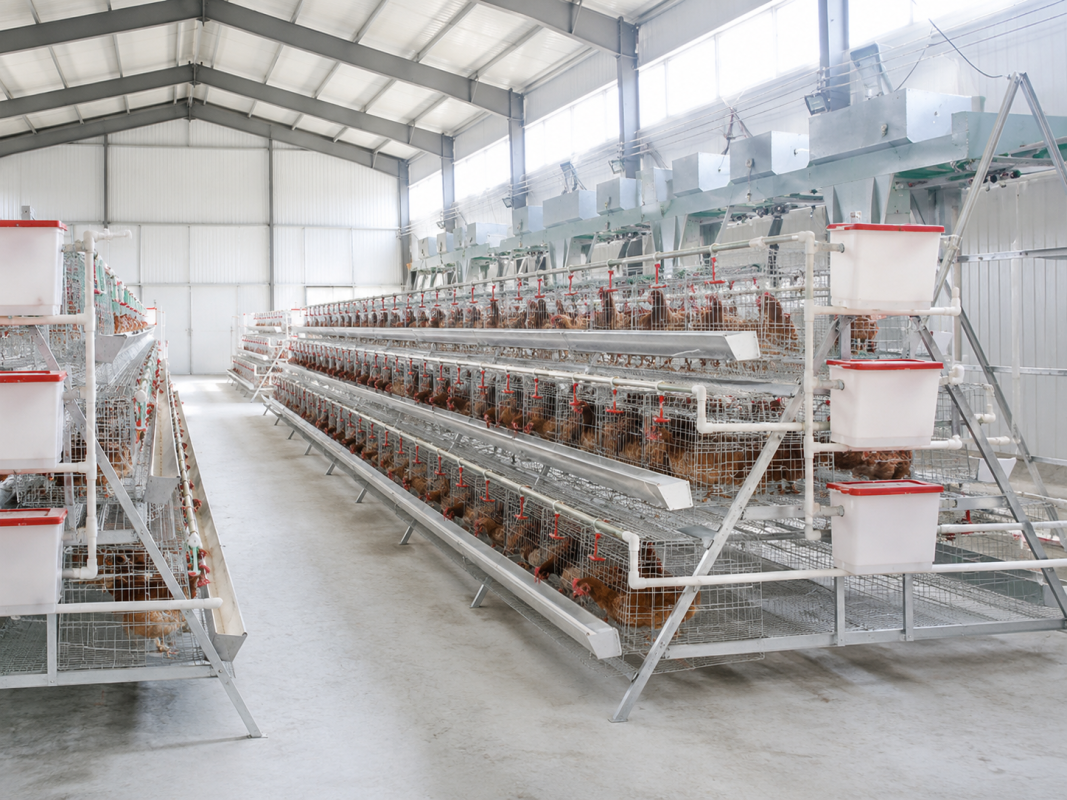
For larger new-build farms, however, an H-Type automatic layer cage system may offer greater advantages.
H-type systems usually make more sense when a project requires:
- Higher bird capacity per poultry house
- Better land utilization
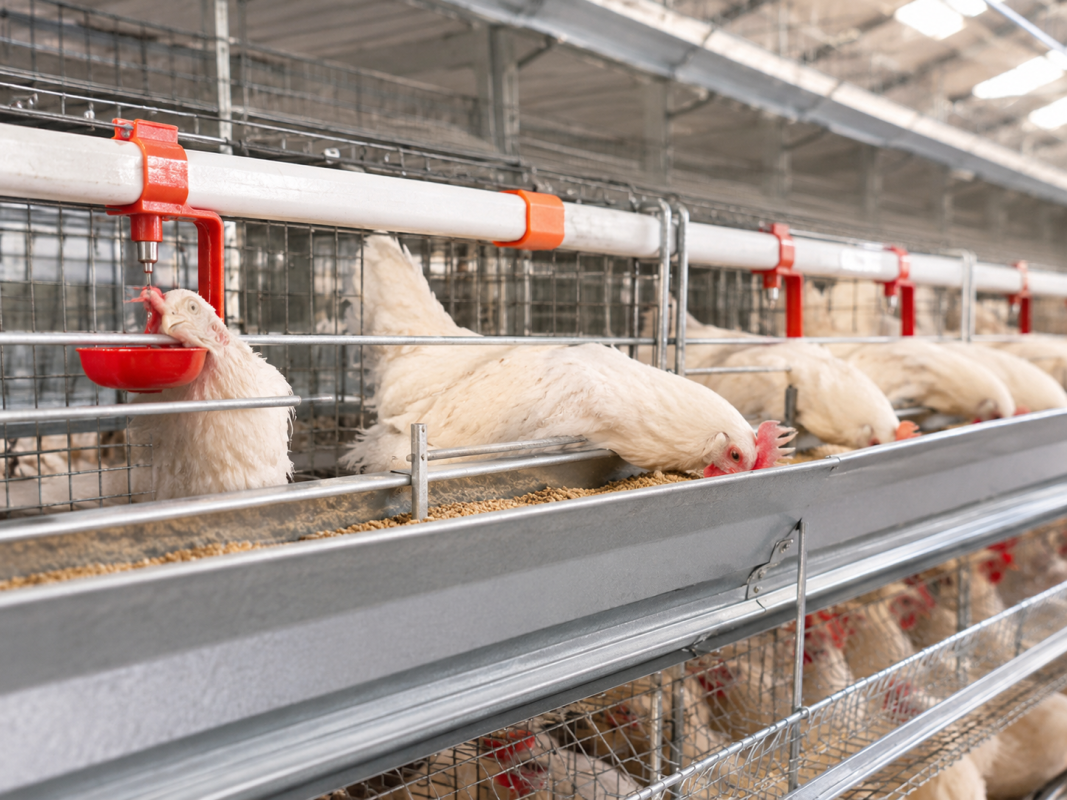
- Automatic feeding
- Automatic nipple drinking
- Automatic manure removal
- Automatic egg collection
- Lower daily labor requirements
For example, if I were reviewing a new 50,000- or 100,000-layer project where labor efficiency and future expansion matter, I would seriously consider an H-type system.
However, I would still calculate the poultry house layout, airflow and manure handling requirements before deciding how many cage tiers to install.
More tiers are not automatically better.
If you increase bird density without recalculating ventilation and environmental control, you may create a poultry house that looks efficient on paper but becomes difficult to manage in actual production.

Automation Should Work as One System
A modern poultry farm is not simply a collection of machines.
It is a coordinated production system.
For example, you cannot select an automatic poultry feeding system without considering the total poultry house capacity.
The engineer needs to know:
- Number of birds
- Daily feed consumption
- Number of cage rows
- Feeding distance
- Feed silo location
- Required feeding cycles
- Motor specifications
The same principle applies to ventilation.
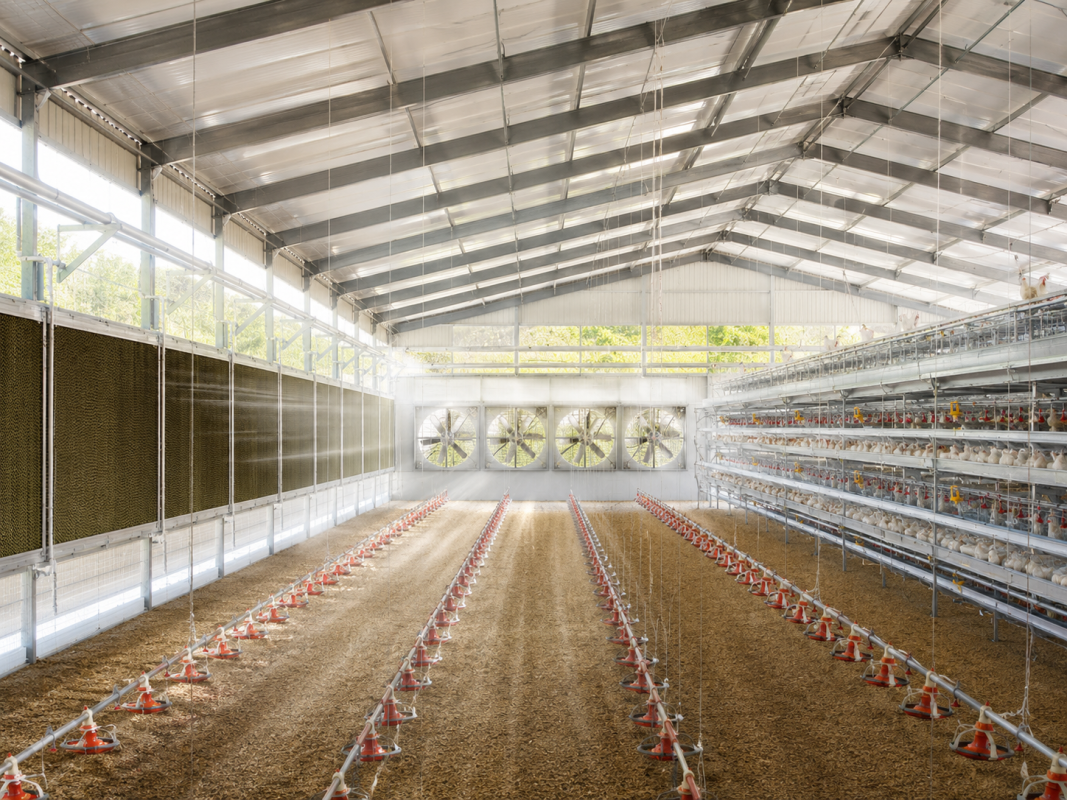
The engineer should calculate the number and size of fans according to bird capacity, house dimensions, cage arrangement and local environmental conditions.
The project team should also plan the egg collection route together with the egg storage or grading area.
Similarly, the manure belt should discharge toward a logical manure collection and transportation route.
This coordination is one of the main advantages of a turnkey project approach.
Instead of asking several suppliers to solve separate parts of the same farm, you can design all systems around one common project layout.
What Information Should You Send Before Asking for a Quotation?
Some buyers send an inquiry that says:
“I need equipment for 50,000 layers. Please send me a price.”
That information is enough to start a conversation, but it is not enough for a reliable technical quotation.
Before designing the project, I would normally ask for the following information.
Farm location:
Which city or prefecture is the project located in?
Poultry type:
Are you planning layers, pullets, broilers or breeders?
Bird capacity:
How many birds do you plan for the first phase?
Land dimensions:
How much land is available?
New or existing poultry houses:
Are you building a new farm or renovating an existing one?
Existing house dimensions:
What are the length, width, usable height and column spacing?
Automation requirement:
Do you prefer a semi-automatic or fully automatic system?
Electrical specification:
What are the voltage, phase and frequency — 50 Hz or 60 Hz?
Expansion plan:
Do you plan to add more poultry houses later?
After the supplier receives these parameters, the engineering team can calculate the number of poultry houses, cage rows, cage tiers, equipment quantities, ventilation requirements, electrical load and approximate shipping volume.
This produces a much more useful quotation than simply giving a price per cage.
A Practical Turnkey Poultry Farm Project Process
For a Japanese poultry project, I recommend following a clear engineering process.
Step 1: Collect Project Information
First, confirm the farm location, poultry type, bird capacity, land conditions and automation requirements.
Step 2: Prepare the Preliminary Farm Layout
Next, determine the number and orientation of poultry houses, service roads, feed storage areas, manure routes and auxiliary areas.
Step 3: Design the Poultry House and Equipment Layout
Then, match cage rows, feeding systems, drinking lines, ventilation, manure removal and egg collection with the poultry house dimensions.
Step 4: Confirm Technical Specifications
The engineering team should review electrical requirements, structural conditions, equipment configuration and installation responsibilities.
Step 5: Manufacture the Equipment
The manufacturer should start production after both sides confirm the technical drawings and equipment specifications.
Step 6: Arrange Shipping to Japan
The supplier should plan packaging and container loading according to the installation sequence whenever possible.
This can save time when the installation team begins work at the farm.
Step 7: Install and Commission the Equipment
After mechanical installation, the installation team should complete electrical connections, system testing and parameter adjustment.
Step 8: Train Farm Operators
Before commercial production starts, farm staff should learn daily operation, preventive maintenance, alarm handling and spare-parts replacement.
What I Would Check Before Choosing a Poultry Equipment Supplier
When comparing turnkey poultry farm equipment suppliers, I would not make the final decision based only on the lowest quotation.
I would first ask the following questions:
- Can the supplier provide a complete farm and poultry house layout?
- Does the same engineering logic connect cages, ventilation, manure removal and other systems?
- Can the supplier configure motors and electrical equipment for the actual Japanese voltage and frequency?
- Who will handle installation and commissioning?
- Will the supplier provide technical drawings before production?
- How quickly can the supplier provide spare parts after installation?
- Can the farm expand later without redesigning the entire project?
Guangzhou Guangxing Poultry Equipment Group provides poultry cage systems, automatic feeding, drinking, manure removal, egg collection, environmental control and poultry house project planning for commercial farms.
However, for a Japanese project, we still start with the actual farm conditions rather than recommending a standard equipment package immediately.
Start With the Farm Plan, Not the Equipment List
If you are planning to purchase turnkey poultry farm equipment in Japan, do not start by deciding how many cages you want to buy.
Start by confirming the project location, bird capacity, poultry house conditions, structural requirements, electrical specifications, biosecurity layout and automation target.
Once you know these conditions, you can make a much better decision about whether an A-type cage, H-type cage, floor system or another configuration suits the project.
A well-designed turnkey poultry farm should reduce technical conflicts between different systems and make installation, daily operation and future expansion easier to control.
If you are preparing a poultry farm project in Japan, send us your farm location, planned bird capacity, land or poultry house dimensions and preferred automation level.
Our engineering team can use this information to prepare a preliminary equipment configuration and farm layout for further technical discussion.