


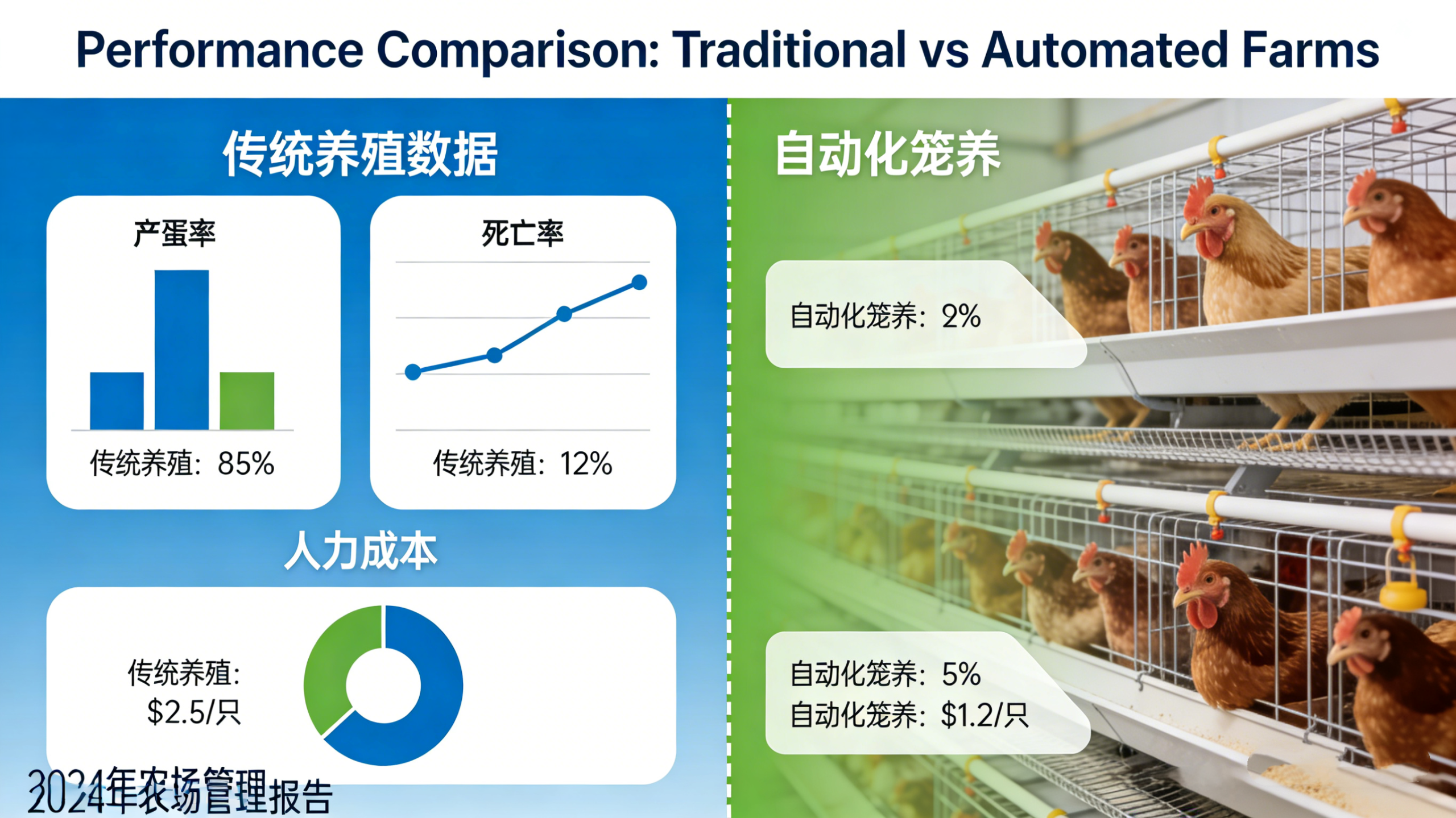
The global poultry industry is undergoing a rapid transformation. With rising demand for eggs, commercial farmers are increasingly adopting layer chicken cage systems to maximize productivity, improve biosecurity, and reduce labor costs. In this ultimate guide, we will explain everything you need to know about layer cage systems, including types, automation, performance comparison, material standards, investment costs, and why choosing Guangxing Poultry Equipment can ensure long-term success.
1. What Is a Layer Chicken Cage System?
A layer chicken cage system is a structured housing solution designed specifically for egg-laying hens. Unlike traditional deep litter systems, cage systems allow farmers to:
Increase stocking density
Automate feeding, drinking, egg collection, and manure removal
Reduce labor costs
Improve hygiene and disease control
Minimize egg breakage
Comparison: Cage System vs. Deep Litter
| Feature | Deep Litter | Layer Cage System |
| Stocking Density | 5–7 birds/m² | 12–20 birds/m² |
| Egg Cleanliness | Moderate | High |
| Labor Requirement | High | Low |
| Disease Risk | Higher | Lower |
| Egg Collection | Manual | Automatic |
Modern commercial farms increasingly prefer layer cage systems for their higher operational efficiency and biosecurity.
2. Types of Layer Chicken Cage Systems
2.1 A-Type Layer Cage
Best for: Small to medium-scale farms (5,000–30,000 birds)
Features:
3–4 tiers
Manual or semi-automatic feeding
Manual or semi-automatic egg collection
Manual manure removal
Advantages:
Lower initial investment
Simple installation
Suitable for developing markets
Limitations:
Lower stocking density
Higher long-term labor costs
Limited automation integration

2.2 H-Type Layer Cage
Best for: Large-scale commercial farms (30,000–500,000 birds)
Features:
4–8 vertical tiers
Fully automatic feeding
Automatic egg collection belts
Automatic manure removal belts
Integrated climate control
Advantages:
30–50% higher stocking density than A-type
60–70% labor reduction
Centralized control system
Higher biosecurity
H-type cage systems provide a faster ROI, especially in regions with high labor costs like the Middle East and Africa.
3. Key Components of a Modern Layer Cage System
A complete layer chicken cage system includes multiple automation solutions that work together to optimize farm productivity.
3.1 Automatic Feeding System
Chain or pan feeding
Uniform feed distribution
Feed waste below 3%
Improved feed conversion ratio (FCR 1.95–2.1)
3.2 Nipple Drinking System
Stainless steel nipples
Automatic water pressure control
Cleaner water supply
Reduced wet litter and disease risk
3.3 Automatic Egg Collection System
Soft conveyor belts transport eggs
Central collection table
Egg breakage rate <0.5%
Labor savings up to 70%
3.4 Manure Removal System
Polypropylene belts
Timed cleaning cycles
Reduced ammonia levels
Improved bird health
3.5 Climate Control System
Essential for hot climates:
Exhaust fans
Cooling pads
Air inlets
Temperature and humidity sensors
Smart control cabinet
Maintaining stable temperature can increase egg production by 5–8%, especially in tropical or Middle Eastern conditions.

4. Production Performance Comparison
| Metric | Traditional House | H-Type Automated Cage |
| Egg Production Rate | 88–90% | 92–95% |
| Mortality Rate | 8–10% | 3–5% |
| Labor per 50,000 Birds | 20 workers | 6–8 workers |
| Feed Waste | 6–8% | <3% |
| ROI Period | 4–5 years | 2–3 years |
Observation: For farms exceeding 50,000 birds, automation significantly reduces operational risk and increases profitability.
5. Material & Durability Standards
High-quality cages must meet strict material standards:
Q235 high-strength steel
Hot-dip galvanization (275g/m² zinc coating)
Anti-corrosion lifespan 15–20 years
Note: Poor galvanization in tropical environments can cause rust in 3–5 years, affecting structural integrity and financial returns. Guangxing Poultry Equipment uses full hot-dip galvanization after welding, ensuring long-term durability.
6. Why Choose Guangxing Poultry Equipment?
Guangxing Poultry Equipment is a leading manufacturer of automated poultry solutions, with projects across Africa, the Middle East, and Southeast Asia. Their advantages include:
6.1 Turnkey Farm Solutions
Farm layout and design
Equipment supply
Installation and commissioning
Technical training
6.2 Durable Cage Materials
Hot-dip galvanized steel
Corrosion-resistant
15–20 years lifespan
6.3 Automation Integration
Feeding, drinking, egg collection
Manure removal
Climate control
IoT-based monitoring for temperature, humidity, feed, and water usage
6.4 International Project Experience
Guangxing has successfully supplied medium to large-scale commercial farms, ensuring equipment adapts to local climate and operational conditions.
7. Investment Cost Estimation (Reference)
50,000-layer H-type farm project:
| Item | Estimated Cost |
| Cage System | $120,000 – $180,000 |
| Feeding & Drinking | Included |
| Egg Collection | Included |
| Manure Removal | Included |
| Climate Control | $40,000 – $60,000 |
| Steel Structure Housing | Depends on local price |
、
Total investment: $200,000 – $300,000 (automation level and local construction costs affect total).
8. How to Choose the Right Cage System
Consider these factors:
Target production capacity
Local labor cost
Climate conditions
Available land
Budget and financing
Recommendation:
High labor-cost regions: H-type automated cages
Areas with limited electricity: semi-automatic A-type cages may be suitable
9. Future Trends: Intelligent Poultry Farming
The poultry industry is moving toward smart and IoT-integrated farms:
AI-based monitoring
Remote farm management
Data-driven feed optimization
Automatic egg grading and packaging
Investing in scalable cage systems now ensures competitiveness for the next 15–20 years.

10. Conclusion
A professional layer chicken cage system is the backbone of any profitable commercial egg farm. Compared with traditional methods, modern H-type automated systems provide:
Higher egg output
Lower mortality
Reduced labor cost
Faster ROI
Improved biosecurity
Guangxing Poultry Equipment offers durable, customizable, and automation-ready solutions tailored for farms in Africa, the Middle East, and emerging markets.
If you are planning a commercial egg farm, contact Guangxing for a customized layout and cost estimation to maximize your farm’s efficiency and profitability.


