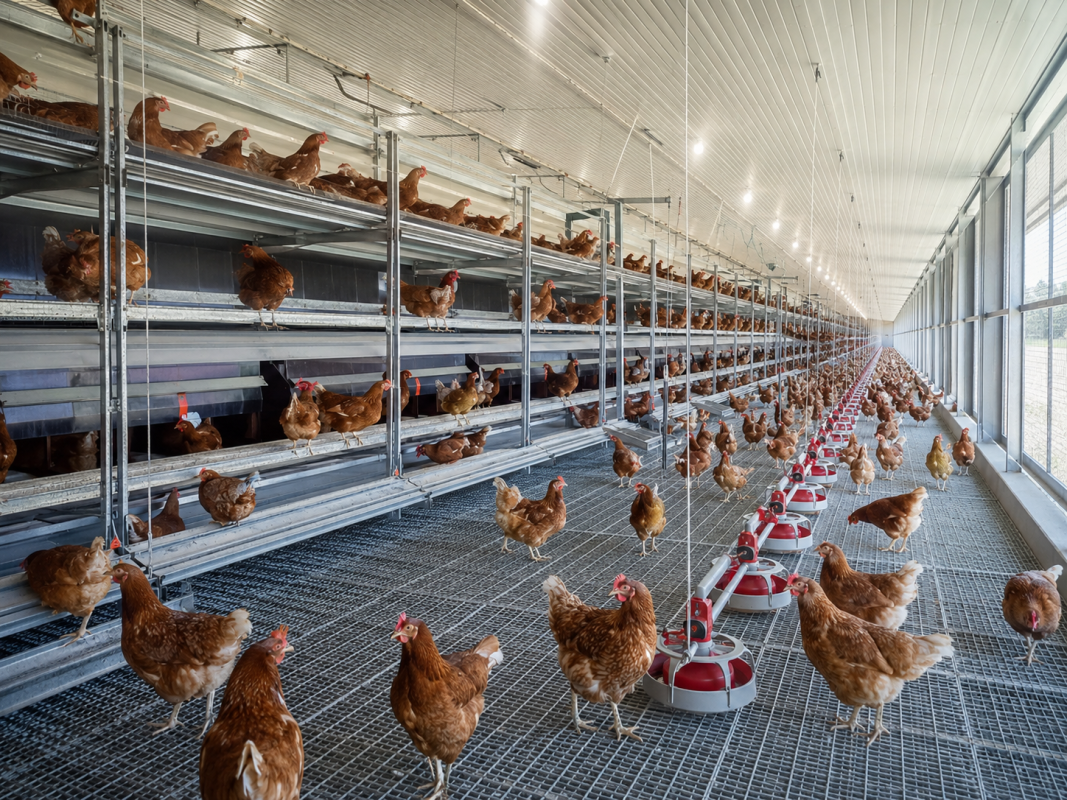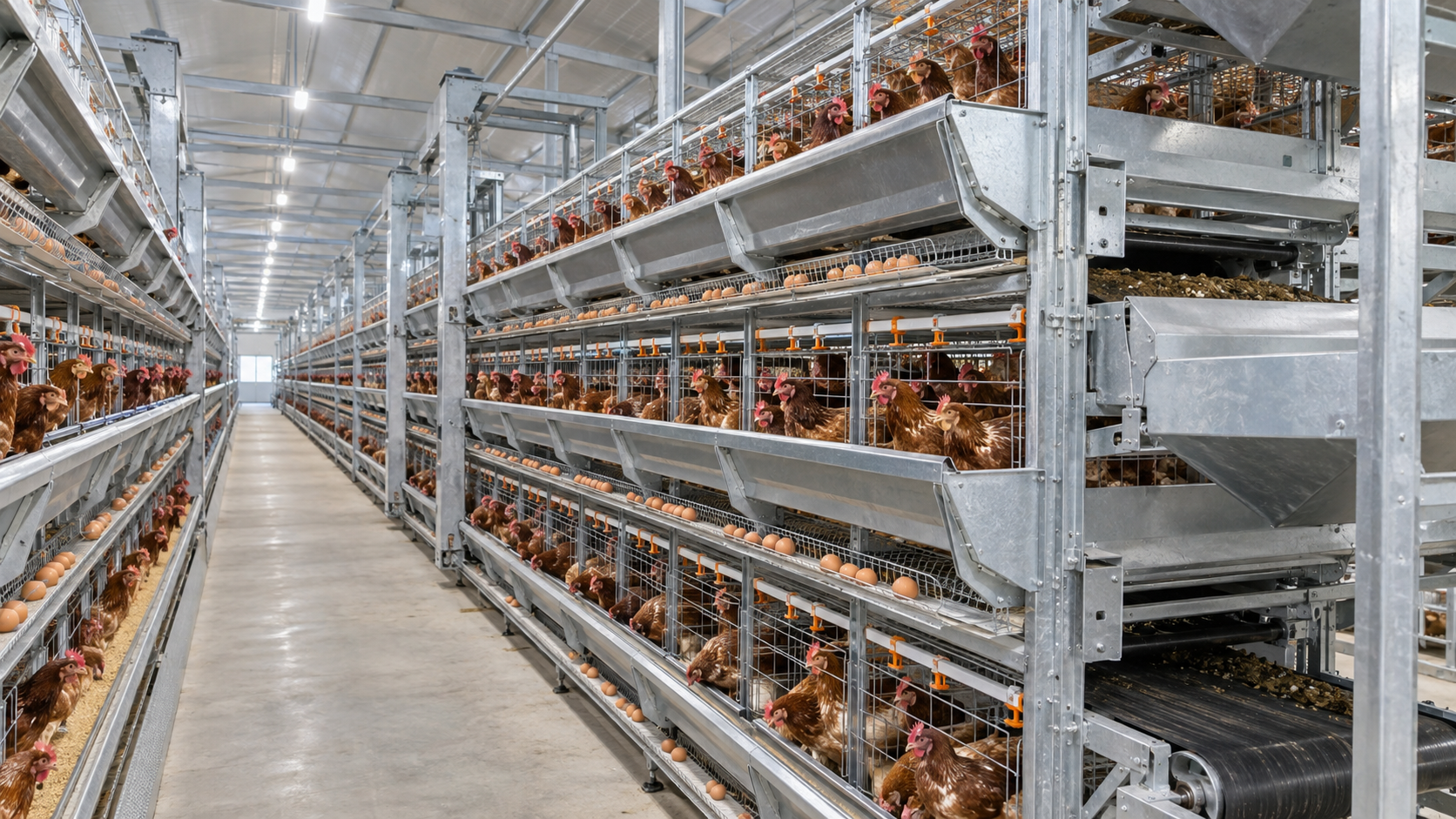
The poultry farm cost for 25000 layers depends on the cage system, building specifications and level of automation.
One equipment supplier publishes a reference price of US$35,000–55,000 for a 25,000-bird, four-tier H-type cage module. This is not a complete poultry farm construction price or a Guangxing quotation. Feeding, drinking, egg collection, manure removal, ventilation, building work and installation must be checked separately.
For a farm of this size, another question matters just as much as cage prices: Can the equipment collect, handle and prepare 20,000 or more eggs for sale every day without unnecessary labor or damage?
That is where equipment planning becomes more important than simply buying additional cage capacity.
1. How Would Guangxing Configure a 25,000-Layer Farm?
Guangxing manufactures A-frame and H-type layer cage systems, together with feeding, drinking, egg collection and manure-handling equipment.
For a new 25,000-hen farm, we would compare two equipment approaches before preparing the building layout.
| Equipment | A-Type Option | H-Type Option |
|---|---|---|
| Cage arrangement | Stepped A-frame | Vertically stacked |
| Feeding | Manual or automatic options | Integrated automatic feeding |
| Drinking | Nipple drinking | Multi-tier nipple drinking |
| Egg collection | Manual or automatic | Automatic row or central collection |
| Manure handling | Compatible removal system | Multi-tier manure belts |
| Main consideration | Lower initial equipment commitment | Space utilization and automation |
These are possible configurations based on Guangxing’s published products, not finalized engineering designs.
The actual cage row count, tier arrangement and building dimensions require a project-specific layout.
For a buyer with an existing poultry house, we would first check its usable dimensions, internal height and maintenance access.
For a new building, we would establish the cage arrangement, egg collection route and manure discharge before finalizing the construction drawings.
A detailed layout helps avoid expensive changes after equipment installation.
2. What Does a 25,000-Layer Farm Really Cost?
The published US$35,000–55,000 reference covers a supplier-defined H-type cage module. It should not be compared directly with a quotation for a fully automated farm.
A complete project budget needs several separate cost categories.
| Budget Category | What to Confirm |
|---|---|
| Cage equipment | Cage model, rows, tiers and accessories |
| Feeding and drinking | Feed delivery, troughs, nipples and regulators |
| Egg collection | Egg belts, elevators and central conveyors |
| Manure removal | Belts, motors and discharge conveyors |
| Egg handling | Grading, inspection and packing equipment |
| Environmental control | Fans, cooling, lighting and controllers |
| Building construction | Steel structure, foundations and drainage |
| Delivery and installation | Freight, import costs, electrical work and commissioning |
| Working capital | Pullets, feed, packaging and labor |
The difference between quotations often comes from what suppliers include.
For example, one package may include standard egg collection, while another includes a central conveyor and a connection to the packing area.
The second package costs more but may reduce manual handling. Whether that investment is justified depends on the farm layout and local labor costs.
We recommend requesting a detailed bill of materials and confirming the applicable trade terms, such as EXW or FOB.
Local civil work, electrical installation and unexpected site adjustments also need separate allowances.
Compare the total installed cost and equipment scope, not just the advertised cage price.
3. When Is Central Egg Collection Worth the Investment?
At an illustrative 90% hen-day laying rate, 25,000 hens produce:
25,000 × 90% = 22,500 eggs per day
Moving that many eggs from cage rows to a packing area requires careful planning.
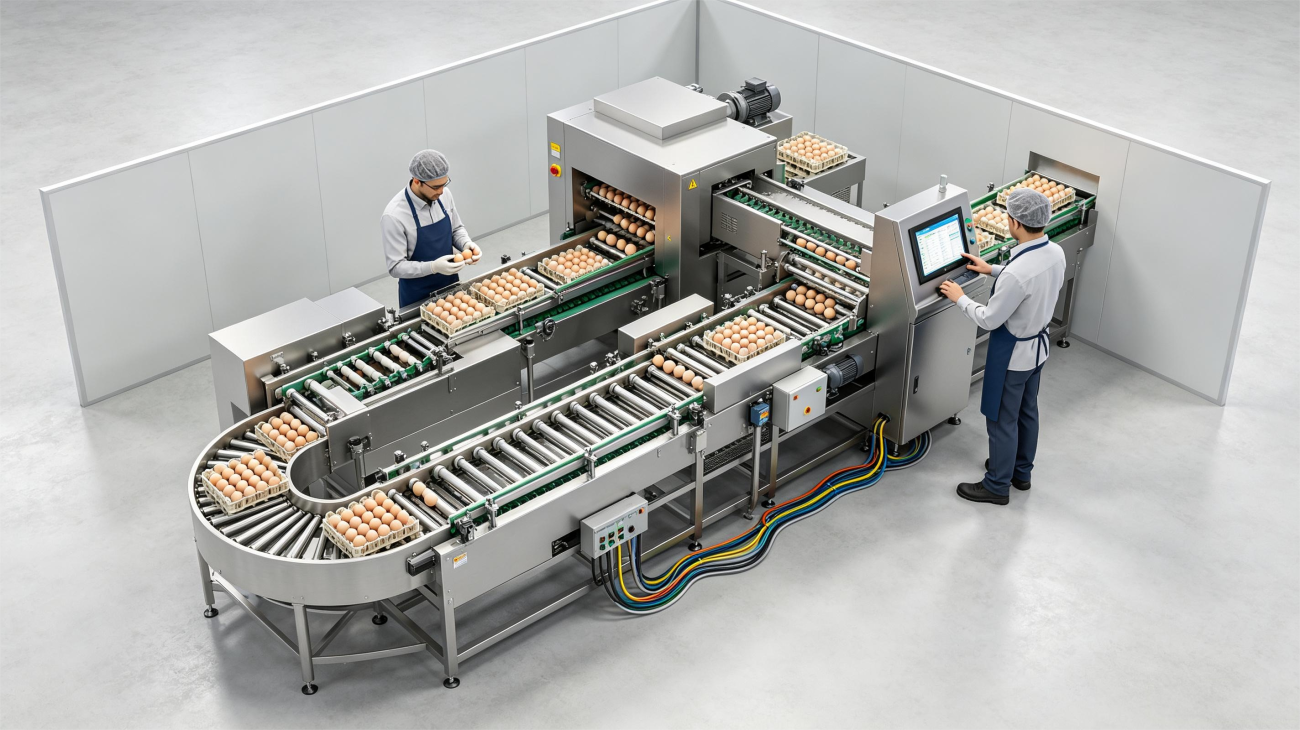
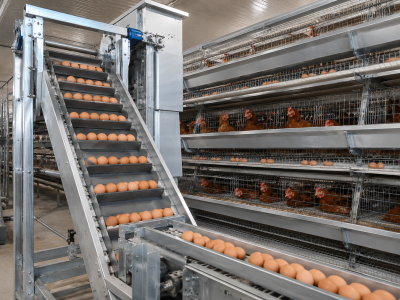
Guangxing’s automatic egg collection system includes collection equipment suitable for different cage arrangements.
For a house with several cage rows, centralized collection may reduce repeated manual transfers.
However, extra conveyors also introduce motors, transfer points and maintenance requirements.
If the farm can handle its daily volume efficiently with row-level collection, central automation may not justify the additional expense.
How Much Could a 1% Egg-Loss Difference Cost?
Consider a hypothetical one-percentage-point increase in unsaleable eggs.
| Egg Loss Sensitivity | Example |
|---|---|
| Daily egg production | 22,500 |
| Additional unsaleable share | 1 percentage point |
| Additional unsaleable eggs | 225/day |
| Assumed egg price | $0.10/egg |
| Daily revenue difference | $22.50 |
| Equivalent over 365 days | $8,212.50 |
This is a sensitivity calculation, not a forecast or a guaranteed saving from automation.
Actual production varies throughout the laying cycle, and the value of damaged eggs depends on the market.
Before choosing equipment, ask suppliers to explain the egg-transfer points, conveyor adjustment and handling process.
The goal is not simply faster collection. It is to deliver more eggs to the packing area in saleable condition.
4. Does a 25,000-Layer Farm Need Egg Grading and Packing Equipment?
At this scale, collecting eggs efficiently is only part of the job.
The next decision depends on how the farm sells its eggs.
| Sales Channel | Equipment to Consider |
|---|---|
| Bulk sales to local traders | Collection and packing tables |
| Wholesale by egg weight | Egg grading equipment |
| Retail-ready eggs | Grading and packaging systems |
| Buyers requiring quality inspection | Appropriate inspection equipment |
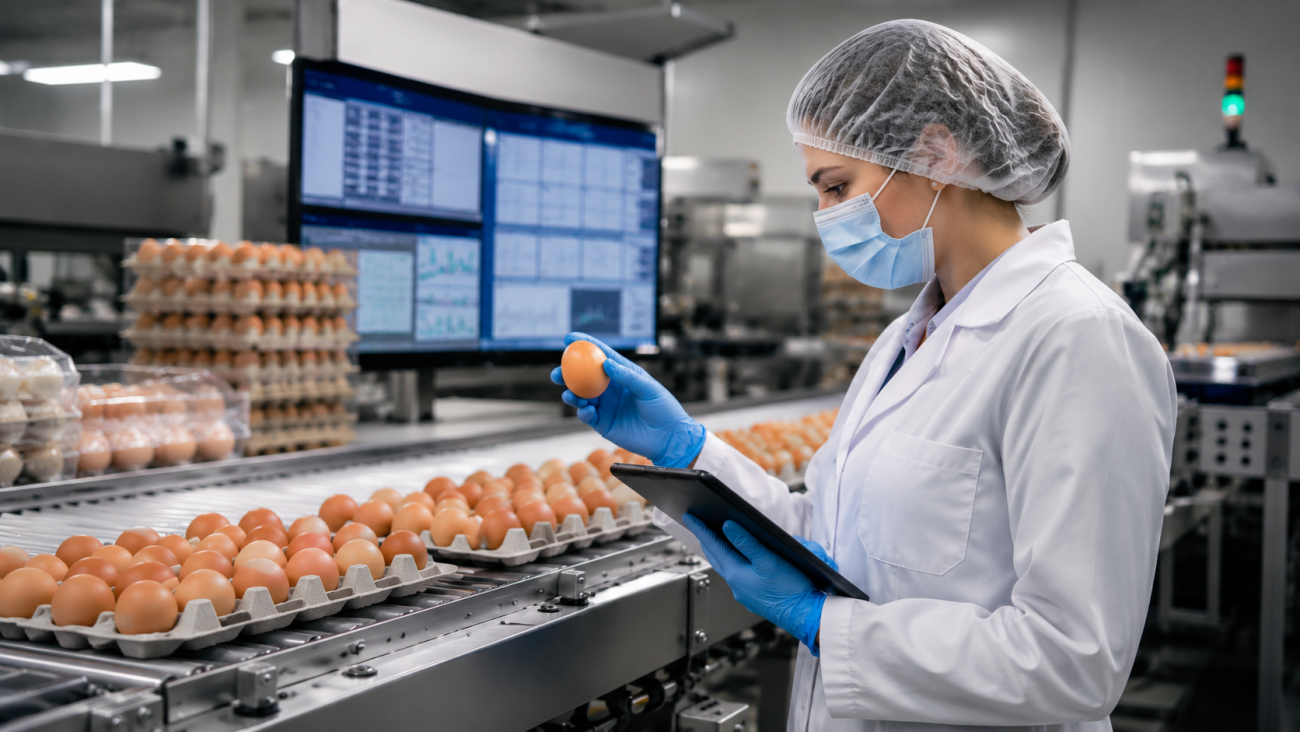
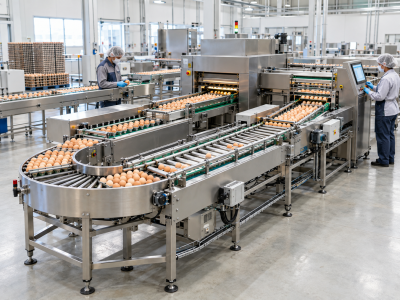
Guangxing offers egg grading and packaging equipment for commercial egg handling.
However, we would not automatically recommend a complete grading and packing line for every 25,000-hen farm.
First, confirm the buyer’s requirements for egg size, grading, packaging and daily delivery volume.
A grading system creates financial value only when it helps the farm meet customer requirements, reduce handling costs or obtain worthwhile price differences between egg grades.
If the farm sells most eggs in bulk without grading requirements, a simpler packing arrangement may be more economical.
We recommend designing the egg-handling process around confirmed sales channels rather than purchasing the most automated equipment available.
5. Feed Cost: Why Five Grams per Hen Matter
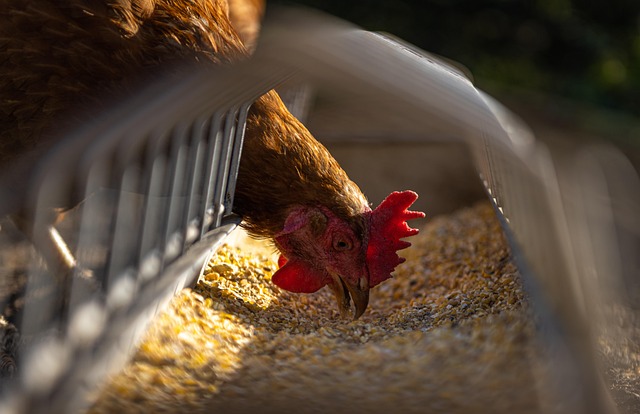
Feed is a major recurring cost in commercial egg production.
Hy-Line Brown provides breed-specific performance information covering feed intake and egg production.
Using an illustrative intake of 110 g per hen per day:
25,000 × 0.110 kg = 2,750 kg of feed daily
At a hypothetical feed price of US$0.35/kg, daily feed purchases would cost US$962.50.
Now consider an additional 5 g per hen per day.
| Feed Sensitivity | Example |
|---|---|
| Additional feed per hen | 5 g/day |
| Additional feed for the flock | 125 kg/day |
| Assumed feed price | $0.35/kg |
| Additional daily expense | $43.75 |
| Equivalent over 365 days | $15,968.75 |
This illustrates the effect of a small difference in feed consumption. It does not mean Guangxing equipment will save 5 g per hen.
Actual requirements depend on breed, flock age, diet, temperature and laying performance. Reducing necessary feed intake can harm egg production.
When comparing feeding systems, examine trough design, distribution consistency, adjustment and maintenance.
A reliable feeding system should minimize avoidable waste without restricting the birds’ nutritional needs.
6. Manure Removal, Ventilation and Power: What Should Not Be Overlooked?
A manure-belt system is useful only when it connects to a practical waste-handling arrangement.
Before installation, confirm where manure leaves the house, how it reaches storage or treatment equipment, and whether workers can access the belt drives.
Poor belt tracking and delayed manure removal can increase maintenance requirements and affect air quality.
Ventilation requires similar attention.
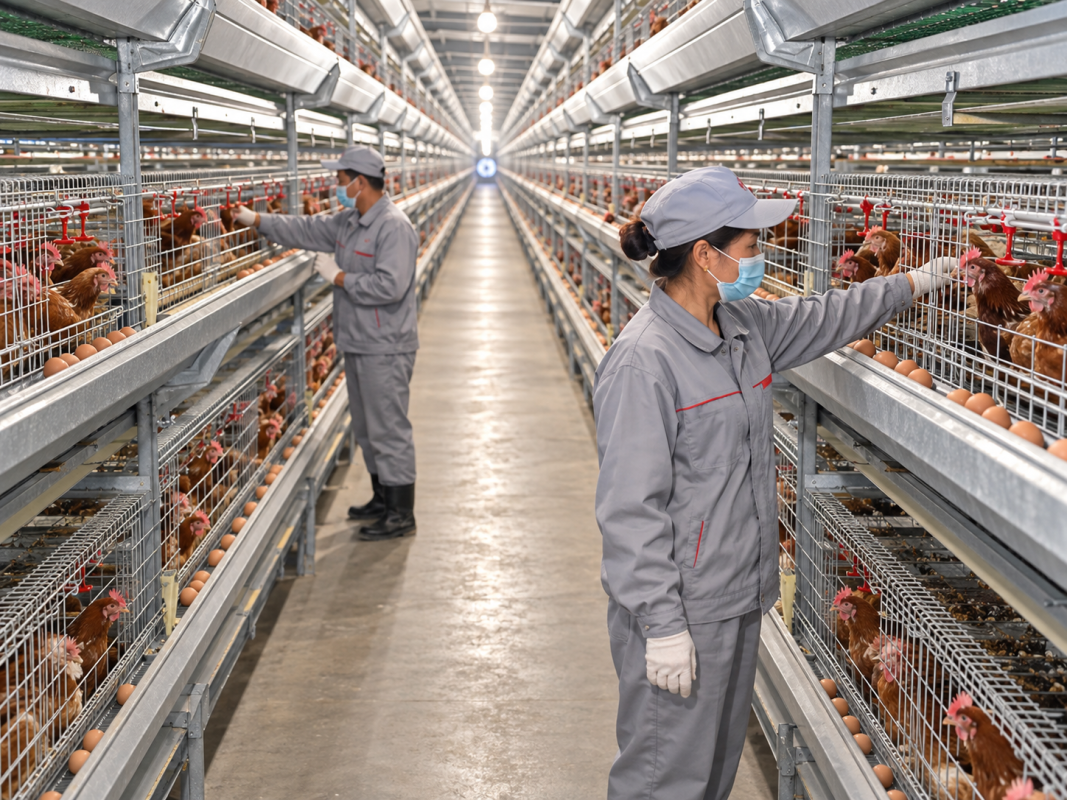
H-type cages place hens at different heights. Engineers must therefore design airflow around the actual cage arrangement rather than rely on a generic fan package.
For mechanically ventilated houses, emergency alarms and suitable backup power should be part of the initial equipment review.
A temporary egg-conveyor shutdown may be manageable. Losing essential ventilation during extreme heat is a much more serious risk.
We would prioritize reliable environmental control and essential power protection before spending on optional monitoring features.
7. Should You Prepare for Future Expansion?
A 25,000-hen farm may eventually expand to another poultry house.
Even if expansion is not immediate, the original layout should consider feed deliveries, electrical supply, egg collection and manure handling.
For example, the position of a central egg conveyor may affect whether a future second house can share the same packing area.
However, this does not mean buying oversized equipment today.
Some infrastructure may justify additional space or future connection points. Other equipment can be purchased when the expansion becomes certain.
Ask the supplier to indicate possible extension routes on the initial layout.
This gives the farm flexibility without committing unnecessary capital.
8. What Revenue Could 25,000 Layers Generate?
Consider the same illustrative 90% laying rate and US$0.10 selling price.
| Item | Hypothetical Example |
|---|---|
| Hens in production | 25,000 |
| Hen-day laying rate | 90% |
| Eggs produced daily | 22,500 |
| Assumed selling price | $0.10/egg |
| Gross daily revenue | $2,250 |
25,000 × 90% × $0.10 = $2,250
This is gross revenue, not profit. It assumes all eggs are saleable at one price.
Actual production changes with flock age and management, while egg prices vary by market, size and grade.
Feed, pullets, packaging, electricity, labor, veterinary expenses, equipment maintenance and financing must still be considered.
For a realistic investment analysis, use the selected breed’s laying curve and local operating costs rather than multiplying one hypothetical day by 365.
9. Why Consider Guangxing for a 25,000-Layer Farm?
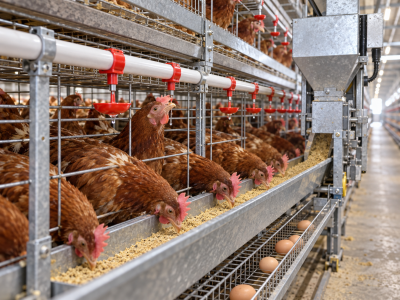
Guangxing’s H-Type Automatic Layer Cage System integrates cage structures with feeding, nipple drinking, egg collection and manure-removal equipment.
The company also offers A-frame layer cages for projects where a stepped arrangement better fits the building and budget.
For a 25,000-layer project, Guangxing can review the proposed cage arrangement, egg-handling requirements, manure discharge and relevant environmental equipment.
The company’s website also features the Shanxi Shilou Golden Rooster Project as an H-type layer equipment reference. Its precise supply and installation scope should be confirmed before using it as evidence for a comparable project.
A preliminary layout and detailed equipment list provide the basis for a meaningful quotation.
We recommend confirming essential systems, optional upgrades, delivery responsibilities and spare-parts arrangements before placing an order.
Is a Fully Automated 25,000-Layer Farm Worth It?
A higher level of automation deserves consideration when labor costs are substantial, several cage rows need centralized egg collection and the farm has reliable technical support.
A simpler arrangement may be more suitable where land is available, initial capital is limited or the intended buyers do not require graded and packaged eggs.
The decision depends on three factors: total installed cost, realistic operating benefits and long-term maintenance requirements.
More equipment does not automatically mean a better investment.
Frequently Asked Questions
How much does a 25000-layer cage system cost?
One supplier publishes US$35,000–55,000 for a 25,000-bird H-type cage module. This is a limited equipment reference, not a complete project cost or Guangxing quotation.
Does a 25,000-layer farm need central egg collection?
Not necessarily. Central collection is worth evaluating when several cage rows send eggs to one packing area and the operating benefits justify the additional equipment.
Should the farm install egg grading equipment?
It depends on customer requirements. Bulk egg sales may need simpler equipment, while wholesale grading or retail packaging may justify additional machinery.
Can the farm expand later?
Potentially, but expansion should influence the original building layout, electrical supply, feed storage, egg collection and manure-handling plans.
Plan Your 25,000-Layer Farm with Guangxing
Send Guangxing your country, proposed building dimensions, layer breed, planned capacity, egg-sales channel and preferred automation level.
We can discuss A-type or H-type cage arrangements, feeding, drinking, egg collection, manure removal and suitable egg-handling equipment.
Based on these requirements, Guangxing can prepare a project-specific equipment proposal with a clearly defined supply scope.
Request a 25,000-Layer Farm Equipment Plan