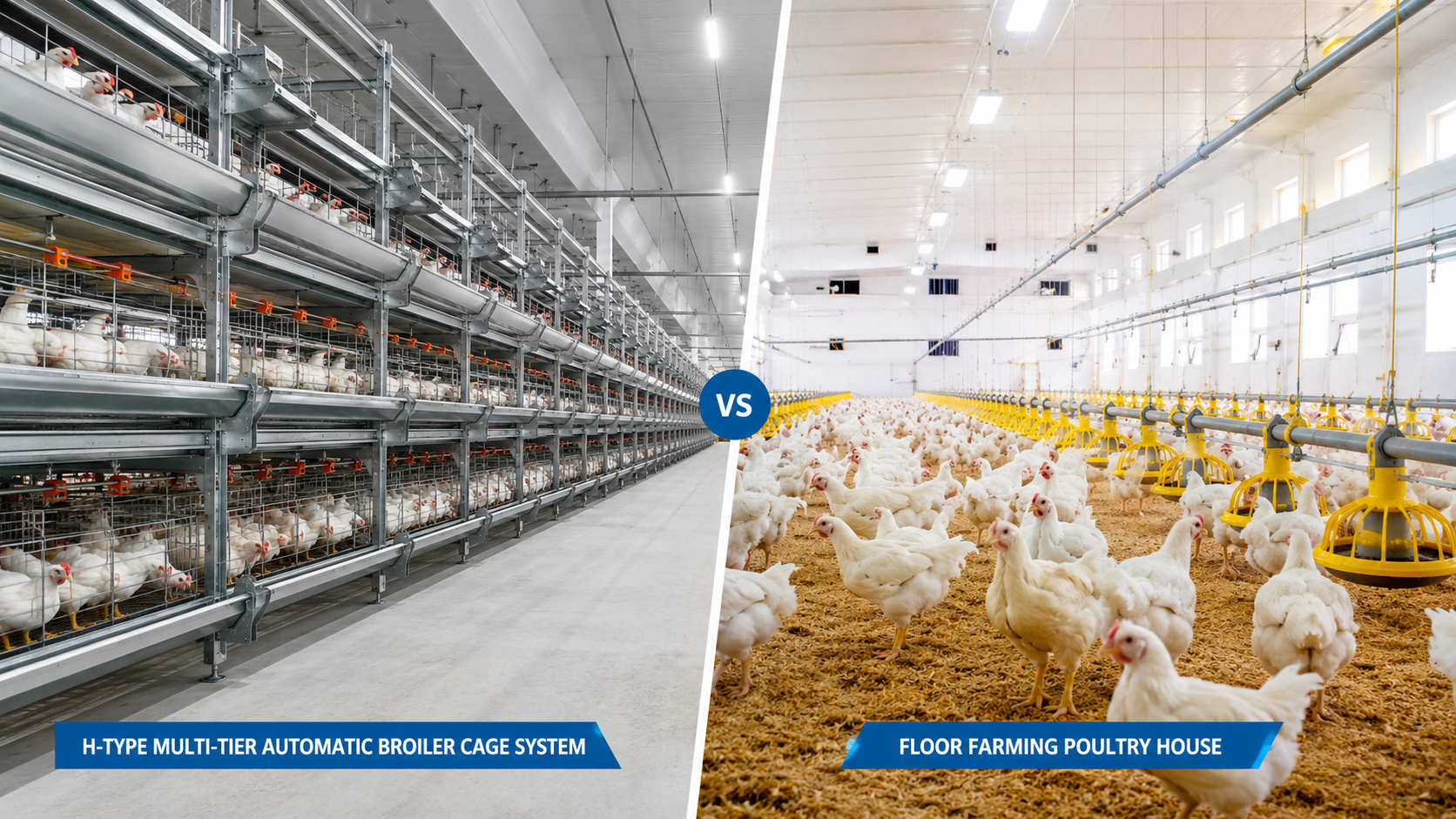
When planning a commercial broiler farm, one of the first decisions is whether to raise birds in cages or on the floor.
Floor farming has been widely used for many years. It requires a relatively simple equipment configuration and usually has a lower initial investment. Broiler cage farming, however, can use the vertical space inside the poultry house, improve automation and reduce dependence on manual labor.
Neither system is automatically the best choice for every project.
The right decision depends on the target farm capacity, available land, labor cost, local climate, electricity supply, animal welfare regulations, market requirements and long-term investment plan.
For small farms with sufficient land and inexpensive labor, floor farming may remain practical. For medium and large commercial projects where land, labor and production consistency are major concerns, an automatic broiler cage system may offer stronger long-term value.
This guide compares broiler cage farming and floor farming across the factors that matter most to poultry investors.
Broiler Cage vs Floor Farming: Quick Comparison
| Comparison Factor | Broiler Cage Farming | Floor Farming |
|---|---|---|
| Initial equipment investment | Higher | Lower |
| Poultry house space utilization | High | Limited to floor area |
| Automation potential | High | Medium to high |
| Labor requirement | Lower with automation | Usually higher |
| Litter requirement | Normally not required | Required for deep-litter systems |
| Manure removal | Belt or automatic manure system | Litter removal after each cycle |
| Bird contact with manure | Reduced | Higher in deep-litter houses |
| Feeding and drinking control | More centralized and precise | Effective but requires good line management |
| Bird movement | More limited | Greater freedom of movement |
| Catching and harvesting | Can be mechanized | Often labor-intensive |
| Animal welfare acceptance | Depends on market and regulations | Generally more widely accepted |
| Suitability for large farms | Strong | Possible, but requires more floor area |
| Long-term labor saving | High | Moderate |
The table provides a quick overview, but each factor should be evaluated according to the actual farm conditions.
What Is Broiler Cage Farming?
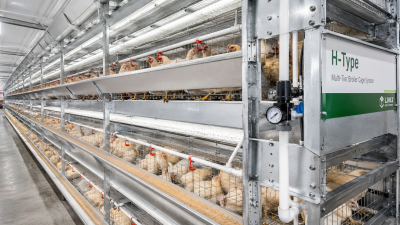
Broiler cage farming uses multi-tier cage rows to raise meat chickens above the poultry house floor. A modern H-type broiler cage system can integrate feeding, drinking, manure removal, lighting, environmental control and bird harvesting.
A complete Guangxing broiler cage solution may include:
- H-type multi-tier broiler cages;
- automatic feeding equipment;
- nipple drinking lines with pressure regulators;
- manure removal belts;
- feed silos and feed conveying systems;
- ventilation fans and cooling pads;
- temperature, humidity, carbon dioxide and ammonia monitoring;
- programmable lighting;
- automatic or semi-automatic bird harvesting systems;
- centralized environmental control.
The main purpose of cage farming is not simply to place more chickens inside a building. A properly designed system should improve production organization, reduce unnecessary manual work and make daily management more standardized.
However, cage capacity must never be calculated by floor area alone. Ventilation, bird weight, stocking density, equipment layout and local regulations must all be considered.
For farms that require higher stocking capacity and greater automation, learn more about the Guangxing broiler chicken cage farming system, including H-type cages, automatic feeding, drinking and manure removal equipment.
What Is Floor Farming?
In floor farming, broilers are raised directly inside the poultry house rather than in multi-tier cages.
The most common form is deep-litter farming. Materials such as rice husks, wood shavings or chopped straw are spread over the concrete floor. The litter absorbs moisture and manure during the production cycle.
Modern floor farms may also use plastic slatted floors or raised mesh floors. These systems separate the birds from part of the manure and reduce some of the problems associated with wet litter.
A commercial floor farming system can still be highly automated. It may include:
- pan feeding lines;
- nipple drinking lines;
- feed silos;
- automatic auger feed conveyors;
- ventilation fans;
- cooling pads;
- heating equipment;
- environmental controllers;
- programmable lighting.
The difference is that the birds remain on one horizontal level, so the total capacity is more dependent on the usable floor area.

1. Initial Investment Cost
Floor farming normally has a lower equipment entry cost.
The farm may only require a poultry house, feeding lines, drinking lines, ventilation, heating, cooling and lighting. Deep-litter farms also need bedding materials and equipment for cleaning the house after each production cycle.
Broiler cage farming requires a larger initial equipment budget because the project includes cage structures, support frames, manure belts, feeding machines and other automated components.
Looking only at the purchase price, floor farming may appear more economical.
However, commercial investors should calculate the total cost over several years rather than focusing only on the first quotation. The long-term calculation should include:
- labor;
- litter purchase and disposal;
- manure handling;
- bird catching;
- cleaning time;
- equipment maintenance;
- electricity;
- land and building costs;
- production interruptions;
- replacement of damaged components.
A higher initial investment may be reasonable when it reduces recurring labor and operating costs over multiple production cycles.
2. Stocking Capacity and Space Utilization
This is one of the clearest differences between broiler cages and floor farming.
Floor farming uses the horizontal floor area of the poultry house. Increasing capacity normally requires a larger building, an additional poultry house or a higher stocking density. Raising density without sufficient ventilation can create heat, humidity and air-quality problems.
H-type broiler cages use both horizontal and vertical space. Several cage tiers can be arranged inside the same building, allowing a properly designed house to accommodate more birds than a single-level floor system.
This can be particularly valuable when:
- land is expensive;
- the farm has limited expansion space;
- the investor wants a higher capacity per poultry house;
- future expansion must be planned within an existing site;
- labor and management resources need to be centralized.
Guangxing designs cage layouts according to poultry house length, width, height, aisle space, ventilation direction and target bird capacity. Capacity should be matched with the environmental control system rather than calculated separately.

3. Labor and Automation
Labor availability is becoming a major issue for commercial poultry farms.
Floor farming can automate feeding, drinking and climate control, but workers are still commonly needed for litter management, dead-bird inspection, floor cleaning and bird catching.
Large-scale harvesting can require a team of workers to gather, catch, carry and load the broilers. This process may increase labor cost and create additional stress for birds if it is not properly organized.
An automatic broiler cage system can reduce manual work through:
- centralized feeding;
- automatic drinking;
- belt manure removal;
- programmed ventilation;
- automatic lighting;
- remote environmental monitoring;
- mechanized bird harvesting.
Guangxing can configure the automation level according to the farm budget. Some projects require a fully automatic system, while others may begin with automatic feeding, drinking and manure removal before adding more functions later.
4. Feed and Water Management
Feed is usually the largest operating cost in broiler production.
Both cage and floor systems can achieve good performance when the equipment is correctly designed and managed. The key differences are access, uniformity and control.
In floor houses, feeders and drinkers must be adjusted as the birds grow. Poor line height, uneven feed distribution or water leakage can cause feed waste, wet litter and uneven flock development.
In a broiler cage system, feed troughs and nipple drinking lines are positioned along the cage rows. This can make it easier to observe feed distribution and water access by tier.
Guangxing feeding equipment is designed to deliver feed consistently along the cage line. The drinking system can include water filters, pressure regulators, nipple drinkers and drip-control components.
Cage farming does not automatically guarantee a better feed conversion ratio. Performance still depends on feed quality, genetics, temperature, health, stocking density and daily management. Its advantage is that it provides a more controlled platform for standardized feeding and drinking.
5. Manure, Litter and House Hygiene
Deep-litter floor farming requires careful moisture management.
Water leakage, poor ventilation, high stocking density or humid weather can cause wet litter. This may increase ammonia levels, create footpad problems and make disease control more difficult.
The litter must also be removed, transported or composted after the flock leaves the house.
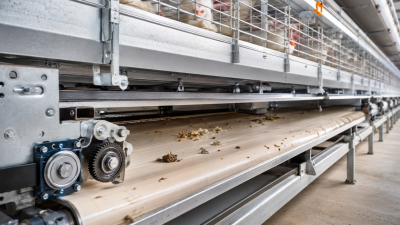
In cage farming, manure falls below the birds and is collected on manure belts. The belts can be operated regularly to transport manure out of the poultry house.
This separation helps reduce direct contact between birds and manure. It also makes manure removal more predictable and can support centralized composting or organic fertilizer treatment.
Guangxing manure removal systems can be connected with manure conveyors, lifting equipment and fermentation solutions, depending on the farm size.
However, cage farming still requires effective ventilation. If manure remains inside the house for too long, ammonia and moisture can still become serious problems.
6. Disease Prevention and Biosecurity
Neither system can replace a proper biosecurity program.
Floor-raised broilers have more contact with litter and manure. When litter becomes contaminated or remains wet, disease pressure may increase. Coccidiosis management is often an important concern in floor systems.
Cage farming separates birds from much of the manure and can make cleaning between cage rows more organized. It may also reduce some forms of direct contamination.
However, high-capacity cage farms require strict control because a disease outbreak can affect a large number of birds. Water sanitation, ventilation, vaccination, disinfection and access control remain essential.
Guangxing poultry farm solutions can integrate equipment layout with biosecurity zoning, ventilation design and manure flow planning. This helps prevent clean and dirty routes from unnecessarily crossing inside the farm.
7. Ventilation and Climate Control
Climate control is critical in both systems, especially in Africa, Southeast Asia, the Middle East and other hot regions.
Floor houses contain birds on one level, which can make airflow distribution relatively straightforward. However, heat can accumulate when stocking density is high or litter moisture increases.
Multi-tier cage houses require more precise airflow design because birds are distributed at different heights. Poor ventilation can create temperature differences between the upper and lower tiers.
A complete Guangxing broiler cage project may include:
- tunnel ventilation;
- negative-pressure fans;
- evaporative cooling pads;
- sidewall air inlets;
- temperature and humidity sensors;
- ammonia and carbon dioxide monitoring;
- variable-speed fan control;
- backup power planning.
The cage layout, fan capacity and cooling-pad area should be designed as one coordinated system. Installing cages without upgrading the ventilation system may create serious production risks.
8. Bird Welfare and Market Requirements
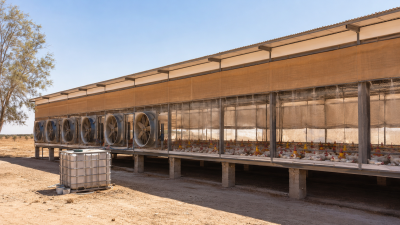
Floor farming normally allows more walking and natural movement. For markets with strict animal welfare standards, floor systems may be easier to approve.
Cage farming limits movement and must be carefully designed to protect the birds’ legs, feet and breast area. Cage floor structure, stocking density, material quality and harvesting method all affect bird welfare.
Before choosing a cage system, investors should review:
- local animal welfare laws;
- customer requirements;
- slaughterhouse standards;
- export-market expectations;
- retailer or certification rules.
Guangxing can provide cage, floor and customized poultry farm solutions. The recommended system should match the market where the broilers will be sold, not only the production target.
9. Harvesting and Market Weight
Harvesting is one of the most labor-intensive stages in floor farming.
Workers normally enter the house, gather the birds, catch them and place them into transport crates. In large farms, this requires careful planning and a significant workforce.
Modern broiler cages can be designed with movable cage floors or conveyor-based bird collection systems. Birds can be transferred from the cage rows toward a centralized collection point.
This can reduce catching labor, shorten loading time and improve production organization.
The cage size and harvesting design must also match the target slaughter weight. A system designed for lighter broilers may not be suitable for heavier birds without adjustment.
10. Long-Term ROI
The better system is not always the one with the lowest starting cost.
Floor farming may provide a faster and simpler start for small farms. It can also be suitable where land is available, labor is affordable and welfare regulations favor floor-raised production.
Broiler cage farming may provide stronger long-term returns when:
- farm capacity is large;
- land is limited;
- labor costs are rising;
- manure handling must be automated;
- consistent production is important;
- bird harvesting needs to be mechanized;
- the investor plans long-term expansion.
A meaningful ROI calculation should compare the two systems over several production cycles and include all major costs.
Which System Should You Choose?
Choose floor farming when:
- the initial budget is limited;
- the project is relatively small;
- sufficient land is available;
- labor is affordable;
- the target market prefers floor-raised broilers;
- local welfare rules restrict cage production.
Consider broiler cage farming when:
- the target capacity is medium or large;
- land and building space are limited;
- automation is a priority;
- labor availability is uncertain;
- manure removal must be standardized;
- the farm requires centralized management;
- future expansion is part of the investment plan.
Guangxing Broiler Farming Solutions
With more than 30 years of experience in poultry equipment manufacturing and farm project delivery, Guangxing provides both individual equipment and complete broiler farm solutions.
Our services can include:
- poultry house layout design;
- H-type broiler cage systems;
- automatic pan or trough feeding;
- nipple drinking systems;
- manure removal equipment;
- automatic bird harvesting;
- tunnel ventilation and cooling;
- environmental monitoring;
- steel-structure poultry houses;
- installation guidance;
- operation training;
- turnkey poultry farm EPC services.
Every project is designed according to the poultry house size, target capacity, local climate, electricity conditions, labor cost and investment budget.
Conclusion
The broiler cage vs floor farming decision should not be based on a single advantage.
Floor farming offers lower entry costs, flexible operation and greater freedom of movement for birds. Broiler cage farming provides higher space utilization, stronger automation potential and lower dependence on manual labor.
For a small farm, floor farming may be the more practical choice. For a large commercial project, an automatic broiler cage system may deliver better capacity, management efficiency and long-term cost control.
Before selecting a system, calculate the complete poultry house, equipment, labor, ventilation, manure and harvesting requirements.
To receive a customized broiler farm proposal, provide Guangxing with your poultry house dimensions, planned bird capacity, local climate, target slaughter weight and required automation level.