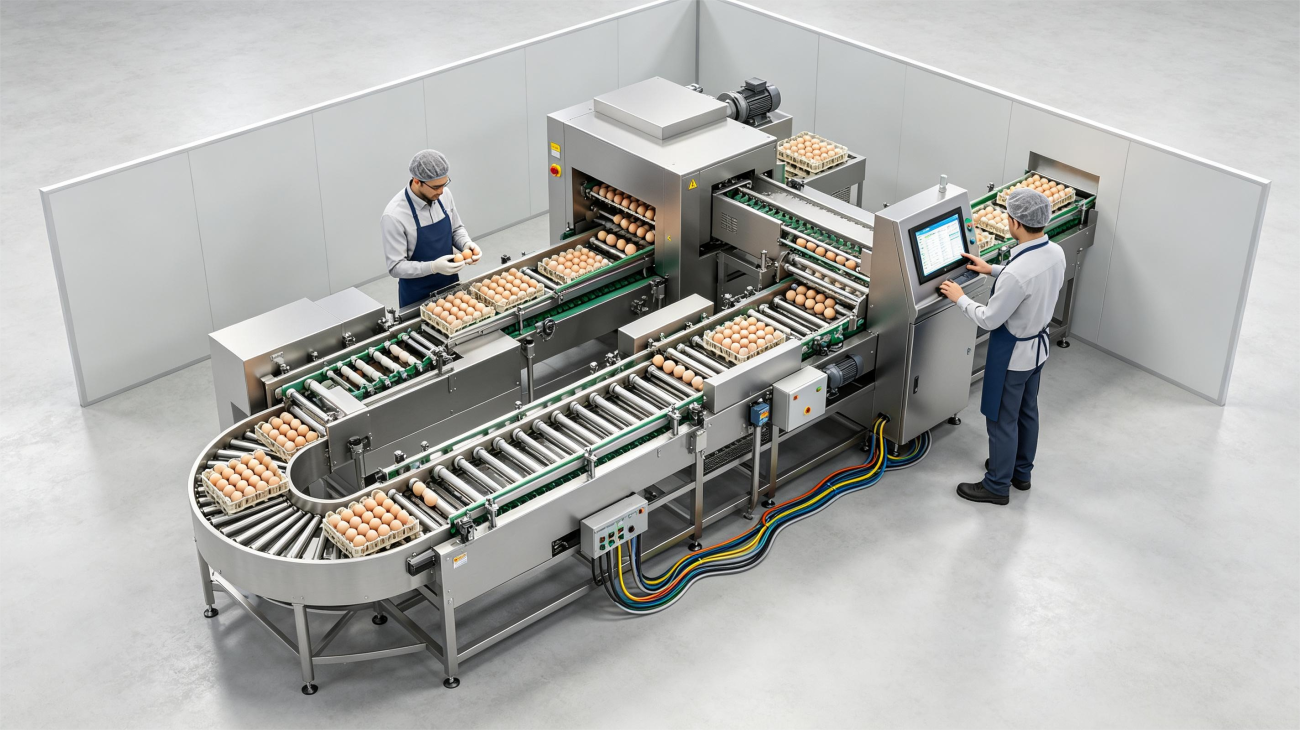
If you are planning a new poultry farm in Australia, or preparing to upgrade an existing operation, do not start by comparing product catalogues.
Start with the farm itself.
What type of birds will you raise? Is the project for layers, broilers or breeders? If you produce eggs, will you use a free-range, barn, furnished-cage or another housing system? How many birds do you plan to keep? Where is the farm located? Finally, how much automation do you actually need?
These questions matter because equipment that works well on one farm may not suit another.
For an Australian project, you also need to consider animal-welfare requirements before ordering housing equipment. Australia has nationally endorsed poultry welfare standards, while individual states and territories manage implementation in their own jurisdictions.
Therefore, before you approve a final equipment layout, check the requirements that apply where the farm will actually operate.
For a serious commercial project, the main question should not be:
“Which poultry equipment manufacturer offers the lowest price?”
Instead, ask:
“Which supplier can design a system around my production model, farm location, climate, labor situation and long-term operating plan?”
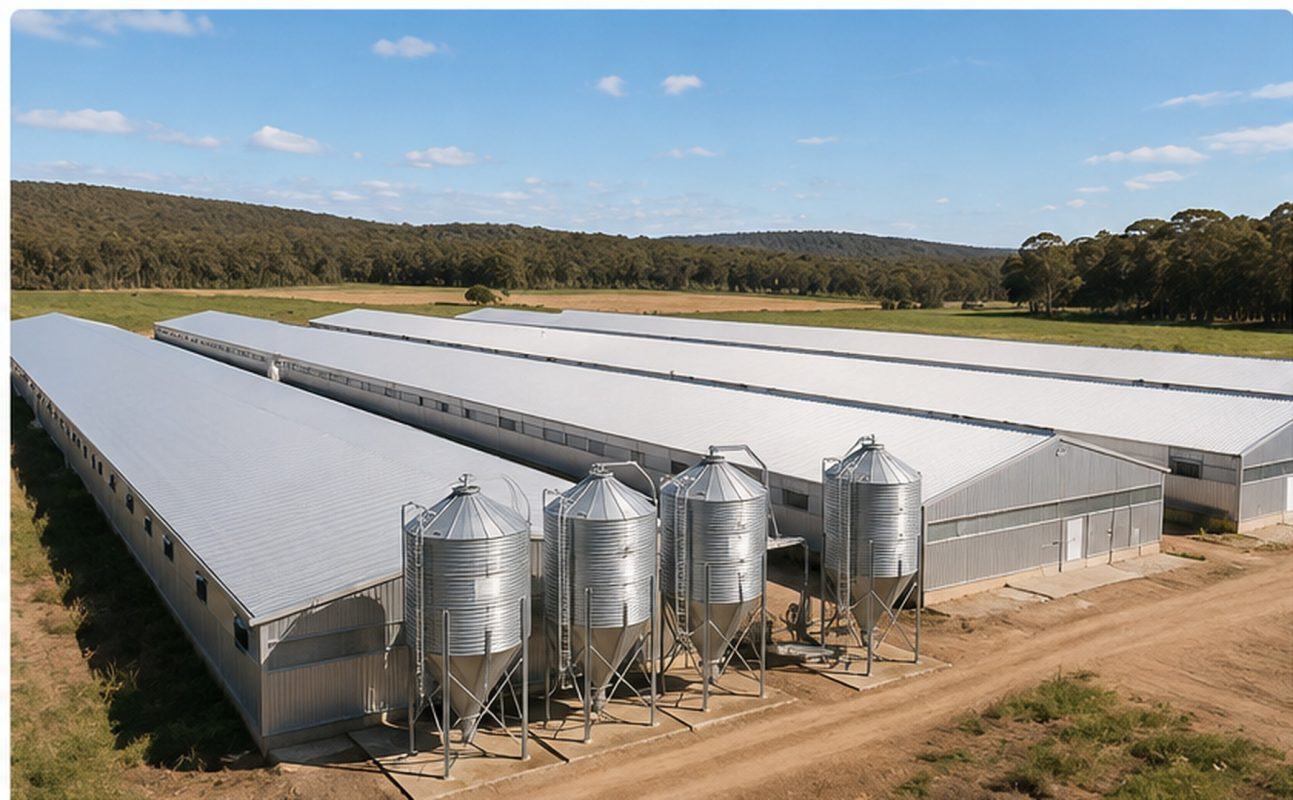
First Decide What Type of Poultry Farm You Are Building
“Poultry equipment” covers several very different production systems.
For example, a commercial free-range layer farm needs different housing equipment from a broiler farm. Likewise, a barn-laid project has different priorities from a furnished-cage system.
So, before comparing manufacturers, define the production model.
| Farm Type |
Main Equipment to Consider |
| Free-range layers |
Nests, feeding, drinking, egg collection, ventilation, lighting |
| Barn / cage-free layers |
Nest systems, feeding, drinking, manure handling, ventilation |
| Furnished-cage layers |
Housing, feeding, drinking, manure removal, egg collection |
| Broilers |
Pan feeding, nipple drinking, heating, ventilation, cooling |
| Breeders |
Feeding, drinking, nests, egg collection, environmental control |
This distinction matters especially in Australia.
According to
Australian Eggs, free-range eggs accounted for
56.6% of major supermarket grocery sales by volume in the 2024–25 financial year, compared with 27.7% for barn-laid eggs and 13.3% for cage eggs.
These figures do not mean that every new Australian layer farm must use a free-range system.
However, they do show that Australian egg production now includes several important housing models. As a result, you should choose the production system before selecting individual machines.
Check Welfare Requirements Before Choosing the Housing System
One of the most expensive mistakes in a new poultry project is choosing housing equipment first and checking local requirements afterward.
Australia’s agriculture ministers have endorsed the
Australian Animal Welfare Standards and Guidelines for Poultry. Individual states and territories then put those standards into effect through their own regulatory systems.
That distinction matters.
Victoria provides a good example. From mid-2026, new cage infrastructure for laying hens in Victoria must include features such as perches or platforms and nest areas, together with other welfare provisions and revised usable-space requirements.
You can review the current details through
Agriculture Victoria’s guidance for chicken egg producers.
For an equipment buyer, the practical lesson is simple:
Do not order a housing system simply because farmers use it widely in another country.
First, confirm the project location.
Next, confirm the production model.
Then, check the welfare requirements that apply to that farm.
An overseas manufacturer should also work with your Australian consultant, local engineer or project team when necessary. By contrast, a supplier that claims one standard system automatically suits every Australian state deserves closer scrutiny.
Free-Range Farming Does Not Mean Less Automation
Many people assume that a free-range farm needs little equipment because hens have access to an outdoor range.
In commercial production, that assumption is often wrong.
Free-range hens still spend significant time inside a purpose-designed poultry house. Therefore, the farm still needs reliable feeding, drinking, nesting, ventilation, lighting and egg-handling systems.
For a large free-range layer project, you may still need:
- Automatic feed distribution
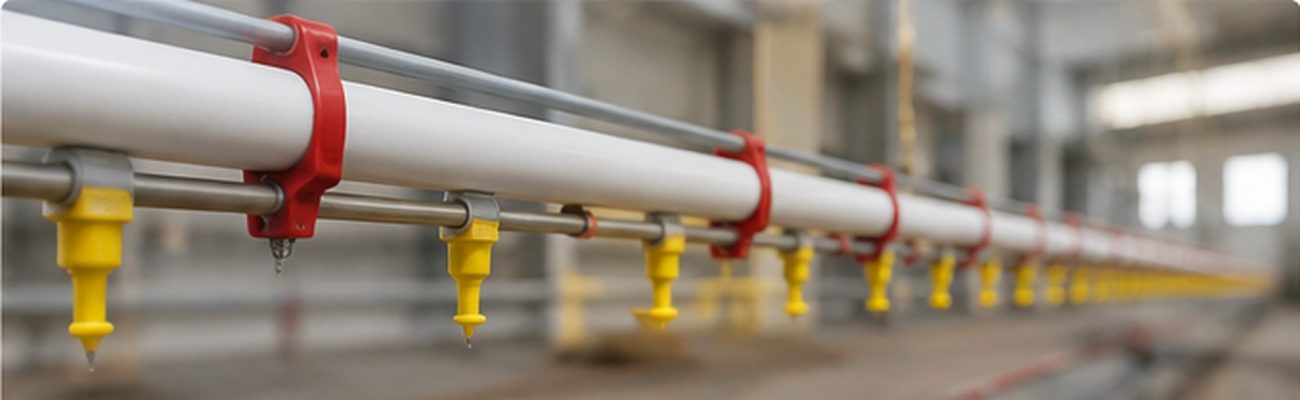
- Nipple drinking lines
- Automatic nest systems
- Egg conveyors
- Manure handling
- Ventilation
- Lighting
- Environmental monitoring
- Feed silos
- Central egg transport
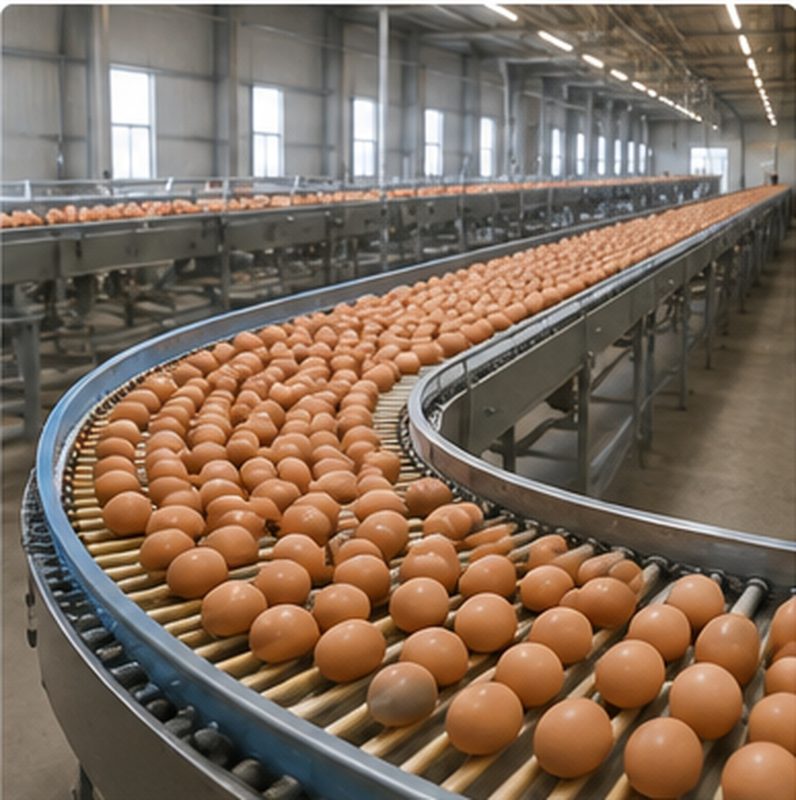
For example, if several rows or poultry houses send eggs to one collection area, a centralized conveyor can reduce repeated manual handling. Guangxing’s
Automatic Egg Collection System can support commercial layer-farm layouts that require automatic egg transfer.
The important point is:
Free range changes the housing model. It does not remove the need for efficient farm automation.
Before selecting equipment, think about how feed, water, eggs, manure and workers will move through the farm every day.

Automation Should Be Based on Labor Needs, Not the Word “Automatic”
Australian poultry farms often have good reasons to reduce repetitive manual work.
However, “fully automatic” can mean very different things in different quotations.
For this reason, break automation down into real daily tasks.
Who fills the feeders?
Who checks the drinking system?
How do eggs move from the poultry house to the collection or packing area?
How does the farm remove manure?
What happens if a motor, sensor or controller fails?
For a commercial farm, an automatic feeding process may look like this:
Feed silo → feed conveying → poultry-house distribution → feeding lines
The goal is not simply to install more motors.
Instead, the system needs to deliver feed consistently while remaining easy to inspect, adjust and repair.
If you are deciding whether higher feeding automation makes sense for your farm, Guangxing’s
Automatic Poultry Feeding vs. Manual Feeding Guide explains how labor requirements and scalability change as farm size increases.
Before accepting an automation proposal, ask one simple question:
What happens when part of the system stops?
In practice, that question often tells you more than a long list of automatic functions.
Ventilation Should Match the Farm Location
Australia does not have one poultry climate.
For example, a farm in Queensland may face very different heat-management conditions from a farm in Tasmania.
Therefore, simply telling a supplier that the project is “in Australia” does not provide enough information for an environmental-control design.
The supplier needs the actual farm location.
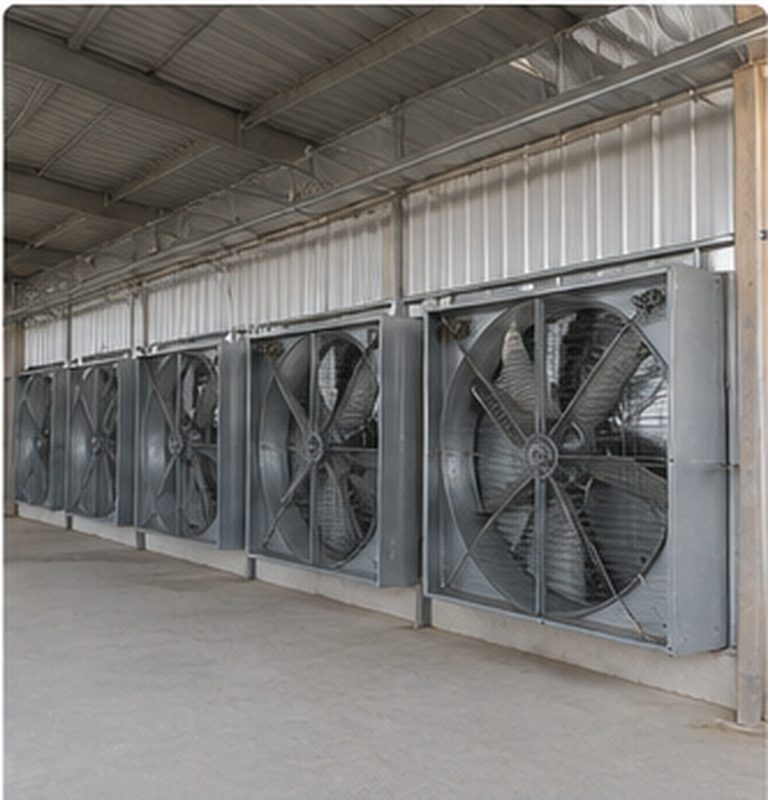
Depending on the project, the ventilation and environmental-control system may include:
- Minimum ventilation
- Tunnel ventilation
- Air inlets
- Exhaust fans
- Cooling systems
- Heating
- Temperature sensors
- Humidity monitoring
- Static-pressure control
- Alarm systems
- Emergency ventilation
The final configuration depends on bird type, stocking level, building dimensions and local climate.
This becomes even more important as stocking density increases.
More birds inside the same building produce more heat and moisture. As a result, increasing capacity without reviewing ventilation can create temperature differences, excessive moisture and poorer air quality.
So, if a supplier proposes a high-capacity poultry layout without asking about your farm location and ventilation conditions, an important part of the project is missing.
Remote Farms Need a Spare-Parts Strategy
Equipment reliability matters everywhere. However, Australia’s geography makes spare-parts planning especially important for farms located far from major service centres.
An automated poultry farm should not wait for the first breakdown before identifying critical parts.
Depending on the equipment configuration, you may need to keep selected items such as:
- Motors
- Sensors
- Switches
- Bearings
- Belts
- Controllers
- Drinking-line components
- Drive components
This does not mean keeping large quantities of every component in storage.
Instead, ask the supplier:
“Which parts could stop production if they failed, and which of those should we keep on the farm?”
At the same time, confirm how technical support works.
Does the manufacturer provide wiring diagrams and parts lists?
Can technicians diagnose faults remotely?
Can you identify replacement parts through a clear model number?
Who supports the Australian installation team during commissioning?
A small sensor may cost very little. Nevertheless, waiting several days or weeks for that sensor can cost much more if production stops.
New Poultry House or Existing Shed? The Design Process Is Different
If you are building a new poultry house, you can plan the building and equipment together.
This gives the project team more freedom to optimize:
- House width
- Equipment rows
- Airflow
- Feed-silo position
- Egg-conveyor routing
- Manure discharge
- Electrical areas
- Maintenance access
An existing poultry house creates a different challenge.
In that case, the equipment must fit dimensions that you cannot easily change.
For example, the clear internal height may matter more than the roof height shown on a drawing. Beams, lighting, ventilation components and other structures can reduce the space available for equipment.
Access also matters.
Before workers can assemble the system, the equipment needs to enter the building.
Therefore, for renovation projects, an experienced manufacturer should ask for accurate measurements, drawings or site information instead of assuming that a standard layout will fit.
Broiler Farms Need a Different Equipment Strategy
Not every project looking for
poultry equipment manufacturers for Australia is an egg farm.
For a broiler project, cages and egg collection usually do not drive the equipment decision.
Instead, the main system often includes:
- Feed silos
- Automatic pan feeding
- Nipple drinking
- Brooding and heating
- Tunnel ventilation
- Cooling
- Lighting
- Environmental control
- Alarm systems
Stocking density, ventilation and heat management need to work together.
For example, Victoria’s new poultry requirements also include provisions that affect chicken meat producers, including requirements related to lighting, substrate and stocking density.
Therefore, before finalizing a broiler project, check the current requirements in the state or territory where the farm will operate.
A good supplier should understand both production efficiency and the environment in which the birds will live.
Australian, European or Chinese Poultry Equipment?
There is no useful rule that equipment from one country is always better.
Australian suppliers may offer stronger local support and greater familiarity with local project requirements.
European manufacturers often have mature automation and alternative-housing technologies.
Meanwhile, established Chinese manufacturers may offer broader equipment combinations, flexible customization and integrated project support.
So, instead of choosing by country alone, compare suppliers using practical criteria:
| What to Check |
Why It Matters |
| Experience with similar farm sizes |
Shows whether the proposed layout is realistic |
| Ability to customize the project |
Important for existing poultry houses |
| Understanding of the housing system |
Critical for Australian layer projects |
| Ventilation engineering |
Directly affects the bird environment |
| Spare-parts support |
Reduces downtime risk |
| Installation documentation |
Important for imported equipment |
| Remote technical support |
Useful for overseas projects |
| Expansion capability |
Important if capacity may increase later |
| Clear quotation scope |
Helps identify missing systems and costs |
In addition, a manufacturer should clearly explain what it does
not supply.
That is usually more useful than claiming one company can handle every type of poultry project.
Compare Total Project Cost, Not Just Equipment Price
If two manufacturers provide very different quotations, do not compare only the final number.
First, compare what each supplier actually includes.
A poultry project’s real cost may include:
Equipment + shipping + installation + electrical work + labor + energy + maintenance + spare parts + downtime
For example, a lower FOB equipment price can become expensive if you later need to add missing equipment, installation work or replacement parts.
On the other hand, a small poultry farm may pay too much for automation functions it rarely uses.
Therefore, the best investment is not always the cheapest or most advanced system.
It is the system that fits the farm’s operating model.
What Should You Send Before Requesting a Quote?
A message saying:
“I need poultry equipment for Australia. Please send price.”
does not give a manufacturer enough information to prepare a useful proposal.
Instead, prepare:
- Farm location and state or territory
- Layer, broiler or breeder project
- Planned production system
- Bird capacity
- Poultry-house length, width and clear height
- New construction or existing building
- Required automation level
- Egg-collection requirements
- Manure-management plan
- Ventilation requirements
- Available power and backup arrangements
- Installation scope
- Future expansion plans
With this information, the manufacturer can discuss a real farm rather than send a generic price list.
How Guangxing Approaches Australian Poultry Projects
For an Australian project inquiry, we do not start with an equipment model number.
Instead, we first need to understand the farm.
Where is the project located?
What birds will you raise?
Which production system do you plan to use?
How many birds will the farm hold?
Is the poultry house new or existing?
Which daily operations do you want to automate?
Guangxing supplies equipment and supporting systems for commercial poultry projects, including feeding, drinking, egg collection, manure handling, broiler production, ventilation and environmental control.
However, the farm conditions should determine the final equipment configuration.
In addition, if Australian animal-welfare, building or local requirements affect the housing system, the project team should confirm those requirements with the appropriate local authorities and qualified professionals before finalizing the equipment.

Final Thoughts
Choosing among
poultry equipment manufacturers for Australia is not simply a matter of comparing catalogues.
First, choose the correct production and housing system.
Next, confirm the requirements that apply in the project’s state or territory.
Then compare automation, ventilation, installation, spare parts, maintenance and long-term operating costs.
If you are planning a poultry project in Australia, prepare your
farm location, bird type, production system, planned capacity and poultry-house dimensions before asking for a final equipment price.
The more accurately you define the project at the beginning, the easier it becomes to avoid expensive changes later.
Ultimately, the best equipment for a commercial poultry farm is not necessarily the system with the most automation or the lowest purchase price.
It is the system that still makes sense after the farm has been operating for years.