


1. What Are Floor Raised Chickens?
Floor raising is one of the most natural and widely adopted poultry farming methods today, designed to better match the natural growth habits of chickens. Simply put, it eliminates traditional cage confinement and allows birds to live directly on the floor of the poultry house throughout their production cycle, giving them greater freedom of movement and a more natural living environment.
To create a dry, comfortable, and healthy environment, poultry farmers typically spread natural bedding materials evenly across the floor of the poultry house. Common bedding materials include wood shavings, rice husks, wheat straw, and chopped crop residues.
These materials offer excellent ventilation and moisture absorption properties. They help absorb manure and excess moisture, keeping the floor dry and clean while reducing the risk of respiratory diseases, intestinal infections, and skin problems associated with damp environments. At the same time, the soft bedding protects the birds’ feet from injury and supports natural behaviors such as scratching, pecking, and foraging, significantly improving bird comfort and welfare.

2. Why Are More Poultry Farms Choosing Floor Raising Systems?
Over the past decade, floor raising systems have experienced rapid growth worldwide for several important reasons.
Growing Demand for Cage-Free Products
Consumers are becoming increasingly concerned about food sources and animal welfare.
Many major supermarkets, food brands, and restaurant chains have committed to sourcing cage-free eggs and poultry products that meet higher welfare standards.
As a result, farms adopting floor raising systems are better positioned to remain competitive in future markets.
Lower Initial Investment Cost
Compared with multi-tier automated cage systems, floor-raised poultry houses are relatively simple to construct.
For investors entering the poultry industry for the first time, this significantly reduces upfront costs while providing flexibility for future expansion.
Improved Animal Welfare
Floor-raised chickens can:Walk freely、Spread their wings naturally、Scratch and forage、Interact socially with other birds
These natural behaviors contribute to better welfare outcomes and align with modern consumer expectations regarding responsible animal farming.
Greater Expansion Flexibility
Floor raising systems can accommodate farms of various sizes.
Whether operating a small farm with 5,000 birds or a commercial operation with more than 100,000 birds, producers can easily plan and expand according to their production goals
3. The Difference Between Floor Raised Chickens and Cage Raised Chickens
Many poultry producers ask the same question before investing:
Which system is better—floor raising or cage raising?
The answer depends on market requirements and business objectives, as both systems offer unique advantages.
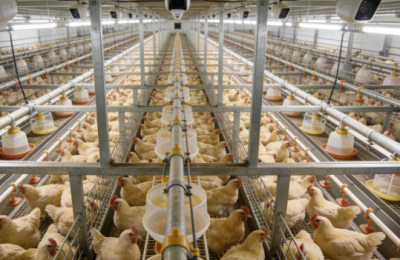
Compared with the space limitations of cage systems, the greatest advantage of floor raising is the freedom of movement it provides to the birds.
In an open floor environment, chickens are not confined to small cages. They can walk, run, jump, stretch their wings, eat, drink, dust bathe, scratch the floor, and interact naturally with other birds. This production method removes many of the behavioral restrictions associated with cage systems, helping birds maintain healthier physical and psychological conditions.
As a result, stress levels are reduced, flock vitality improves, and natural immunity may be enhanced.
Thanks to its adaptability, production efficiency, and welfare benefits, floor raising systems are suitable for a wide range of poultry farming applications and continue to gain popularity worldwide.
4. Three Common Types of Floor Raising Systems
Today, the poultry industry mainly uses three floor raising systems: Deep Litter Systems, Slatted Floor Systems, and Combination Systems. Each offers unique advantages depending on farm size, poultry type, and management objectives.
Deep Litter System
The Deep Litter System is the most widely used floor raising method around the world.
Birds live directly on a thick layer of bedding materials such as wood shavings, rice husks, straw, or similar organic materials throughout the production cycle. Farmers regularly add fresh bedding and turn the litter to maintain its condition. Used litter can later be composted and utilized as organic fertilizer.
Key Advantages:
This system requires minimal initial investment, features simple equipment that can be installed quickly, is compatible with broilers, layer hens, breeding hens, and various specialty poultry species, offers flexible and hassle-free management, making it the ideal choice for small and medium-sized farms as well as novice poultry farmers.


Slatted Floor System
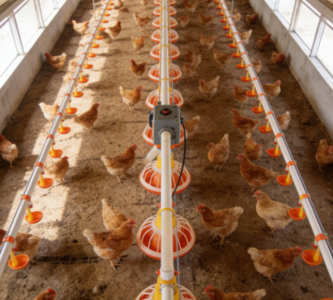
In this system, chickens are raised on elevated slatted flooring.
Manure falls directly through the gaps into collection areas below, effectively separating birds from waste and reducing manure accumulation.
Key Advantages:
The strip-type flooring system allows poultry to be housed on elevated slatted panels, enabling manure to leak directly into a below-ground collection area. This system facilitates manure separation and prevents manure accumulation, thereby creating a clean and hygienic poultry housing environment that inhibits bacterial growth, reduces indoor humidity and ammonia concentrations, and protects the poultry’s respiratory tract; furthermore, it significantly simplifies manure removal processes, making it particularly suitable for farms with stringent breeding hygiene standards.
Combination Floor System
The Combination Floor System has become a preferred solution for many modern commercial layer farms.
This design combines litter-covered areas with slatted floor sections. The litter area allows birds to perform natural behaviors such as scratching, dust bathing, and resting, while the slatted floor section improves manure management efficiency.
Key Advantages:
Modular flooring systems represent an optimal solution for modern large-scale layer farms, integrating a bedding zone with a slatted panel zone. The bedding zone accommodates poultry’s natural behaviors—such as scratching, sand bathing, and resting—while the slatted zone enhances manure removal efficiency, balances animal welfare with manure management, reduces various issues arising from ammonia emissions and bedding materials, ensures the overall health of the flock, and aligns perfectly with efficient large-scale farming management practices.
5. Challenges of Floor Raised Chicken Farming
Ammonia Control
High ammonia concentrations can negatively affect respiratory health and overall production performance.
Disease Prevention
Because birds have direct contact with the floor, biosecurity management becomes especially important.
Recommended measures include:
Farm entry and exit control procedures
Regular cleaning and disinfection programs
Vaccination schedules
Rodent and pest control systems

Feed Waste
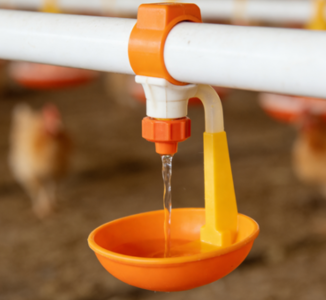
Poor equipment design or improper management practices can increase feed losses.
Automated feeding systems help improve feed utilization and reduce waste.
6. Conclusion
By combining sustainable farming practices, improved animal welfare, and efficient production performance, floor raising systems have become one of the most important trends in the modernization of the global poultry industry.
Modern floor raising is far more than simply allowing birds to live on the ground. It involves scientifically designed poultry houses, properly matched equipment systems, and intelligent management technologies that enable standardized and highly efficient production.
This modern farming approach not only improves feeding efficiency, ventilation performance, and environmental control while reducing labor costs and production losses, but also helps maintain flock health and productivity.
At the same time, floor raising systems align with today’s growing market demand for animal welfare, food traceability, and sustainable agricultural practices. Poultry meat and eggs produced under these conditions often achieve higher product quality, stronger consumer acceptance, and greater market value, making them attractive to premium retailers, restaurant chains, and organic food suppliers.For details, please contact us.
For product and solution consultations, please contact Guangxing’s professional team for customized advice: WhatsApp: 00852-46090144 or [Phone/WeChat]: 0086-17876668787


