Commercial poultry farming can be a profitable agricultural business, but it is never as simple as buying chicks, feeding them, and selling eggs or meat. It is a complete production system. Profit depends on poultry house design, feed efficiency, disease prevention, labor control, market timing, and daily management.
For many new investors, the biggest risk is often not that the farm is too small, but that the project lacks systematic planning before it starts. Poor poultry house design, insufficient ventilation, unstable water supply, low feeding efficiency, poor manure management, or delayed sales planning can turn a promising poultry project into a high-cost operation.
Whether you plan to raise broilers, layers, or build a large integrated poultry farm, the basic logic is the same: plan the entire farm before buying chicks. A well-designed poultry house, reliable feeding and drinking systems, good ventilation, egg handling equipment, manure removal systems, and strict biosecurity measures can all help reduce losses and make production more stable and controllable.
This article explains four key decisions in a profitable poultry farming project: poultry house design, broiler farming strategy, layer farm management, and equipment selection.
Start with a Clear Poultry Farming Project Plan
Many poultry projects fail because farmers focus on production first and think about sales later. In reality, sales channels should influence the farm design from the very beginning.
Before construction begins, farm owners need to define the production direction. Will the farm produce broilers, table eggs, hatching eggs, or a combination of poultry products? This decision affects poultry house structure, equipment layout, feeding systems, stocking density, labor arrangement, and product handling processes.
The second question is: who will buy the final product? Broilers may be sold to live bird traders, restaurants, hotels, supermarkets, processing plants, or local distributors. Eggs may be sold to wholesalers, bakeries, supermarkets, catering companies, or retail markets. Different buyers have different requirements for weight, quality, packaging, delivery frequency, and food safety.
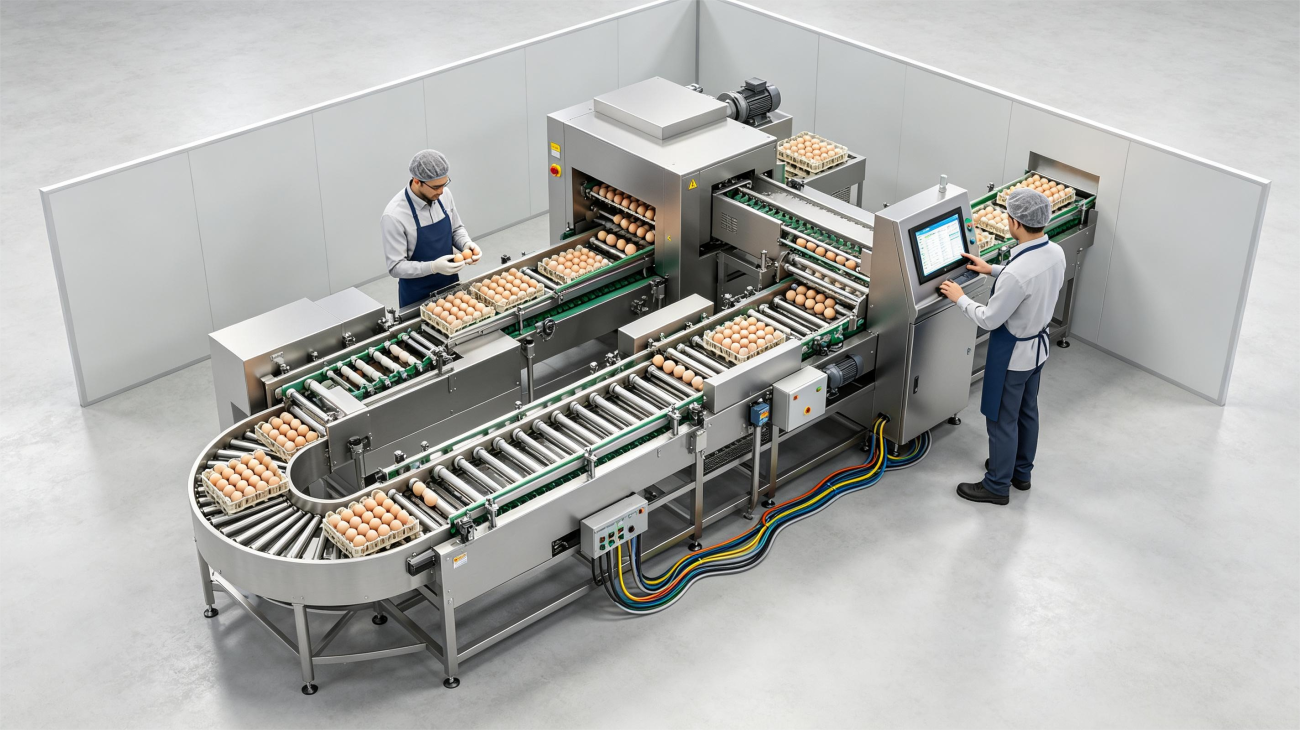
Farmers also need to define their daily or weekly target output. A small layer farm may only need basic egg collection and manual packing, while a medium or large layer farm may require automatic egg collection, egg grading, washing, tray loading, and packaging equipment. A farm designed for 10,000 layers is very different from a farm designed for 30,000 broilers, although both are commercial poultry farms.
Local climate should also be considered in advance. Farms in hot and humid regions need stronger ventilation and cooling systems than farms in dry or cold regions. Labor conditions are equally important. When labor costs are high, workers are unstable, or management is difficult, the value of automatic equipment becomes more obvious.
A practical poultry farming project plan should not be designed only around the question of how many birds to raise. It should consider bird type, local climate, production targets, labor conditions, biosecurity risks, market demand, and long-term expansion plans.
1. Poultry House Design: The Foundation of Bird Health and Farm Efficiency
Poultry house design directly affects temperature control, air quality, bird comfort, feed conversion, mortality rate, labor efficiency, and long-term profitability. A poultry house is not just a building that protects birds from wind and rain. It is the production environment where birds eat, drink, grow, lay eggs, and respond to stress.
A good poultry house should provide enough fresh air, suitable temperature, dry flooring or timely manure removal, clean drinking water, stable lighting, safe feeding space, and protection against wild birds, rodents, predators, and extreme weather.
Poor poultry house design often creates many hidden problems. If the house is too hot, birds reduce feed intake and production drops. If ventilation is insufficient, ammonia and moisture accumulate. If manure is not removed in time, respiratory pressure increases. If water lines leak, litter becomes wet and disease risk rises. If the house layout is inconvenient, labor efficiency also decreases.

Common Poultry Farming Systems
Free-range systems are often used for specialty egg or meat markets. Their advantages include lower building costs, easier animal welfare positioning, and more natural bird movement. However, they also bring higher risks from predators, wild bird contact, weather changes, and disease exposure.
Deep litter floor systems are commonly used in small and medium broiler farms or floor-raised poultry farms. They require lower equipment investment and offer flexible layout options. The main challenge is litter management. Farmers must control litter moisture, ventilation, stocking density, and cleaning frequency.
A-frame layer cages are suitable for layer farms with moderate automation needs. They make flock management easier, improve egg collection efficiency, and reduce direct contact between birds and manure. For many small and medium commercial layer farms, A-frame cages are a practical choice.
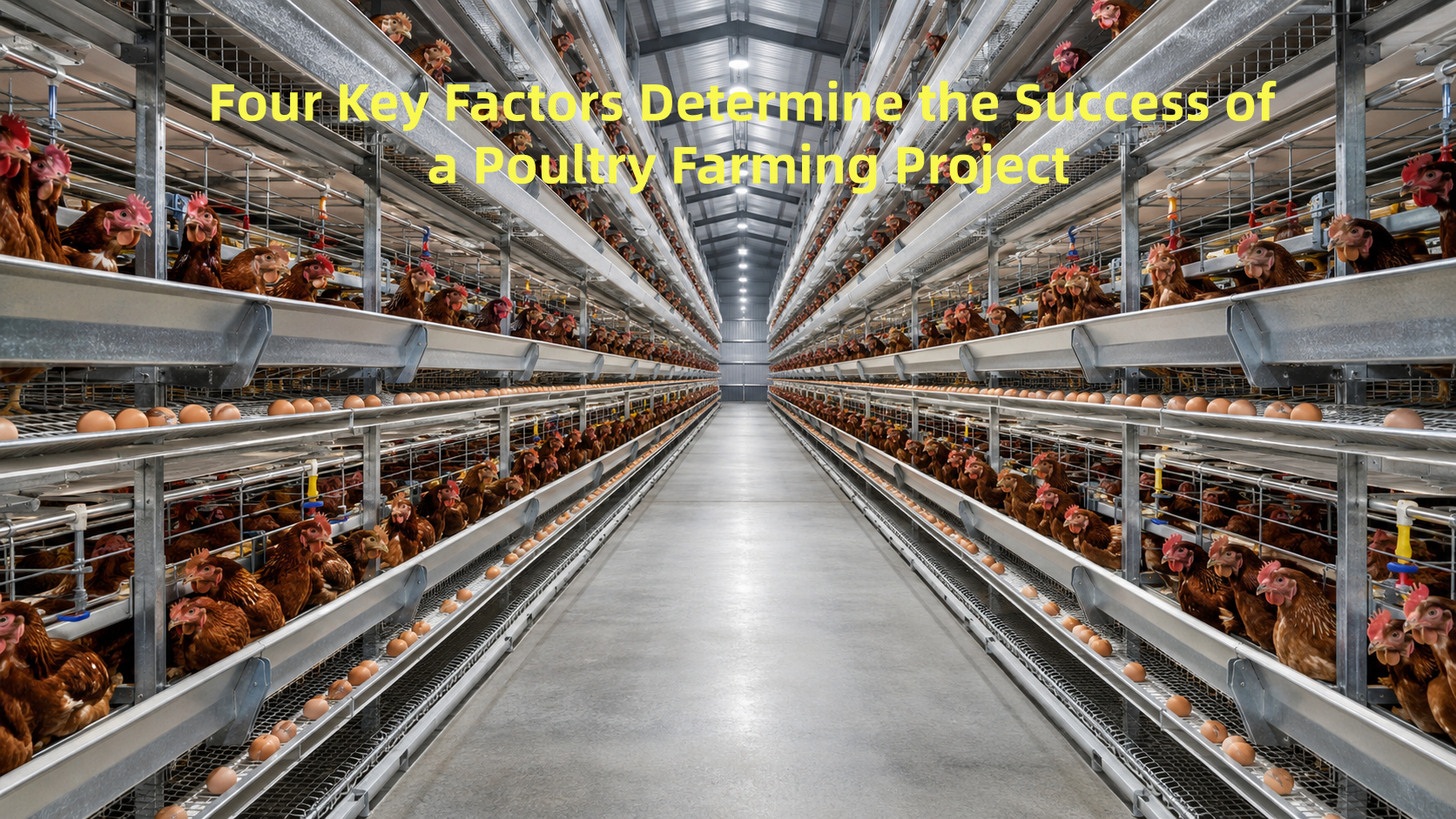
H-type cages or multi-tier cage systems are more suitable for medium and large commercial layer farms. These systems improve space utilization and can integrate automatic feeding, nipple drinking, automatic manure removal, automatic egg collection, lighting, and environmental control systems. Their main advantages are reduced labor demand and higher management efficiency. The challenges are higher initial investment and greater dependence on ventilation, electricity, backup power, and regular maintenance.
Environmental Control and Ventilation
Ventilation is one of the most important parts of commercial poultry house design. Poor ventilation can cause heat stress, wet litter, ammonia buildup, respiratory problems, reduced feed intake, and production losses.
In hot and tropical regions, poultry houses are often designed with the long axis running east to west. This reduces direct sunlight on the long side walls and helps lower heat stress inside the house. However, the final layout should also consider prevailing wind direction, drainage, road access, feed transport routes, manure removal routes, and future expansion.
In open-sided poultry houses, natural ventilation should be considered at the design stage. In closed or environmentally controlled houses, fans, air inlets, cooling pads, controllers, and alarm systems must match the house area and stocking density.
For large farms, environmental control should not rely entirely on worker experience. Temperature, humidity, fan operation, cooling systems, and alarm settings should be continuously monitored. This is where automatic environmental control systems and IoT monitoring platforms become valuable.
2. Broiler Farming Strategy: Profit Depends on Market Timing
Broiler farming is a fast-cycle business. Birds grow quickly, but the profit window is relatively narrow. Once broilers reach the target market weight, keeping them on the farm means they continue consuming feed. If market prices do not rise, delayed sales may reduce profit.
Market weight varies by breed, feed program, climate, and buyer preference. In many markets, broilers are usually sold at around five to seven weeks of age. Some buyers prefer lighter birds for restaurants and local markets, while processing plants may prefer heavier birds. The best target is not always the heaviest bird, but the weight that the market truly needs and that feed costs can support.
A good broiler farming strategy should be prepared before chicks arrive. Farmers should define the target selling age, target market weight, expected buyer list, backup buyers, feed budget, mortality control target, and cash flow plan in advance. Without these arrangements, mature broilers may stay on the farm too long, increasing feed costs and reducing profitability.
Live bird markets are common in many developing regions. They allow fast sales and require low processing investment. Farmers can sell directly to traders, local markets, or wholesalers. The risk is that prices may fluctuate sharply when local supply increases.
Dressed chickens or cut-up poultry products after slaughter and processing can create higher value and help farms enter restaurants, hotels, supermarkets, and institutional purchasing channels. However, this model requires slaughtering, pre-cooling, packaging, cold storage, clean water, sanitation control, and food safety management.
Contract supply is another option. It can provide more stable demand and better production planning, but it requires consistent product quality, reliable delivery, and complete farm records.
For broiler farmers, production and sales must be connected. Raising good birds but selling them too late can still lead to losses. Farms that truly understand the market can better arrange chick placement, selling time, and feed use.
3. Layer Farm Management: Stable Egg Production Depends on a Stable System
Layer farming is different from broiler farming. Broilers are sold in one fast cycle, while layer farms rely on daily egg output, egg quality, eggshell strength, and stable sales. Small daily losses may look minor, but across the full production cycle they can become significant economic losses.
The brooding and rearing stage usually lasts from 0 to 18 weeks. During this stage, management focuses on temperature, vaccination, body weight uniformity, feed transition, and flock health. Poor management at this stage directly affects later laying performance.
The start of lay usually begins at around 18 to 21 weeks, depending on breed and management level. Key tasks include light stimulation, calcium nutrition, adaptation to cages or laying areas, and early egg handling. Sudden stress should be avoided as much as possible during this stage because the flock is entering production.
After the birds enter the laying period, the flock reaches peak egg production. Farmers need to focus on feed quality, water supply, ventilation, lighting, eggshell quality, egg collection, and disease prevention. A stable production environment helps layers maintain better laying performance.
For commercial layer farms, lighting management is very important. Many farms use approximately 14 to 16 hours of light per day during the laying period, but the specific program should be adjusted according to the breed manual and local conditions. Sudden lighting changes, timer failure, water shortage, heat stress, or poor feed quality can all cause egg production to drop.
Egg handling is also an important part of layer farm management. Eggs should be collected promptly, handled gently, sorted by quality and weight, and moved to a clean storage area. Dirty eggs, cracked eggs, and misshapen eggs should be separated from saleable eggs.
For medium and large layer farms, automatic egg collection systems can reduce broken eggs, lower labor demand, and reduce unstable manual operations. Egg belts can smoothly transfer eggs from cages to the collection area, allowing workers to collect eggs faster and more safely.
Egg grading and packaging systems can further increase product value. A complete egg handling line can include egg collection, washing, drying, candling or crack detection, weight grading, coding, tray loading, and packaging. This helps farms supply supermarkets, distributors, bakeries, and other customers that require consistent egg size and appearance.
4. Common Equipment List for Commercial Poultry Farming
The right poultry equipment is not only about saving labor. More importantly, it helps the flock remain stable every day. Commercial poultry farming equipment should be selected according to farm scale, local climate, automation level, and future expansion plans.
Brooding heaters provide a warm environment for chicks and help prevent chilling, weak chicks, poor early growth, and early mortality.
Nipple drinking systems provide clean water through closed pipelines, reducing water contamination and helping keep litter dry.
Automatic feeding systems deliver feed evenly to the flock, reduce labor, lower feed waste, and improve flock growth uniformity.
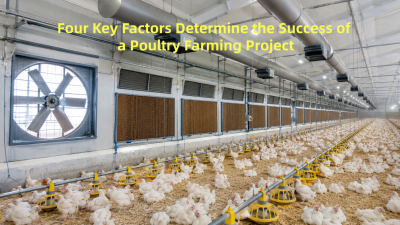
Ventilation fans and air inlets control airflow, temperature, humidity, and harmful gas discharge, reducing heat stress, ammonia buildup, and respiratory pressure.
Cooling pad systems are suitable for hot regions. Through evaporative cooling, they help birds maintain feed intake and production performance during high-temperature seasons.
Layer cage systems provide a structured feeding environment for laying hens, supporting flock management, egg collection, manure separation, and space utilization.
Automatic egg collection systems transfer eggs from cages to the collection area, reducing egg breakage and labor intensity.
Automatic manure removal systems remove manure from the poultry house in time, improving air quality and reducing ammonia risk.
Environmental controllers monitor and regulate temperature, humidity, fans, cooling pads, and alarm systems, making environmental management more accurate and reducing human error.
Egg grading and packaging equipment sorts and packs eggs by size and quality, improving product value, consistency, and market image.
Guangxing can provide automatic poultry farming equipment and turnkey poultry farm solutions, including A-frame and H-type layer cage systems, automatic feeding systems, nipple drinking systems, automatic manure removal systems, automatic egg collection systems, ventilation and environmental control systems, and egg grading and packaging systems. For medium and large farm investors, equipment integration is often more important than purchasing a single machine separately.

Conclusion: Build the Farm Around the Flock, Data, and Market Demand
Commercial poultry farming is more likely to be profitable only when biological performance and business planning work together. Good birds cannot perform well in a poor poultry house. A good poultry house cannot generate profit without a market. Good equipment also cannot replace daily management. A successful poultry farm needs all links to operate together as one system.
If you are planning a new poultry farming project or preparing to upgrade an existing farm, start with a complete design. This includes poultry house layout, cage systems, feeding and drinking systems, ventilation, manure treatment, egg collection, biosecurity routes, labor flow, and product sales channels.
Guangxing can provide poultry farm investors with automatic farming equipment, layer cage systems, broiler farming equipment, automatic egg collection, automatic manure removal, environmental control, egg grading and packaging systems, and turnkey poultry farm project solutions.
If you are planning a commercial poultry farm, contact the Guangxing team to discuss your farm scale, target stocking capacity, local climate, and automation needs. A well-planned poultry farm design can help you reduce future risks and build a more stable poultry farming business.