


In the daily operations of family farms, small and medium-sized egg processing plants, and rural breeding cooperatives, egg sorting and grading constitutes the most time-consuming and error-prone core process. Traditional manual sorting not only exhibits low efficiency and inconsistent grading standards but also frequently leads to issues such as broken eggshells and missed detection of defective eggs, directly impacting egg product prices and brand reputation.
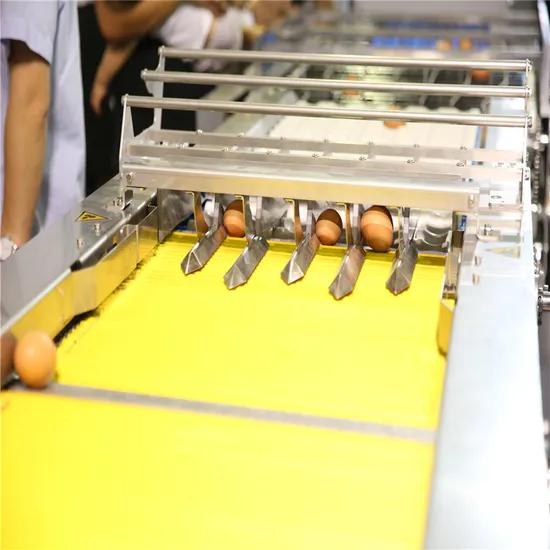
The small egg grading equipment differs fundamentally from bulky, high-cost large-scale industrial sorting lines, being specifically designed to meet the small-batch sorting needs of small and medium-sized farms and cooperatives. It integrates a complete set of functions including automatic egg loading, light-based inspection, precise weight grading, defect screening, and automated material distribution and discharge. With no complex installation or calibration required, it can be easily deployed upon delivery and operated by a single person with minimal daily maintenance. Compared to large-scale equipment, it occupies less space, consumes lower power, incurs lower initial costs, lacks unnecessary redundant features, and fully meets the lightweight, cost-effective production demands of small and medium-scale farmers while effectively addressing various challenges associated with manual sorting.
What is a small egg grading machine?
The compact egg grading machine is a space-efficient sorting solution distinct from large-scale industrial production lines, specifically designed for small to medium-sized operations. It integrates comprehensive functions including automated egg loading, light-based quality inspection, weight grading, defect screening, and categorized discharge, requiring no complex installation or calibration and operable by a single operator. Compared to large-scale systems, the compact model offers superior cost-effectiveness, occupies less floor space, consumes lower energy, and is perfectly suited for lightweight, small-to-medium batch egg processing applications.
Its core applications cover all categories of small and medium-sized breeding and processing entities:
Family backyard farms and small poultry farms – suitable for daily egg sorting in individual farmers and small-scale operations, addressing the inefficiency associated with manual sorting;
designed to meet production demands of thousands of eggs per day; Small and medium-sized egg cooperatives and local egg retailers – enables standardized grading of eggs (distinguishing premium, ordinary, and defective eggs) to enhance retail prices and product competitiveness;
Small egg processing plants and fresh food distribution companies – supports grading various egg types including chicken eggs, duck eggs, and quail eggs, fulfilling standardized supply requirements for supermarkets and fresh food markets.

Core Advantages of Small Egg Grading Equipment
Traditional manual grading relies entirely on workers’ subjective judgment to determine egg size and screen defective eggs, which is not only time-consuming and labor-intensive but also suffers from issues such as inconsistent grading standards, high breakage rates, and rising labor costs year by year. The implementation of automated small-scale egg grading equipment offers comprehensive improvements across four dimensions—efficiency, accuracy, cost, and quality control—with markedly prominent core advantages.
1. High-efficiency sorting that significantly reduces labor costs:
Mainstream small egg sorters have a production capacity of 2,000–5,500 eggs per hour, far exceeding manual sorting efficiency. A single unit can replace 3–5 sorting workers, substantially lowering long-term labor expenses. Additionally, the equipment operates continuously 24/7, unaffected by worker fatigue or time constraints, ensuring uninterrupted and stable egg sorting performance.
2. Precise grading with standardized quality assurance:
The equipment is equipped with high-precision weighing sensors and an intelligent control system, enabling accurate division into 5–7 weight categories and effectively eliminating issues of inconsistent sizes and grading inconsistencies associated with manual sorting. Selected high-end models feature an LED-based egg inspection function that accurately detects hidden defects such as shell cracks, internal blood spots, or air cell abnormalities, achieving a grading accuracy far superior to manual methods and significantly improving the pass rate of finished eggs.
3. Compact and energy-efficient, suitable for various venues:
With a compact modular design, the equipment occupies only approximately 1.8 × 0.9 meters in size and weighs about 200 kg. It requires no dedicated large-scale facility and can be installed in standard aquaculture workshops or warehouses. Additionally, the device features low power consumption, stable operation, simple daily maintenance, and does not require specialized technical personnel—new users can start operation with a single click.
4. Food-grade materials:
All standard small-scale egg grading equipment complies with food processing safety standards such as HACCP and CE, featuring rust-resistant and corrosion-resistant properties without any hygiene dead zones. The device adopts a detachable structural design for easy daily cleaning and disinfection, effectively preventing egg contamination and meeting the hygiene compliance requirements for fresh egg processing.

Analysis of Core Functions and Key Parameters of Small Egg Sorters
When purchasing small egg grading equipment, the primary focus should be on functional configurations and hardware specifications, as these directly impact sorting efficiency, applicability, and service life. Key parameters include:
1. Sorting capacity and grading levels:
Standard small models come in two main variants – the basic model delivers a capacity of 4,000 eggs per hour with 5-level weight grading, while the upgraded model offers 5,400 eggs per hour with 7-level precision grading; users can switch grading standards flexibly based on market demand to accommodate regional egg sales requirements.
2. Intelligent Detection Function:
The basic model supports pure weight-based sorting to meet fundamental sorting requirements; the high-end model integrates dual functions of light-based egg inspection and crack detection, automatically eliminating broken eggs, contaminated eggs, and internally deteriorated eggs, with a sorting defect rate controlled within 0.3%, significantly improving the yield of premium eggs.
3. Versatile Small Grading Equipment:
This universal device is compatible with eggs, duck eggs, goose eggs, quail eggs, and various types of preserved eggs. Parameters can be adjusted with a single touch on the touchscreen to accommodate eggs of different sizes, offering multi-functional versatility that meets diverse breeding and processing requirements
4. Operation and Maintenance Design:
The mainstream models employ a PLC-based intelligent control system integrated with a touchscreen interface, allowing customizable adjustment of classification weight, sorting speed, and discharge modes for simple and intuitive operation. The standardized interface design reduces daily maintenance time by 40%, exhibits low failure rates, and results in significantly lower subsequent operational costs.
Key criteria for selecting an egg grading machine
The market offers a wide variety of small egg grading equipment manufacturers and models, with significant price differences. When purchasing, do not focus solely on low prices; instead, conduct a comprehensive evaluation considering your specific operational needs, equipment quality, and compliance requirements. Four key selection criteria are essential:
1. Match production capacity to actual demands—avoid units with either excessive or insufficient performance. For small-scale households or farms producing up to 3,000 eggs per day, a basic semi-automatic model capable of 2,000–4,000 eggs/hour is recommended for better cost-effectiveness; for small commercial egg factories or cooperatives handling over 5,000 eggs daily, fully automatic models exceeding 5,000 eggs/hour are advised to support continuous mass production operations.

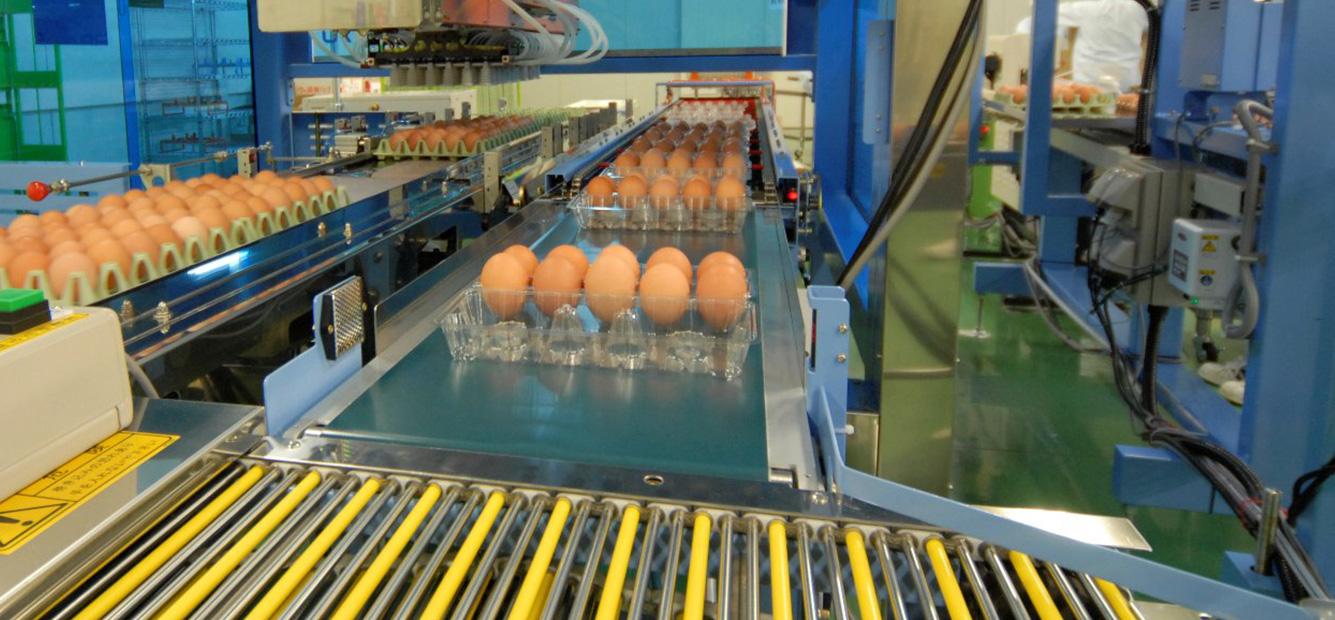
2. For the CE European Compliance Certification Standard.Prioritize food-grade materials and compliance certifications to prevent contamination of eggs by ordinary iron products or rust-prone materials. For export trade and cross-border procurement, ensure that the equipment holds CE, USDA, and HACCP certifications to meet overseas market entry standards and avoid customs clearance obstacles.
3. Prioritize sorting accuracy and breakage rate: Grading precision directly determines the premium value of egg products. High-precision weighing sensors should be prioritized, with weight errors controlled within ±1 g. Additionally, pay attention to the equipment’s conveying mechanism; a flexible conveying design can minimize shell breakage rates and ensure product yield.
4. Evaluate the manufacturer’s after-sales service and customization capabilities. Prioritize equipment from original manufacturers that support parameter customization, comprehensive warranty coverage, and overseas after-sales support. Some high-quality manufacturers offer modular customization services, allowing for optional installation of egg washing, drying, and packaging modules, with potential for future upgrades to meet production capacity expansion requirements.
conclusion
For small and medium-sized farms, egg cooperatives, and small processing enterprises, a cost-effective small-scale egg grading device is a key tool for standardized production, enhancing egg value, and reducing operating costs. With its compact size, low energy consumption, high precision, and ease of maintenance, it is perfectly suited for small-scale egg sorting applications, replacing inefficient manual sorting methods and enabling these businesses to achieve standardized and intelligent upgrades.
Frequently Asked Questions
Q1: Is a small egg sorter suitable for beginners?
A: Absolutely. The device features one-touch startup and intelligent touchscreen control, requiring no specialized technical knowledge. A single operator can complete the entire process of operation, sorting, and discharge independently. It is user-friendly, allowing even novice users to operate it quickly.
Q2: Can a small sorter classify quail eggs and duck eggs?
A: Yes. The universal equipment supports sorting of various types of eggs; by adjusting the device spacing and weight parameters, it can accommodate eggs of different specifications (e.g., chicken eggs, duck eggs, quail eggs), demonstrating high versatility.
Q3: How to choose between fully automatic and semi-automatic small-scale sorters?
A: For household use with limited budget, a semi-automatic model is recommended due to its high cost-effectiveness; for commercial applications requiring batch processing, a fully automatic model is advised as it offers higher automation levels, faster sorting efficiency, and lower labor costs.
For product and solution inquiries, please contact Guangxing’s professional team for customized advice: WhatsApp: 00852-46090144 or [Phone/WeChat]: 0086-17876668787


