When people first enter the poultry industry, they often focus on one question:
“How much does it cost to build a poultry farm?”
It seems like a straightforward question. However, after decades of working with poultry producers around the world, we’ve learned that the real question should be:
“How do you build a poultry farm that will still be profitable ten years from now?”
The answer involves much more than purchasing cages, constructing buildings, or installing feeding systems. A successful poultry operation depends on how every component works together—from land planning and house design to ventilation, automation, manure management, and long-term operational efficiency.
This is exactly where the concept of a Poultry Farm EPC Project comes into play.
For investors building their first commercial poultry farm and for existing producers planning large-scale expansion, EPC has become one of the most effective approaches to reducing project risk and improving long-term returns.
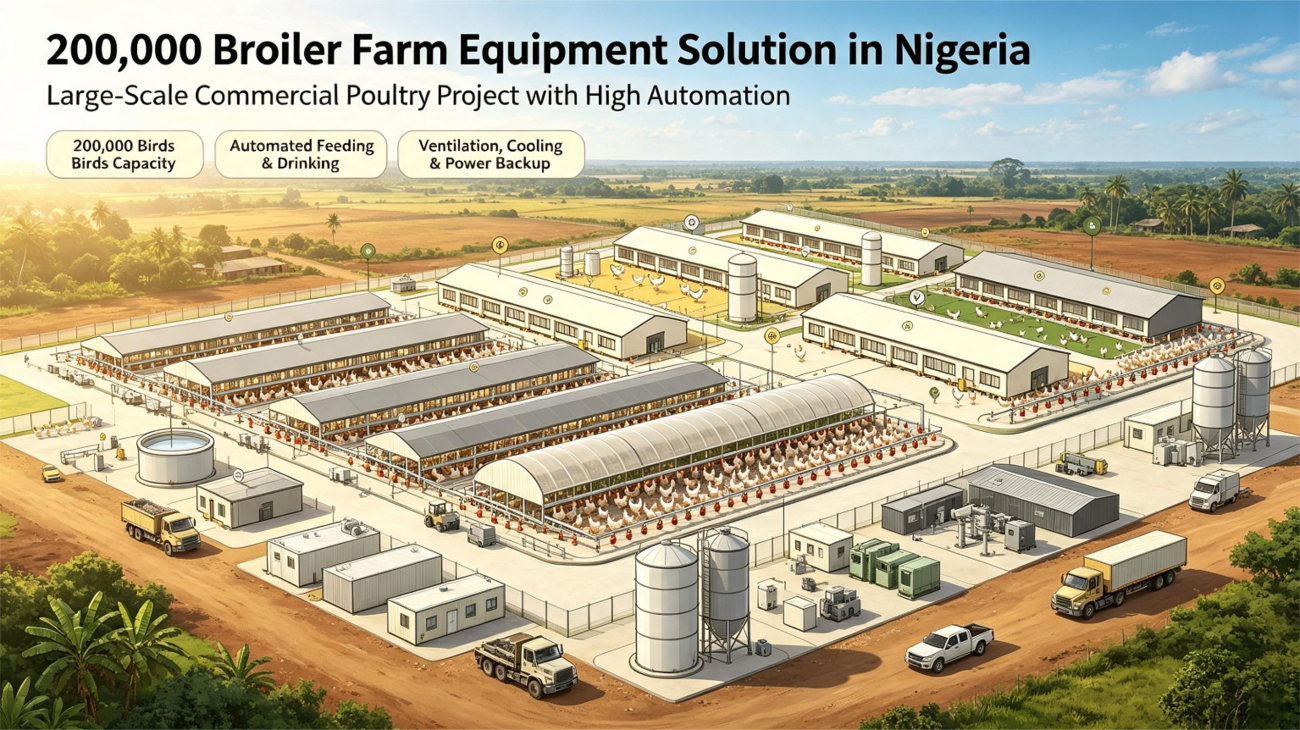
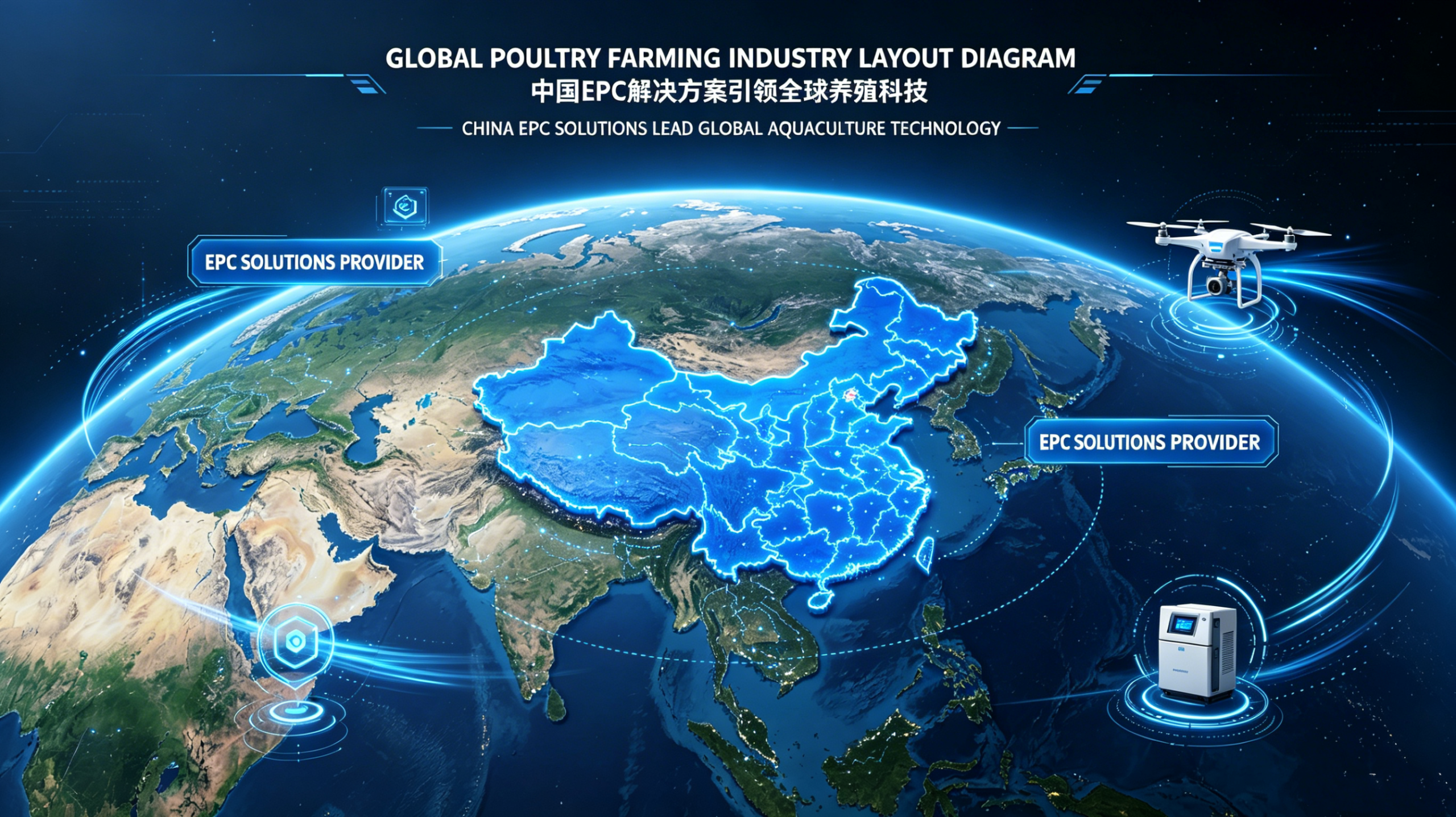
In this article, we’ll explain what a poultry farm EPC project actually means, why more investors are choosing EPC solutions, and what lessons we have learned from over 30 years of poultry farm projects across Asia, Africa, the Middle East, and Latin America.
The Problem Many Poultry Investors Don’t See at the Beginning
Every year, countless poultry projects begin with great enthusiasm.
An investor purchases land.
A contractor starts construction.
Equipment suppliers submit quotations.
The project appears to move quickly.
Then problems start to emerge.
The building design doesn’t match the equipment dimensions.
Ventilation systems are installed too late.
Power requirements are underestimated.
Water systems need modification.
Manure removal systems interfere with cage layouts.
The result?
Construction delays.
Budget overruns.
Operational inefficiencies.
And in some cases, expensive redesigns after the farm is already operating.
Unfortunately, these situations are far more common than many new investors realize.
The challenge isn’t necessarily a lack of funding or ambition.
The challenge is coordination.
A modern poultry farm is no longer just a collection of buildings and equipment. It is an integrated production system where every element influences performance.
That’s why experienced poultry companies increasingly favor EPC delivery models.
Understanding EPC in Simple Terms
EPC stands for:
Engineering
Procurement
Construction
Rather than hiring multiple independent companies to handle different parts of a project, the investor works with one partner responsible for delivering the complete farm solution.
In a poultry farm EPC project, the supplier typically manages:
- Farm planning
- Site evaluation
- Poultry house design
- Equipment selection
- Equipment manufacturing
- Logistics coordination
- Installation supervision
- Commissioning
- Staff training
- Technical support
The objective is simple:
Create one coordinated process from concept to production.
Instead of managing ten different suppliers, the investor works with one experienced team that understands how all components fit together.
Why EPC Is Becoming the Preferred Model for Commercial Poultry Farms
The poultry industry has changed dramatically over the last two decades.
Farms are becoming larger.
Labor costs continue to rise.
Biosecurity requirements are stricter.
Energy efficiency matters more than ever.
Profit margins are often tighter.
As farms become more sophisticated, project complexity increases.
A 5,000-bird operation might tolerate inefficiencies.
A 100,000-layer farm cannot.
At larger scales, small design mistakes can create significant financial consequences.
We’ve seen farms lose productivity because ventilation systems were improperly designed.
We’ve seen excessive feed wastage caused by poorly integrated feeding systems.
We’ve seen manure management become a major operational challenge because it was treated as an afterthought during construction.
These experiences explain why EPC projects are gaining popularity globally.
Investors want predictable outcomes.
EPC provides a framework for achieving them.
Looking Beyond Buildings: Designing for Production Performance
One of the biggest misconceptions about poultry farm construction is the belief that the project ends when the buildings are completed.
In reality, construction is only the beginning.
The real objective is production performance.
A poultry house should not simply look impressive.
It should create the conditions necessary for birds to thrive.
This means considering factors such as:
- Airflow patterns
- Temperature management
- Humidity control
- Feeding efficiency
- Water accessibility
- Stocking density
- Waste removal
- Worker efficiency
These factors influence:
- Feed conversion rates
- Mortality rates
- Egg production
- Growth performance
- Labor requirements
- Operating costs
An EPC approach considers these outcomes from the very beginning.
Instead of designing a building first and solving operational problems later, the design process starts with production objectives

A Lesson from a Layer Farm Expansion Project
Several years ago, a poultry producer in Africa approached our team with plans to expand his layer operation.
The original intention was simple:
Build additional poultry houses and purchase new cage equipment.
However, after reviewing the project, several concerns emerged.
The proposed house orientation would have increased heat stress during the hottest months of the year.
The existing electrical infrastructure lacked sufficient capacity for future expansion.
Feed storage areas were undersized relative to projected production volumes.
Water distribution systems would eventually become a bottleneck.
None of these issues were immediately obvious.
The farm could have been built according to the original plan.
But doing so would likely have created operational challenges for years.
By redesigning the project as a coordinated EPC solution, the farm achieved better ventilation performance, smoother logistics flow, and greater flexibility for future growth.
The investment in planning paid dividends long after construction was completed.
What Does a Typical Poultry Farm EPC Project Include?
Although every project is different, most commercial poultry EPC projects follow a similar framework.
The process often begins with feasibility analysis.
This stage examines:
- Project objectives
- Market demand
- Site conditions
- Utility availability
- Environmental factors
- Budget expectations
Once the project scope is defined, engineering teams develop detailed plans.
These plans cover far more than building dimensions.
They address:
- Poultry house layouts
- Ventilation design
- Structural engineering
- Feed systems
- Drinking systems
- Electrical systems
- Environmental controls
- Waste management systems
Procurement follows.
This stage involves sourcing all required equipment and materials while ensuring compatibility across the entire farm.
Construction then transforms the design into a functioning operation.
Finally, commissioning and training ensure the farm is prepared for commercial production.
The most successful EPC projects treat these stages as interconnected rather than separate activities.
Why Equipment Selection Matters More Than Many Investors Realize
Equipment decisions often determine whether a poultry farm operates efficiently or struggles with ongoing maintenance issues.
Unfortunately, some investors focus exclusively on purchase price.
This approach can become expensive over time.
Low-cost equipment may lead to:
- Higher maintenance expenses
- Reduced productivity
- Increased labor requirements
- More frequent downtime
- Shorter service life
Experienced poultry operators typically evaluate equipment differently.
They focus on lifecycle value.
Questions include:
- How long will the equipment last?
- How easy is it to maintain?
- How much labor can it save?
- How efficiently does it use energy?
- How does it affect bird performance?
Over the past 30 years, Guangxing has seen countless examples where durable, well-designed systems generated significantly better returns than cheaper alternatives.

Why Global Investors Are Looking to China for EPC Solutions
The global poultry equipment industry has changed significantly.
Many investors today are evaluating Chinese suppliers not only for equipment but also for complete EPC delivery capabilities.
There are several reasons for this trend.
Chinese manufacturers have accumulated extensive experience serving international markets.
Large-scale manufacturing capabilities allow competitive pricing.
Automation technology has improved dramatically.
Most importantly, experienced suppliers can provide integrated solutions rather than individual products.
For international investors, this combination often creates a compelling value proposition.
The goal is no longer simply buying equipment.
The goal is building a profitable production system.
The Role of Training in EPC Success
One aspect often overlooked during project planning is staff training.
Even the most advanced poultry equipment cannot deliver optimal performance if operators lack proper training.
Successful EPC projects typically include:
- Equipment operation training
- Maintenance procedures
- Biosecurity protocols
- Farm management guidance
- Emergency response procedures
Training transforms infrastructure into productivity.
Without it, many farms struggle to achieve expected performance levels.
What We Have Learned from 30 Years of Poultry Projects
After more than three decades in the poultry equipment industry, one lesson stands out above all others:
Successful farms are rarely the result of a single great decision.
They are the result of hundreds of coordinated decisions made correctly throughout the project lifecycle.
The most successful producers think long term.
They plan for future expansion.
They prioritize operational efficiency.
They invest in reliable systems.
They choose partners who understand both construction and production.
Most importantly, they recognize that poultry farming is not simply about housing birds.
It is about creating an integrated production environment capable of delivering consistent results year after year.
https://guangxiniot.com/products/
Is an EPC Project Right for Every Poultry Farm?
Not necessarily.
Small farms may not require comprehensive EPC services.
In some cases, purchasing individual equipment systems may be sufficient.
However, as project size increases, coordination becomes increasingly important.
For medium and large-scale commercial operations, EPC often reduces complexity, improves accountability, and minimizes project risk.
The larger the investment, the more valuable integrated planning becomes.
Final Thoughts
A poultry farm EPC project is much more than a construction contract.
It is a strategic approach to farm development that integrates engineering, procurement, and construction into a unified process.
For investors entering the poultry industry, EPC can help avoid costly mistakes and accelerate project delivery.
For existing producers expanding their operations, EPC provides a pathway toward greater efficiency, scalability, and long-term profitability.
At Guangxing, our experience across thousands of poultry projects has reinforced a simple principle:
The best poultry farms are not built piece by piece.
They are planned as complete systems from the very beginning.
And in an industry where efficiency, biosecurity, and productivity continue to define success, that difference can have a lasting impact on the future of the business.