Rising feed costs, surging labor expenses, and frequent disease outbreaks are relentlessly squeezing the profit margins of modern poultry enterprises. In today’s unforgiving economic climate, producers simply cannot afford flock losses driven by preventable environmental stress. Yet, as global summer temperatures shatter records year after year, farmers face a silent and highly destructive threat: heat stress.
When ambient temperatures exceed a bird’s thermal comfort zone, a systemic crisis erupts. Without rapid, systematic intervention, flock performance plummets, immune defenses collapse, and mortality rates spike. Safeguarding poultry during extreme heat is no longer just an animal welfare concern—it is a critical strategy for protecting an enterprise’s overall capital investment.
In this environment, relying on manual labor or outdated housing designs is a high-stakes gamble. Modern poultry production demands an integrated ecosystem that fuses advanced climate engineering with precision livestock systems. This guide breaks down the biological and economic tolls of heat stress, delivers actionable management strategies, and highlights industry-leading hardware solutions from Guangxing (GX) that protect flock health while maximizing economic returns.

1. Problem Analysis: The Biological & Economic Toll of Heat Stress
To curb summer mortality, we must first understand exactly what happens to a bird’s physiology as temperatures climb. Unlike mammals, poultry lack sweat glands. Their primary mechanism for heat dissipation is panting for evaporative cooling—a physiological tool with strict limitations.
The Thermoneutral Zone and Comfort Shifts
For mature broilers and layers, the ideal ambient temperature range is 18°C to 24°C (64°F to 75°F), known as the thermoneutral zone. Within this window, birds maintain their core body temperature without expending extra energy.
Once house temperatures surpass 30°C (86°F), especially when relative humidity reaches 60% or higher, birds plunge into acute heat stress. This combination is particularly lethal: high ambient humidity blocks moisture evaporation from the respiratory tract, rendering panting completely ineffective.
The Physiology of Heat-Induced Mortality
What actually kills a chicken during a heatwave? It is a cascade of failures across multiple biological systems:
-
Respiratory Alkalosis: As birds pant rapidly to shed heat, they expel excessive amounts of carbon dioxide ($CO_2$). This causes blood pH to rise, becoming highly alkaline. To compensate, the kidneys excrete vital electrolytes like potassium ($K^+$) and bicarbonate ($HCO_3^-$). This disruption in blood chemistry triggers cardiovascular distress, culminating in heart failure.
-
Leaky Gut Syndrome: To keep its core cool, the bird’s body diverts blood flow away from internal organs (like the digestive tract) and toward the skin and respiratory system. Deprived of oxygen and nutrients, the intestinal lining degrades. Pathogens and toxins easily breach this compromised barrier, entering the bloodstream to cause systemic inflammation, immunosuppression, and death.
-
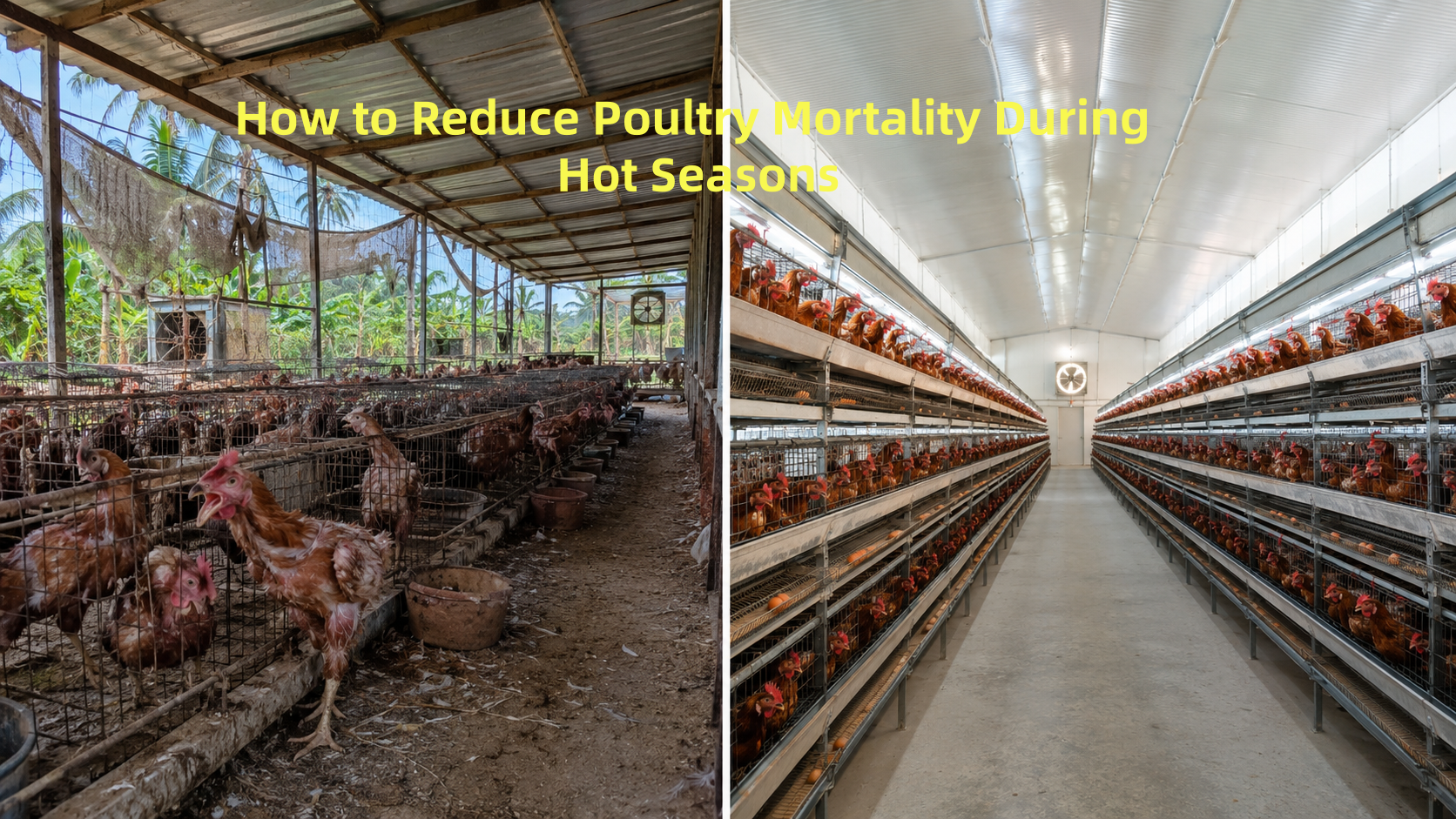
The Multi-Tier Cage Nightmare: Poorly designed multi-tier battery systems create localized microclimates. Heat radiates upward from lower tiers, trapping stagnant hot air at the top. If the cage mesh is too restrictive or tier spacing is inadequate, birds trap each other’s body heat, causing mortality rates to skyrocket in the upper tiers.
The Hidden Financial Burden
Dead birds are merely the tip of the iceberg. Weeks before a bird succumbs, heat stress quietly erodes profits across several Key Performance Indicators (KPIs):
| Performance Metric | Impact of Heat Stress | Financial Consequence |
| Feed Conversion Ratio (FCR) | Spikes significantly | Birds consume more feed just to maintain body temperature, wasting costly nutrients. |
| Feed Intake | Drops by 1.5% for every 1°C rise above 30°C | Growth rates stall; broilers fail to reach market weight on schedule. |
| Egg Quality & Yield | Shells thin/crack; output drops up to 20% | Higher breakage rates, fewer marketable eggs, and lower grading. |
| Immunosuppression | Vaccine efficacy drops; lymphoid organs atrophy | Increased susceptibility to secondary infections like E. coli and Newcastle Disease (NDV). |

2. The Solution: A Comprehensive Summer Management Protocol
Reducing mortality requires a multi-pronged strategy targeting the birds’ microenvironment, nutritional status, and daily husbandry.
A. Environmental Optimization & Ventilation Dynamics
Air velocity is the single most potent weapon against hot weather. Moving air creates a “wind-chill effect,” lowering the effective temperature felt by the bird even if the thermometer reads high.
-
Achieve Target Target Airflow: Maintain a minimum air velocity of 2.5 to 3.0 m/s (500–600 ft/min) throughout the entire house length for birds older than 4 weeks.
-
Ensure Total Tunnel Ventilation: Seal the house completely so air only enters through the cooling pads at one end and only exits via the exhaust fans at the other. Structural leaks or static air pockets destroy cooling efficiency.
-
Eliminate Microclimate Hotspots: In high-density tier configurations, standard airflow often fails to penetrate the center of the cages. This is where Guangxing’s cage geometry excels—engineered with an optimized open-mesh structure and precise tier spacing, it allows high-velocity air to sweep through every layer, wiping out trapped heat pockets.
B. Nutritional & Hydration Interventions
Altering what and when birds eat drastically reduces their metabolic heat production.
-
Implement a Midday Fasting Schedule: Digesting feed generates significant internal heat (the thermic effect of food), peaking around 3 to 5 hours post-consumption. Withdraw feed 4 to 6 hours before the hottest part of the day, and resume feeding during the cooler evening and early morning hours.
-
Keep Drinking Water Chilled: Poultry will refuse water if it exceeds 30°C (86°F). Flush water lines regularly throughout the day to ensure birds have access to cool water between 15°C and 20°C (59°F to 68°F). Cool water acts as an internal heat sink, absorbing core body heat.
-
Electrolyte & Vitamin Therapy: Supplement drinking water with potassium chloride ($KCl$) or sodium bicarbonate ($NaHCO_3$) to restore electrolyte balance. Additionally, add Vitamin C (ascorbic acid) at 150–200 mg/kg of feed to suppress stress hormones.
C. Husbandry & Biosecurity Refinements
-
Optimize Stocking Density Safely: Reducing bird numbers is a common fix, but it kills profitability per square meter. By utilizing Guangxing’s high-density vertical farming systems, farms can maintain high production scales without overcrowding; the cages optimize space allocation per bird, balancing comfort with airflow.
-
Minimize Disturbances: Postpone non-essential chores to cooler evening hours. Keep the flock calm; panic and unnecessary movement can double a bird’s metabolic heat output.
-
Manure Management: Accumulated manure releases moisture and ammonia, both of which worsen heat stress. Guangxing’s automated manure belt removal systems run continuously across tiers, clearing waste instantly to keep indoor humidity low and eradicate toxic gases.
3. Equipment Architecture: Engineering Upgrades for Superior Climate Control
Modern poultry facilities require automated, heavy-duty structural and climate systems. Guangxing (GX) provides integrated, turnkey solutions that seamlessly pair world-class houses and cage systems with high-performance climate hardware.
1. Guangxing Fully Enclosed, Insulated Poultry Houses
Summer resilience starts with the building envelope. Guangxing’s pre-engineered steel poultry houses are custom-built for high-efficiency climate control.
-
Superior Thermal Insulation: Constructed with high-density polyurethane (PU) sandwich panels for walls and roofs, these structures boast excellent R-values (thermal resistance) that block solar radiation, keeping the outdoor heat out.
-
Flawless Negative Pressure Sealing: Engineered with precision joints, automatic air inlets, and airtight seals, GX houses create a perfect vacuum when exhaust fans run, ensuring 100% of fresh air passes through the cooling pads with zero energy-wasting structural leaks.
2. Guangxing Precision Battery Cage Systems (A-Type and H-Type)
The structural design of the space where birds live dictates how well they can shed heat. Built with hot-dip galvanized wire mesh, Guangxing cages combine durability with biosecurity.
-
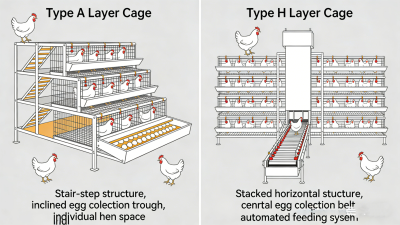
Aerodynamic Cage Configurations: Unlike standard cages that block airflow, Guangxing H-Type battery cages feature an optimized wire layout that promotes horizontal cross-ventilation and longitudinal tunnel airflow, allowing air to glide smoothly over the birds’ bodies for maximum convective cooling.
-
Automated Integrated Feeding & Watering: Equipped with tamper-proof precision nipple drinkers and automated hopper feeding carts, the system distributes feed evenly during scheduled cooling windows. The enclosed water line design prevents drinking water from heating up to room temperature.
💡 Poultry Design Guide: Choosing the right layout is critical for summer airflow. To understand how cage configuration alters ventilation efficiency, read our comprehensive industry breakdown:
👉 H-Type vs. A-Type Battery Cages: Structural Comparison of Multi-Tier Layer Cage Systems.
3. High-Output Tunnel Exhaust Fans & Evaporative Cooling Pads
To complement the structural layout, Guangxing deploys heavy-duty ventilation hardware:
-
High-Volume Exhaust Fans: GX utilizes heavy-duty, direct-drive exhaust fans capable of moving massive volumes of air, creating the precise negative pressure required to maintain a 3.0 m/s wind-chill velocity across the facility.
-
Premium Evaporative Cooling Pads: Paired with an optimized water recirculation and filtration system, Guangxing’s 6-inch cross-fluted cellulose cooling pads can drop incoming air temperatures by up to 10°C in hot, dry climates, stabilizing the indoor environment well within the thermoneutral zone.
4. Guangxing Smart Smart Environment Controllers
The brain of the system is an automated smart controller integrated directly into the house infrastructure. By monitoring the Temperature-Humidity Index (THI) in real time, the system instantly activates fans, adjusts air inlets, and modulates water flow to cooling pads, responding automatically to shifting outdoor weather conditions.

4. Case Study: Turning Around a High-Mortality Operation
To understand the real-world impact of shifting from traditional open housing to a fully integrated Guangxing system, let’s look at a commercial poultry operation located in a subtropical climate zone.
Farm Profile
-
Location: South Asia (Summer temperatures routinely hit 38°C–41°C with 60% humidity).
-
Capacity: 4 traditional open-sided, semi-automated houses holding 25,000 layers each (100,000 birds total).
-
The Crisis: During a severe 10-day summer heatwave, the farm suffered a catastrophic 16.2% peak mortality rate in its layer flock. Surviving birds saw a 22% drop in egg production, and eggshell thickness deteriorated to unmarketable levels.
The Guangxing Intervention
The producer demolished the legacy houses and commissioned Guangxing to design and build two modern, fully enclosed, 4-tier H-type battery layer houses.
Upgrades included: Guangxing insulated steel structures, automated H-type cages with integrated manure removal belts, heavy-duty direct-drive exhaust fans, 6-inch cellulose cooling pads, and a central smart controller programmed for split-feeding schedules and automatic water line flushing to keep drinking water cool.
The Results
The following summer, the region faced an identical severe heatwave, with ambient temperatures soaring to a scorching 40.5°C. The performance gap between the legacy open-sided houses and the new integrated Guangxing houses spoke for itself:
PERFORMANCE DURING 40.5°C HEATWAVE

Legacy Houses (Open-Sided / Basic Structure)
[█████████████████████████████] Mortality: 13.5%
[██████████████████████████] Egg Production Drop: 22.0%
[█████████████████████████████] Cracked/Broken Eggs: 8.5%

Guangxing Integrated Houses (Insulated + H-Type Cage Architecture)
[█] Mortality: 1.1%
[██] Egg Production Drop: 2.5%
[█] Cracked/Broken Eggs: 1.2%
Inside the Guangxing houses, while outdoor temperatures raged at 40.5°C, indoor air temperatures remained stable and comfortable between 26.5°C and 28.0°C. Thanks to the aerodynamic cage design, birds on the top tiers showed no signs of distress, eggshell quality remained uniform, and mortality was virtually non-existent.
5.The Financial Math
Let’s look at the annual savings achieved by migrating to a climate-resilient Guangxing system:
By year four, the system pays for itself entirely through climate risk mitigation alone. When factoring in year-round operational gains, the financial return increases even faster:
-
Improved Feed Conversion Ratio (FCR): Reduced feed wastage during temperate months.
-
Accelerated Growth Rates & Higher Market Weights for broiler operations.
-
Lower Veterinary & Medication Bills due to reduced environmental stress.
-
Minimized Operational Labor Costs via full automation.
The Future of Poultry Climate Management
As global weather volatility intensifies, summer heatwaves will become more frequent and severe. The future of profitable poultry farming rests on data-driven infrastructure:
-
AI-Driven Microclimate Monitoring: Systems that automatically adjust parameters before heat stress visualizes in the flock.
-
IoT-Based Smart Thermoregulation: Dynamic ventilation adjustments based on real-time flock behavior analysis.
-
Integrated Thermal Risk Early-Warning Platforms: Merging local weather forecasting with automated house preparation protocols.
Shifting to automated, data-backed environmental control is no longer optional—it is the core competitive advantage for modern commercial poultry farms.
Hot Weather Mitigation Summary Checklist
To secure your flock during peak summer, ensure your management protocol checks all core boxes:
-
[ ] High-Velocity Airflow: Maintain 2.5–3.0 m/s wind speed to maximize the wind-chill effect.
-
[ ] Evaporative Cooling: Keep cooling pads clean and functional to drop inlet temperatures up to 10°C.
-
[ ] Chilled Water Supply: Flush lines regularly to keep drinking water between 15°C and 20°C.
-
[ ] Strategic Feeding: Shift feed availability to the cooler evening and early morning hours.
-
[ ] Smart Ventilation & Cleanliness: Use aerodynamic cage profiles and automated manure removal to keep humidity and toxic gases low.
Partner with Guangxing Group for Modern Poultry Success
With over 30 years of expertise in poultry equipment manufacturing and large-scale project construction, Guangzhou Guangxing Poultry Equipment Group provides world-class, end-to-end engineering solutions for global producers:
-
Automated Layer & Broiler Cage Systems (A-Type and H-Type)
-
High-Volume Longitudinal Tunnel Ventilation Systems
-
Advanced Evaporative Cellulose Cooling Pad Systems
-
Precision Automatic Feeding & Closed-Pipe Drinking Systems
-
Smart Environmental Control Systems
-
Full Turnkey Poultry Farm EPC Solutions
Whether you are breaking ground on a greenfield site or retrofitting an existing facility, Guangxing engineers custom hot-weather solutions tailored to your local climate, operational scale, and investment budget.
👉 Contact Guangxing Group Today to receive a customized facility layout. Protect your flock, stabilize your yields, and maximize your ROI with modern automation.