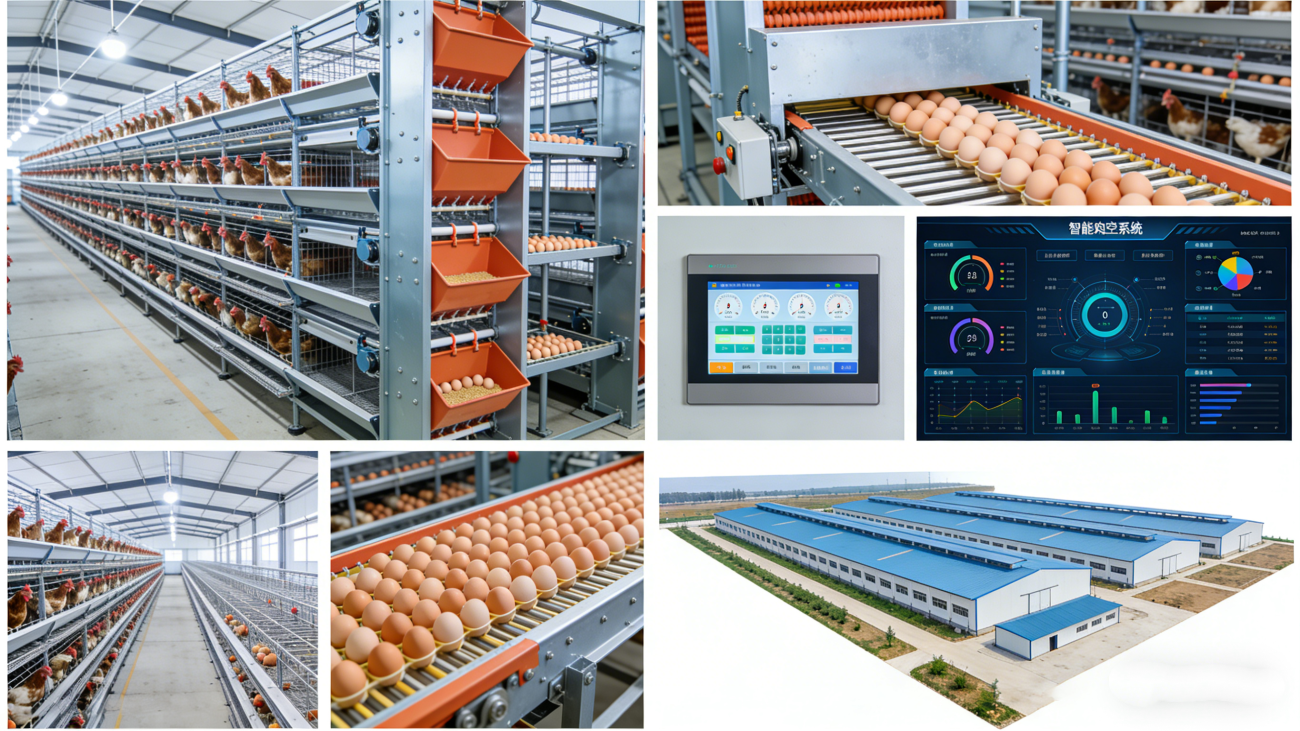
I. What is Egg Grading and Packaging Equipment?
Egg grading and packaging equipment refers to fully automatic intelligent production lines that replace manual egg sorting, arranging and packing, serving as core backend processing equipment for layer farms.
Its core advantage lies in the one-stop completion of full-process operations including egg washing, drying, crack inspection, size grading, tray loading and packaging.
It functions like a dedicated quality inspection and packaging assembly line exclusively for eggs, solving all types of post-production processing challenges for shell eggs.
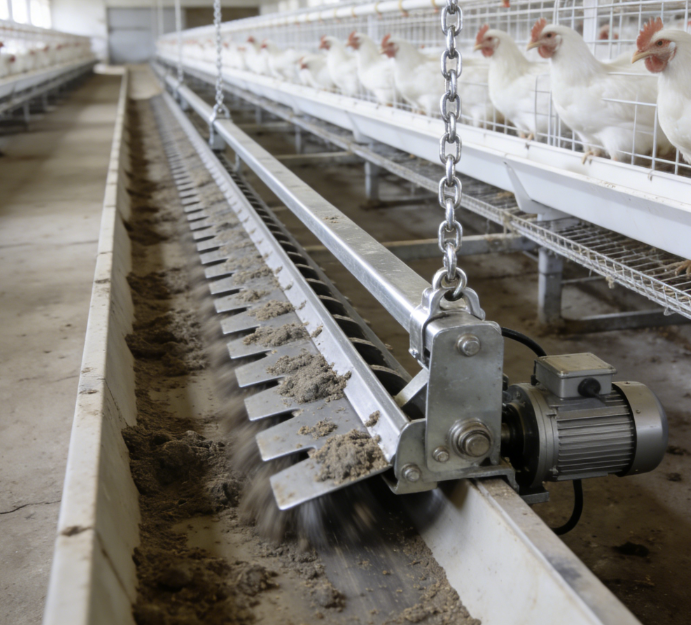
While chicken houses focus on egg production, grading and packaging equipment carries out quality control and finishing for every single egg. Freshly laid eggs contain soiled eggs, cracked eggs and irregular-sized misshapen eggs unfit for direct commercial sales.
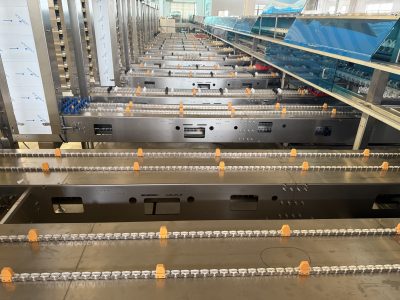
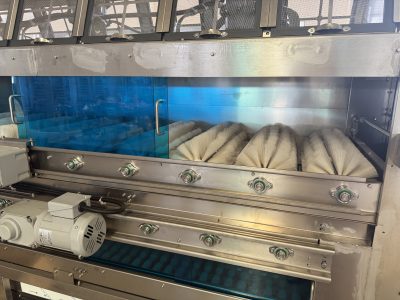
After standardized processing via automated machinery, eggs turn into clean, uniformly-sized products complying with retail specifications before being delivered to supermarkets, fresh food markets and end consumers. This equipment constitutes an indispensable link in large-scale egg farming operations.
II. Why Modern Layer Farms Must Invest in This Type of Equipment?
A growing number of egg farms choose to upgrade automated egg processing equipment mainly for the four reasons below:
Commercial layer farms produce tens of thousands of eggs daily, yet manual sorting is slow and prone to order backlogs during peak delivery seasons. Intelligent automated equipment runs stably around the clock, finishing workload equivalent to an entire day’s manual labor within one hour. It eliminates production bottlenecks and easily fulfills large-volume shipment requirements.
Traditional manual egg sorting and packaging requires sizeable rotating work teams, leading to persistent high costs in recruitment, staff turnover and employee training. Post equipment upgrading, the whole production line operates automatically with merely 1 to 2 workers assigned to routine patrol and maintenance. Labor expenditure is drastically cut down to directly boost net profit over the long run.
Manual sorting relies entirely on workers’ naked eyes and personal experience, resulting in inconsistent grading standards and frequent mixing of graded and defective eggs with uneven finished product quality.
Automated equipment performs grading based on precise digital data, automatically screening out cracked, stained and damaged eggs. All finished eggs feature consistent weight, dimension and appearance to greatly lift qualified product yield.
Modern supermarkets, chain fresh food retailers and export buyers impose stringent requirements on shell eggs: clean intact shells, uniform sizing plus standardized packaged traceable products.
Manual processing hardly meets such strict specifications and often triggers returned goods and financial penalties. Eggs processed by automated production lines fully satisfy domestic retail and export criteria, enabling farms to access high-end sales channels and secure premium pricing for ordinary shell eggs.


III. Complete Working Process of Egg Grading & Packaging Equipment
1. Automatic Egg Collection: Seamless transportation from chicken house to processing center
As the first procedure of the full production line, automatic egg collection abolishes traditional manual egg picking. In-house collection conveyors receive freshly laid eggs in real time and deliver eggs smoothly via flexible transportation belts toward the central processing workshop without collision or extrusion.
Highlighted by outstanding efficiency and hassle-free operation, the system runs 24/7 to avoid missed or delayed egg collection caused by human error, cutting breakage rate from the source. Meanwhile, it prevents cross-contamination from farm workers entering chicken houses with dust and bacteria, improving initial sanitation of raw eggs.
2. Egg Washing & Sanitization: Achieve food safety compliance
Freshly laid eggs carry manure residue, dust and microbial contaminants on eggshells, failing to meet market hygiene standards for direct sale. The equipment proceeds with soft water rinsing, air drying and multi-stage disinfection to thoroughly remove surface contaminants and eliminate harmful bacteria for upgraded sanitary qualification.
Markets adopt divergent washing standards: conventional local wet markets have low cleanliness thresholds, whereas chain supermarkets, branded fresh stores and export orders mandate mandatory washing and disinfection with zero residual stain or moisture. This processing stage acts as an essential entry requirement for high-end egg sales channels.
-400x284.png)
3. Intelligent Inspection & Sorting: Precise elimination of all defective eggs
Human visual inspection inevitably misses fine hairline cracks, hidden stains and deformed eggs, whereas intelligent inspection systems deliver near-zero omission rates. Equipped with high-precision light scanning and smart sensing modules, the equipment identifies barely visible micro-cracks and concealed shell damages, automatically rejecting stained, soft-shelled, malformed and undersized unqualified eggs.
High-speed automated classification eliminates inconsistent sorting and mixed defective products typical of manual operations to stabilize overall finished egg quality.
4. Automatic Weighing & Grading: Uniform product specification
Precision weighing sensors automatically measure individual egg weight and categorize eggs without human intervention. Commercial egg products are commonly sorted into four weight tiers: extra-large, large, medium and small, with certain premium markets adopting a five-grade classification system.
Standardized weight grading ensures uniform dimension and weight across production batches for superior product appearance and market positioning, putting an end to irregular sizing from subjective manual grading.
5. Automated Packaging: Unmanned orderly sealing & labeling
Post grading, eggs enter fully automatic packaging seamlessly. Robotic arms precisely load eggs into plastic or pulp egg trays without cracking or dropping; afterwards, eggs are boxed, sealed and labeled automatically as required. Customizable labels can print production dates, traceability codes, origin details and batch numbers.
The full packaging workflow minimizes human contact to deliver neatly packed, clearly labeled eggs with superior market presentation ideal for branded retail sales.
Case in point: Multiple medium-to-large layer farms install fully automated Sino-Japanese joint venture grading production lines from Guangxing. The integrated system covers automatic egg feeding, water washing, shell waxing maintenance, candling crack detection, precision grading and automatic tray loading. Capable of stable hourly output of over 30,000 eggs, the machine fits mid-to-large scaled breeding bases. With mature mechanical craftsmanship and low malfunction rate, it restricts egg breakage below 0.5%. Only a small workforce is needed for daily inspection and random sampling, avoiding secondary contamination from manual handling and fixing longstanding flaws including irregular manual grading and overlooked defective eggs, helping facilities realize standardized and hygienic commercial egg production.
6. Automatic Case Packing & Delivery: Accelerate logistics for bulk shipment
Packaged finished eggs flow via conveyor to the casing station, where automated equipment stacks and seals cartons systematically. Smooth process connection directly links finished goods with outbound logistics to reduce manual carton handling workload and boost delivery efficiency.
Perfect for large-batch order fulfillment of scaled farms, standardized carton stacking cuts breakage risks during transit and shortens delivery lead time to satisfy timely supply demands of supermarkets and distributors.
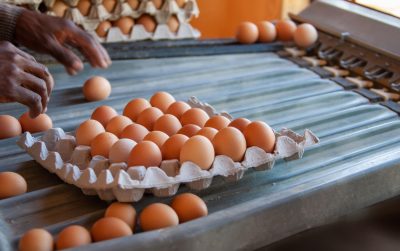

IV. Core Factors to Consider When Purchasing Egg Grading & Packaging Equipment
Match equipment capacity with actual production: mainstream models feature hourly throughput of 10,000, 20,000, 30,000, 60,000 and 120,000 eggs. Select machine capacity 20% higher than the farm’s average daily egg output. Small-scale egg producers opt for 10,000–30,000-egg-per-hour units while large-scale industrial egg enterprises choose high-speed 60,000 or 120,000-egg models to avoid idle overcapacity or production line blockage from underpowered machinery.
Avoid relying on visual assessment for quality sorting; align equipment precision with local supermarket and fresh retailer grading norms and verify actual single-egg weighing tolerance on-site. Poor weighing accuracy either leads to premium-grade eggs mistakenly sold as low-grade goods with profit loss or results in returned consignments and financial penalties from retail clients. Prioritize machinery with steady weight tolerance and adjustable grading tiers.
Semi-automatic machines feature lower upfront cost and easy operation, suitable for small family farms with partial manual egg feeding and defective egg picking. Fully automatic lines run independently from egg loading, washing, sorting through packaging to slash labor cost, the top pick for high-output commercial farms.
Select equipment with widely available universal spare parts accessible from nearby suppliers and user-friendly component disassembly to avoid hiring expensive professional maintenance technicians.
Niche proprietary machinery suffers from scarce replacement parts and exorbitant repair fees; long-term maintenance expenses can far exceed initial price gaps between different equipment brands.
Account for future farm expansion when purchasing equipment: choose modular-design machines upgradable via additional sorting modules and stations to lift hourly output without full equipment replacement within just a few operating years, saving substantial replacement investment.

Conclusion
Automated egg processing equipment has evolved from exclusive premium facilities for giant egg corporations into standard infrastructure for contemporary layer farms. Traditional manual sorting is inefficient, inconsistent in grading and plagued by high egg breakage losses, failing to meet strict procurement standards of supermarkets, fresh food retailers and branded egg programs. End-to-end mechanization covering egg washing, crack inspection, weight grading and automatic casing helps farms stabilize finished quality, cut product wastage and sustain long-term labor cost savings. Whether small and mid-sized farms carry out phased equipment upgrades or large production bases deploy full automated lines, investing in grading and packaging machinery is an essential step toward standardized production. Embracing mechanization represents an inevitable trend for sustainable profitability in modern egg farming.