


A poultry farmer in Nigeria receives two quotations for a new 20,000-layer farm. One looks much cheaper, but it covers only cages, drinking lines and basic feeding equipment. The other includes automatic feeding, egg collection, manure removal and environmental controls.
Which offer gives the farmer better value?
The answer depends on what the farm needs and what each supplier includes.
Poultry farm equipment price varies with flock size, housing design, materials, automation and the scope of supply. No single price can accurately represent every 10,000-, 20,000- or 50,000-bird project.
For buyers in Nigeria and other African markets, electricity reliability, climate, transport and installation conditions can also affect the final investment.
This guide explains how to compare supplier quotations, identify missing costs and choose equipment that suits your farm.
1. What Equipment Do 10,000-, 20,000- and 50,000-Layer Farms Need?
Bird numbers determine the required capacity, but they do not tell suppliers how to design the farm.
For example, a producer expanding an existing open-sided poultry house may need different equipment from an investor building a new enclosed house. Both farms may keep 20,000 layers, yet their cage arrangements, ventilation and automation requirements can be quite different.
The following examples show how purchasing priorities may change with farm size.
| Farm size | Planning situation | Main equipment decisions |
|---|---|---|
| 10,000 layers | A smaller commercial farm, possibly using an existing house | Cage layout, feeding method, reliable drinking, egg collection and manure handling |
| 20,000 layers | A growing farm or new commercial house | A-type versus H-type cages, automation, egg transfer and ventilation |
| 50,000 layers | A larger operation with more daily egg handling | Cage-row layout, central collection, manure discharge, environmental controls and backup systems |
These are planning examples rather than fixed equipment packages or Guangxing quotations.
At an illustrative 90% hen-day laying rate, the three flock sizes would produce approximately 9,000, 18,000 and 45,000 eggs per day.
However, actual production depends on breed, flock age, nutrition, health and management. Therefore, use these figures to estimate egg-handling volume rather than predict farm income.
A 10,000-layer farm may work well with a straightforward collection arrangement. By contrast, a 50,000-layer farm may benefit from central conveying, especially when several houses share one packing room.
The right equipment depends on daily egg volume, collection time and the physical layout.
2. What Should a Complete Poultry Equipment Quotation Include?
A low equipment price is not necessarily a problem. However, buyers can run into trouble when they assume that every quotation covers the same work.
Some suppliers quote only cage frames and basic accessories. Others include the machinery needed to operate the poultry house.
To make a fair comparison, divide each quotation into three groups:
Production equipment: Cages, feeding and drinking systems.
Operating systems: Egg collection, manure removal, ventilation, cooling, lighting and controls.
Project services: Freight, installation, electrical connections, testing and commissioning.
Use the following checklist to review the scope.
| Item | What the quotation should clarify |
|---|---|
| Layer cages | Model, tiers, rows, capacity, dimensions and material |
| Feeding | Feed troughs, feed delivery equipment, silo, drives and controls |
| Drinking | Nipples, pipes, filters, regulators and connections |
| Egg collection | Row belts, elevators, transfer conveyors and central collection |
| Manure removal | Longitudinal belts, cross-conveyors and discharge points |
| Ventilation | Fans, air inlets, cooling pads, pumps and controllers |
| Electrical equipment | Control panels, wiring, alarms and protective devices |
| Installation | Drawings, supervision, labor, testing and commissioning |
| Spare parts | Included components, separately priced spares and availability |
| Delivery | EXW, FOB, CIF or another agreed commercial term |
Not every farm needs every component.
For example, a single-house operation may not need a central egg conveyor. However, its manure belt still needs a practical discharge arrangement.
Also, check whether the supplier includes spare parts in the equipment price or sells them separately. Otherwise, the initial quotation may leave important replacement components outside your budget.
A useful quotation should clearly explain what the supplier will deliver and what the buyer must arrange separately.
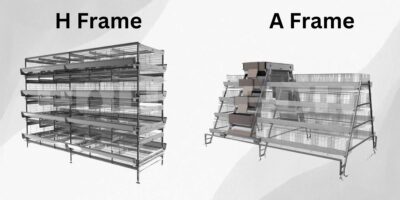
3. A-Type vs H-Type Layer Cages: Which Fits Your Farm?
Cage selection affects more than the purchase price. It also determines how feeding, egg collection, cleaning and maintenance work.
Guangxing offers A-frame layer cages and H-type automatic layer cage systems.
Both support commercial egg production, but their layouts differ.
| Feature | A-Type Layer Cage | H-Type Layer Cage |
|---|---|---|
| Structure | Stepped cage arrangement | Vertically stacked arrangement |
| Building space | Requires width for the stepped layout | Makes greater use of building height |
| Feeding | Manual or automatic options, depending on the model | Commonly integrates automatic feeding |
| Egg collection | Depends on the selected system | Commonly integrates egg belts and elevators |
| Manure handling | Depends on cage and house configuration | Commonly uses longitudinal manure belts |
| Maintenance focus | Access, cleaning and collection arrangements | Conveyor drives, belt tracking and access between tiers |
| Initial investment | May suit a simpler equipment package | May involve more integrated automation |
When should you consider A-type cages?
A-type cages can suit farms with an existing building or buyers who prefer a simpler starting arrangement.
Guangxing’s published A-frame range includes three- and four-tier options and hot-dip galvanized cage components. The company also offers compatible feeding, drinking and egg collection equipment.
However, not every A-type farm needs full automation. The right configuration depends on the cage model, daily production and available labor.
When should you consider H-type cages?
H-type cages may suit farms that need vertically stacked housing and coordinated automatic operations.
Their layout requires careful planning of ventilation, egg elevators, manure belts and maintenance access.
A higher quotation may reflect a larger automation package rather than better cage materials alone.
Before selecting either system, ask the supplier to prepare a layout using your actual shed dimensions.
That drawing should show the planned capacity, cage rows, access aisles and equipment discharge points.
Finally, check the housing and animal welfare rules in your destination market before choosing a cage system.
4. Why Can Poultry Equipment Prices Differ So Much?
Two suppliers may quote the same bird capacity but use different materials, equipment quantities and commercial terms.
Therefore, look beyond the final total and examine the specifications.
Steel and corrosion protection
Humidity, manure exposure and cleaning practices influence corrosion inside poultry houses.
In addition, coastal farms may face salt-laden air. These conditions make material selection and maintenance particularly important.
Ask suppliers which components use hot-dip galvanizing, what coating specifications apply and how workers should clean and maintain the equipment.
Guangxing describes hot-dip galvanized construction in its A-type and H-type product ranges. Nevertheless, buyers should request the specifications for the exact model they plan to purchase.
Galvanizing helps protect steel against corrosion, but it does not eliminate the need for maintenance.
For example, damaged coatings, standing moisture and unsuitable cleaning chemicals can still cause problems over time.
Avoid relying on an advertised service life without understanding the operating conditions behind the claim.
Feeding system boundaries
An automatic feeding quotation may include the equipment inside the poultry house but exclude the outdoor feed silo.
Therefore, check whether the supplier also includes feed delivery equipment, drives, motors and controls.
Ask where the supplier’s responsibility ends and where local installation work begins.
Egg and manure transfer
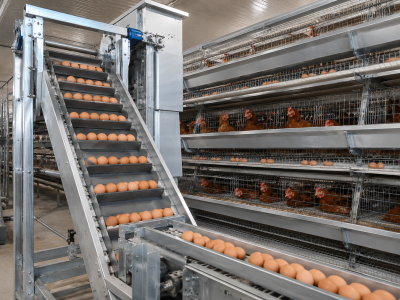
An egg belt along one cage row does not provide the same function as a complete central collection line.
Guangxing’s automatic egg collection system includes standard and central collection options for different farm layouts.
The supplier should explain the complete conveying route, including elevators, connecting conveyors and transfer points.
Similarly, an internal manure belt may not include the machinery that transfers waste outside the poultry house.
Electrical specifications
Automatic systems rely on motors, controllers, sensors and protective devices.
If the local power supply is unstable, ask about voltage and frequency requirements, motor starting loads and suitable electrical protection.
For instance, the project may require undervoltage, overvoltage or surge protection to protect sensitive equipment.
A qualified electrical engineer should assess these requirements. Do not assume that every controller or motor will operate safely with any generator.
5. How Should Nigerian Farms Plan for Heat and Unreliable Power?
A poultry house may have well-designed cages yet still face serious problems if its ventilation or electrical supply fails.
This matters especially in mechanically ventilated houses. During hot weather, a loss of airflow can quickly create unsafe conditions.
A backup generator helps, but it must support the correct electrical loads.
Before installation, the equipment supplier and local electrical contractor should review the following risks.
| Risk | What to check |
|---|---|
| Power outage | Which essential systems must continue operating? |
| Generator supply | Running load, starting load, voltage and frequency |
| Power transfer | Switching method and expected interruption |
| Voltage fluctuation | Motor and controller protection |
| Ventilation failure | Alarm arrangements and emergency response |
| Controller fault | Independent protection or suitable fallback arrangements |
| Maintenance | Generator tests, alarm checks and emergency procedures |
A farm does not necessarily need to operate every machine during an emergency. Instead, a qualified engineer should identify the essential loads and design the backup arrangement accordingly.
Open-sided and enclosed poultry houses need different solutions
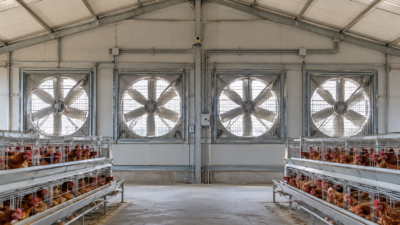
An open-sided poultry house relies more on natural airflow, building orientation and suitable openings.
An enclosed house with mechanical ventilation depends more heavily on fans, controls and reliable electricity.
As a result, the same ventilation package will not suit both housing types.
The building itself also needs attention. Poor drainage, inadequate roof protection and restricted airflow can create problems that better equipment cannot fully correct.
Agricultural extension guidance in Nigeria emphasizes practical site selection, drainage, ventilation and access to essential utilities.
Likewise, the FAO’s poultry housing and management resources explain the importance of temperature, humidity, air movement, feed and water.
For farms in Nigeria, Ghana, Kenya or other African markets, suppliers should review the local climate and building type before selecting equipment.
6. Can You Invest in Poultry Automation in Stages?
For a farm with limited starting capital, phased investment may make more sense than buying every automated system immediately.
However, the first design should also consider future expansion.
Consider a new 20,000-layer farm.
Stage 1: Establish reliable production
The initial investment may focus on suitable cages, drinking equipment, a workable feeding system, manure management and essential environmental controls.
The housing type matters here. An open-sided building and an enclosed house will not have identical requirements.
Whatever the design, the farmer should not postpone essential water, ventilation or safety equipment merely to reduce the first invoice.
Stage 2: Improve daily operations
Once production stabilizes, the owner can evaluate automatic feeding or additional egg collection equipment.
These upgrades may reduce repetitive work. However, the decision should depend on actual labor costs, egg-handling volume and maintenance requirements.
Stage 3: Expand collection and processing
If the farm adds more poultry houses or begins selling graded and packed eggs, central collection and egg processing equipment may become worthwhile.
Still, future expansion requires preparation.
Some existing cages, motors and conveyors cannot support later upgrades without major modifications.
Therefore, ask the supplier to identify compatible future equipment before approving the first purchase.
Also, reserve space for conveyors, electrical connections and maintenance access where expansion is likely.
A practical phased investment plan separates what the farm needs immediately from what it can add later without major reconstruction.
7. What Can Buyers Learn from Guangxing’s Guiyang Layer Project?
Guangxing’s published Guiyang Agricultural Investment Project in Qingzhen, Guizhou, illustrates how different systems work together in a large commercial farm.
According to the company’s project description, the development includes four layer houses, two pullet-rearing houses, an egg processing workshop and manure-treatment facilities.
The website reports approximately 313,000 laying hens and daily production of around 210,000 eggs. It also states that the project began operating in December 2023.
Guangxing describes supplying feeding, drinking, egg collection, manure handling, ventilation, cooling and environmental control equipment.
These figures come from the company’s published project information. They do not represent an independently audited performance report or a price reference for smaller farms.
The important lesson concerns equipment coordination.
Feed storage needs a practical connection to the feeding lines. Egg conveyors must reach the processing area. Manure equipment needs an appropriate discharge point. Ventilation must match the actual building layout.
Although a farm in Africa may need different housing and environmental controls, the same coordination principles still apply.
Even smaller projects benefit from resolving these connections before manufacturing and installation begin.
8. What Should African Buyers Check Before Shipping Equipment?
The factory quotation is only one part of the total purchasing cost.
A buyer importing equipment into Nigeria may also need to arrange freight, customs clearance, inland delivery, local construction and installation.
Before ordering, clarify who will handle each activity.
Check the building dimensions
Compare the final site measurements with the approved equipment layout.
Check the internal width, available height, aisle space, floor levels, foundations, equipment openings and conveyor discharge points.
For example, a construction team may complete the poultry house before the equipment arrives. If the building dimensions do not match the drawings, installation may require expensive changes.
Therefore, confirm critical measurements before production or shipment.
Clarify installation responsibilities
Will local workers assemble the equipment?
Does the supplier include technical supervision, offer it as an additional service or exclude it?
Also, confirm who will test the feeding, drinking, egg collection, manure removal and electrical systems before the farm starts operating.
Review electrical connections
Check that equipment specifications match the site’s electrical supply and the agreed backup-power arrangement.
The electrical contractor should also review protective devices and installation requirements.
Ask about spare-parts costs
Some suppliers include a basic spare-parts package, while others quote replacement components separately.
Ask which parts come with the equipment and which require an additional purchase.
For critical motors, sensors, drinking regulators and conveyor components, request pricing and availability information.
Confirm warranty and technical support
Obtain the warranty terms in writing.
Also, ask how the supplier handles troubleshooting, replacement parts and service requests after installation.
For farms far from the manufacturer, keeping selected critical spare parts on site may reduce the risk of prolonged downtime.
9. How Can You Compare Poultry Equipment Quotations Fairly?
Start by giving each potential supplier the same project information.
Then request three documents.
1. Equipment layout
The layout should show cage rows, tiers, access aisles and major equipment connections.
2. Itemized bill of materials
The list should identify equipment models, quantities, principal material specifications and relevant electrical requirements.
3. Commercial scope
The quotation should explain the price basis, currency, delivery terms, installation responsibilities, exclusions, warranty and spare-parts arrangements.
For buyers comparing layer cage prices in Nigeria, freight, installation and electrical provisions can make a substantial difference.
Therefore, ask suppliers to identify these expenses separately.
If two quotations have very different totals, request an item-by-item explanation before deciding.
This process helps buyers understand what each offer includes without assuming that the cheapest or most expensive option is automatically the best.
10. What Information Do You Need for an Accurate Poultry Equipment Quote?
A supplier can prepare a more useful proposal when the buyer provides a clear project brief.
Include the following information:
- Country and project location.
- Bird type and planned capacity.
- New construction or existing poultry house.
- Building length, width and available height.
- Open-sided, semi-open or enclosed housing.
- Preferred cage arrangement, if known.
- Feeding, drinking and automation requirements.
- Egg collection and manure-handling requirements.
- Local climate and available electrical supply.
- Generator and emergency-power arrangements.
- Delivery destination and installation requirements.
- Plans for future expansion.
If you have not selected a cage system yet, ask for alternative configurations with clearly defined differences.
Guangxing offers A-frame and H-type layer cages, automatic egg collection and supporting poultry-house equipment. Buyers can use these product options as a starting point for discussing their requirements.
However, the final equipment selection, installation scope and quotation must reflect the actual farm conditions.
Frequently Asked Questions
How much does poultry farm equipment cost per chicken?
Cost per bird depends on the equipment package. A cage-only price cannot provide a fair comparison with a complete system that includes feeding, egg collection, manure removal and environmental controls.
Is an H-type cage system always better than an A-type system?
No. H-type systems may suit intensive layouts and coordinated automation, while A-type systems may fit simpler arrangements or existing buildings. The best option depends on the project.
Can poultry equipment operate with generator power in Nigeria?
Equipment can operate with a suitable generator-supported power system. However, an engineer must check generator capacity, voltage, frequency, starting loads, switching arrangements and essential equipment before installation.
How long does it take to receive poultry equipment spare parts in Nigeria?
Lead times depend on stock availability, component type, shipping method and customs clearance. Therefore, request written availability information and delivery terms before ordering.
Can Guangxing provide installation supervision in Nigeria?
Guangxing’s published service information describes installation guidance for overseas buyers. However, the company must confirm whether it can provide on-site supervision for a specific Nigerian project, along with the cost and schedule.
Can a 20,000-layer farm add automation later?
Possibly. The supplier must first confirm that the existing cage structure, conveyors, motors and controls can support future upgrades. Planning these connections early can help avoid unnecessary reconstruction.
Compare the Equipment You Will Actually Receive
The lowest poultry farm equipment price does not always mean the lowest total project cost.
Instead, compare what each supplier includes, what the farm must arrange locally and how the equipment will work under actual operating conditions.
For farms in Nigeria and other African markets, ventilation, electrical reliability, corrosion protection, installation and spare parts deserve particular attention.
Whether you are planning 10,000, 20,000 or 50,000 layers, begin with your building dimensions and operating requirements.
If you would like to discuss suitable equipment options, share your farm location, planned capacity, poultry-house dimensions and preferred automation level.




One thought on “Poultry Farm Equipment Price: How to Compare Quotes and Avoid Hidden Costs”