A poultry equipment quotation that is 15 or 20 percent cheaper can look like the obvious choice. In practice, it is not always the lower-cost project.
A buyer may save money on cages, feeding or ventilation at the purchasing stage, then spend more over the next several years on labor, repairs, electricity, spare parts or equipment replacement.
That is why cost-effective poultry farm equipment should not be confused with cheap poultry equipment.
For a commercial farm, the better question is simple:
Where should the budget be protected, and where can investment be reduced without creating operating problems later?
The answer depends on the flock size, poultry house, climate, labor conditions, electricity supply and how much automation the farm actually needs.
1. The Real Cost Is Bigger Than the Supplier’s Quotation
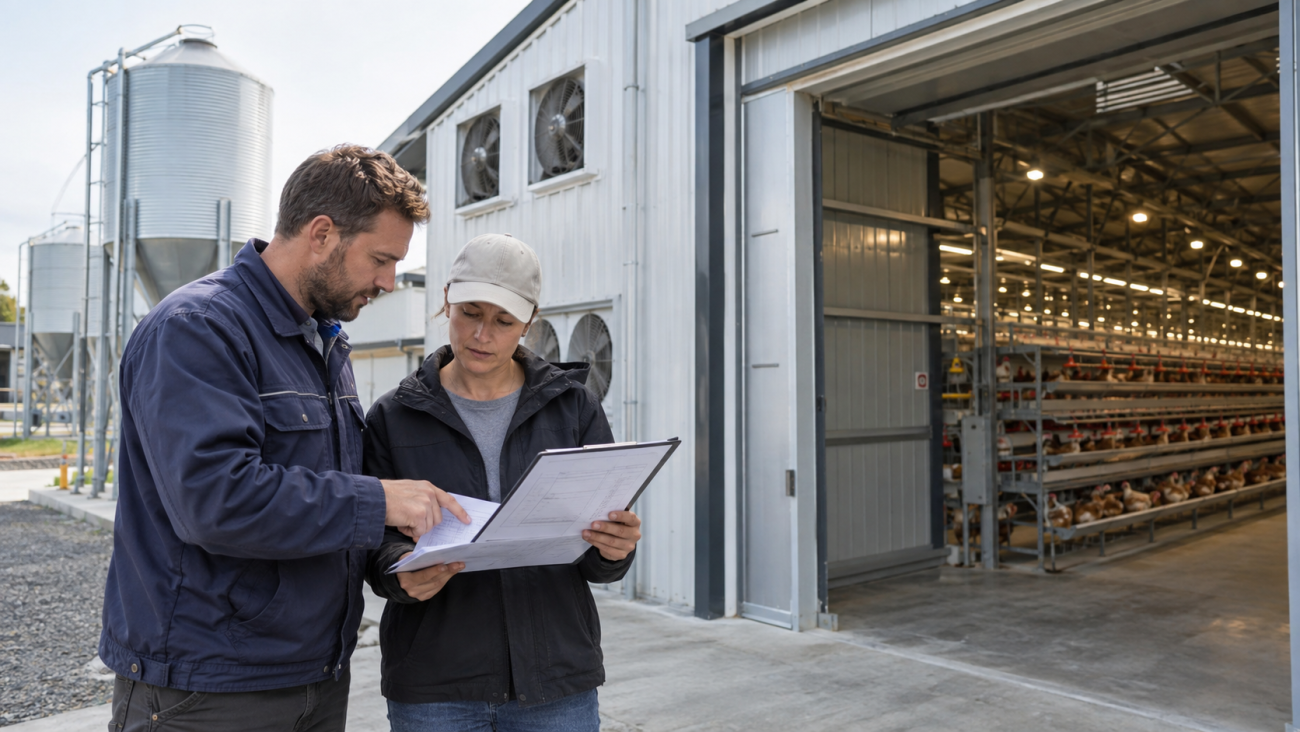
When comparing two quotations, many buyers first look at the total price. Before doing that, it is worth checking what each quotation actually includes.
Does the cage price include nipple drinking lines? Is feeding manual, trolley-based or fully automatic? How will manure be removed? Are motors and controls included? What about egg collection and ventilation?
Two suppliers can both call their offer a “complete poultry system” while describing very different equipment packages.
The purchase price is only one part of the investment.
Labor, electricity, routine maintenance, spare parts, equipment downtime and future expansion also affect the real cost of running the farm.
This is where a cheaper quotation can eventually become an expensive project.
2. Start With the Farm, Not the Equipment List
We would not normally recommend a cage system based only on bird capacity.
A 20,000-layer farm in a mild climate with affordable labor may need a very different configuration from the same-size farm in a hot and humid region where labor is difficult to find.
Before selecting equipment, several basic conditions should be clear:
- Bird type and target capacity
- Poultry house length, width and height
- Open, semi-closed or closed housing
- Local temperature and humidity
- Electricity and backup power conditions
- Labor availability and cost
- Future expansion plans
Once these points are clear, it becomes much easier to decide what should be automated immediately and what can be added later.

3. Some Parts of the Farm Are the Wrong Place to Save Money
Cost control does not mean reducing the specification of every component.
Cage structure and corrosion protection are good examples.
Poultry houses contain moisture, manure and ammonia. Cage frames, wire mesh and exposed steel therefore need suitable corrosion resistance, especially in humid or coastal environments.
The drinking system also deserves attention.
A nipple that leaks continuously may look like a small problem, but extra moisture around cages and manure can create more cleaning and maintenance work. Over time, a small component can become a daily management problem.
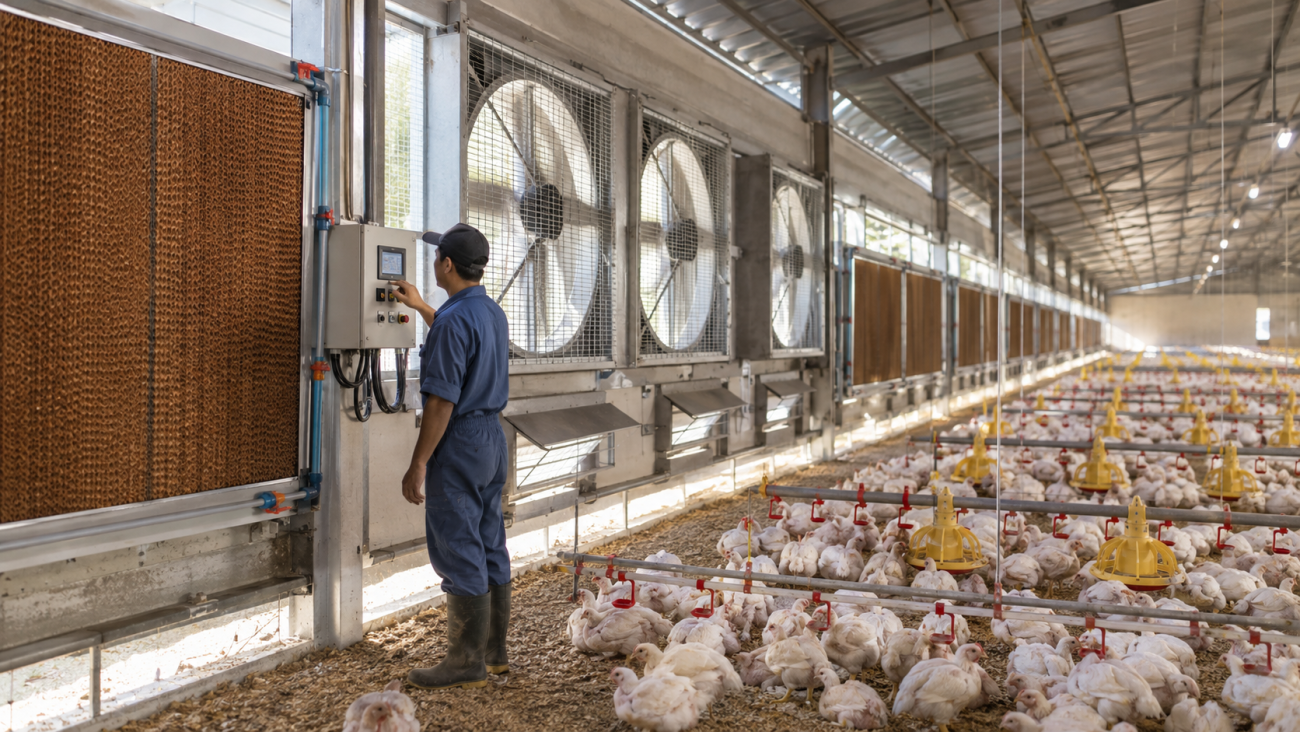
Ventilation is another area where underinvestment can affect the whole project.
The FAO guidance on poultry management and housing highlights temperature, humidity and air movement as important parts of the poultry environment, and notes that commercial production generally moves toward greater mechanization and automated ventilation as operations become larger.
For a hot-climate project, expensive cages inside a poorly ventilated poultry house are not a cost-effective combination.
4. Some Automation Can Be Added Later
Not every system has to be installed on day one.
For a smaller layer farm, a central egg conveyor may not be the first priority. The farm can begin with a simpler egg collection method while leaving enough space and a suitable layout for future upgrading.
Advanced monitoring is similar.
Remote alarms and centralized environmental controls are useful for larger farms, but a smaller operation may first need reliable feeding, drinking, manure removal and ventilation.
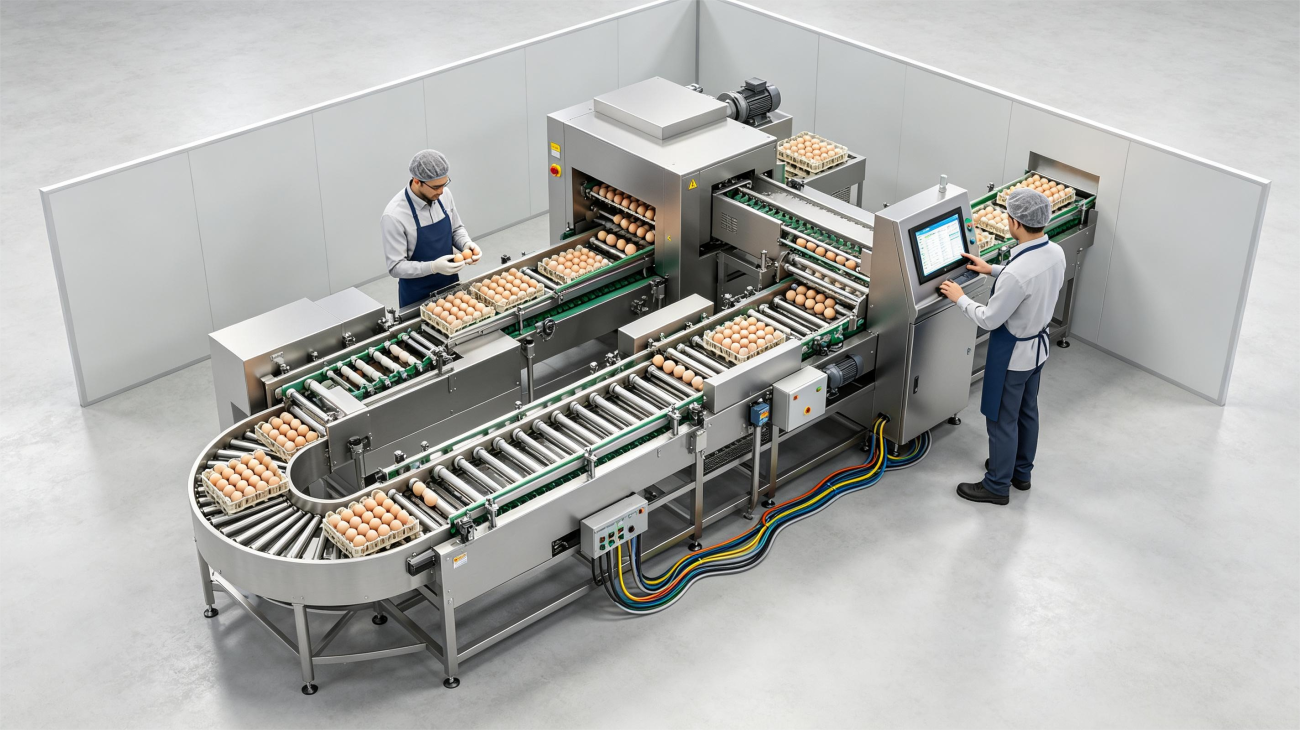
Egg grading and packing equipment can also be introduced later when daily egg output and the sales channel justify the investment.
There is an important difference between a low-budget farm and a badly designed farm.
A good low-budget project still leaves room for expansion.

5. A-Type or H-Type: Which Is More Cost-Effective?
This is one of the most common questions when planning a commercial layer farm.
An A-type stepped cage normally requires a lower initial investment and can work well for small and medium commercial farms.
It also gives buyers more flexibility over automation. Feeding, drinking, manure handling and egg collection can be selected according to the actual budget instead of installing everything at once.
For farms that need to control the first-stage investment, an A-frame layer cage can therefore be a practical starting point.
An H-type system takes a different approach.
The cages are arranged vertically, making more intensive use of the poultry house. This becomes more attractive as bird capacity increases and the farm depends more heavily on automatic feeding, drinking, manure removal and egg collection.
For medium and large commercial egg farms, an H-Type Automatic Layer Cage System can integrate these operations into one equipment layout.
Neither system is automatically better.
If land is available, labor is affordable and maximum stocking density is not the priority, A-type may provide a reasonable balance between initial investment and operation.
For a large intensive farm, H-type may justify a higher initial investment because space utilization and automation become more important.
The real question is not:
“Which cage is cheaper?”
It is:
“Which system fits the way this farm will actually operate?”

6. Climate and Electricity Can Change the Answer
The same equipment list should not simply be copied from one country to another.
In Southeast Asia, high heat and humidity make ventilation, corrosion protection and manure management particularly important.
In the Middle East, high summer temperatures can make cooling capacity and airflow a major part of the poultry house design.
Some African projects face a different issue: unstable electricity.
A highly automated farm without reliable backup power can create operational risks when ventilation, feeding or manure-removal equipment depends on motors and controllers.
In these cases, adding more automation is not automatically the better decision.
Power supply, backup generation and emergency operation should be considered together with the equipment configuration.
This is why climate and local infrastructure should be discussed before the final quotation is prepared.
7. Good System Design Can Save More Than a Cheaper Component
Another common mistake is purchasing every system separately.
A buyer may source cages from one supplier, fans from another and feeding equipment from a third, then try to make everything fit during installation.
Sometimes it works.
Sometimes the poultry house has already been built before the final cage layout is confirmed.
Then problems begin.
The aisles may be too narrow. Equipment clearance may be insufficient. Fan positions may need to be changed. Egg or manure conveyors may not have enough installation space.
These changes cost money, even if each individual piece of equipment was purchased at a good price.
It is usually better to confirm the poultry house, cage layout, feeding, drinking, manure removal, egg collection and ventilation together before construction is finalized.
Changing a drawing is relatively easy. Changing a completed poultry house is not.
8. Spend Where Failure Hurts Production
There is no single cheapest poultry farm configuration that works everywhere.
For one project, the sensible decision may be an A-type cage with automatic drinking and feeding, while egg collection is added during a later expansion.
For another project, a highly automated H-type system may make more economic sense over the operating life of the farm because it reduces daily manual work and supports a larger capacity.
At Guangxing, the useful starting information for a new poultry project is usually simple:
bird type + target capacity + poultry house dimensions + project country + required automation level.
With these details, equipment can be matched to the actual site rather than selected from a standard product list.
That is the practical meaning of cost-effective poultry farm equipment.
Do not save money where equipment failure can interrupt daily production.
Save where a system can be simplified safely, introduced in stages or upgraded when the farm grows.
The goal is not to build the cheapest poultry farm.
It is to avoid paying twice for the same problem.