


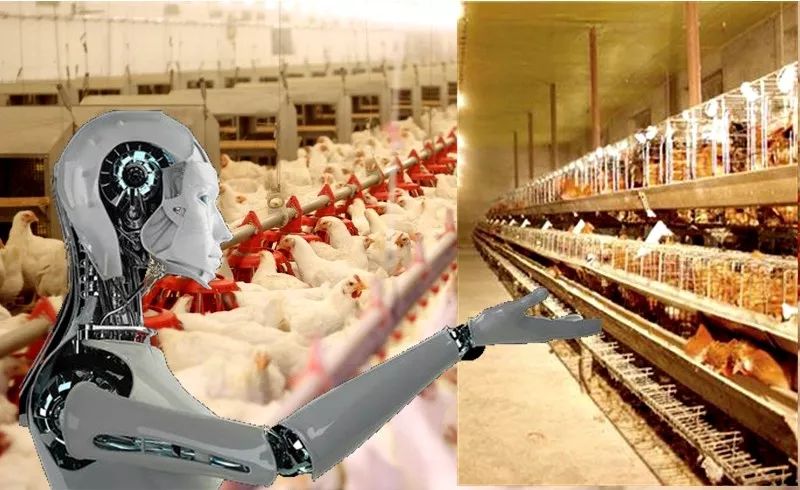
Planning a poultry farm in Imo State is very different from simply buying cages and putting birds inside them.
Before ordering equipment, I would first look at four things: how many birds the farm will hold, whether it is a layer or broiler project, how much daily labor is available, and how reliable the power and water supply will be.
These decisions affect almost everything that comes later — the poultry house size, cage type, ventilation, manure handling, feeding system and even how easily the farm can expand.
For a small farm outside Owerri, a simple A-frame cage system may be perfectly practical. For a commercial layer project with 20,000, 50,000 or more birds, the same approach can create too much manual work.
There is no single equipment package that suits every farm.


Start With Farm Capacity, Not the Cage Price
One mistake we often see in new poultry projects is that equipment is selected before the farm layout is confirmed. A buyer may ask for the price of 10,000-layer cages, but we still need to know:- poultry house length and width;
- planned number of birds;
- number of houses;
- layer, pullet or broiler project;
- open or environmentally controlled house;
- available power supply;
- water source;
- level of automation;
- whether future expansion is planned.
A-Type or H-Type Layer Cages in Imo State?
For commercial egg farms, this is usually one of the first equipment decisions.
A-Type Cages: Practical for Farms Controlling Initial Investment
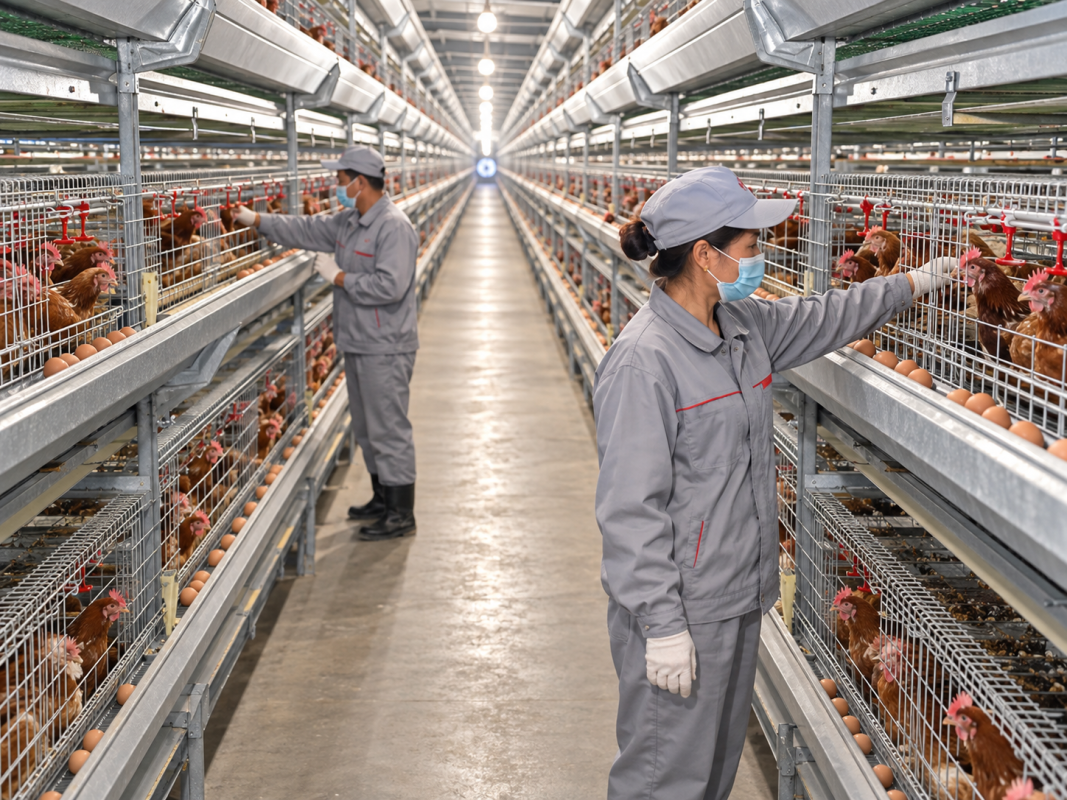
An A-frame layer cage is often suitable for small and medium commercial farms where the owner wants to control the first investment while still moving away from traditional floor raising. The stepped structure provides relatively open airflow around the cages and is straightforward to operate. Depending on the project, an A-type farm can begin with: A-frame cages, nipple drinking lines, feed troughs and basic manure removal. Automatic feeding or egg collection can then be added according to the farm’s budget. For farms where labor is still readily available, this can be a sensible way to start commercial production without installing every automatic system on day one. However, the owner should also consider the long-term labor requirement. Manual feeding or egg collection may look inexpensive at 3,000 birds. At 20,000 or 30,000 birds, the same job becomes a daily operating cost.H-Type Cages: Better Suited to Intensive Commercial Farms
An H-type layer cage system uses the vertical space of the poultry house more efficiently. It is usually considered when the farm needs higher bird capacity, lower dependence on manual work and a more integrated automatic system. A complete H-type project can combine: automatic feeding, nipple drinking, manure belt removal, egg collection, ventilation, lighting and environmental control. This does not mean every large farm must choose H-type cages. If electricity supply is unstable, spare parts are difficult to manage or the farm team is not ready for a highly automated operation, installing too much equipment can create another problem. The correct level of automation should match the farm’s actual operating conditions.A 10,000-Layer Farm Is a Useful Example
Suppose an investor plans to build a 10,000-layer farm in Imo State. There are several ways to configure it. A lower-investment project may use A-type cages with nipple drinking, manual or trolley feeding, mechanical manure removal and natural ventilation supported by fans. This keeps the initial equipment package relatively simple. Another investor may prefer an A-type cage system but add automatic feed transport, feeding trolleys and improved manure removal. This reduces daily labor without moving directly to a fully automatic H-type farm. A third option is a multi-tier H-type system with automatic feeding, egg collection and manure belts. That option normally requires a larger initial investment, but it becomes more attractive when labor reduction, higher stocking capacity and future expansion are important. The right answer depends less on which system looks more advanced and more on how the farm will actually be managed five years from now.
Ventilation Matters in Southern Nigeria
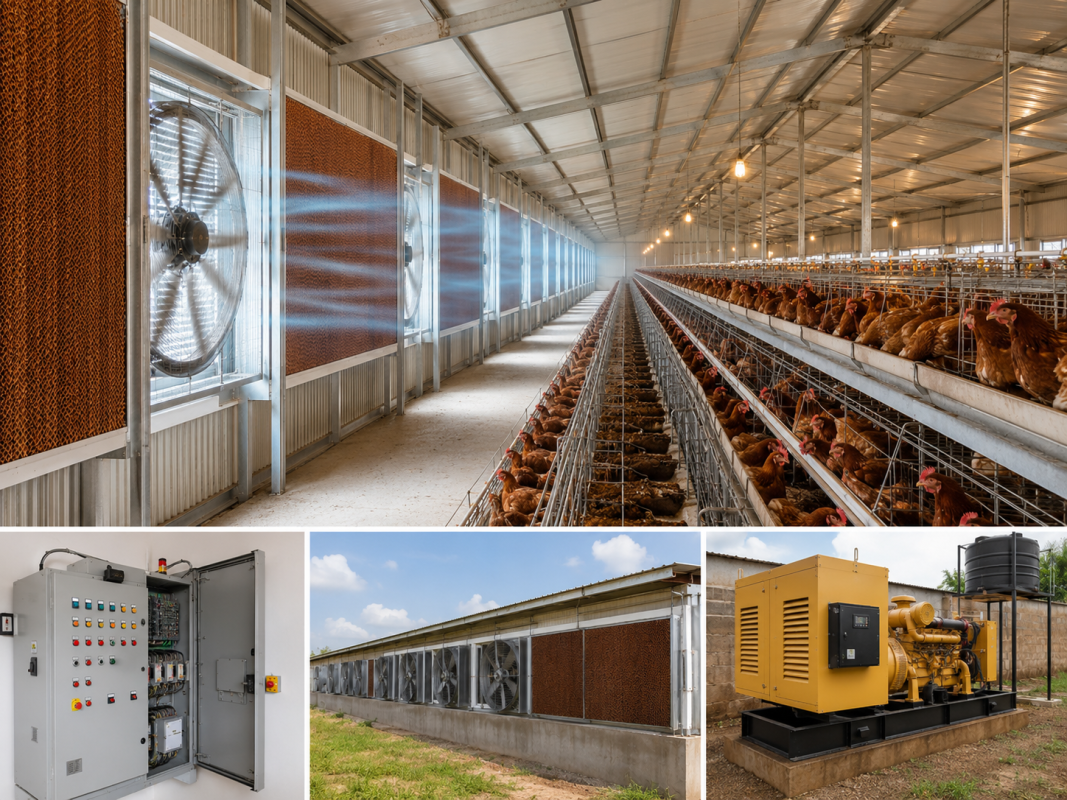
Cage quality alone will not solve a poor poultry house environment. For projects in Imo State, heat and humidity need to be considered when designing the house and selecting ventilation equipment. In a naturally ventilated poultry house, the building orientation, side openings, roof design and distance between houses can make a noticeable difference. As bird density increases, relying entirely on natural airflow becomes more difficult. Commercial farms may need circulation fans, exhaust fans or tunnel ventilation. Larger environmentally controlled houses can also use cooling pads. When calculating ventilation, we do not recommend selecting fans simply by counting the number of birds. House dimensions, stocking density, outside temperature, cage layout and air inlet arrangement also matter. Air must move through the birds’ living area rather than taking the easiest path through an empty part of the house.Do Not Ignore Backup Power
This is one of the practical issues that should be discussed before the equipment is finalized. A farm with manual feeding can continue operating for some time during a power outage. A highly automated poultry house is different. Ventilation fans, feed motors, water pumps, controllers, lighting and egg collection equipment may all depend on electricity. If a closed poultry house loses ventilation during hot weather, the risk can become serious much faster than the failure of a feeding trolley. For this reason, larger projects should consider backup generation and emergency ventilation as part of the farm design rather than as accessories to purchase later. It is also useful to separate critical loads from equipment that can temporarily stop. Ventilation and water supply usually deserve higher priority than systems that can wait for power to return.Automatic Feeding: Where Automation Starts to Make Sense
Feeding takes place every day, so even small inefficiencies become expensive over time. In a larger poultry house, carrying or manually distributing feed creates several problems. It requires more workers, makes feed distribution less consistent and becomes increasingly difficult as the number of cage rows and tiers increases. A poultry automatic feeding system can connect outdoor feed storage with indoor feed transport and cage feeding equipment. For a growing farm, this is often one of the first automation upgrades worth considering. The feed silo capacity and transport system should be designed according to daily feed consumption rather than selected from a catalogue without calculation. A farm should also keep enough storage capacity to avoid production problems if feed delivery is delayed.Manure Handling Should Be Planned Before Birds Arrive
Manure management is easy to underestimate when looking at a new, clean poultry house. After production starts, it quickly becomes a daily issue. Poor manure handling can increase flies, odor, ammonia and labor requirements. It also makes the area around the poultry house harder to manage during wet weather. A-type farms may use scraping or mechanical manure removal depending on the building structure. H-type cages normally work well with manure belt systems, where manure is removed from each tier and transferred outside the poultry house. For very large projects, manure should not simply be moved from inside the building to a pile beside it. Storage, drying, composting or fertilizer utilization needs to be considered as part of the complete farm. Guangxing also supplies poultry manure treatment and fermentation equipment for projects where centralized manure processing is required.



