


For New Zealand pig farmers planning to build a new farrowing house, renovate an existing pig building, or replace outdated equipment, choosing the right farrowing crates should not be based solely on the purchase price of each unit.
Farrowing crates directly affect sow farrowing, piglet heating, crushing risk, farrowing-house cleaning efficiency, and workers’ daily operations. This is especially important in New Zealand, where labour costs are relatively high, some regions receive significant rainfall, and pig farms vary greatly in size and building conditions. In many cases, corrosion resistance, ease of cleaning, installation convenience, and long-term durability are more important than the initial quotation.
According to the minimum wage rates published by the New Zealand Government, the adult minimum wage will be NZD 23.95 per hour from 1 April 2026. For sow farms where workers must carry out feeding, animal inspections, manure removal, cleaning, and disinfection every day, farrowing crates that are easy to operate and clean can help reduce long-term labour costs. Therefore, New Zealand pig farms should focus on the total life-cycle cost of the equipment rather than simply choosing the lowest-priced product.

What Problems Do New Zealand Pig Farms Face When Choosing Farrowing Crates?
1.Farm Sizes and Pig-House Conditions Vary Considerably
New Zealand has indoor pig-production systems as well as free-range and outdoor farming systems. Local climate, soil drainage, farm location, and production methods all influence the choice of sow farrowing facilities.
New Zealand pork industry information shows that outdoor breeding requires a relatively mild climate, lower rainfall, and well-drained soil. As a result, outdoor production is mainly concentrated in suitable areas such as Canterbury. Farms in regions with higher rainfall or unsuitable soil conditions rely more heavily on indoor pig housing and controlled farrowing environments.
This means New Zealand pig farms cannot rely on one fixed standard farrowing-crate size. Renovation of older pig houses, small-scale expansion, and construction of new commercial farms usually require different pen dimensions, aisle layouts, and flooring configurations.
2.High Labour Costs Require Fewer Repetitive Tasks
Labour costs on pig farms continue to increase, and repetitive manual work requires a significant amount of staff time. Daily work in the farrowing house includes checking sows and piglets individually, removing manure, washing feeders, cleaning pens, adjusting temperature and water supplies, caring for weak piglets, separating animals, and disinfecting pens. These tasks are numerous, detailed, and time-consuming.
If the farrowing-crate gates are difficult to open, feeders are hard to clean, or dirt accumulates underneath the equipment, workers must spend additional time repeating the same work.
Farrowing crates designed for New Zealand pig farms should therefore have a simple and practical structure, allowing one worker to complete inspections, feeding, and cleaning more efficiently while reducing repeated labour costs.
suitable farrowing crates for New Zealand pig farms should feature a simple structure and user-friendly operation, allowing one worker to complete inspection, feeding, and cleaning tasks more efficiently.

3.Humid Conditions and Frequent Washing Can Cause Corrosion
Rainfall varies considerably across New Zealand, and some regions experience relatively high humidity and rainfall throughout the year. Buyers can refer to New Zealand’s national and regional climate maps published by the country’s geoscience and climate research organisations to understand long-term rainfall and climate conditions at the project location.
For humid regions or farrowing houses that require frequent high-pressure washing, hot-dip galvanized steel pipes are generally more suitable for long-term use than ordinary painted frames.
Painted farrowing-crate pipes or steel structures with poor corrosion protection can create many hidden problems. The surface coating may peel away, welds can rust through, feet and joints may corrode after long-term exposure to moisture, and bolts may become so badly rusted that they cannot be removed. In some cases, the entire system may need to be replaced after only a few years.
For New Zealand buyers, corrosion resistance is therefore one of the most important standards when choosing farrowing crates, because it directly affects long-term farming costs.
Why Are Hot-Dip Galvanized Farrowing Crates Recommended?
Hot-dip galvanizing involves immersing the completed steel structure in molten zinc, forming a protective zinc coating over the steel pipes and some connection areas. Compared with ordinary paint or thin electro-galvanized coatings, hot-dip galvanized structures are generally more suitable for pig houses that are frequently washed or exposed to humid conditions.
The practical advantages of hot-dip galvanized steel are clear. It provides strong corrosion resistance, is less likely to peel or rust, reduces the need for frequent repainting and repair, and helps the complete farrowing system remain durable for many years. It is well suited to commercial pig farms operating continuously throughout the year.
Buyers should clearly distinguish between hot-dip galvanizing and electro-galvanizing. They should also verify the steel-pipe diameter, wall thickness, welding quality, and surface treatment after galvanizing.
The crate feet, welds, gate hinges, and feeder connection points deserve particular attention because these areas are more frequently exposed to moisture and waste and are important indicators of overall equipment quality.
What Design Features Make a Farrowing Crate Easy to Clean?
For New Zealand pig farms with high labour costs, easy cleaning is not simply a product selling point. It is a practical feature that can directly reduce daily operating expenses.
A sow farrowing crate that is easy to clean should normally include the following features:
1.Simple Structure with Fewer Hygiene Dead Spots
The bottom of the frame should not contain too many complicated crossbars, and sufficient space should be left between connecting components for washing. Manure and feed residue should not be allowed to accumulate around bolts, crate feet, or panel joints.
2.Feeders That Are Easy to Empty and Wash
Sow feeders should allow workers to inspect leftover feed, empty the feeder quickly, and wash it thoroughly. Where possible, farms can select tilting, removable, or drainable feeders.
3.Convenient Gate Operation
The front or rear gate should open quickly and include a reliable locking mechanism. Workers should not need to spend excessive time removing bars when entering the pen to care for a sow or piglets.
4.Efficient Floor Drainage
Slatted flooring and manure channels should be properly matched so that wastewater drains away quickly after washing. The piglet resting area should remain relatively warm and dry, while floor openings should not be so large that they injure piglets’ feet.

How Can Equipment Design Reduce Labour Requirements?
Reducing labour does not necessarily require complicated automated equipment. In many cases, well-designed practical details can significantly improve working efficiency.
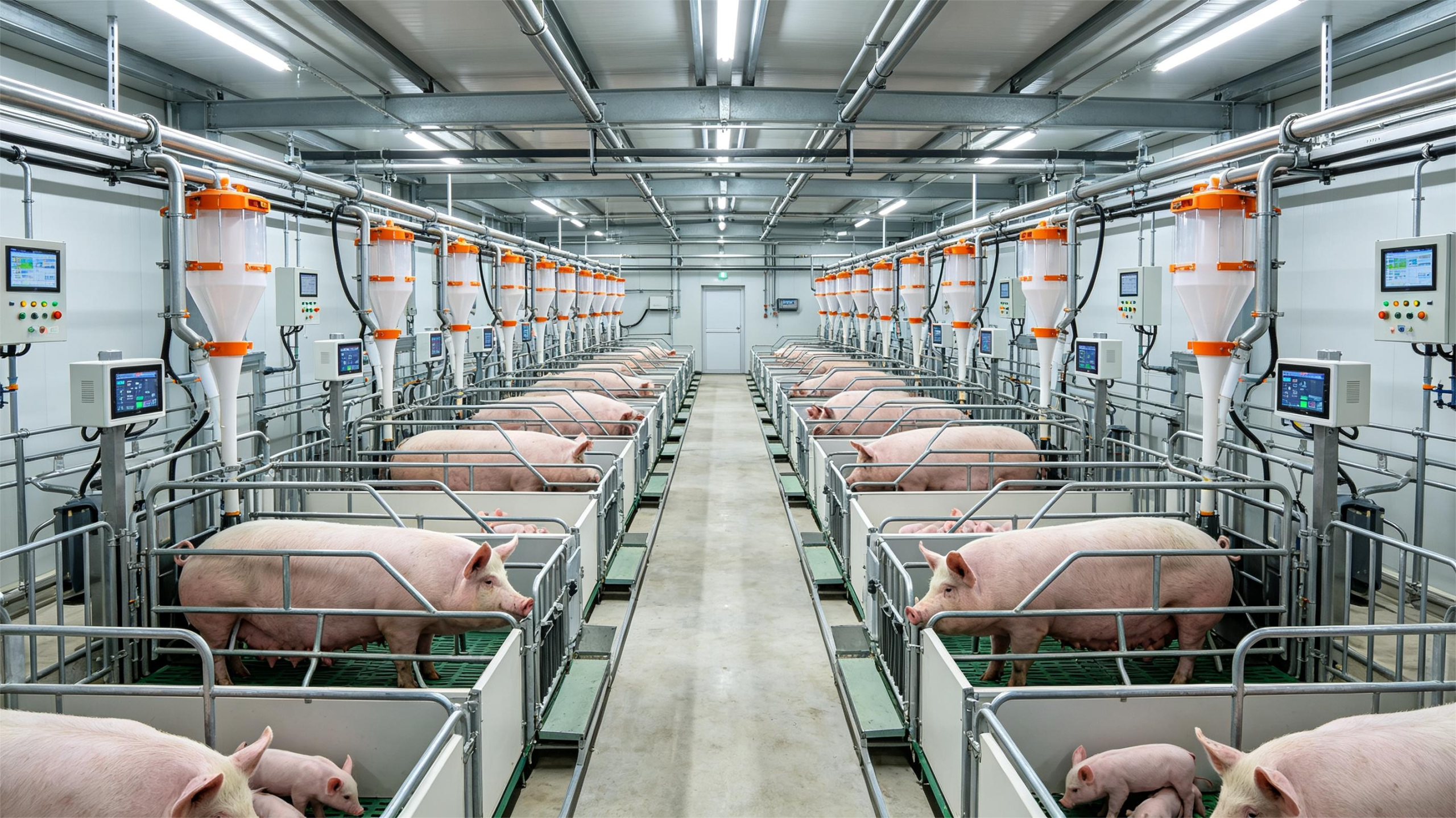
Useful farrowing-crate configurations for New Zealand pig farms include adjustable sow-crate width, easy-to-operate front and rear gates, dedicated sow feeders and drinkers, open fencing that allows workers to inspect piglets easily, standardized replaceable parts, reserved connections for automatic feeding systems, and separate piglet heating and creep-feeding areas.
Local pig-industry standards also make it clear that farrowing facilities should provide a separate heated area for piglets. This allows piglets to rest safely away from the sow and makes it easier and safer for workers to access and care for sows and weak piglets.
Why Is Modular Installation Suitable for New Zealand Pig Farms?
Many New Zealand pig farms do not install hundreds of farrowing crates at one time. Instead, they invest in stages according to the existing pig-house structure, sow numbers, and future expansion plans.
Modular farrowing crates allow the frames, fences, flooring, and connecting components to be packed separately by pen and assembled after arriving at the project site.
Before shipment, the supplier should number every component and provide installation drawings, assembly videos, and a complete parts list. This helps prevent delays caused by unclear or unidentified components after the equipment arrives.
How Can Piglet Crushing Risk Be Reduced?
Piglets can be crushed when the sow lies down, so farrowing facilities need to balance sow movement with piglet safety.
New Zealand pig welfare requirements state that farrowing facilities should allow piglets to reach the sow, maintain their body temperature, and avoid being crushed, while also meeting the welfare needs of the sow.
It is important to understand that even the best equipment cannot completely replace good farrowing-house management. Workers must still record the causes of piglet mortality, check weak piglets, ensure adequate colostrum intake, and adjust heating temperatures promptly.
Importing from China or Buying Locally in New Zealand?
Both purchasing options have advantages. The key is to compare the complete landed project cost.
Buying Locally in New Zealand
Local purchasing generally offers convenient communication, faster delivery of small quantities of spare parts, and easier access to on-site service. However, customized product choices may be more limited, and prices for bulk equipment or complete systems may be higher.
Importing from Chinese Manufacturers
For new pig farms, large-scale farrowing-house renovation, or projects requiring non-standard customized dimensions, purchasing a complete system from China often provides better overall value.
A complete farrowing-house package can include:
Hot-dip galvanized sow crates, piglet protection fences, specialized slatted flooring for sows and piglets, complete feeding and drinking equipment, piglet heating equipment, automatic feeding connection points, full installation accessories, and commonly required replacement parts.
However, imported equipment costs should also include packaging, sea freight, customs clearance, local transport, and installation.
Do not compare only the price of a metal crate frame. A more accurate comparison should include:
Equipment price + flooring + feeders + drinking system + heating system + packaging + sea freight + customs clearance + installation + spare parts.
Some low-priced products include only the sow restraint frame. Flooring, piglet fences, drinking equipment, and heating systems must then be purchased separately, meaning the final installed cost may not actually be lower.
What Information Should Be Provided to the Supplier Before Purchasing?
To obtain an accurate layout and realistic quotation, buyers should prepare the following information before contacting the supplier:
Pig-house floor-plan dimensions, total number of farrowing crates required, sow breed and body size, slatted-floor and manure-channel design, aisle width and crate arrangement, requirements for feeders, drinkers, piglet heating and automatic feeding equipment, project location, destination port, construction and production schedule, and whether on-site or remote installation guidance is required.
Only after receiving complete project information can the supplier provide a pen layout, configuration list, packing plan, and quotation that more accurately reflects the final installed cost.
Conclusion
Choosing suitable farrowing crates for New Zealand pig farms should not be based only on the lowest unit price.
For New Zealand projects with high labour costs, frequent farrowing-house washing, and flexible pig-house sizes, it is more important to select farrowing crates that are genuinely suitable for local farming conditions.
A complete farrowing system with a slightly higher initial price but strong corrosion resistance, easy cleaning, and complete accessories will usually provide better long-term value than a low-cost bare crate.
For a new or renovated farrowing house in New Zealand, buyers can provide the supplier with the pig-house dimensions, sow numbers, and required number of crates to receive a customized layout, equipment list, and complete quotation.


