


For investors planning to build a large-scale layer farm, broiler farm, breeder farm, or poultry processing plant, there is no single answer to the question, “What is the best poultry equipment in the world?”
Truly world-class poultry equipment is not defined solely by its level of automation. It should also address practical challenges such as stocking density, labor costs, animal welfare, feed waste, poultry house conditions, egg breakage, food safety, and production traceability.
Different equipment manufacturers have different areas of expertise. Some specialize in automated layer housing, while others focus on cage-free systems, precision feeding, environmental control, egg grading, or poultry slaughtering and processing.
The following sections introduce six representative types of advanced poultry equipment, together with their technological advantages, manufacturers, and real-world applications.

1. Guangxing H-Type Fully Automatic Layer Farming System
Manufacturer: Guangzhou Guangxing Poultry Equipment Group, China
European manufacturers have strong advantages in precision control, animal-welfare-oriented farming, and high-end egg processing. Chinese complete poultry equipment manufacturers are also highly competitive for projects requiring complete farm planning, equipment customization, steel-structure poultry houses, overseas installation, and comprehensive cost control.
Guangxing’s H-type multi-tier layer farming system integrates cages, automatic feeding, nipple drinking, automatic manure removal, automatic egg collection, and environmental control into one production system.
The H-type structure makes full use of the vertical space inside the poultry house and is suitable for commercial layer projects with large flock capacities.
Feed is distributed to different tiers through automatic feeding equipment. Manure falls onto manure belts installed under each level and is regularly transported outside the poultry house. Eggs are carried by longitudinal egg belts to a cross conveyor or central egg collection system.
The technological strength of the system lies mainly in system integration and project adaptability rather than dependence on one individual machine.The manufacturer can combine and design the number of equipment tiers, ventilation method, cooling-pad area, egg collection route, and manure-treatment solution according to flock size, poultry house dimensions, local climate, electricity conditions, and labor costs.
At the Jinji Project in Shilou, Shanxi, Guangxing has installed H-shaped multi-tier layer hen cages, along with an automatic feeding system, automatic drinking system, feces conveyor cleaning system, and automatic egg collection system. The project utilizes complete sets of automated equipment to reduce repetitive manual labor and enable more centralized and standardized poultry house management.

2. Vencomatic Bolegg Terrace and Meggsius Precision Poultry Management System
Manufacturer: Vencomatic Group, the Netherlands
Vencomatic Group is a well-known manufacturer in the fields of cage-free housing, animal-welfare-oriented production, and precision layer management. Its product range includes layer aviary systems, breeder nests, egg transportation equipment, chick management solutions, and farm data collection systems.
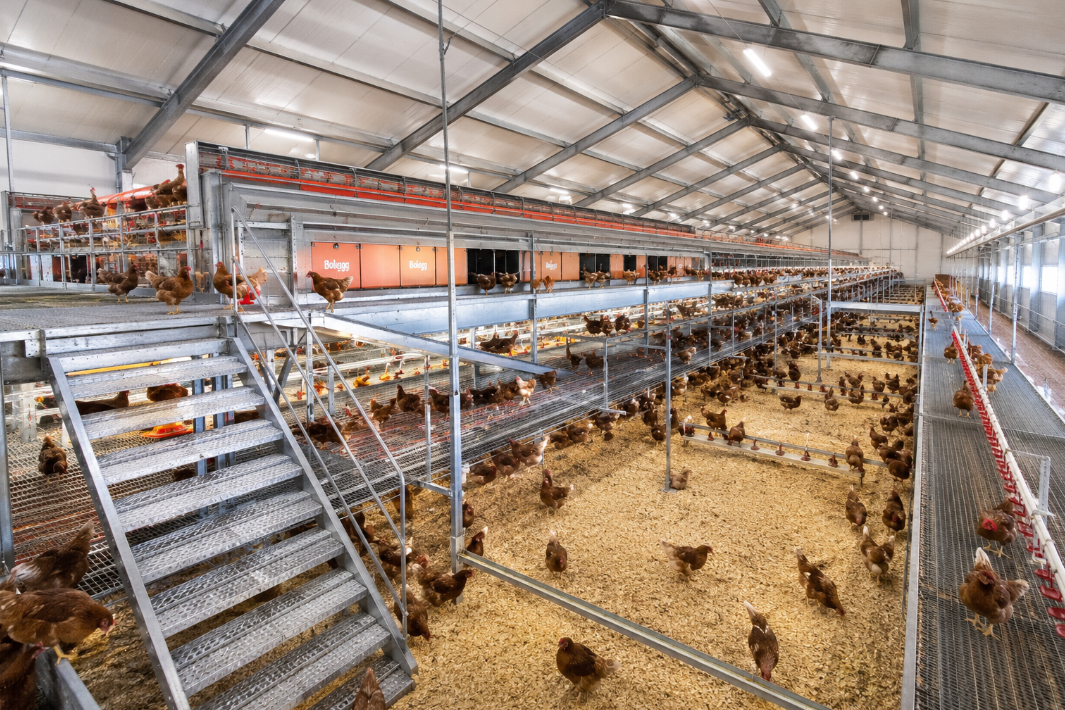
Bolegg Terrace is a multi-tier open aviary system for layer farming. Unlike conventional enclosed cage equipment, it uses a stepped structure that allows hens to move between different levels and easily access drinking areas, feeding areas, perches, and nesting zones.
One important feature is its open spatial design, which supports better airflow and makes flock observation easier for farm workers. Properly designed passages and tier layouts help distribute birds throughout the poultry house and reduce localized overcrowding.
Vencomatic has also developed the Meggsius precision poultry management system. Functions such as Detect, Count, and Select use sensors, imaging, and data collection technologies to analyze flock behavior, egg numbers, and production changes. This enables farm managers to identify potential problems earlier instead of responding only after an issue has already occurred.
Main Advantages
The system balances animal welfare and movement space with commercial production capacity. Its open structure makes daily inspection of flock health easier. It continuously collects production data such as egg output and flock activity, helping managers anticipate potential farming risks. It is suitable for barn and free-range production and closely matches the requirements of overseas markets with high animal welfare standards.
Dutch poultry farmer Jos Nelissen raises approximately 70,000 and 60,000 laying hens at two separate farm locations. Both poultry houses use the Bolegg Terrace system.
He was also one of the earlier poultry farmers in the Netherlands to use Meggsius Select, Count, and Detect equipment, using cameras and data systems to monitor flock behavior continuously.
3. Roxell iQon Smart Poultry House Controller and MiniMax Precision Feeding Equipment
Manufacturer: Roxell, Belgium
Feed is usually one of the most important costs in commercial poultry farming. Therefore, world-class feeding equipment should do more than simply deliver feed to the birds. It should also control feed distribution, reduce residual feed, and adjust feeding strategies according to bird age and production stage.
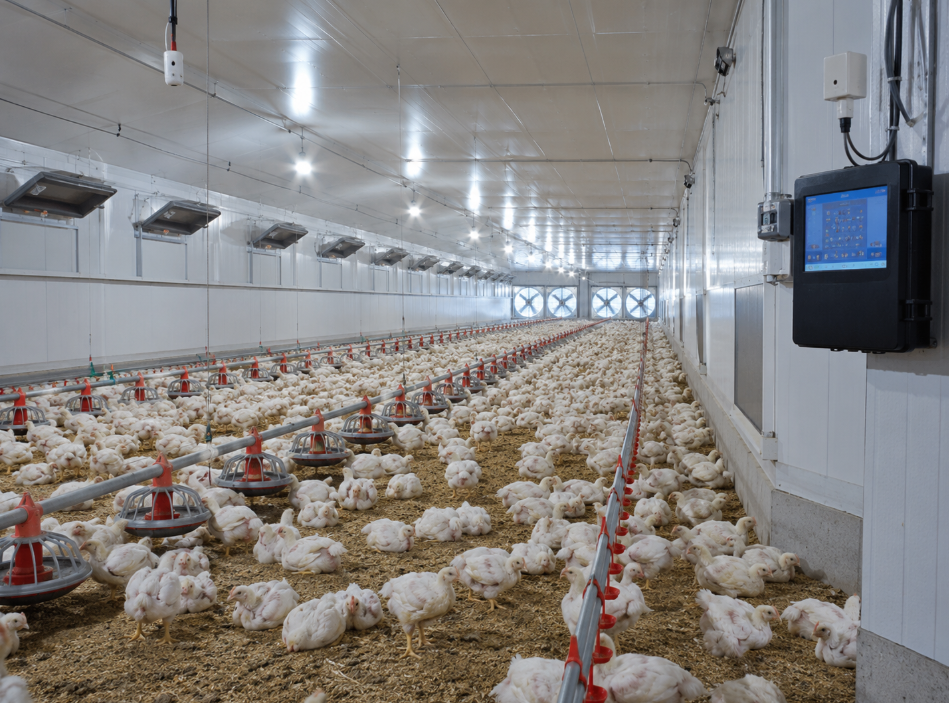
Roxell’s MiniMax pan feeding system is widely used in broiler farming. The pans can provide feed from the early chick placement stage and continue to be used as the birds grow, reducing the need for equipment replacement and manual adjustment.
Unlike conventional single-function controllers, Roxell iQon can manage feeding, drinking, heating, and ventilation through one control platform. Farms can set feeding curves, schedules, and feed quantities for different flocks and view poultry house conditions through computers, tablets, or mobile phones.
Its main technological advantage is the integration of systems that were traditionally operated independently. For example, farm managers can simultaneously review feed consumption, changes in water intake, poultry house temperature, and ventilation conditions, helping them identify abnormal production performance in a timely manner.

Main Advantages
The system provides integrated control of feeding, drinking, heating, and ventilation equipment. Precision feeding curves can be customized according to the growth cycle of the birds.
It also supports real-time remote monitoring and parameter adjustment, simplifying the operation of multiple separate controllers. This makes it particularly suitable for large farming groups that need centralized management of multiple poultry houses.
Advanced feeding and climate-control equipment should support flock health and welfare rather than focusing only on production efficiency. The WOAH poultry welfare standards provide internationally recognized guidance for broiler production systems, covering housing conditions, thermal environment, air quality, lighting, stocking density, feeding, water supply, and flock management.
Baramati Agro, a large agricultural company in India, uses the Roxell iQon control system at its broiler breeder farm. The central controller allows the company to monitor feeding and equipment operation across different poultry houses.
The De Sutter broiler farm in Belgium has also used the MiniMax pan feeding system for the long-term production of approximately 40,000 broilers.
4. Moba Omnia and Mopack Automatic Egg Grading and Packing Equipment
Manufacturer: Moba, the Netherlands
When a layer farm reaches a capacity of hundreds of thousands or even millions of hens, collecting eggs from the poultry house is only the beginning.
Eggs must also be cleaned, inspected, weighed, graded, packed, and boxed before they can enter supermarkets, food-processing plants, or export markets.
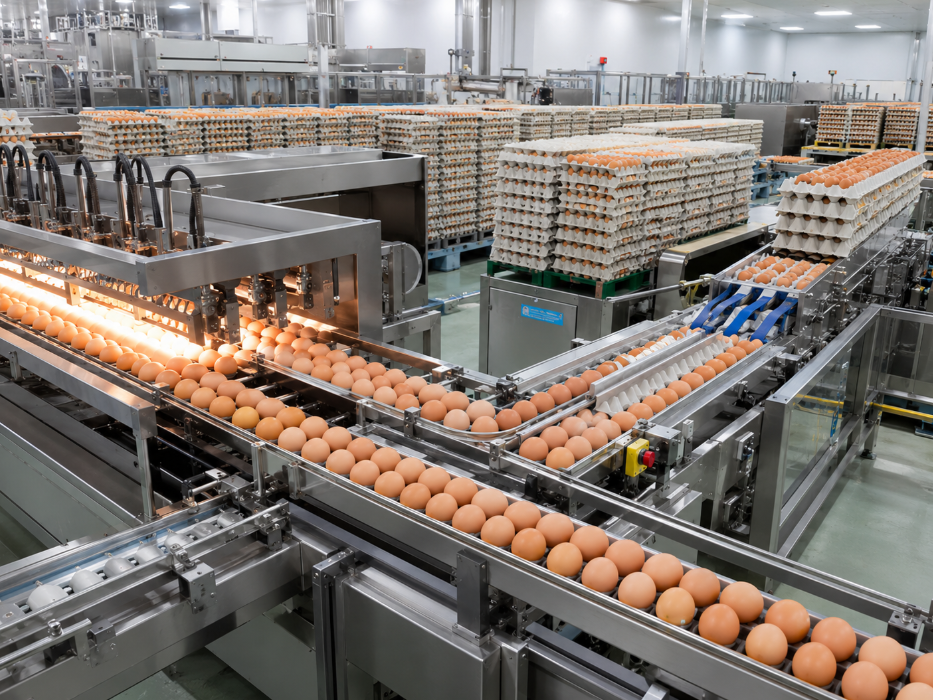
Moba has long specialized in egg grading, packing, and egg-processing equipment. Its Omnia series integrates egg inspection, weighing, grading, and packing into one production line. Eggs can then be directed to different packing lanes based on their weight, surface quality, and detected defects.
The Mopack EP is an automatic farm-packing machine. It can receive eggs directly from the central egg collection line and pack them into 30-egg trays. Its rated processing capacity can reach 27,000 eggs per hour.
The Mopack EP uses sensors and egg-flow control structures to regulate the speed at which eggs enter the machine, reducing frequent starts and stops. It also uses easy-to-clean structures and stainless-steel materials to meet hygiene requirements for egg handling.
Main Advantages
The equipment automatically integrates egg weighing, grading, sorting, and packing. It can intelligently detect cracked, dirty, leaking, and other unqualified eggs.
It reduces manual handling and transportation losses, maintains consistent grading standards, and supports efficient fulfillment of large-volume orders. It is a suitable choice for large layer farms, egg-processing centers, and egg export companies.
Chew’s Agriculture, one of Singapore’s major fresh egg producers, installed the Moba Omnia PX530, Moba 2500, and Ovolution 1300 liquid egg processing line at its new layer farm.
The project was designed to produce no fewer than 800,000 eggs per day, with equipment covering automatic inspection, washing, grading, packing, and further egg processing.
Geldard Farm Eggs in the United Kingdom was also one of the earlier users of the Mopack EP. The company stated that the new equipment helped reduce the time required for egg packing and improve packaging quality.
5. JBT Marel Automatic Poultry Slaughtering, Cutting, and Production Traceability System
Manufacturer: JBT Marel, Iceland and international manufacturing locations
For large broiler enterprises, advanced equipment is not limited to the farming stage. It also covers slaughtering, evisceration, chilling, weighing, cutting, deboning, inspection, and packing.
JBT Marel provides equipment and software systems covering the entire poultry-processing process.
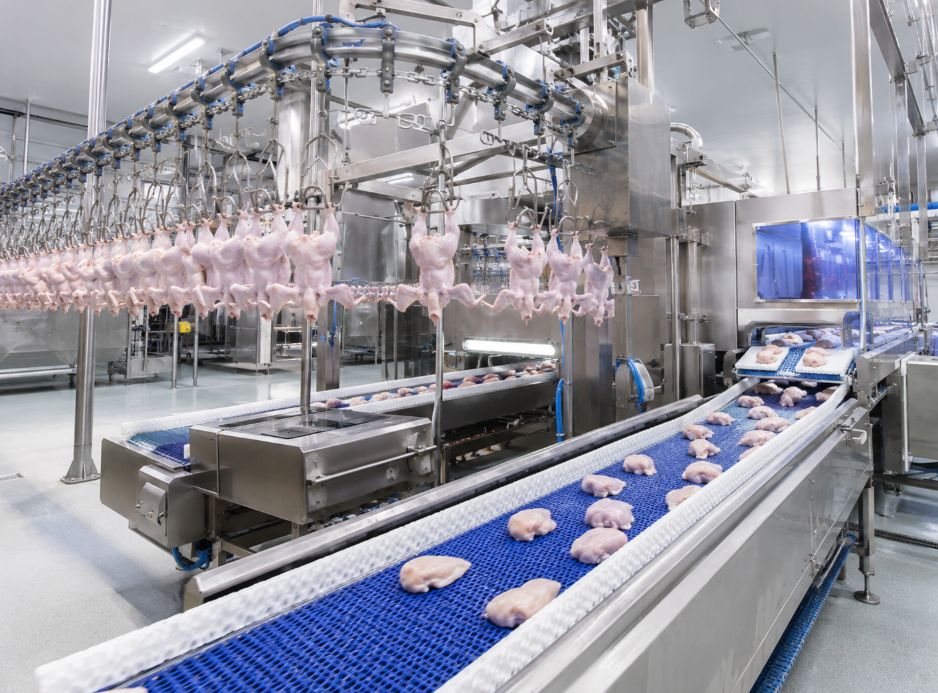
Its automatic cutting and deboning equipment can process chicken breasts, legs, wings, and other parts according to product specifications. Vision recognition, weighing, and production software are then used to control product flow.
Compared with individual slaughtering machines, Marel’s advantage lies in its ability to connect machinery, production data, and quality traceability.
The PDS production distribution system can continuously record product information from live bird processing and whole-bird grading through to cutting and further processing. This data supports quality management, order processing, and food safety traceability.
Main Advantages
The system supports high-speed, continuous poultry slaughtering and further-processing operations while replacing heavy and repetitive manual work.
It helps maintain a high degree of consistency in cutting specifications and individual product weights. It can also collect production volume, yield, loss, and equipment operating data in real time.
By connecting the entire product traceability process from slaughtering through cutting, it meets the standardized production requirements of large poultry-processing plants.
Arasco Entaj Poultry, a major poultry-processing company in Saudi Arabia, adopted a large amount of Marel equipment and software during its capacity expansion.
The company operates two processing lines, each capable of handling 13,500 birds per hour, with a maximum processing capacity of approximately 500,000 birds.
According to a company representative, about 90% of the solutions used in the plant were supplied by Marel. The company also uses the PDS system to track products from the start of the processing line through the cutting stage.
JBT Marel’s customers also include Baiada in Australia, LDC Group in France, Hubers Landhendl in Austria, and several large poultry-processing companies in China.
6. Big Dutchman Natura Step Layer Aviary and Automatic Egg Collection System
Manufacturer: Big Dutchman, Germany
Big Dutchman is one of the world’s representative manufacturers of poultry and pig farming equipment. Its product portfolio covers layer, broiler, and breeder systems, as well as feeding, drinking, egg collection, manure removal, environmental control, and digital farm management.
Natura Step is a multi-tier housing system designed for barn and cage-free layer farms. It uses platforms, perches, nesting areas, feeding lines, and drinking lines positioned at different heights, providing hens with space for movement while making efficient use of the vertical space inside the poultry house.
The advanced feature of this system is not simply that it moves birds from conventional cages into an open poultry house. It integrates bird movement, egg laying, drinking, feeding, and egg transportation within one coordinated spatial structure.
The EggTrax egg belt drive system can transport eggs smoothly from longitudinal egg belts to a central egg collection line. The EggCellent egg collection elevator is suitable for multi-tier poultry houses and can collect eggs from different levels while reducing manual handling and the risk of collision during transportation.
Advantages for Cage-Free Layer Houses
The system makes efficient use of existing poultry house space while supporting natural movement and designated nesting behavior. Fully automatic egg collection helps prevent damage caused by manual transportation. It can also be connected to a cloud-based farm management platform, enabling centralized digital management of production data while reducing costs and improving egg quality.
APF Holdings in Latvia is one of the larger egg producers in the Baltic region. In 2024, the company purchased Big Dutchman Natura Step, EggTrax, EggCellent, and cloud-based data management systems for two newly constructed cage-free layer houses. The contract value reportedly reached EUR 4 million.
How to Choose World-Class Poultry Equipment
The “best equipment in the world” is not necessarily the most expensive system or the one with the greatest number of automation modules.
The right solution should match the farming model, market regulations, project scale, and local operating conditions.
For cage-free or animal-welfare-oriented layer projects, investors can focus on the aviary systems offered by Big Dutchman and Vencomatic.
For precision feeding and centralized poultry house control, professional equipment manufacturers such as Guangxing can be considered.
For the construction of large egg grading and packing centers, Guangxing offers a mature range of equipment solutions.
For poultry slaughtering and further processing, JBT Marel’s complete processing lines and traceability software are highly representative.
Customers who place greater importance on return on investment, complete farm customization, and overseas project delivery should compare European brands with Chinese complete equipment manufacturers.
The FAO points out that the poultry house environment should meet the physiological requirements of the birds. As farms develop toward medium- and large-scale operations, the use of commercial equipment, mechanization, and automation becomes increasingly important.
Equipment purchasing decisions should therefore not be based solely on the price of an individual machine. Investors should also evaluate poultry house construction, installation and commissioning, energy consumption, spare-parts supply, technical training, and long-term maintenance costs.
Conclusion
From automated poultry houses and intelligent environmental control to precision feeding, egg grading, high-speed slaughtering, and food traceability, the global poultry equipment industry is moving from traditional mechanization toward digitalization, intelligent control, and integrated production systems.
Big Dutchman, Vencomatic, Roxell, Moba, and JBT Marel represent advanced technologies in different segments of the industry.
Chinese manufacturers such as Guangxing provide another competitive option in fully automated poultry farming systems, complete farm planning, and customized international project delivery.
For poultry farm investors, truly world-class equipment is not simply the system with the greatest number of functions on a technical specification sheet.
It is a complete solution that can operate reliably over the long term, reduce total operating costs, and match local production conditions.



