


As layer farming continues to develop toward larger-scale and more automated production, the equipment configuration inside poultry houses is also changing. This is especially true for farms using H-type multi-tier cage systems. If feed is still distributed manually, labor requirements remain high, and it becomes difficult to ensure consistent feed supply across every tier and cage row.
For this reason, the multi-tier cage automatic feeding system has become an important part of modern layer farms and pullet-rearing facilities.
Why Do Multi-Tier Cage Systems Need Automatic Feeding?
One of the main advantages of multi-tier cage farming is the ability to accommodate more birds within a limited poultry house area, improving stocking capacity per unit of floor space.
Common H-type cage systems can be designed with 3 tiers, 4 tiers, 5 tiers, or even more, depending on poultry house height, farm capacity, and project requirements. As the number of cage tiers increases, manual feeding becomes increasingly difficult.
For example, a poultry house accommodating tens of thousands of laying hens may require several feeding cycles every day. If workers have to distribute feed manually to every tier, the farm will require more labor, while uneven feed distribution may occur between different sections of the cage system.
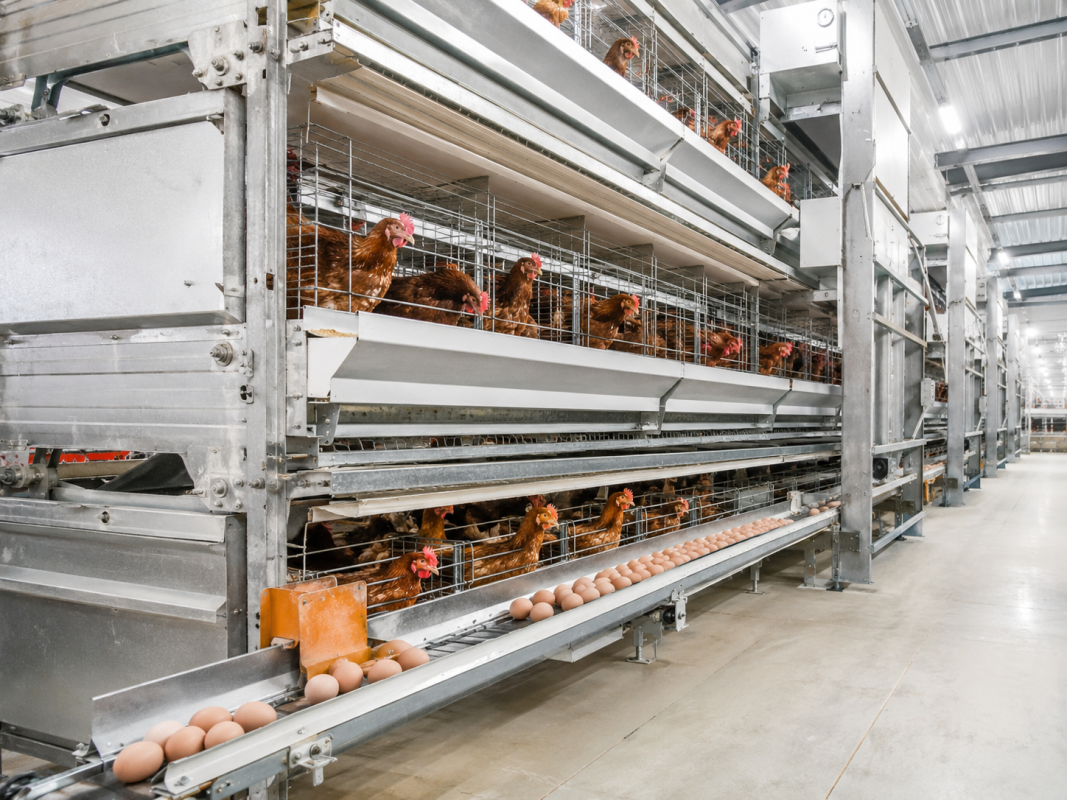
An automatic feeding system can use feed silos, feed conveying pipes, cross-conveying equipment, and feeding machines to deliver feed to the troughs on each cage tier according to a preset feeding process.
What Equipment Is Included in a Complete Automatic Feeding System?
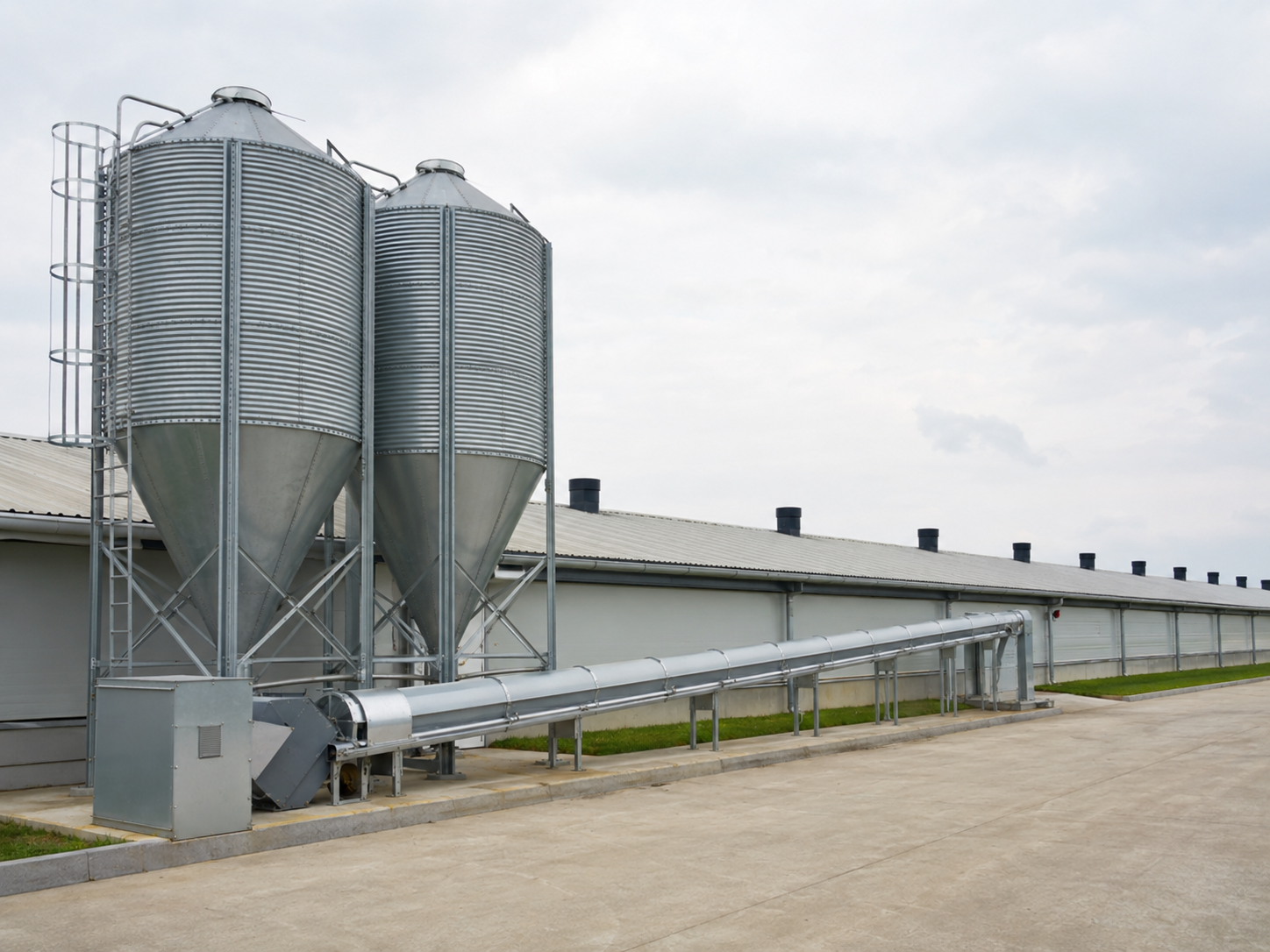
A multi-tier cage automatic feeding system is usually not a single piece of equipment. Instead, it consists of several interconnected components. The first is the feed storage system. Poultry farms can install outdoor feed silos according to daily feed consumption, allowing bulk feed storage while reducing manual feed handling.
The second is the feed conveying system. Feed moves from the silo into the conveying pipeline and is then transported into the poultry house. For large-scale farms, conveying capacity is normally determined according to poultry house length, bird capacity, and the position of the feed silo. Once inside the poultry house, the feed is transferred into the feeding system for each cage row. Automatic feeding machines then move along the cage rows and distribute feed evenly into the troughs.
For multi-tier H-type cage systems, the main objective is not simply to “deliver feed into the house.” The system should ensure that birds on different tiers, cage rows, and positions can receive a stable and consistent feed supply.
What Practical Problems Can Automatic Feeding Solve?
In large-scale poultry farms, one of the most immediate benefits of automatic feeding is the reduction of repetitive manual work. Feeding tasks that previously required several workers can be completed through an automated system. This is particularly important in regions where labor costs continue to increase, as labor efficiency can directly affect long-term farm operating costs.
Automatic feeding can also improve feeding consistency. If the depth of feed inside the trough varies significantly, bird feeding behavior and feed intake may also be affected. Therefore, when designing the feeding system, it is important to consider feeding machine speed, feed quantity adjustment, and trough structure rather than focusing only on conveying speed.
In addition, the automatic feeding system can work together with automatic drinking, manure removal, egg collection, and environmental control systems, gradually forming a complete automated poultry farming system.

Do Not Compare Only Motor Power and Price When Purchasing
For customers planning to build a multi-tier cage poultry farm, the first step in selecting an automatic feeding system should be to confirm the poultry house dimensions, number of cage tiers, bird capacity per house, and estimated daily feed consumption.
The longer the poultry house and the larger the bird capacity, the higher the requirements for the stability and durability of the feed conveying system.
Local voltage, power supply stability, feed condition, and daily maintenance capability should also be considered. If the project is located in an area where power outages occur frequently, a backup generator should be planned in advance to avoid prolonged interruptions to the feeding system.
Therefore, a multi-tier cage automatic feeding system is best designed together with the cage system, poultry house, and overall farm capacity, rather than being purchased separately after the cage equipment has already been installed.

Guangxing Multi-Tier Cage Feeding System
Guangzhou Guangxing Poultry Equipment Group can provide complete equipment solutions for different layer farms and pullet-rearing projects, including H-type multi-tier cage systems, automatic feeding, automatic drinking, automatic manure removal, automatic egg collection, and environmental control systems.
In actual project design, we match feed silo capacity, conveying routes, and feeding equipment according to poultry house length, width, number of cage tiers, farm capacity, and local climate conditions.
If you are planning a multi-tier cage poultry farm for 10,000, 50,000, 100,000 birds, or an even larger capacity, you can provide Guangxing with your poultry house dimensions, planned bird capacity, and project country. Our technical team can recommend a more suitable automatic feeding system and complete cage equipment solution based on your actual project conditions.
For product and solution consultations, please contact Guangxing’s professional team for customized advice: WhatsApp: 00852-46090144 or [Phone/WeChat]: 0086-17876668787



