


When purchasing pig farrowing crates, many farmers first ask:
How much does one pig farrowing crate cost?
The price difference between farrowing crates on the market can be considerable. Some basic products cost only a few hundred US dollars, while fully equipped premium systems require a much higher budget. This price gap is not simply caused by suppliers setting prices arbitrarily. The main reasons are the equipment included in each quotation, the materials and workmanship, product dimensions and the scope of supporting services.
Many low-priced products are essentially only metal restraint frames for sows. They do not include slatted flooring, piglet panels, feeders, drinking nipples or piglet heating equipment. Buyers must purchase many additional accessories separately, so the final total cost may not actually be low.
A proper complete pig farrowing system includes all the necessary supporting equipment, such as slatted flooring, piglet activity panels, a creep box, heating components and all installation hardware. Once delivered, the system can be assembled and put directly into operation.
Therefore, when comparing pig farrowing crate prices, buyers should not look only at the quoted figure. They must also confirm the exact configuration.

How Much Does One Pig Farrowing Crate Cost?
Pig farrowing crate quotations commonly found online can generally be divided into three categories.
1. Basic Sow Restraint Crate
A basic product normally includes only the main sow restraint crate, steel tube frame and simple connecting parts.
Reference prices for basic crate frames on some Chinese B2B platforms are approximately USD 100–500. However, the actual price is affected by the material, dimensions, steel tube wall thickness and order quantity.
These quotations normally do not include:
Slatted flooring, piglet panels, sow feeders, drinkers, piglet creep boxes, heat lamps/heating plates and floor support beams are generally not included. Basic restraint crates are more suitable for pig farms that already have completed flooring and supporting facilities and only need to replace the crate frame.
2. Standard Pig Farrowing Crate
A standard farrowing crate normally adds a piglet activity area, anti-crushing structures, feeder, drinker and some installation accessories to the basic sow restraint crate.
Some standard products in the North American retail market are priced at approximately USD 400–650. However, there are significant differences in flooring and heating equipment between different products.
Some products may appear to have similar prices, but one quotation may include only the crate frame, while another may already include part of the flooring, feeder and installation hardware. Buyers should therefore ask the supplier to provide a complete configuration list.
3. Complete Pig Farrowing System
A complete pig farrowing system normally includes:
A complete set of finished farrowing equipment and accessories, including the sow restraint crate, piglet panels, anti-crushing rails, plastic/cast-iron slatted flooring, sow feeder, drinker, piglet creep box, heat lamp or electric heating plate, floor support frame and a complete set of installation hardware.
Although a complete system costs more than purchasing only the crate frame, it can be uniformly planned according to the dimensions of the pig farm. Once installed, it can be put directly into operation.
For newly built pig farms, farrowing-house expansion projects or complete farm upgrade projects, purchasing a complete system is often more convenient than separately purchasing flooring, crate frames and piglet heating equipment later.


What Equipment Is Usually Included in a Pig Farrowing Crate Quotation?
When asking for a farrowing crate quotation, these accessories must be checked one by one.
When requesting prices from manufacturers, do not look only at the total amount. Focus on confirming whether the following major components are included:
1. Main Sow Restraint Crate
This is the core structure of the complete farrowing system. It controls the sow’s movement and provides a safer activity area for piglets.
Buyers should confirm the steel tube diameter, tube wall thickness, painting or hot-dip galvanizing process, length and width, whether the crate width is adjustable and whether anti-crushing rails are included. Material quality directly affects the price difference.

2. Piglet Activity Panels
A properly equipped complete farrowing crate has piglet activity areas on both sides to reduce the risk of piglets being crushed by the sow.
Options include fixed or removable panels, piglet escape spaces, separate heated creep areas and piglet feeding troughs. A product that includes only the sow frame without piglet panels cannot be regarded as a complete farrowing system.

3. Slatted Flooring
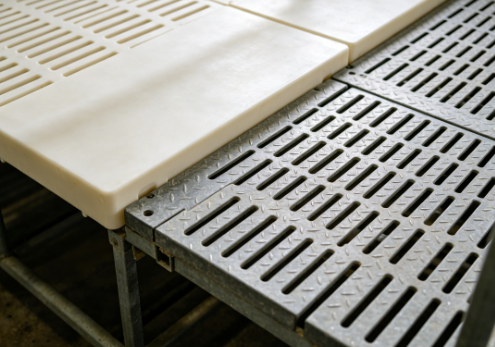
Flooring is one of the biggest factors separating low-priced and high-priced systems. Common options include all-plastic flooring, cast-iron flooring, composite flooring and combined plastic-and-cast-iron flooring.
The sow area requires strong load-bearing capacity, while the piglet area needs warmth and slip resistance. Complete systems commonly use combined flooring, while purchasing the flooring separately can be expensive.
4. Complete Feeding and Drinking Equipment
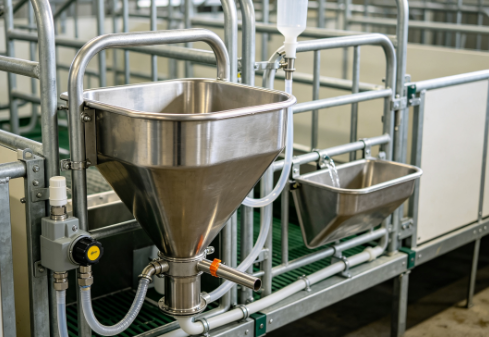
Confirm whether the quotation includes a stainless-steel/cast-iron sow feeder, drinking nipples, water pipes, pressure-regulating valves and piglet drinking accessories.
Many low-priced product images appear to show a complete feeder and drinking system, but buyers may discover after placing the order that these parts require additional payment.
5. Complete Piglet Heating Equipment
Newborn piglets are highly sensitive to cold. Pig farms in cold regions should be equipped with creep boxes, insulated panels, heat lamps, electric heating plates and temperature controllers.
The power of the heating lamps and the number of temperature-control devices will increase the total quotation.

6. Complete Installation Hardware
Floor support beams, fixing bolts, connecting plates and pen-joining brackets should all be included.
When the quotation does not include installation accessories, the pig farm may need to purchase additional steel components and fasteners after delivery, resulting in extra expenses.

Eight Core Factors That Determine Pig Farrowing Crate Prices
Many buyers consider only appearance and unit price when purchasing farrowing crates. However, the real price differences come from materials, manufacturing processes, configuration details, dimension standards and supporting services.
Even when two products are both called pig farrowing crates, their prices may differ by 100%. The main reasons are found in the following eight factors.
1. Materials and Corrosion-Protection Process — The Biggest Price Difference
Farrowing houses remain humid for long periods and require frequent washing and disinfection. Corrosion resistance directly determines the service life of the equipment and is one of the most important factors affecting price.
Ordinary painted steel tubes have the lowest cost. However, once the paint surface is damaged, the steel can rust easily. This type is more suitable for small pig farms with limited budgets or short-term use.
Hot-dip galvanized steel tubes are corrosion-resistant, durable and able to withstand humid conditions and frequent washing. They are the mainstream choice for large-scale pig farms and generally offer the best value for money.
Stainless steel is corrosion-resistant and easy to clean, but the overall cost is relatively high. In the industry, it is mostly used for feeders, drinking components and other important accessories rather than for the entire crate.
When purchasing, do not ask only whether the product is galvanized. Confirm whether it is electro-galvanized or hot-dip galvanized, and also check the steel tube wall thickness and welding quality. These details directly determine product quality and cost.
2. Overall Crate Dimensions
The length, width and height of the farrowing crate directly determine the amount of steel and flooring required. For more information about standard farrowing stall dimensions, flooring options and piglet creep areas, buyers can refer to the Farrowing Systems for the Sow and Her Piglets guide published by the Pork Information Gateway.
A farrowing crate designed for larger sows requires a wider restraint area, a longer lying area, stronger load-bearing flooring, more reasonable feeder and drinker positions and a larger piglet activity area.
Choosing an undersized crate simply to reduce the price may restrict the sow’s ability to stand and lie down, affect feeding and nursing, increase the risk of piglet crushing and make daily management more difficult.
3. Slatted Flooring Configuration
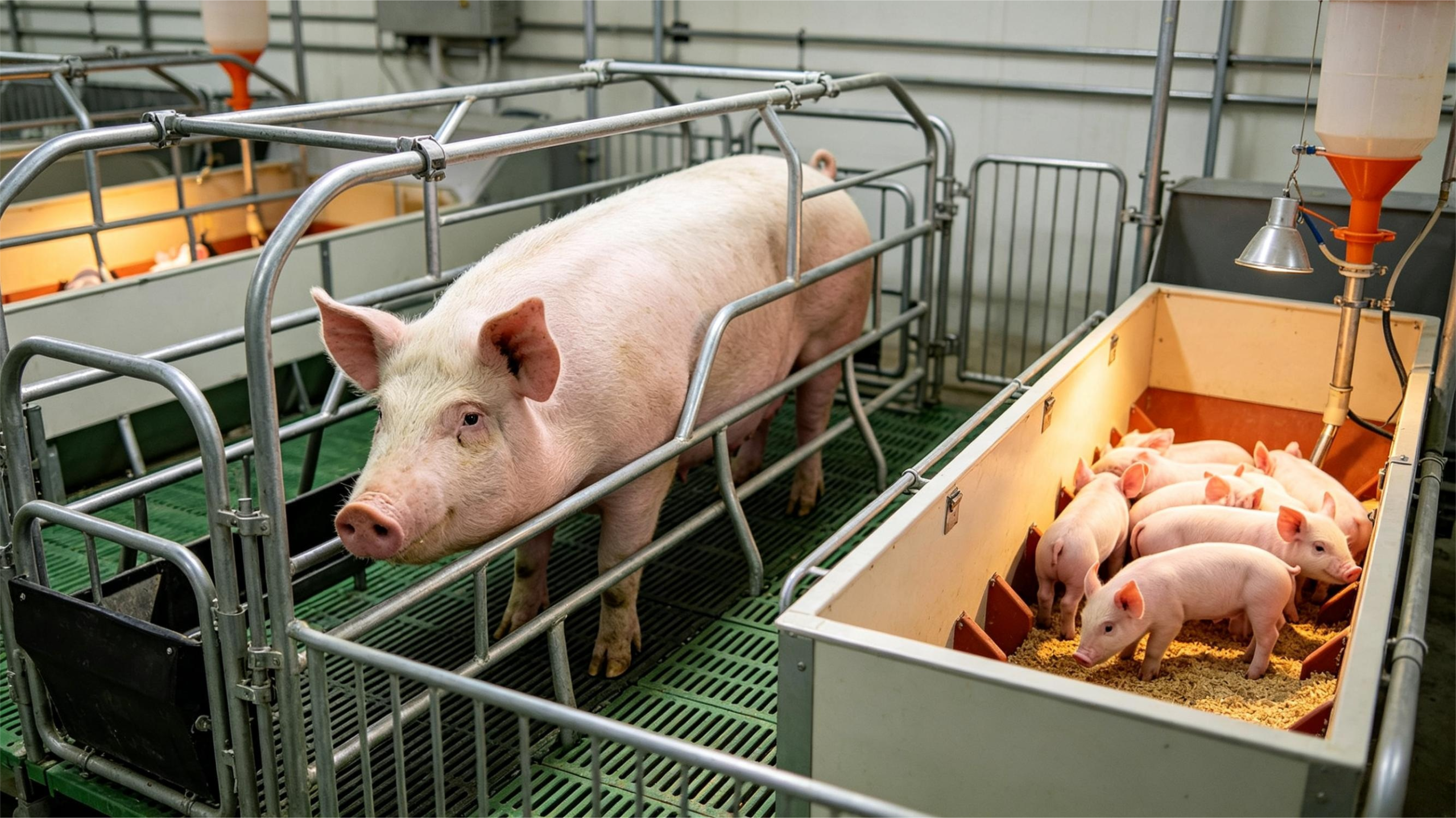
Flooring is a major part of the total cost of a farrowing system. Prices vary significantly according to the flooring material and combination method.
Plastic flooring is lightweight and provides good thermal insulation. It is suitable for piglet activity areas and helps protect piglets from slipping and cold surfaces.
Cast-iron flooring has strong load-bearing capacity, stability and durability. It is suitable for the high-load areas where the sow stands and lies.
High-quality complete systems usually use combined plastic-and-cast-iron flooring. This arrangement meets the sow’s load-bearing requirements while providing warmth and comfort for piglets.
It costs more than an all-plastic flooring configuration, but its practicality and durability are significantly better than those of low-configuration products.
4. Anti-Crushing Safety Design
Basic low-cost farrowing crates have only a simple restraint frame without additional protective structures.
Standard complete farrowing crates may include curved anti-crushing rails, adjustable crate width, folding anti-crushing side wings, structures that assist the sow when standing and lying down, and dedicated piglet escape spaces.
The more complete the structural design, the more complicated the manufacturing process and the higher the cost. However, a well-designed anti-crushing structure can effectively reduce piglet crushing injuries and deaths, reduce farm losses and improve farrowing-house management efficiency.
5. Piglet Heating Configuration
There is a significant price difference between simple and advanced heating configurations. According to the University of Minnesota Extension, newborn piglets require a much warmer environment than lactating sows, making a separate heated creep area especially important.
A basic system may include only one heat lamp, while a premium complete system may include an enclosed creep box, electric heating plate and intelligent temperature-control equipment, making it suitable for winter production and pig farms in cold regions.
Buyers should not compete only on the lowest initial price. Pig farms in cold regions should select a complete heating solution according to the ventilation and insulation conditions of the building.
This helps prevent piglets from becoming chilled, developing diarrhea or suffering from lower survival rates.

6. Purchase Quantity
The price of a single unit or small batch is usually higher than the price of a customized order for a complete pig farm.
For large orders, manufacturers can purchase materials in bulk and use standardized production, significantly spreading the production, packaging, design and logistics costs.
Large-volume orders also provide better container-loading efficiency and clear overall project-cost advantages.
For complete pig farm projects, buyers should provide the exact required quantity and pig-house dimensions to obtain a more cost-effective project quotation.
7. Logistics and Trade Costs
The equipment factory price is not the same as the final delivered cost.
The final cost is affected by the equipment weight, disassembled structure, packing volume and container-loading quantity. Ocean freight, port charges, customs duties, customs-clearance fees and local transportation from the port to the pig farm must also be included.
International buyers must clearly distinguish between EXW factory prices, FOB port-of-loading prices and CIF destination-port prices to avoid hidden additional costs later. International buyers can review the official Incoterms® 2020 rules from the International Chamber of Commerce to better understand the responsibilities, costs and risks associated with different trade terms.
8. Customized Requirements
Pig-house dimensions, sow size and climate conditions vary between regions, so standardized equipment may not always be suitable.
Common customization requirements include adjusting the crate dimensions, designing single-row or double-row layouts, adapting the system to the manure pit, adjusting feeder and drinker positions, reserving interfaces for automated equipment, changing flooring materials and adding supporting equipment.
The higher the level of customization, the higher the initial design, tooling and production costs.
However, customized equipment can better match the actual pig farm, reduce installation and operational problems, and avoid future modification costs.
What Information Should Be Provided to Obtain an Accurate Quotation?
1. Project Location
Specify the country and city where the project is located. This allows the manufacturer to consider the local climate and logistics conditions, select a suitable configuration and accurately calculate transportation and adaptation costs.
2. Basic Pig Farm Capacity
Provide the total number of sows and the number of farrowing crates required. Large projects may qualify for special volume discounts.
3. Pig-House Dimensions
Provide the actual length, width and height of the pig house. This allows the manufacturer to plan the layout and confirm whether the equipment will be arranged in single rows, double rows or multiple rows.
Accurate dimensions help prevent mismatched equipment sizes and wasted building space.
4. Sow Size
Provide information about the average size of the sows on the farm.
The manufacturer can then adjust the crate width, restraint area and flooring load-bearing standards to better meet the sow’s movement and nursing requirements.
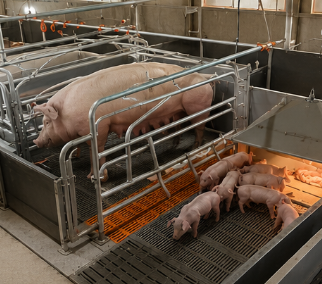
5. Core Equipment Configuration Requirements
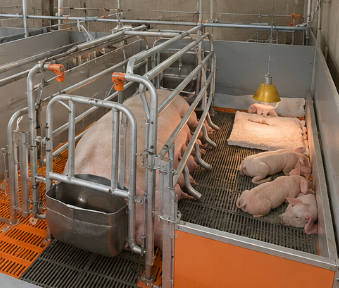
Confirm the required flooring material, whether a piglet creep box is needed, whether heat lamps or electric heating plates are preferred, and whether automatic feeding and drinking systems are required.
This allows the supplier to prepare an accurate quotation based on the actual requirements without mixing unnecessary configurations or adding unexpected costs.
6. International Logistics Information
Export orders should include the name of the destination port so that the manufacturer can accurately calculate ocean freight, customs clearance and other logistics costs.
The more complete the information is, the easier it is for the supplier to provide an accurate pen layout, equipment list and shipping quotation.
Conclusion
Pig farrowing crate prices cannot be evaluated by looking at only one number.
A low-priced quotation may include only the sow restraint frame, while a complete pig farrowing system normally also includes piglet panels, slatted flooring, feeders, drinkers, heating equipment, floor support structures and installation hardware.
Buyers should compare prices based on the same configuration and select equipment according to the pig-house conditions, number of sows, local climate and farm management requirements, rather than simply choosing the lowest quotation.


