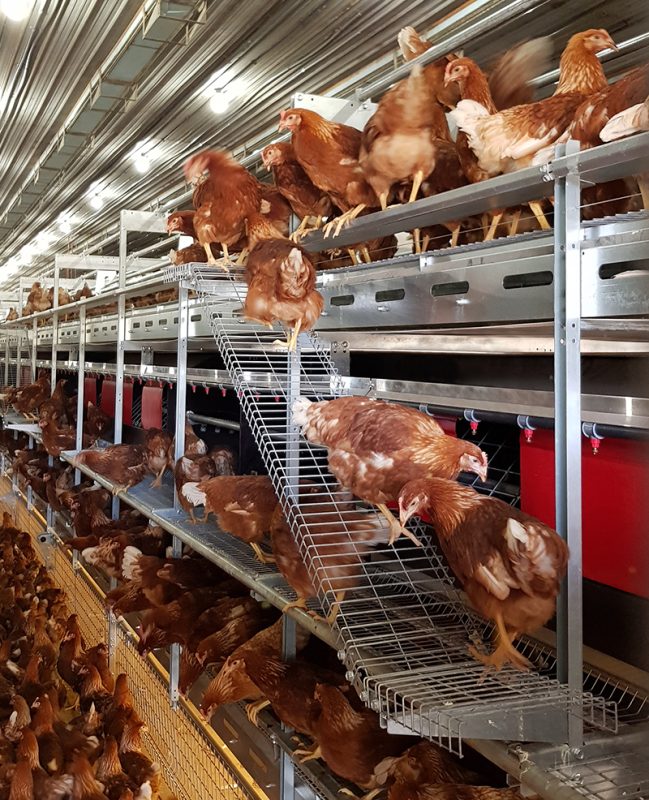
Australia’s pig farming industry is steadily advancing toward large-scale production, full automation, and precision management.

Whether establishing a new pig farm, expanding or renovating existing facilities, or upgrading outdated equipment, farmers invariably face three core challenges: controlling total equipment investment, reducing labor costs, and complying with stringent local animal welfare and biosafety standards—key priorities that must be prioritized during initial planning.
The pig farming industry remains a vital component of Australia’s agricultural and food supply chain. According to industry data from Australian Pork Limited, the sector contributed an estimated A$6.9 billion to the local economy during the 2024–2025 fiscal year, with 4,708 registered pig farms nationwide supporting approximately 36,000 full-time jobs. This underscores its pivotal role in Australia’s agricultural and food supply chain.
Given the high costs of local equipment, installation labor, and project construction, some Australian pig farms have begun incorporating China-based pig farming equipment manufacturers into their global procurement and supplier selection processes. For projects involving a large number of pens, requiring customized pen layouts, or planned phased expansion, Chinese suppliers can provide integrated solutions ranging from pen structures and flooring to automated feeding systems, water supply systems, and environmental control systems.
What are the requirements of Australia’s pig farming industry for modern equipment?
Australian pig farms employ various production models, including indoor farming, outdoor farming, and free-range farming. Each approach imposes distinct requirements regarding pen layout, housing structure, sow activity space, and environmental control systems. Purchasers may refer to Australian Pork Limited’s overview of farming practices in Australia to gain further insights into different methods such as sow confinement pens, group housing systems, farrowing pens, and outdoor farming.
Modern Australian pig farms typically focus on the following key aspects:
their operational priorities are entirely centered on cost reduction and efficiency improvement, ensuring high-quality sow and piglet production, and adapting to local climate conditions.
First, they strive to minimize labor requirements by relying on equipment for feeding, water supply, and pen cleaning instead of manual labor.
Second, they prioritize optimizing farrowing environments and maintaining proper piglet insulation, while designing pens to reduce losses caused by sow crushing of piglets.
Third, they streamline manure removal and disinfection procedures, significantly shortening the site clearance and disinfection cycle.
Fourth, they implement targeted solutions for summer heat challenges by installing comprehensive ventilation and cooling systems to support stable herd growth. Fifth, they employ smart sensing devices to monitor environmental parameters such as temperature and humidity in real time, while reserving expansion space during facility planning to facilitate future growth without major renovations.
Many procurement decisions focus solely on comparing unit prices of hardware components, which is highly one-sided. When selecting pig farming equipment, it is essential to comprehensively evaluate factors such as service life, installation complexity, daily maintenance costs, stability of component supply, as well as overall energy consumption and operational expenses over long-term use. Only equipment that proves reliable, durable, and efficient in prolonged operation can truly deliver cost savings.
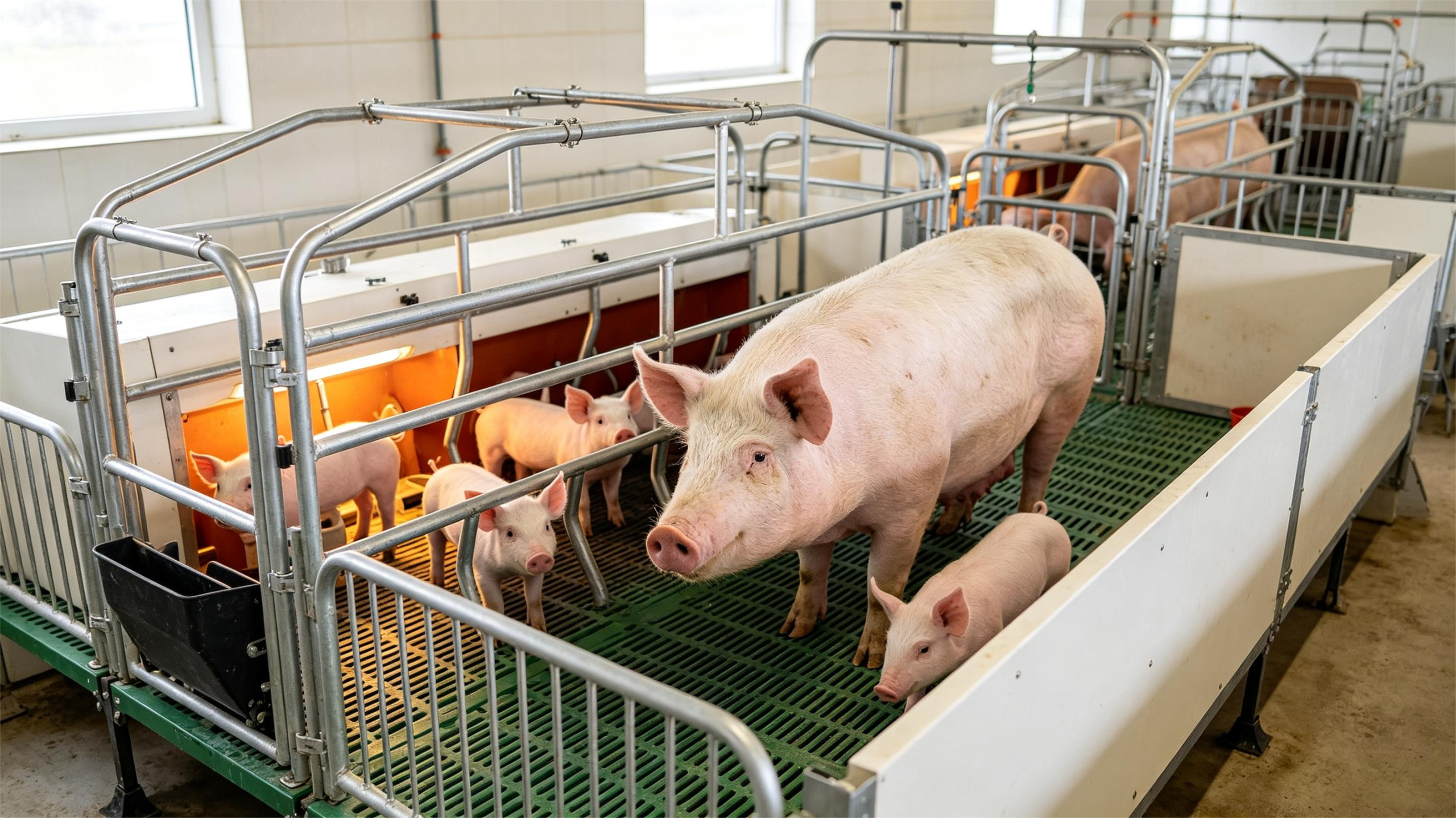
What equipment are required for modern pig farms in Australia?
1. Equipment for sow breeding and pregnancy management
A sow rearing area typically requires the provision of breeding pens, gestation pens, group housing enclosures, as well as corresponding feeding and water supply facilities.
For pig farms adopting group farming systems, activity spaces must be planned based on the number of sows, their body size, feeding behavior, and management protocols. The enclosures should ensure structural integrity while minimizing potential injuries to sows caused by sharp corners, protrusions, or inappropriate gaps.
If the project employs an electronic sow feeding system, the locations of entry points, exit points, waiting areas, and identification devices must be planned in advance.
2. Piglet birth pens and free delivery pens
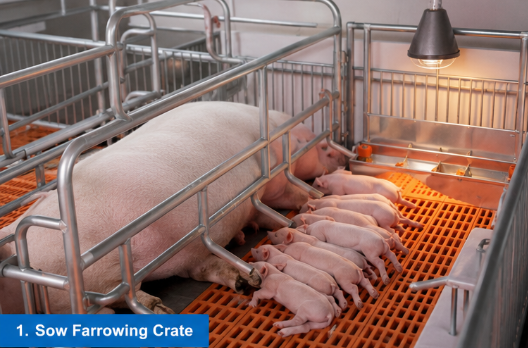
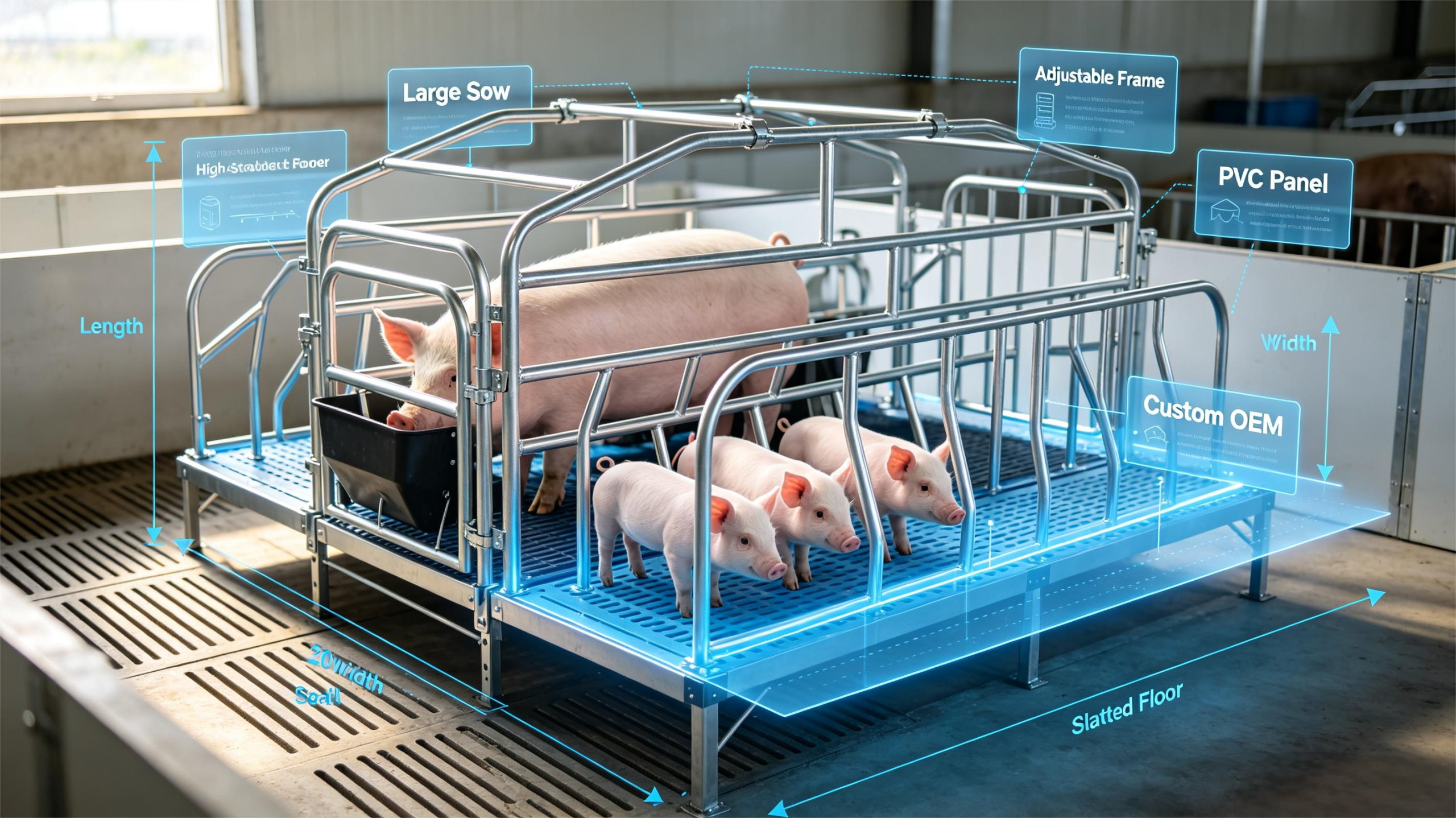
The farrowing room is a crucial area in the equipment configuration of a pig farm. A traditional sow farrowing pen typically consists of a sow confinement zone, a piglet activity area, a slatted floor, sow feeding troughs, water supply facilities, and a piglet insulation zone.
An optimal farrowing pen design must consider the following aspects simultaneously:
a functional farrowing pen should provide sufficient space for sows to move freely while standing or lying down, designate dedicated areas where piglets can avoid contact with sows, and incorporate appropriately positioned pressure barriers to minimize crushing injuries at their source.
A dedicated piglet insulation zone should be established to maintain constant temperature for the offspring; the floor shall be constructed from anti-slip and easy-to-clean materials, while the enclosure structure must be fully transparent with no blind spots, facilitating efficient subsequent cleaning and disinfection.
When selecting a farrowing bed, do not rely solely on its appearance; these practical details are crucial for determining survival rates and reducing maintenance costs. For projects that prioritize sow activity space, open-type farrowing pens or free-range farrowing enclosures may be considered.
Such equipment typically requires a larger single-compartment area and must be arranged in consideration of the pig house’s total width, aisle locations, and number of compartments.

3. Piglet nursery pen
Weaned piglets are highly sensitive to temperature, floor dryness, and feeding conditions. The nursery pen can typically be equipped with modular enclosures, plastic slatted floors, piglet feeders, nipple waterers, and thermal insulation devices.
The modular fence allows for adjustment of pen dimensions according to the size of the pigpen, and facilitates subsequent increases or decreases in the number of animals per pen. The plastic slatted floor surface is relatively gentle, easy to clean, and can be combined with the underlying manure ditch to enhance pigpen hygiene.

4. Swine fattening pens and feeding equipment
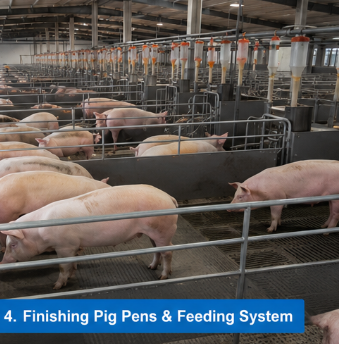
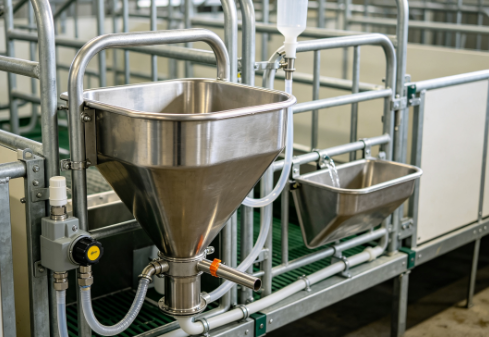
Fattening pig houses typically require high-strength enclosures, dry and wet feed troughs, automatic water supply systems, and automated feeding systems.
The dry and wet feed storage tanks allow feeding and water supply to be centralized in the same area, helping to reduce feed spillage. For larger pig farms, outdoor feed towers, feeding screw conveyors, main feed lines, and branch lines can be installed to deliver feed to different pig houses and pens.
During the equipment design phase, the capacity of the feeding system should be determined based on the length of the pig house, the number of pigs, daily feed consumption, and the location of the feed tower to prevent subsequent issues such as insufficient conveying distance, excessive turns, or uneven material distribution.
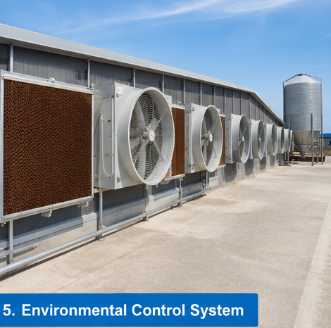
5. Pig House Environmental Control System
There are significant climatic variations across different regions of Australia, so the environmental systems in pig houses cannot adopt identical configurations.
In high-temperature regions, priority should be given to the planning of wind turbines, air inlets, wet curtains, or spray cooling systems; in areas with significant diurnal temperature variations, considerations must also include thermal insulation, minimum ventilation requirements, and air exchange.
Modern environmental control systems can connect temperature, humidity, carbon dioxide, and ammonia sensors to automatically regulate fans, air intake windows, and cooling equipment based on the conditions within pig houses. For multiple pig house projects, additional functions such as remote monitoring, abnormal alarm detection, and data recording can be incorporated.
Why would the Australian Purchasing Chamber consider China-made pig farming equipment?
More competitive overall procurement costs
The costs of purchasing local equipment and manual installation in Australia are relatively high. For newly established pig farms or large-scale pen projects, China-made equipment typically offers certain advantages in terms of scaled production, centralized procurement, and container loading.
However, purchasers should not compare only the factory price. What truly needs to be compared is the overall project cost, which includes equipment, shipping, customs clearance, installation, spare parts, and maintenance.
Can be customized according to the pigpen requirements
China manufacturers can adjust the equipment dimensions based on the pigpen drawings, number of stalls, and body size of pigs provided by customers, including:
Domestic equipment manufacturers offer on-demand customization services. By providing farm plans, inventory size, and local pig body types, we can tailor specifications precisely: including bed dimensions, sow confinement stall widths, piglet activity space, stall height, floor gap configurations, aisle widths, as well as feed and water line placements—all flexibly adapted to your farm layout. For existing pighouse renovation projects, customization is particularly critical, as standard equipment often cannot be directly fitted to existing column spacing, wall structures, manure ditches, or passageways.
Multiple types of equipment can be procured centrally.
A pig farm project typically requires not only pens but also floors, feed troughs, waterers, feed towers, feeding lines, fans, wet curtains, and control systems.
Selecting manufacturers with comprehensive end-to-end capabilities reduces the time buyers spend coordinating with multiple suppliers and facilitates standardization of equipment dimensions, installation interfaces, and technical documentation.
Suitable for phased expansion
Some Australian pig farms do not complete all construction projects at once; instead, they first build a single pigpen or a portion of the housing facilities and only proceed with expansion after ensuring stable operation.
Modular equipment and standardized connectivity enable purchasers to easily add columns, material handling lines, or environmental control systems in later stages, eliminating redundant design work and modifications.。
The process of importing pig farming equipment from China to Australia
The entire process of procuring pig farming equipment from China and shipping it to Australia is clear and standardized, with each step specifically designed to meet the requirements of Australian pig farms, ensure effective implementation, and control costs.
Step 1: Organize the basic information of the pig farm
During the initial cooperation phase, the purchasing party only needs to provide comprehensive project details to enable manufacturers to develop precise customized solutions and quotations. These details should include the pig farm’s location, whether it is a new construction or renovation project, pigpen dimensions, inventory size and pen layout planning, standard pig body sizes, as well as specific requirements related to local Australian farming practices such as welfare standards, biosafety measures, temperature control, feed supply, and water provision, along with the estimated procurement and installation timeline. The more detailed the information provided, the more accurate and tailored the solution and quotation will be to the actual site conditions.
Step 2:Finalize the layout and verify the equipment list
The manufacturer develops a customized equipment layout plan based on the drawings, specifying the arrangement of storage compartments, access pathways, manure drains, material flow routes, and installation space.
Both parties shall carefully verify the dimensions of each column, the total number of columns, the door opening direction, floor materials, water supply and drainage systems, insulation facilities, as well as installation methods.
For complex projects, start by creating sample samples or 3D renderings for verification; only proceed with mass production after confirmation to prevent on-site adaptation issues from the outset.

Step 3:Clarify specifications and establish supply standards
The quotation process is fully transparent, with all key parameters clearly specified: steel pipe specifications, hot-dip galvanizing anti-corrosion treatment, floor and trough materials for joint gaps, fasteners, electric motor configuration, spare parts, packaging standards, and warranty details.
Resolutely reject vague, general quotations without detailed specifications to effectively avoid reduced allocation amounts and subsequent price disputes.
Step 4:Production and Trial Assembly: Strict Quality Control Before Delivery
Throughout the production process, we strictly control raw materials, welding techniques, equipment dimensions, and surface treatments, while verifying the quantity of all components.
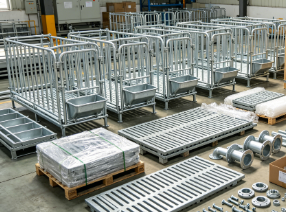
Perform a full trial assembly before shipment to ensure all components fit properly and install smoothly.
Pack the materials separately by pigpen zone and category, with clear labeling to facilitate rapid sorting and efficient installation at the Australian site.
Step 5:Scientific Packaging for Efficient Maritime Shipping
The equipment features a detachable structural design that provides robust protective packaging to minimize maritime damage, maximizes container loading efficiency, significantly reduces cross-border transportation costs per unit, and delivers high cost-effectiveness for international shipments.
During packaging, it is essential not only to prevent collisions and deformation during transportation but also to ensure that both the equipment surface and the interior of the package remain clean.
Australia implements stringent biosafety regulations for imported machinery and equipment; such imports must not contain contaminants such as soil, seeds, plant or animal materials.
If the equipment does not meet cleaning requirements, it may face disposal, delays, or even return.
Prior to formally commencing production and shipment, Australian purchasers shall verify through the BICON Biosafety Import Conditions Inquiry System operated by the Australian Department of Agriculture, Fisheries and Forestry whether pig farming equipment, wooden packaging, and other supporting materials are subject to specific import requirements or require permit applications. BICON serves as the official primary channel for querying biosafety import requirements for goods in Australia.
What issues should be noted when importing China farm equipment for pig farms?
Do not choose the lowest price only
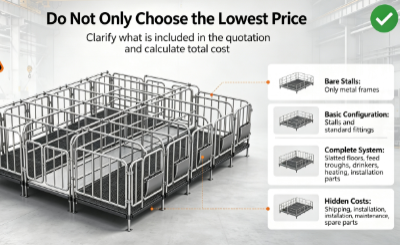
Some low-priced quotes may only include metal railings, excluding gap-filled flooring, material troughs, water dispensers, piglet insulation equipment, and installation accessories.
The purchaser must confirm whether the quotation applies to bare units, basic configurations, or complete systems, and include all costs for shipping, installation, and subsequent maintenance.
Confirm the device meets Australian project requirements
The standard products provided by China manufacturers may not directly suit all Australian pig farms. This is particularly true for sow pens and farrowing pens, which require adjustments based on local animal welfare requirements, sow body size, and pen space availability.
Before confirming equipment specifications, the purchaser should request the supplier to provide complete dimension drawings rather than relying solely on product photos.
Check the electrical parameters.
Fans, material-line motors, water pumps, control cabinets, and sensors must be configured according to the power supply conditions at the project site.
Prior to formal production, voltage, frequency, motor protection, control cabinets, and safety requirements must be verified by qualified Australian electrical professionals.
Parts involving fixed electrical installations shall be installed and inspected in compliance with applicable local regulations and standards.

Prepare replacement parts in advance.
Swine farm equipment typically requires long-term continuous operation. During procurement, it is advisable to simultaneously equip the system with waterers, seals, chain connectors, sensors, limit switches, and other common spare parts to prevent complete system downtime caused by damage to minor components.
Obtain customized equipment solutions for Australian pig farms
Procuring pig farming equipment from China involves not merely purchasing a batch of pens, but requires comprehensive planning for pen layout, pig population size, feed and water supply, environmental control, transportation, and installation.
Before requesting a quote, prepare the following documents:
Location of the pig farm; Floor plan and dimensions of the pig houses; Types and number of pigs; Number of required pens; Requirements for automatic feeding and water supply; Environmental control requirements; Estimated procurement timeline.
Guangxing offers customized solutions for sow farrowing pens, free-range farrowing pens, nursery pens, fattening pens, as well as automated feeding, water supply, and environmental control systems, tailored to the size of pig houses, breeding scale, and project requirements.