


What Is a Poultry Manure Management System?
A poultry manure management system is a complete process for collecting, handling, storing, treating, and utilizing poultry waste in an efficient and environmentally safe way.
It typically includes:
Manure collection inside the poultry house
Transportation and removal systems
Storage facilities
Treatment (composting, drying, or biogas)
Final utilization (fertilizer or energy)
👉 A well-designed system ensures clean environment, healthy birds, and higher farm profitability.
Why Manure Management Is Critical
Poultry farms generate large amounts of waste. For example:
A laying hen produces ~47–55 kg manure per year
Poor handling can cause:
Ammonia gas buildup
Disease spread
Water and soil pollution
👉 Proper management turns waste into valuable fertilizer and income source.
Main Types of Poultry Manure Management Systems
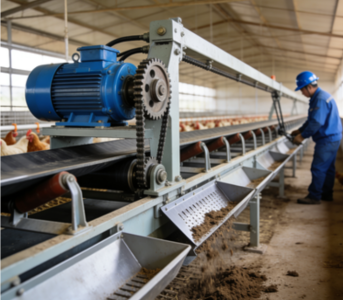
1. Manure Belt System (Most Popular for Layer Farms)
How it works:
Conveyor belts installed under cages
Automatically collect and remove manure daily
Advantages:
Reduces ammonia levels
Improves air quality
Saves labor
Enhances biosecurity
👉 Modern poultry houses widely use belt systems because they remove manure before decomposition starts
2. Scraper System
How it works:
Mechanical scrapers push manure out of the house
Features:
Lower cost than belt systems
Suitable for medium-scale farms

3. Deep Pit System
How it works:
Manure accumulates under cages for long periods
Disadvantages:
High ammonia emission
Difficult cleaning
Poor bird health
👉 This system is becoming outdated in modern farms.
4. Dry Litter System (Floor System)
How it works:
Birds raised on bedding (wood shavings, straw)
Manure mixes with litter
Features:
Low investment
Common in broiler farming
👉 Waste is removed periodically as “poultry litter”
5. Liquid / Slurry System
How it works:
Manure mixed with water and stored in lagoons
Features:
Used in some large farms
Can produce methane gas
👉 Requires strict environmental control.
Key Components of a Modern System
A complete manure management system includes:
1. Collection System
Manure belts / scrapers
Cage design integration
2. Transportation System
Conveyor belts
Augers or trucks
3. Storage System
Covered storage sheds
Lagoons or tanks
👉 Proper storage prevents nutrient loss and pollution
4. Treatment System
Composting
Converts manure into organic fertilizer
Kills pathogens
Drying
Reduces moisture
Easier transportation
Anaerobic Digestion (Biogas)
Produces energy (methane)
Reduces environmental impact
👉 Poultry manure is rich in organic matter, making it suitable for energy production
5. Utilization System
Common uses:
Organic fertilizer
Soil improvement
Bioenergy production
👉 Poultry manure contains nitrogen, phosphorus, and potassium, which improve crop yields
Benefits of a Good Manure Management System
✅ 1. Improve Poultry Health
Reduces ammonia and harmful gases
Lowers disease risk
✅ 2. Reduce Labor Cost
Automation replaces manual cleaning
✅ 3. Increase Farm Efficiency
Cleaner environment
Better egg production
✅ 4. Environmental Protection
Prevents water and soil pollution
Reduces greenhouse gas emissions
✅ 5. Create Additional Income
Sell organic fertilizer
Produce biogas energy
Best Solution for Layer Farms (Africa Recommendation)
For most commercial egg farms:
👉 Recommended setup:
Manure belt system
Automatic removal every 1–2 days
Dry manure storage
Composting or direct fertilizer use
💡 Why this works:
Low investment vs full automation
Easy to maintain
Suitable for hot climates
Common Mistakes to Avoid
❌ Allowing manure to accumulate too long
❌ Poor ventilation → ammonia buildup
❌ No storage protection (rain contamination)
❌ Over-application on land (causes pollution)
👉 Overuse can lead to nutrient runoff and environmental damage
Cost of Manure Management System
Typical cost range:
Small farms: $1,000 – $5,000
Medium farms: $5,000 – $15,000
Large automatic farms: $15,000 – $50,000+
👉 Usually 10%–20% of total farm equipment cost
Final Thoughts
A poultry manure management system is not just about cleaning waste—it is a key part of modern, profitable poultry farming.
With the right system, farmers can:
Improve bird performance
Reduce operating costs
Protect the environment
Turn waste into profit

Want a Custom Solution?
If you’re planning a poultry farm, I can help you:
✅ Design a complete manure management system
✅ Match equipment with your cage system
✅ Calculate exact cost & ROI
Just tell me:
Farm size (e.g., 5,000 / 10,000 birds)
Country (Africa market preferred)
Budget
👉 I’ll give you a ready-to-use farm solution plan 🚀


