The production standards and compliance requirements in North America’s egg industry have become increasingly stringent. USDA grading regulations, supermarket traceability systems, and factory biosafety protocols impose clear mandatory specifications on egg processing equipment, where equipment selection directly impacts production efficiency and market competitiveness for egg manufacturers. The local equipment market features a well-defined segmentation with distinct differentiation: the five major brands—Sanovo, Valco, Reids, Diamond, and Acme—offer comprehensive solutions including large-scale intelligent production lines, medium-to-small batch processing units, specialized equipment for small farms, quality inspection enhancement modules, and basic manual sorting devices, catering to producers of varying production scales and operational models. This article compares the performance characteristics, advantages, disadvantages, and application scenarios of each brand’s equipment, providing practical guidance for equipment procurement and production line upgrades in the egg industry.
Sanovo Technology Group
1. Core products:
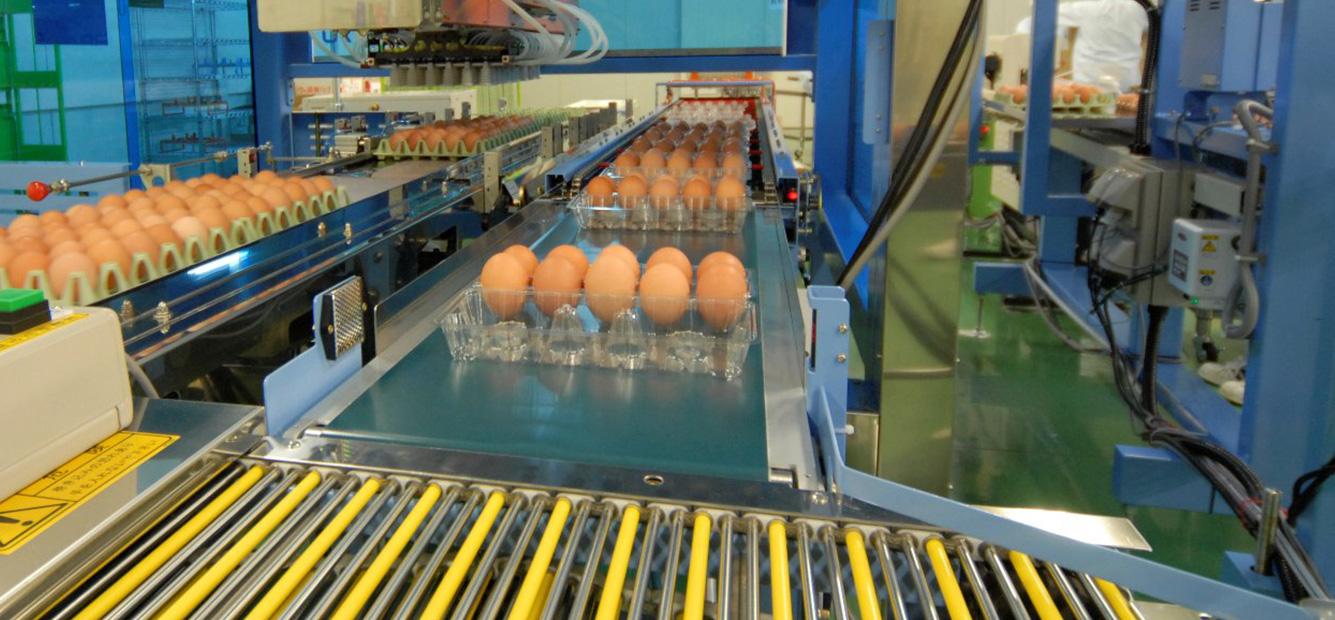
GraderPro, offers a full-range of fully automated egg washing, grading, and packaging lines (70/110/150/300/600/800 units), complemented by Farmpacker standalone packaging equipment, CIP in-situ cleaning systems, and multispectral vision inspection modules, with a production capacity ranging from 27,000 to 288,000 units per hour, suitable for medium-to large-scale egg processing plants.
2. Key Product Features:
The integrated egg sorting and packaging line seamlessly handles the entire process—from feeding, egg washing, multispectral defect detection, high-precision weighing and grading, coding, to tray loading and boxing. Its patented flexible conveying system reduces speed by 25% to prevent egg damage; the unit is constructed from washable 304 stainless steel with optional CIP (Clean-In-Place) cleaning for thorough coverage. It supports single-egg traceability compliant with USDA grading standards, features modular channels adaptable to various packaging types, comes pre-loaded with North American grading software, and is ready-to-operate upon installation.

3. Core advantages:
include support for the CIP fully automated cleaning mode, which significantly reduces manual cleaning time while simultaneously conserving water and electricity, fully complying with the stringent biosafety management standards of U.S. egg processing plants; leveraging a nationwide local after-sales service team and spare parts warehouse, wear-prone components can be replaced promptly, greatly minimizing equipment maintenance downtime; the built-in egg traceability system complies with U.S. supermarket-mandated traceability regulations, enabling direct data integration with factory quality inspection records without additional modifications; the equipment operates stably and reliably in continuous operation over extended periods, with annual maintenance requirements substantially lower than those of European counterparts of equivalent specifications, resulting in greater cost efficiency over long-term use.
4. Disadvantages:
This large-scale integrated production line also has several shortcomings: it occupies considerable space, and factory construction requires dedicated civil engineering facilities along with high-pressure water supply and drainage systems; its electrical and visual components are highly precise and complex, requiring maintenance exclusively by original equipment manufacturers’ engineers—self-service is not feasible; component costs and annual maintenance fees are relatively high, resulting in significant long-term investment expenses; the system exhibits strong interdependence, where failure of any single part causes complete production halt, offering poor fault tolerance, making it more suitable for large egg producers; however, when deployed in small-scale egg farms producing tens of thousands of units daily, it leads to idle production capacity and resource waste.
Valco Companies Inc.
1. Core products:
include the medium-sized fully automatic egg washing and grading integrated machine, side/belt middle egg collection conveyor line, curved flexible conveyor, and accompanying egg crack detection module; Production capacity: 18,000–45,000 units per hour, featuring a 4–6-channel American-style mechanical weighing and grading unit.
2. Key Product Features
This device features an American-style thickened hot-dip galvanized frame and cast iron bearings, ensuring durability even in the humid and dusty conditions of agricultural settings. Its mechanical weighing system delivers precision up to ±1 g, covering all five USDA grading levels. The modular design allows for step-by-step addition of components such as egg washing and coding units. It includes a built-in simple LED indicator for manual defect detection and a tool-free assembly/disassembly mechanism for easy cleaning and maintenance. The user-friendly operation panel makes it effortless for ordinary farmers to operate.

3 .Core Advantages
The entire unit is manufactured in the United States, with a comprehensive network of nationwide parts warehouses and 24-hour on-site maintenance services, offering significantly better after-sales support than imported models. At comparable production capacity, its price is approximately 30% lower than that of Sanovo and Moba models, delivering superior cost-effectiveness. The robust construction makes it suitable for small to medium-sized regional egg farms and cage-raising production lines, seamlessly integrating with proprietary egg collection and transportation systems to provide integrated solutions from chicken houses to sorting facilities. Its simple operation requires no specialized electrical expertise—farm staff can perform basic configuration. The production specifications are tailored to meet the demands of local supermarkets served by family-run egg farms in central America.
4. Disadvantages
The equipment is only equipped with a basic LED manual egg inspector and lacks infrared-based fully automatic defect detection, making it unable to detect all minor egg defects and thus failing to meet high-end organic egg production standards. Its mechanical weighing accuracy is inferior to that of electronic models, resulting in significant sorting errors during large-scale processing. It does not come with a built-in CIP cleaning system and requires manual washing—a time-consuming process—and lacks an individual egg traceability system, failing to comply with export compliance requirements for supermarkets. The equipment’s high-speed operation leads to higher rates of egg breakage and damage compared to Sanovo’s premium models, increased loss of premium eggs, greater challenges in subsequent capacity expansion, and difficulty integration with high-speed packaging lines.
Reids Equipment
1. Core Product
Exclusive distributor of Italian Riva Selegg series: S91 (9,000 units/hour), S121 (12,000 units/hour) semi-automatic mechanical sorters, and E6/E10 compact electronic sorters; specifically designed for family farms and seasonal small-scale egg packaging facilities.
2. Key Product Features
The lightweight stainless steel body features casters for easy relocation during seasonal changes. Operating on single-phase 220V power without requiring three-phase industrial electricity, it fits seamlessly into standard storage spaces. The bottom-mounted LED egg counter is paired with 18–30 mechanical scales capable of performing seven USDA grading levels, supporting manual feeding or connection to small egg collection lines. The detachable tracks facilitate easy cleaning and maintenance; optional steel stamping or spray coding is available, making it ideal for small-batch retail packaging.
3 .Core Advantages
The purchase price is only one-fifth to one-third of that of large fully automatic sorters, making them easily accessible to retail buyers. The unit consists primarily of mechanical components with minimal electronic parts, resulting in low failure rates; farmers can replace worn parts themselves. It occupies less than 5 square meters without requiring a dedicated facility and can be moved for storage when not in use. With low single-phase power consumption, it is ideal for remote small-scale free-range farms and small-scale organic egg processing. North American supplies are abundant, and spare parts are affordable, eliminating costly overseas maintenance expenses.
4. Disadvantages
The semi-automatic design relies on manual feeding and assisted sorting of contaminated or cracked eggs, resulting in high labor costs; it lacks an integrated automatic egg washing system, requiring manual pre-cleaning of contaminated eggs, which adds extra steps; the production capacity is limited to only 12,000 units per hour, insufficient for meeting the daily demand of medium-sized processing plants exceeding 100,000 units.
Diamond Systems Corporation
1 .Core Product
Eggshell crack detection high-speed vision module, infrared blood spot/internal foreign object detection module, and contaminated egg identification module; provided solely as a companion component, not for manufacturing complete grading systems, designed for retrofitting and upgrading with grading machines of all brands.
2. Key Product Features
A multispectral industrial camera paired with a dedicated light source, designed for a full-capacity sorting line handling 20,000 to 300,000 items per hour; AI algorithms identify dark cracks, micro-cracks, blood clots, and fecal stains, automatically generating rejection signals for integration with the main sorting gate; a fully stainless steel protective housing that is waterproof and oil-resistant, suitable for workshop washing environments; a pre-installed USDA defect identification algorithm that automatically distinguishes rework-worthy shallow spots from defective eggs; a data storage module that records daily defect rejection counts for food safety reporting.
3 .Core Advantages
This visual inspection module offers a cost-effective upgrade solution for aging grading machines, enabling the addition of fully automated defect detection without replacing the entire unit. It is compatible with major industry-leading models such as Sanovo, Valco, and Reids, delivering a recognition accuracy of 99.5% and a false-positive rate below 0.5%. By replacing manual egg inspection, it reduces missed inspections; its modular design allows rapid installation without prolonged downtime, complying with mandatory comprehensive inspection requirements for U.S. supermarkets and organic eggs. Additionally, individual modules for detecting cracks or blood spots can be purchased separately to tailor solutions according to specific needs while controlling costs.
4. Disadvantages
These components are intended solely as accessories and cannot be used independently; they must be paired with a grading host unit for operation. The overall procurement cost of the multi-module system is high, making it economically inefficient for small-scale farm upgrades. They are sensitive to workshop lighting conditions and dust environments, as dust and moisture can compromise recognition accuracy, requiring regular cleaning of the lens light source. These units lack weighing, grading, and packaging functions, addressing only the single aspect of visual quality inspection.

Acme
1 .Core Product
Tabletop mechanical weight-classifying balance; multi-channel manual grading and diversion station; designed for retail users, off-grid farms, and mobile collection points.
2. Key Product Features
Fully metal-weighted mechanical structure requiring no power supply, suitable for use outdoors or on livestock farms at any time; rust-resistant and waterproof metal body without electronic components or motors; features a multi-track diversion design that automatically guides eggs into corresponding storage boxes upon manual placement; lightweight and portable, with no installation requirements.
3 .Core Advantages
The procurement cost is extremely low, with virtually no subsequent maintenance or energy consumption expenses; it operates independently of electricity and can be deployed in remote farms without power supply or by mobile vendors at markets; featuring zero failures with a service life exceeding 10 years requiring only simple wiping maintenance; offering zero operational barriers enabling quick proficiency for both elderly users and temporary workers; posing no electrical safety hazards and ensuring safe operation in humid poultry housing environments.
4. Disadvantages
Relying solely on manual sorting is highly inefficient and only suitable for small-scale producers producing fewer than a few thousand items daily. It can only perform weight grading but cannot detect cracks, blood spots, or contaminated eggs; quality assessment relies entirely on visual inspection. Standards for mass grading weights are inconsistent, failing to meet supermarket supply requirements. No grading data can be recorded, and there are no quality control records, thus violating U.S. food traceability regulations.
Recommended China Brands
1. Guangxing Group
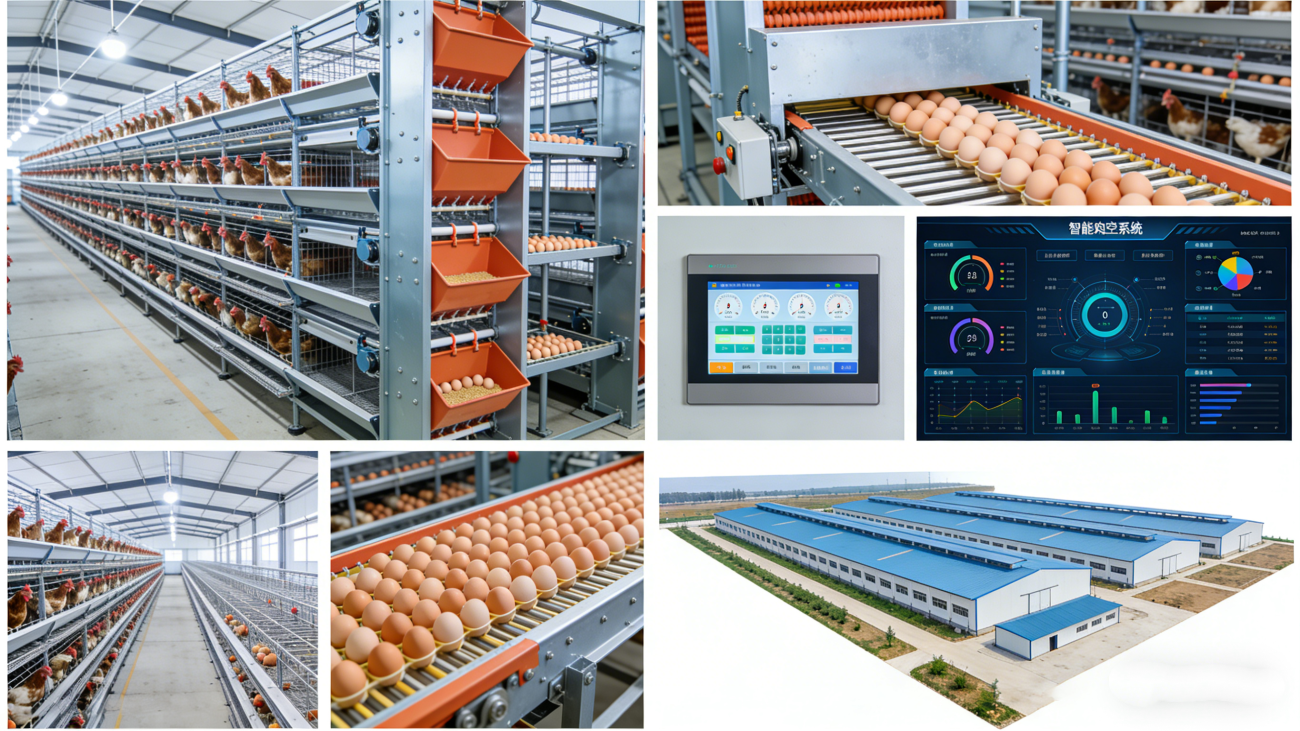
Guangxing Group’s positioning differs significantly from that of a mere egg grading machine brand. Its core products include automated egg-laying chicken cages, automatic egg collection systems, centralized egg transportation systems, supporting equipment for egg grading and packaging, automated feeding systems, nipple water supply systems, automatic manure removal systems, ventilation and cooling systems, as well as comprehensive automated poultry farming solutions.
Guangxing’s hallmark lies in its strong system integration capabilities: it does not merely sell an egg grading machine, but provides comprehensive design solutions covering everything from poultry house planning and layer cage systems to automated egg collection, egg transportation, layout of grading and packaging areas, as well as feeding, water supply, manure removal, ventilation, and environmental control.

Guangxing’s strengths lie in its suitability for new commercial egg farms, automation upgrades at existing facilities, integration of automated egg collection lines, planning of egg processing areas, and turnkey farming projects. For clients prioritizing return on investment, customized configurations, and overall production efficiency, Guangxing offers integrated planning for both poultry housing and egg processing systems, reducing redundant investments and enhancing operational efficiency.
When making procurement decisions, it should be noted that if a customer merely requires a compact egg sorting machine for rapid local use in the United States, Guangxing may not represent the most straightforward local sourcing option. Guangxing is better suited for clients with needs such as comprehensive automation solutions, bulk equipment procurement, customized configurations, or international project requirements.