


In large-scale pig farms, the farrowing pen is the core facility for sows to give birth and nurse piglets. It directly affects piglet survival rate, sow comfort, farrowing room hygiene management, and overall farm production efficiency. Commercial pig farms that choose strong, easy-to-clean farrowing pens can greatly reduce losses caused by piglets being crushed or stepped on by sows, while also helping farm workers complete feeding, observation, manure cleaning, and disinfection more efficiently.
When purchasing farrowing pens, many farmers are most concerned about the following questions: What size is suitable for a single farrowing pen? How can piglet crushing be reduced? How should the piglet warming area be designed? What materials are more durable? Is the farrowing room easy to clean and disinfect? Can the farrowing pen be customized according to pig house dimensions and sow body size? Below, we will introduce the key selection points of farrowing pens from a practical usage perspective.

What Size Is Suitable for a Farrowing Pen?
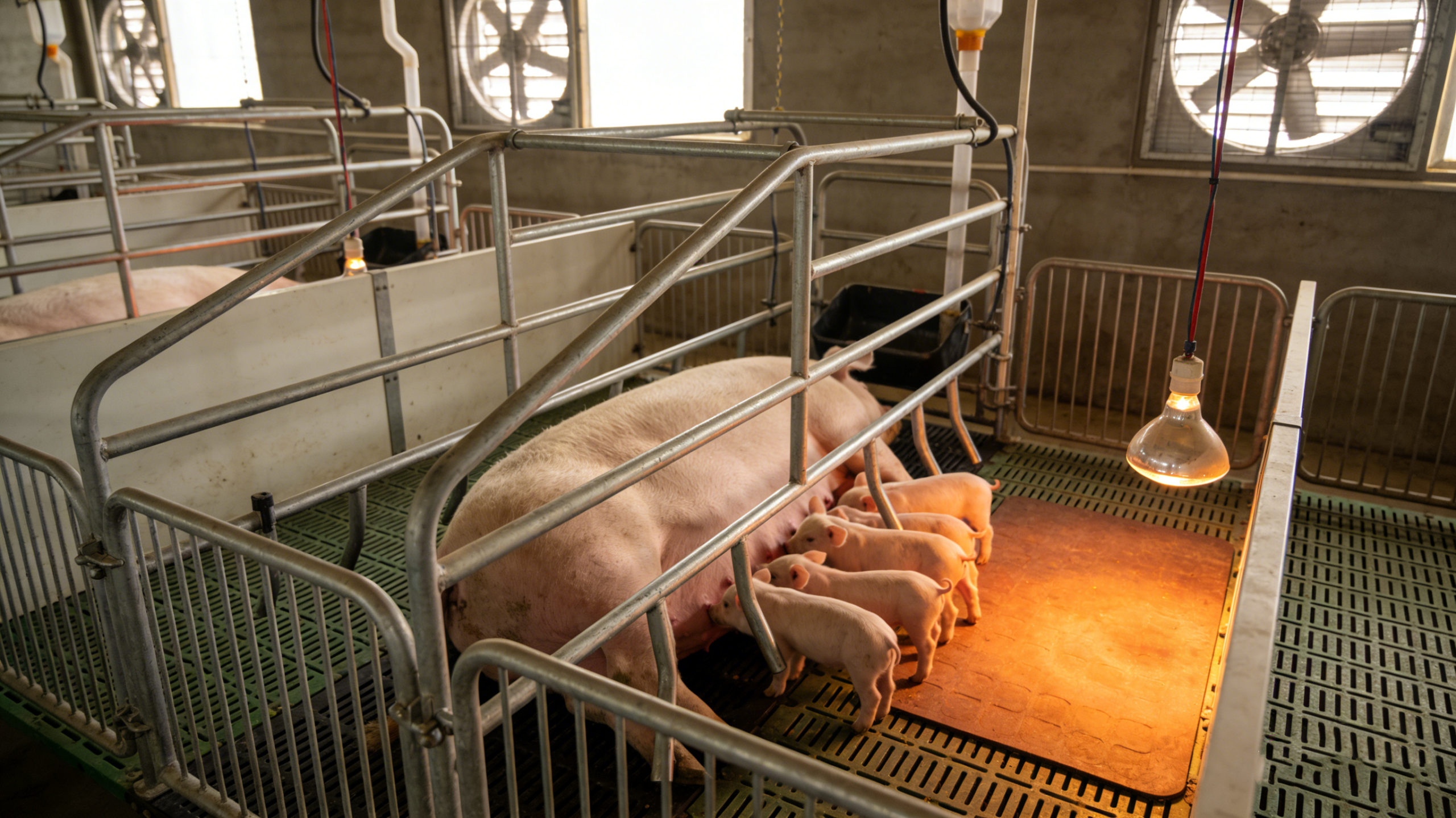
The dimensions of the farrowing pen should be comprehensively designed based on the sow’s body size, breed, parity, farrowing room layout, and management practices. Insufficient dimensions may impair the sow’s ability to get up, lie down, feed, and nurse; excessive dimensions could increase activity risks for piglets and hinder pressure management. According to Queensland government guidelines, farrowing pen design must consider pen dimensions, space utilization, floor materials, water and feed facilities, as well as the location of the piglet insulation zone, with common reference dimensions provided.
Common reference dimensions for a single farrowing pen are:
Length: about 2.1–2.4 meters
Width: about 1.5–1.8 meters
Sow crate width: about 0.6–0.75 meters
Fence height: about 1.0–1.1 meters
For larger sows, it is recommended to increase the pen length appropriately and optimize the width of the sow crate area, allowing the sow to stand, feed, and nurse naturally while limiting excessive turning movements. For large-scale pig farms, farrowing pen design should not only focus on the size of a single pen, but also consider the overall planning of aisle width, manure removal method, piglet warming area position, drinking water pipeline, and staff operation route.
A reasonable farrowing pen design should achieve a balance between “sow movement control” and “safe activity space for piglets.”

How to Reduce Piglet Crushing Rate?
Piglet crushing by sows is a common challenge in farrowing house management. For detailed insights into the sow and piglet delivery system—particularly during the first few days postpartum when piglets are weak and slow-moving while sows exhibit unstable positioning, increasing the risk of crushing—refer to this article. Reducing piglet crushing rates cannot rely solely on manual supervision; structural design of farrowing pens is essential for mitigating risks. Additional data from North Carolina State University indicate that pen width has shown limited impact on piglet survival rates in some studies, whereas pen length, sow body length, and sow weight may significantly influence survival outcomes.
High-quality farrowing pens usually focus on the following designs:
1.Sow Crate
The sow crate can restrict the sow from making large turning movements or lying down suddenly, reducing the chance of piglets being trapped under the sow’s body. The width of the sow crate should be adjusted according to sow body size. It should not be too narrow or too wide.
2.Anti-Crushing Bar Design
Anti-crushing bars are usually installed on both sides or lower areas of the sow section to create escape space for piglets. When the sow lies down, the anti-crushing bars can form a buffer zone and reduce the risk of piglets being directly crushed.
3.Separate Piglet Activity Area
The farrowing pen should clearly separate the sow area and piglet activity area, allowing piglets to have a fixed space for warming, resting, and nursing activities. Proper zoning can reduce the time piglets spend in dangerous areas where the sow stands or lies down.
4.Optimized Sow Standing and Lying Space
The sow needs enough space to stand, lie down, and nurse, but should not have excessive freedom of movement. The design should prevent sudden large turning movements while ensuring the sow’s standing and lying process is more stable and controllable.
For large pig farms, reducing piglet mortality cannot be achieved by one single piece of equipment. It is the combined result of farrowing pen structure, heating system, anti-slip flooring, daily inspection, and feeding management.
How Should the Piglet Warming Area Be Designed?
Newborn piglets have weak temperature regulation ability. Especially in cold regions or during winter farrowing, insufficient heating can easily cause chilling, diarrhea, low vitality, or even death. Therefore, the piglet warming area is a very important part of farrowing pen design.
A reasonable piglet warming area should have the following features:
1.Independent Warming Space
The piglet warming area should be set on the side of the sow’s body or at one end of the pen to prevent piglets from staying under the sow for long periods. An independent area helps piglets rest and also makes it easier for workers to observe their condition.
2.Heat Lamp or Heating Plate
Common configurations include infrared heat lamps, electric heating plates, and composite insulation boards. In cold regions, it is recommended to use heat lamps together with heating plates, so that both the piglet’s abdomen and surrounding environment can maintain a suitable temperature.
3.Keep the Floor Dry
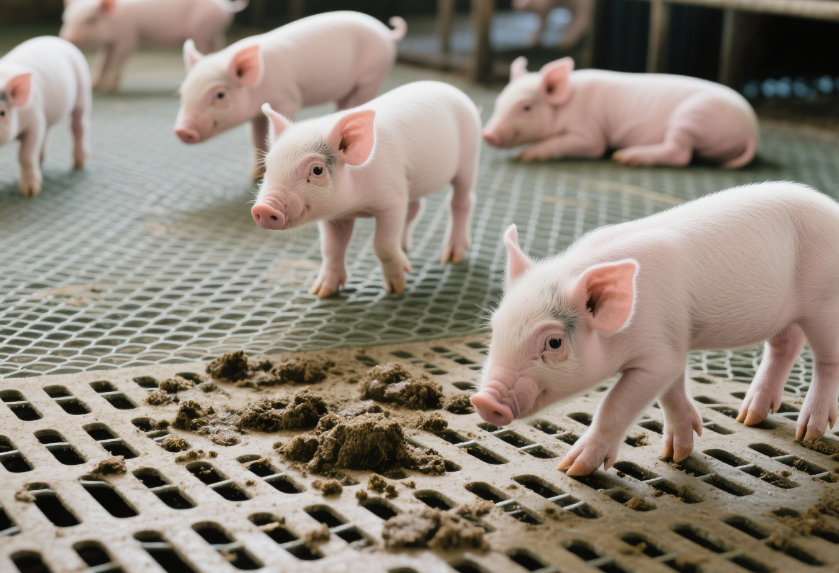
The floor of the warming area should be anti-slip, dry, and easy to clean. If the floor is wet, piglets may still suffer from chilling and infection even when the temperature is sufficient. Therefore, farrowing pen floor design should consider both manure drainage and anti-slip performance.
4.Avoid Direct Cold Air
Ventilation is important, but the piglet warming area should not be directly exposed to cold air. The farrowing room should properly arrange air inlets, fans, and cooling pads to ensure air circulation while avoiding excessive temperature differences in the piglet area.
In cold regions, farrowing pen heating design should not only focus on whether there is a heat lamp. More attention should be paid to the location of the warming area, floor material, ventilation method, and overall temperature control system of the farrowing room.

What Materials Are More Durable for Farrowing Pens?
Farrowing pens are used in humid environments with manure, disinfectants, and frequent operation for a long time. Material quality directly determines equipment service life and later maintenance cost. For commercial pig farms, it is very important to choose materials that are corrosion-resistant, structurally stable, and easy to clean.
Common farrowing pen materials include:
1.Hot-Dip Galvanized Steel Pipe
Hot-dip galvanized steel pipe is a commonly used material for farrowing pens. It has good rust resistance, corrosion resistance, and load-bearing capacity, making it suitable for most large-scale pig farms. High-quality hot-dip galvanizing can extend equipment service life and reduce later maintenance.
2.Stainless Steel Parts
Stainless steel has better corrosion resistance and is suitable for drinking systems, feeders, key connection parts, or highly corrosive environments. However, the overall cost is relatively higher, so it is usually used locally according to budget and application scenario.
3.Cast Iron Slatted Floor
Cast iron slatted floors have high strength and good load-bearing capacity, making them suitable for sow standing and lying areas. They have strong stability, but anti-slip design and surface treatment should be considered.
4.Plastic Slatted Floor
Plastic slatted floors are usually used in piglet activity areas. They are softer for piglet feet, help reduce leg injuries, and are easy to clean. However, high-strength and anti-aging quality materials should be selected.
5.Composite Flooring
Composite flooring can be combined according to the different needs of the sow area and piglet area, balancing load-bearing capacity, anti-slip performance, heat preservation, and cleaning convenience. It is a common configuration in modern pig farms.
A good farrowing pen does not simply pursue one specific material. Instead, it should reasonably combine different materials according to the functions of the sow area, piglet area, manure drainage area, and management area.

Is the Farrowing Room Easy to Clean and Disinfect?
The efficiency of cleaning and disinfection in the farrowing house directly impacts disease prevention, piglet health, and batch management. If the farrowing pen contains excessive hygiene dead zones, the risks of fecal residue accumulation and bacterial proliferation significantly increase. Additional recommendations from the University of Missouri suggest that a farm’s biosafety protocol should include high-pressure washing, broad-spectrum disinfection, zoned management of swine populations at different ages, as well as thorough cleaning, disinfection, and drying after batch transfer.
Easy-to-clean farrowing pens usually have the following features:
Good slatted floor drainage, allowing manure to be discharged quickly
Simple pen structure, reducing cleaning dead corners
Proper feeder and drinker positions for easy washing and maintenance
Clear flooring material division between sow area and piglet area
Neat layout between pens for high-pressure washing and disinfection
Smooth manure discharge channels to reduce manual cleaning pressure
For commercial pig farms, farrowing pen design should not only be “usable.” It should also consider whether daily cleaning, batch disinfection, staff operation, and long-term maintenance are convenient. The easier the equipment is to clean, the easier it is to standardize farrowing room biosecurity management.
Where Can You Buy Customized Farrowing Pens?
Different pig farms have different pig house dimensions, sow quantities, farming models, climate conditions, and budgets. Therefore, farrowing pens are very suitable for customized solutions. Especially for new pig farms, farrowing room expansion, or renovation of existing farms, it is necessary to design pen quantity, aisle width, manure pit location, heating configuration, and water and electricity pipelines according to site conditions.
Before purchasing farrowing pens, it is recommended to prepare the following information before contacting the manufacturer to avoid rework caused by unsuitable dimensions or accessories:
1.Actual internal length, width, and height of the farrowing room, so the supplier can plan pen layout;
2.Total number of sows on the farm to determine the overall purchasing scale of the pen system;
3.Number of sows farrowing in the same batch to match farrowing room zoning;
4.Sow breed and body size to customize sow crate width and anti-crushing structure;
5.Local temperature and humidity conditions in summer and winter todetermine corrosion protection standards and heating configuration;
6.Whether piglet heat lamps, heating plates, or a complete intelligent ventilation and temperature control system are needed;
7.Farrowing room manure cleaning method, such as dry manure cleaning or flushing system, to adjust pen height and slatted floor structure;
8.Whether feeders, drinkers, slatted floors, and on-site installation guidance from the manufacturer are required.
Guangxing can provide customized farrowing pen solutions according to customers’ pig house dimensions, sow quantity, and farming management needs. The solution can include pen structure design, anti-crushing design, piglet warming area, slatted floor, drinking and feeding configuration, and overall farrowing room layout suggestions, helping pig farms improve piglet survival rate, reduce labor management pressure, and increase farrowing room operation efficiency.
Conclusion
When choosing a farrowing pen, price should not be the only consideration. It is more important to comprehensively evaluate whether the size is reasonable, whether the anti-crushing design is complete, whether the piglet warming area is safe, whether the materials are durable, whether cleaning and disinfection are convenient, and whether the supplier has customized design capabilities.
For modern pig farms, a suitable farrowing pen is not only a piece of equipment, but also a system solution that affects piglet survival rate, sow production performance, and farrowing room management efficiency. If you are planning a new pig farm, farrowing room renovation, or sow breeding project, you can provide pig house dimensions, sow quantity, and target pen quantity to get a farrowing pen configuration solution that better suits your farm.
For product and solution consultations, please contact Guangxing’s professional team for customized advice: WhatsApp: 00852-46090144 or [Phone/WeChat]: 0086-17876668787



