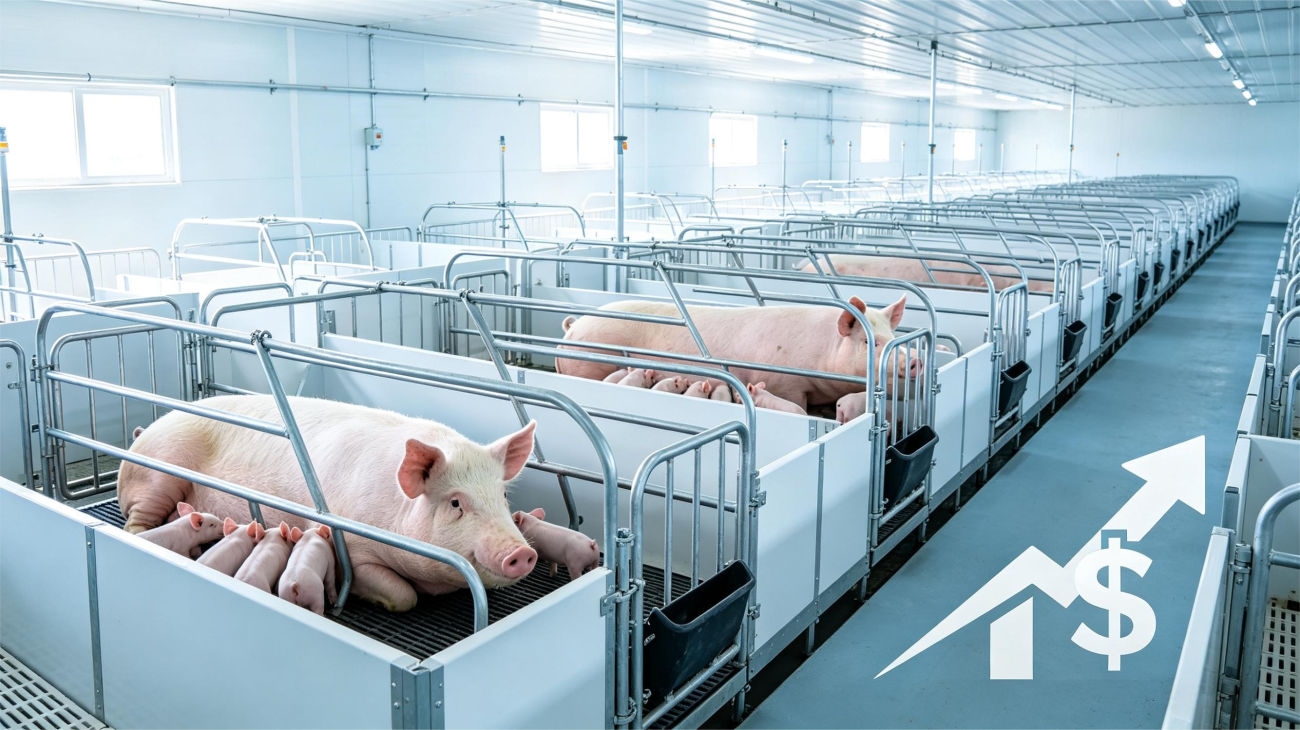
- Farrowing crates are now widely used in commercial pig farms around the world, especially in intensive sow production systems.
- They are designed to provide a safer environment for sows during farrowing and help protect newborn piglets from accidental crushing.
- But who invented farrowing crates?
- The answer is:
- there was no single inventor of the modern farrowing crate.
- Instead, the system developed gradually through decades of improvements in pig housing, breeding management, and farm equipment design.
- Understanding this history helps explain why farrowing crates became an important part of modern pig production.
1. What Is a Farrowing Crate?
- A farrowing crate is a specialized housing system used for sows before and after giving birth.
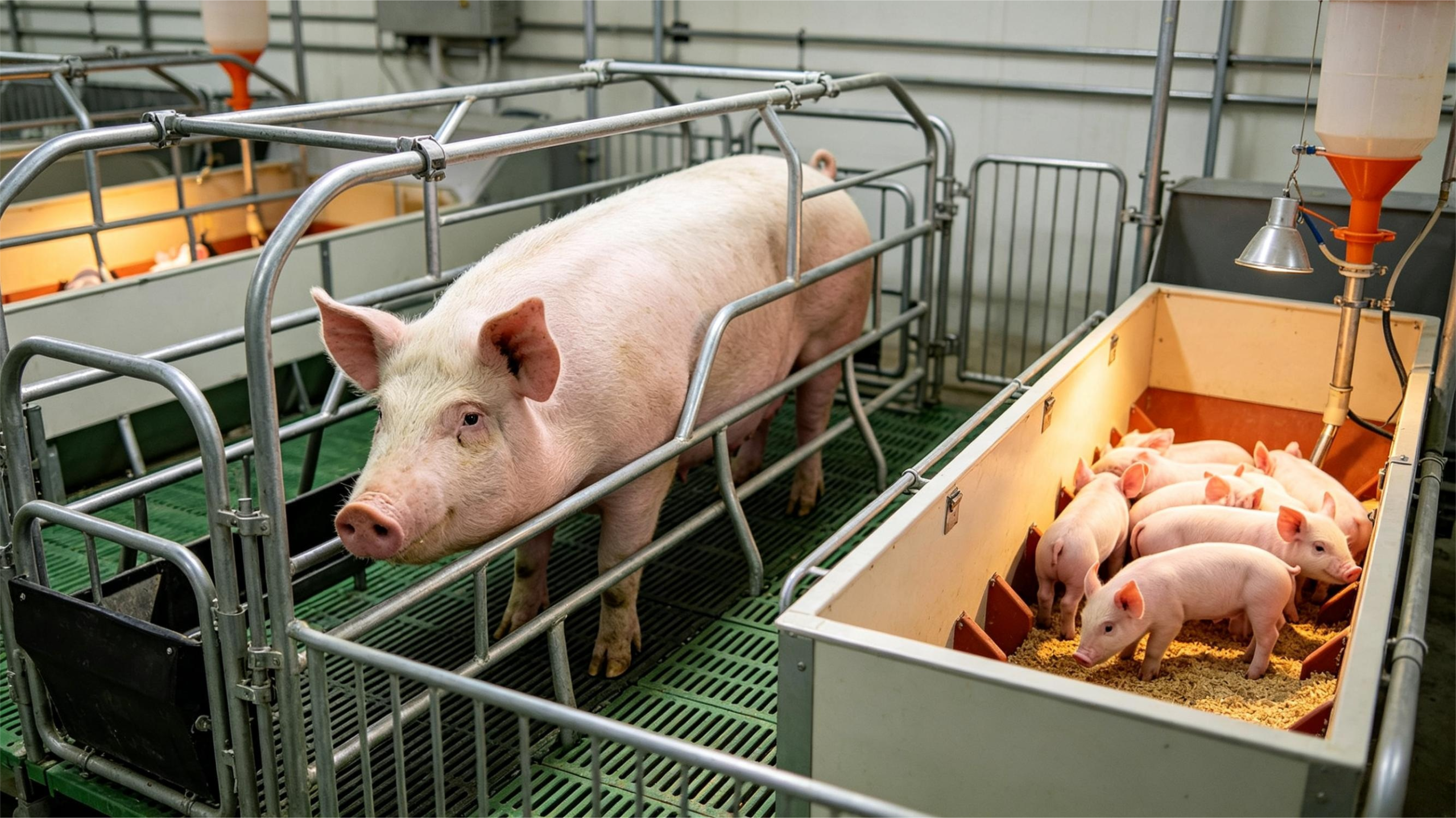
- A typical farrowing crate system includes:
- Sow crate structure
- Piglet creep area
- Feeding equipment
- Drinking system
- Flooring system
- Manure removal system
- The main purpose is to balance two requirements:
- 1. Allow the sow to give birth and nurse normally.
- 2. Provide protection and a stable environment for newborn piglets.
- For commercial farms, especially those managing hundreds or thousands of sows, farrowing equipment helps standardize daily management.
- Learn more about modern pig housing solutions:
2. The Early Development of Farrowing Crates
- Before modern farrowing crates appeared, pigs were mainly raised in simple pens or outdoor systems.
- These traditional methods were suitable for small farms but created several challenges when pig production expanded:
- Higher piglet mortality
- Difficult cleaning
- Poor control of the farrowing environment
- More labor requirements
- Farmers gradually started developing more controlled housing systems to improve piglet survival.
- Early pig confinement designs appeared in Europe during the 19th century. However, these systems were not the same as today's farrowing crates.
- They mainly focused on controlling animal movement rather than protecting newborn piglets.
3. When Were Modern Farrowing Crates Developed?
- Modern farrowing crates began developing during the 1950s and 1960s when commercial pig farming expanded.
- At that time, farms were becoming larger, and producers needed equipment that could improve:
- Piglet survival rates
- Feeding management
- Hygiene control
- Labor efficiency
- Livestock researchers and equipment manufacturers worked together to improve farrowing systems.
- The modern design introduced several important features:
- A fixed sow area
- Easier access for farm workers
- Dedicated piglet protection space
- Better manure management
- Therefore, instead of crediting one person with inventing the farrowing crate, it is more accurate to say that modern farrowing crates were developed through continuous improvements in the pig industry.
4. Why Were Farrowing Crates Developed?
- The development of farrowing crates was mainly driven by practical challenges in pig production.
- As commercial farms became larger, farmers needed a system that could improve piglet survival while making daily management easier.
- The main reasons for developing farrowing crates include reducing piglet losses, improving hygiene, and creating a more controlled production environment.
- Piglet crushing is one of the major causes of early piglet mortality.
- Newborn piglets usually stay close to the sow, especially during nursing. When a sow changes position, smaller piglets may be accidentally trapped underneath her body.
- A well-designed farrowing crate creates a safer area around the sow.
- The crate does not completely restrict natural behavior, but it helps control sudden movements and gives piglets a protected space to rest and feed.
- Large-scale pig farms require consistent management procedures.
- A farrowing crate makes it easier for workers to:
- Monitor sow health
- Carry out vaccinations
- Observe piglet growth
- Clean the farrowing area
- Provide feed and water
- For farms with hundreds or thousands of sows, standardized equipment helps reduce management differences between workers and improves production stability.
- The farrowing period is one of the most sensitive stages in pig production.
- Newborn piglets require:
- Clean conditions
- Reliable drinking water
- Stable temperature
- Good ventilation
- Modern farrowing systems are often combined with ventilation, heating, feeding, and manure management equipment.
- This integrated approach helps farms create a more suitable environment for both sows and piglets.

5. How Have Farrowing Crates Changed Today?
- Modern farrowing crates are very different from early designs.
- Today, manufacturers focus not only on productivity but also on durability, animal comfort, and easier farm operation.
- Common improvements include:
- Adjustable structures
- Stronger corrosion-resistant materials
- Better piglet protection areas
- Easier cleaning designs
- Improved worker accessibility
- Commercial farms now expect farrowing systems to provide reliable performance over many years.
- Therefore, equipment design must consider not only initial investment but also long-term operation costs.
6. Main Improvements in Modern Farrowing Crates
- Different sow breeds have different body sizes.
- Adjustable farrowing crates allow farms to adapt the equipment according to sow size, improving both management efficiency and animal comfort.
- Commercial pig farms usually require equipment that can operate in humid and corrosive environments.
- High-quality galvanized steel structures are commonly used because they provide better corrosion resistance and longer service life.
- Modern systems usually include a dedicated piglet area with heating solutions.
- This helps newborn piglets maintain body temperature during the first days after birth.
7. Farrowing Crate vs Farrowing Pen
- In recent years, some farms have considered loose farrowing systems as an alternative to traditional farrowing crates.
- The choice between a farrowing crate and a farrowing pen depends on farm conditions, management level, labor availability, and local regulations.
| Farrowing Crate | Farrowing Pen | |
|---|---|---|
| Sow movement | More restricted | More freedom |
| Piglet protection | More predictable | Depends on design |
| Daily management | Easier | Requires higher management skills |
| Investment cost | Usually lower | Usually higher |
| Commercial adoption | Widely used worldwide | Growing in some markets |
- For many commercial farms, farrowing crates remain a practical solution because they provide predictable management results and stable production performance.
8. Components of a Modern Farrowing System
- A modern farrowing system is not only a single crate. It is usually a combination of several equipment components designed to support sow health, piglet survival, and efficient farm management.
- A complete farrowing solution normally includes the following parts:
- The farrowing crate is the core structure of the system.
- It provides a dedicated area for the sow during the farrowing and lactation period while creating a safer space for newborn piglets.
- A well-designed crate should consider:
- Sow body size
- Ease of operation
- Structural strength
- Long-term durability
- Worker accessibility
- For commercial farms, the crate structure should be strong enough to withstand daily use while allowing convenient cleaning and maintenance.
- Proper nutrition is essential for lactating sows because milk production directly affects piglet growth.
- A suitable feeding system helps:
- Provide accurate feed amounts
- Improve feeding efficiency
- Reduce feed waste
- Maintain sow body condition
- Automatic or semi-automatic feeding solutions are commonly used in larger farms to improve management efficiency.
- Clean and sufficient water supply is critical during the farrowing period.
- Sows require more water during lactation, and piglets also need reliable drinking sources as they grow.
- A good drinking system should provide:
- Stable water pressure
- Clean water supply
- Easy maintenance
- Reduced water waste
- The floor design directly affects hygiene and animal comfort.
- A suitable farrowing floor should help:
- Remove manure efficiently
- Keep the area cleaner
- Reduce moisture accumulation
- Provide a comfortable surface for animals
- Different farms may choose different flooring solutions depending on climate conditions, management methods, and investment plans.
- Newborn piglets are highly sensitive to temperature changes.
- Modern farrowing houses often combine equipment such as:
- Heating systems
- Ventilation systems
- Cooling equipment
- Environmental controllers
- Maintaining proper temperature, airflow, and humidity helps create a more stable environment for sow and piglet production.
9. How to Choose the Right Farrowing Equipment?
- Choosing the right farrowing system depends on more than just equipment specifications.
- Farm owners should consider several practical factors before making a decision.
Farm Scale and Future Expansion
- A small family farm and a large commercial pig operation usually have completely different requirements.
- Large farms normally need:
- Higher automation levels
- Easier management
- Standardized equipment layouts
- Reliable after-sales support
- Before purchasing equipment, farms should consider not only current production capacity but also future expansion plans.
Local Climate Conditions
- Climate has a direct impact on pig house design.
- For example:
- Hot and humid regions require better ventilation and corrosion resistance.
- Cold regions require stronger insulation and heating solutions.
- Areas with unstable electricity supply may need backup power planning.
- A suitable farrowing system should be adapted to local environmental conditions instead of simply copying another farm design.
Equipment Durability and Maintenance
- Pig farm equipment operates continuously in environments with moisture, manure, and cleaning chemicals.
- Important factors include:
- Material quality
- Anti-corrosion performance
- Structural strength
- Spare parts availability
- Choosing durable equipment can reduce long-term maintenance costs and improve farm profitability.
10. Modern Pig Farrowing Solutions
- Today, commercial pig farms usually combine farrowing crates with complete pig production systems.
- A complete solution may include:
- Gestation stalls
- Farrowing crates
- Piglet heating systems
- Feeding systems
- Drinking systems
- Manure management solutions
- Different farms have different production goals and operating conditions. Therefore, a suitable farrowing solution should be designed according to:
- Farm size
- Housing conditions
- Local climate
- Labor availability
- Future expansion plans
- Guangxing provides customized pig farm equipment solutions based on different farm requirements and production conditions.
- With experience in livestock equipment manufacturing and international pig farm projects, Guangxing focuses on providing practical and reliable solutions for commercial pig farms.
- Related Pages
11. Conclusion
- The history of farrowing crates is not about one person inventing a single piece of equipment.
- Instead, modern farrowing systems are the result of decades of improvements in pig farming technology and management practices.
- From early pig housing designs to today's commercial farrowing solutions, the main goal has remained the same:
- Creating a safer and more efficient environment for sows and piglets.
- For farms planning to upgrade their pig production systems, selecting the right farrowing equipment should be based on farm scale, climate conditions, management requirements, and long-term operating goals.
- A properly designed farrowing system can help improve production stability and support sustainable development of modern pig farming.