


The poultry industry is undergoing continuous evolution, with sustainability at its core. 🐔🌱In Canada, innovative egg producers are leading the way in eco-friendly farming practices—— from smart feed management to the integration of renewable energy, achieving groundbreaking progress. In this in-depth feature, we take a look at how Canadian poultry farms are reducing their environmental impact while maintaining high productivity. Let’s explore the future of sustainable chicken farming!
1.The rise of sustainable poultry farming in Canada With growing public concern about climate change, resource scarcity and animal welfare, the poultry industry is transitioning to regenerative agriculture. Canada, with its vast agricultural landscape, is taking the lead in creating a low environmental impact, efficient egg production model. The core drivers of this change include:
- Reduce carbon emissions from feed production and manure treatment.
- Maximize water and energy waste by automating and closed-loop systems.
- Improve the survival welfare of hens through free-range mode and more perfect cage replacement scheme.
- Use probiotics and organic feed strategies to reduce the use of antibiotics.
- trivia: Some Canadian farms are close to the “zero waste” goal, turning poultry manure into biogas energy and organic fertilizer.

- Smart Feed Management: The combination of nutrition and sustainability
✔ Precision feeding, optimize nutrition supply Modern poultry farms in Canada use AI-driven feed systems to precisely adjust the nutritional ratio and avoid overfeeding and waste. For example:
- The proportion of minerals (such as zinc and calcium) is adjusted dynamically to reduce the excretion of excess minerals and reduce the risk of soil and water pollution.
- The use of organic, non-GMO feeds (such as the feed program of Qinbang Organic Farm) not only improves the health of hens, but also eliminates synthetic additives.
✔ Develop alternative protein sources To reduce dependence on soybeans (one of the main causes of deforestation), farms are testing a variety of alternative proteins:
- Insect protein (e.g., black soldier fly larvae).
- Algae and single cell protein (rich in Omega-3 fatty acids).
- Local sourcing of grains and legumes (reducing carbon emissions from transportation).
✔ Reduce phosphorus pollution Phosphorus loss from poultry farms can pollute water, and Canadian researchers have developed low-phosphorus feed, including:
- Phytase is added (to improve phosphorus absorption rate and reduce phosphorus waste by 54.5%).
- Precise supplementation of minerals (avoid waste caused by excessive addition).
- Energy efficiency and the use of renewable energy
✔ Solar-powered poultry farms Some Canadian farms have adopted solar systems that dramatically reduce fossil fuel consumption. For example:

- Use solar panels on the site to power the automatic climate control system (ventilation and heating equipment).
- The use of simulated natural light LED lighting to relieve the stress response of hens and improve egg production.
✔ Biogas utilization of poultry manure Instead of letting methane (a powerful greenhouse gas) escape from farm manure, it is being recycled in the following ways:
- The feces are sent to the biogas plant for fermentation, generating electricity and heat.
- Convert the fermented waste into organic fertilizer to form a nutrient cycle.
✔ Smart water recycling
- Collect rainwater for hen drinking and site cleaning.
- Build a closed-loop water system (reusing water for processing for hydroponic feed crops).
- breeding environment
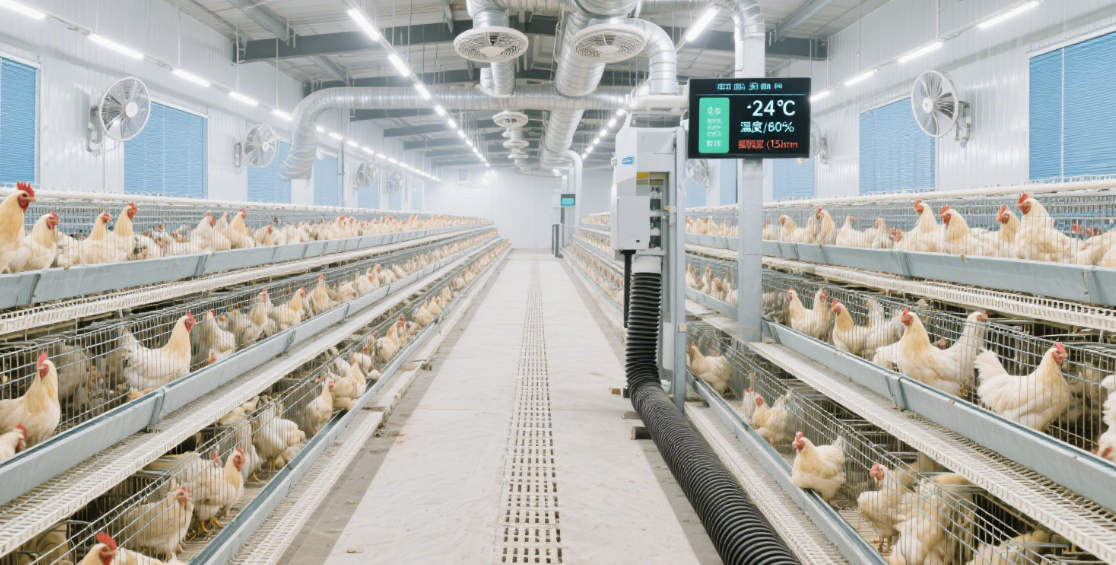
- Build multi-storey chicken houses (such as the design of chicken houses in Tongxiang 10,000-scale chicken farm) so that hens can naturally carry out behaviors such as resting and bathing in sand.
- Automatic egg collecting equipment is used to reduce stress of hens and egg breakage.
✔ Ranch free-range and organic farming mode
- Implement rotational grazing (hens forage naturally and improve soil health).
- Promote the forestry-pastoral integration system (combining tree planting with free-range poultry to provide shade and enhance biodiversity).
✔ Measures to relieve stress in hens

- Classical music in the chicken coop (which has been shown to reduce anxiety levels in hens). • Supplement probiotics (without relying on antibiotics to maintain the intestinal health of hens).
- Future direction: Canada’s net zero roadmap for poultry farming Canada has set a goal—— to be carbon neutral in egg production by 2030. Core implementation strategies include:
- Promote regenerative agriculture (restoring soil carbon storage through the combination of poultry farming and crop cultivation).
- Application of blockchain traceability technology (ensuring that feed and eggs meet sustainability standards). # Sustainable Agriculture #Egg Industry #Green Agriculture #Animal Welfare #Renewable Energy Want a free copy of the Sustainable Poultry Farming Transition Guide? Feel free to leave a comment below! 🐓🌍


