


Introduction
Layer chicken farming plays a vital role in the Philippine agricultural sector. Eggs are one of the most affordable and widely consumed sources of protein in the country, driving continuous demand from households, food processors, bakeries, and restaurants.
With population growth, urbanization, and rising food consumption, commercial layer farming in the Philippines has become an attractive investment for agribusiness owners and poultry entrepreneurs. However, success in egg production depends heavily on proper farm planning, housing systems, equipment selection, and cost control.
This article provides a comprehensive guide to layer chicken farming in the Philippines, covering climate conditions, housing design, cage systems, feeding and watering equipment, automation levels, costs, and best practices. It is written to meet Google SEO requirements and match the search intent of investors and farm operators.
1. Overview of the Layer Poultry Industry in the Philippines
The Philippines has a well-established poultry sector, with eggs being a staple food across all income levels. Local egg production is dominated by small- and medium-sized farms, but large-scale commercial layer farms are increasing rapidly, especially in Luzon and parts of Visayas.
Key characteristics of the Philippine layer industry include:
Strong year-round egg consumption
High dependence on imported poultry equipment
Increasing labor costs in urban and peri-urban areas
Growing interest in automated and semi-automated systems
These factors make modern layer cage systems increasingly popular among commercial farms.
2. Climate Conditions and Their Impact on Layer Farming
2.1 Tropical Climate Challenges
The Philippines has a tropical maritime climate, characterized by:
High temperatures (25–35°C)
High humidity
Seasonal heavy rainfall and typhoons
These conditions directly affect:
Feed intake
Egg production rate
Mortality and disease pressure
As a result, ventilation and heat stress management are critical design considerations for layer houses.
2.2 Recommended Poultry House Types
For Philippine conditions, the most suitable layer house designs are:
Open-sided poultry houses with natural ventilation
Semi-closed poultry houses with mechanical ventilation
Fully closed houses for large-scale, high-density farms
Most medium and large farms prefer semi-closed houses, which balance cost and performance.
3. Layer Chicken Housing Design in the Philippines
3.1 Poultry House Structure
A typical commercial layer house includes:
Steel structure frame
Concrete floor with drainage slope
Open or semi-closed sidewalls with curtains
Galvanized steel roofing with insulation
Recommended orientation:
East–west direction to reduce direct sunlight exposure
3.2 Stocking Density and Farm Scale
Common stocking standards:
A-type cage system: 12–15 birds per m²
H-type cage system: 15–18 birds per m²
Typical farm sizes in the Philippines:
Small-scale: 5,000–10,000 layers
Medium-scale: 20,000–50,000 layers
Large-scale: 100,000+ layers
4. Layer Cage Systems for the Philippine Market
4.1 A-Type Layer Cage System
A-type cages are widely used in the Philippines due to:
Lower initial investment
Simple structure
Easy maintenance
Suitable for:
Small and medium farms
Areas with abundant labor
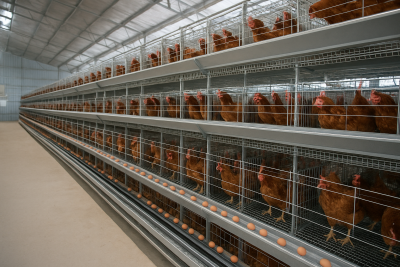
4.2 H-Type Layer Cage System
H-type (multi-tier) cages are increasingly adopted for commercial farms:
Higher stocking density
Better space utilization
Compatible with full automation
Suitable for:
Large-scale farms
Investors focusing on long-term efficiency
5. Feeding, Drinking, and Egg Collection Systems
5.1 Automatic Feeding System
Modern layer farms in the Philippines commonly use:
Trough chain feeding systems
Automatic feed distribution from silos
Benefits include:
Uniform feed supply
Reduced feed waste
Lower labor requirements
5.2 Automatic Drinking System
Nipple drinking systems are standard due to:
Clean water supply
Reduced disease risk
Easy pressure regulation
Water quality is especially important in tropical environments.
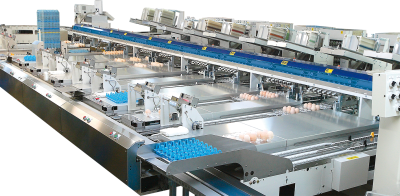
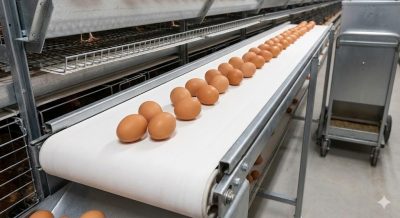
5.3 Egg Collection System
Options include:
Manual egg collection (small farms)
Semi-automatic egg collection
Fully automatic egg conveyor systems
For farms above 20,000 layers, automatic egg collection significantly improves efficiency and reduces breakage.
6. Ventilation and Environmental Control
6.1 Ventilation Systems
Effective ventilation systems include:
Exhaust fans
Air inlets
Circulation fans
Mechanical ventilation is strongly recommended to maintain stable temperature and humidity.
6.2 Cooling Solutions
Common cooling methods:
Cooling pads
Fogging systems
Roof insulation
These systems help reduce heat stress and maintain egg production during hot seasons.

7. Automation Level and Labor Efficiency
7.1 Labor Considerations in the Philippines
While labor is still relatively affordable in rural areas, wages are rising, and skilled poultry workers are becoming harder to find.
Automation helps:
Reduce labor dependency
Improve management consistency
Enhance biosecurity
7.2 Recommended Automation Level
For most Philippine farms:
Semi-automatic systems are ideal for 10,000–30,000 layers
Fully automatic systems are recommended for 50,000+ layers
8. Estimated Cost of Layer Farming in the Philippines
8.1 Investment Cost per Bird (Reference)
Approximate cost ranges:
Semi-utomatic system: USD 25–35 per layer
Fully automatic system: USD 35–50 per layer
Cost components include:
Poultry house construction
Cage systems
Feeding and drinking systems
Ventilation and electrical systems
Installation and training
8.2 Key Cost Influencing Factors
Farm location
Import duties and logistics
Automation level
Local construction materials
9. Biosecurity and Disease Prevention
Essential biosecurity measures include:
Controlled farm access
Disinfection zones
Rodent and insect control
Proper manure management
Strong biosecurity improves flock health and protects long-term profitability.
10. Best Practices for Successful Layer Farming in the Philippines
Design farms based on local climate conditions
Invest in reliable ventilation systems
Choose cage systems that allow future expansion
Work with experienced poultry equipment suppliers
Focus on long-term operating efficiency, not only initial cost
Conclusion
Layer chicken farming in the Philippines offers strong growth potential due to consistent egg demand and an expanding consumer market. However, success depends on scientific farm design, appropriate equipment selection, and climate-adapted housing systems.
By investing in modern layer cage systems, efficient ventilation, and the right level of automation, poultry farmers in the Philippines can achieve stable egg production, lower operational costs, and sustainable long-term returns.
For commercial investors, a well-planned layer farm is not just an agricultural project—it is a scalable agribusiness asset.


