


A layer farm manager cannot stand beside every drinker line, fan and egg conveyor throughout the day. A blocked water line may go unnoticed until consumption falls. A ventilation problem can develop in one section while the sensor near the entrance still shows an acceptable reading.
These are practical reasons to consider IoT in egg production.
Connected monitoring helps operators see what is happening across poultry houses and respond to changes sooner. The buying decision starts with three questions: which problems need earlier detection, what equipment can provide reliable data, and who will respond when an alarm arrives?
AI may help analyse that information. It should have a defined job before it enters the equipment budget.

What Is the Difference Between Automation, IoT and AI?
Automation operates equipment. A controller starts a feeding cycle, adjusts ventilation or runs an egg conveyor according to its settings.
IoT connects devices and makes operating information available across a network. It can bring readings from different houses into a shared monitoring system.
AI analyses patterns. Depending on the application, it may compare current conditions with previous records and flag an unusual change.
These functions can work together, but buyers should ask suppliers to demonstrate each one separately. A remote dashboard does not prove that a system includes AI, and an automatic conveyor does not necessarily include egg counting.
Which Data Should a Layer Farm Monitor?
Start with readings that can lead to a useful inspection or management decision.
| Data | What it helps operators review | What needs checking |
|---|---|---|
| Temperature and humidity | Conditions across the house | Sensor position, calibration and differences between zones |
| Water consumption | Supply interruptions, leakage and changing flock demand | Meter location and the ability to isolate affected lines |
| Feed consumption | Feed delivery and consumption trends | How consumption is measured and reconciled with deliveries |
| Egg count | Output by house or collection route | Counter accuracy, counting location and missed or duplicate counts |
| Fan and motor status | Whether equipment is operating as expected | Whether the signal confirms actual operation or only a start command |
| Power and alarm records | Interruptions and response history | Backup arrangements, alarm delivery and acknowledgement |
More sensors do not automatically produce better information. A farm needs a maintenance plan, clear device labels and a record of where each reading comes from.
Monitor Conditions Where the Birds Are
A single temperature reading can hide differences along a long house or between cage levels.
Ask the supplier to show sensor positions on the house drawing. Locations should reflect the cage layout and ventilation design. Readings close to cooling pads, doors or direct airflow may need careful interpretation.
The poultry environmental control equipment should be selected alongside the house design. Monitoring can reveal uneven conditions, but it cannot correct an unsuitable airflow layout by itself.
Compare Water Use With Operating Conditions
A water alarm should lead to an inspection.
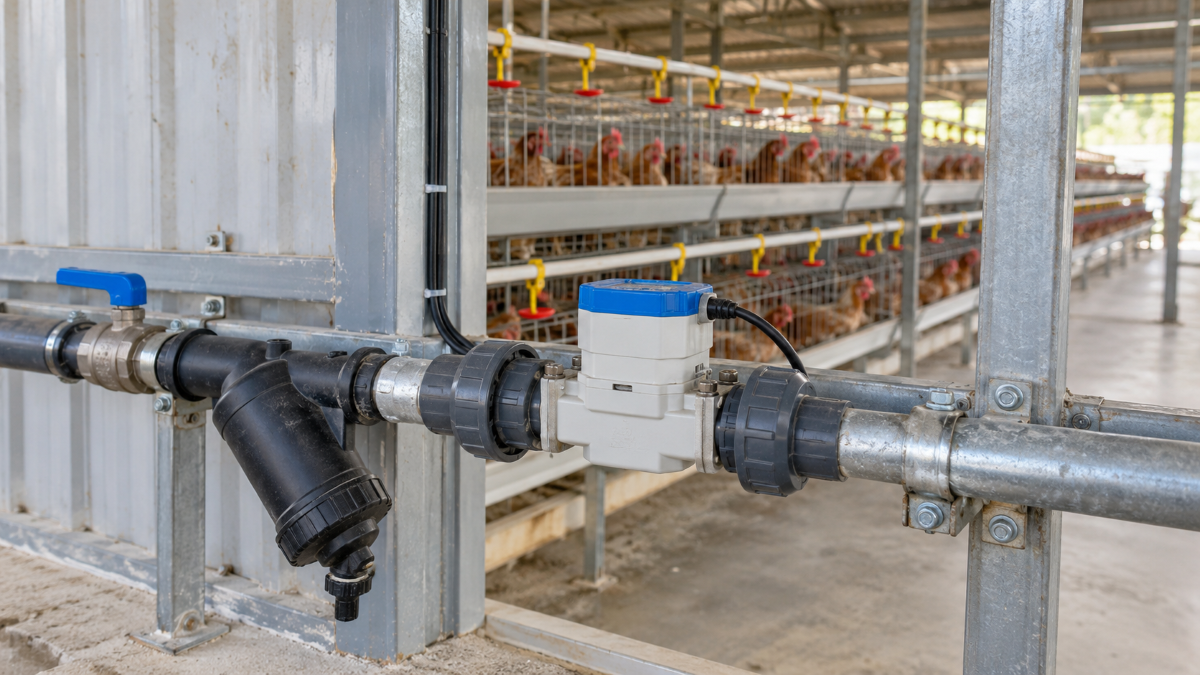
For example, if one house records unusually low consumption during the morning, operators can check supply pressure, valves, filters and drinker lines. They should also confirm that the meter is working.
Comparison with previous days is useful, but flock age, temperature and the lighting schedule affect consumption. An alert identifies a change; it does not establish the cause.
Connect Egg Counts With Collection Records
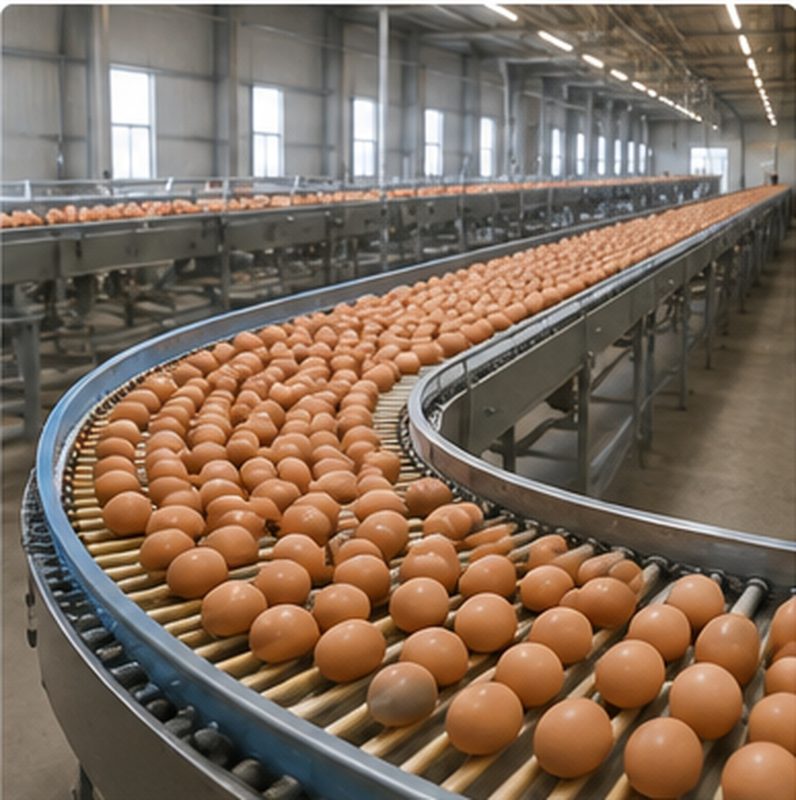
Egg production monitoring needs a consistent counting point and a clear reporting period.
If eggs from several houses merge before counting, the farm may lose the ability to identify which house produced them. Counting by house requires an appropriate arrangement before the streams combine, or another validated traceability method.
When specifying an automatic egg collection system, confirm whether counters, data recording and software connections are included.
Also reconcile conveyor counts with packing records. Differences may reflect breakage, rejected eggs, collection timing or counting errors rather than a change in laying performance.
What Should Happen When the System Detects a Problem?
A dashboard becomes useful when the farm has a response procedure.
Consider a hypothetical situation: egg output falls in one house while neighbouring houses remain stable. The manager should first confirm the bird count, collection period and counter accuracy. Next, review water supply, feed delivery, environmental records and recent management changes.
This sequence helps separate a recording problem from an equipment problem or a flock issue.
The system should record when an alert started, who acknowledged it and what action followed. Otherwise, repeated alarms can become background noise.
What Must Keep Working Without Internet?
Ask for a demonstration of the system with its external internet connection disconnected.
The supplier should explain which functions continue locally, which remote functions stop and how stored records are handled when the connection returns.
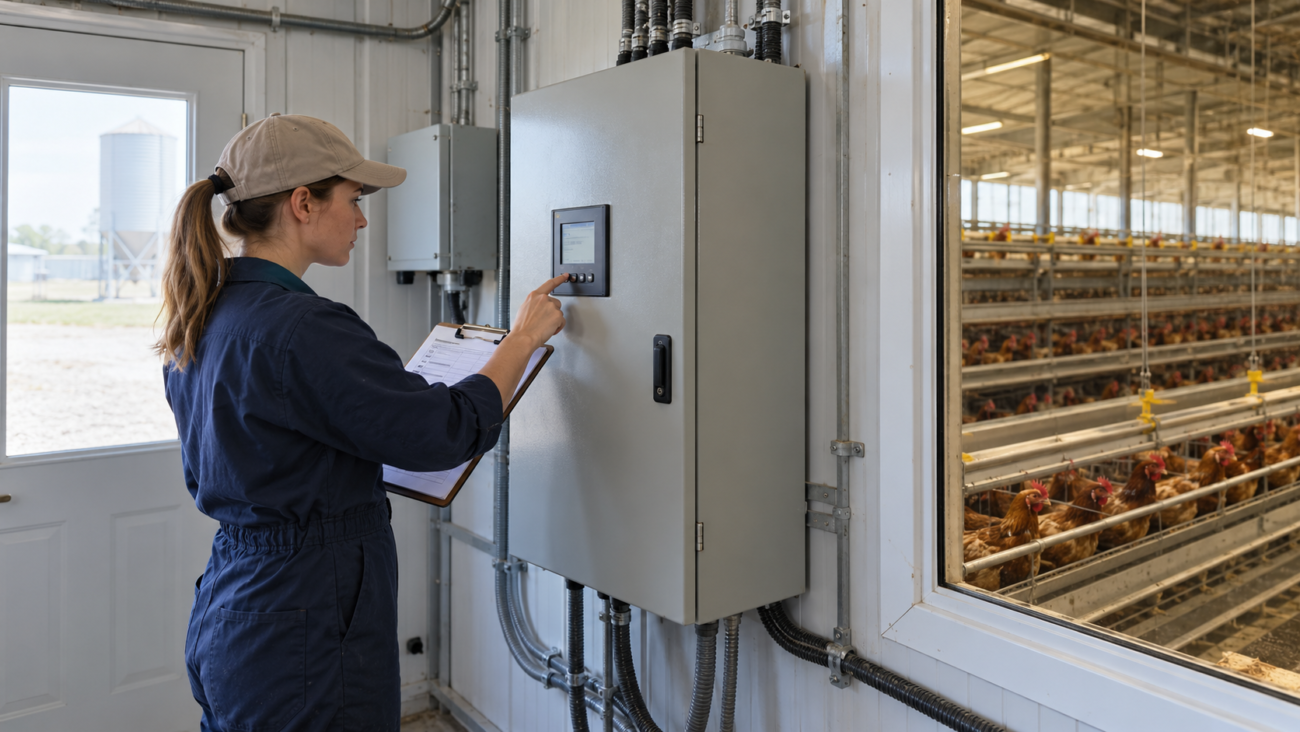
Ventilation control, manual operation and essential alarms need an appropriate local and backup strategy. Remote access is useful, but it cannot replace on-site protection.
Also distinguish an internet outage from a power failure. A controller that works offline still needs power. Backup supply, generator arrangements and independent alarm power require separate discussion.
A Practical Starting Scope for a 50,000-Layer Project
The following is a planning example, not a completed Guangxing installation.
For a proposed 50,000-layer farm, begin by reviewing:
- Temperature and humidity monitoring positions.
- Water measurement by house, with further subdivision where useful.
- The method for recording feed use.
- Fan operation and critical equipment feedback.
- Egg counting points before streams merge.
- Power failure and high-temperature alarms.
- Local control, manual operation and backup arrangements.
- Historical records and data export.
The final quantities depend on the number of houses, cage arrangement, utilities and existing controllers. Bird capacity alone is not enough to determine the monitoring configuration.
For an existing farm, start with one house if practical. Use the installation to verify data accuracy, alarm delivery and operator response before extending it across the site.
Where Can AI Help?
AI is worth evaluating when ordinary records and fixed alarms leave a specific problem unresolved.
One application is detecting unusual consumption patterns that remain within fixed limits. Another is reviewing several signals together, such as egg output, water consumption and house temperature.
Ask how the supplier tested the model, what information it requires and how often it produces false alerts. Request evidence from conditions comparable to your housing system.
The University of Georgia’s review of IoT technologies for precision poultry production identifies opportunities for connected monitoring while highlighting barriers including commercial validation, hardware durability and interoperability.
For a buyer, this means a promising demonstration should be followed by a clear acceptance test. Disease-related alerts should prompt inspection and professional assessment rather than be treated as a diagnosis.
How Should Buyers Compare Monitoring Costs?
Ask for an itemised quotation.
Separate sensors, meters, controller upgrades, wiring, network equipment, software, installation and commissioning. Then check recurring charges for subscriptions, connectivity, calibration and technical support.
Compatibility can change the cost substantially. Existing controllers may provide usable outputs, require additional interfaces or offer limited access to historical records.
Compare proposals against the same scope. One quotation may include only a dashboard, while another includes field devices, alarm testing and staff training.
Frequently Asked Questions
Can IoT monitoring be added to an existing layer farm?
Often it can, but the supplier must inspect the controllers, available interfaces, wiring and equipment condition. Retrofitting should begin with a compatibility review.
Does a small layer farm need AI?
It depends on the problem being addressed. Reliable measurements, local controls and clear alarms may meet the farm’s immediate needs without advanced analytics.
Can AI guarantee higher egg production?
No. Performance also depends on flock health, genetics, nutrition, housing and daily management. Monitoring can help identify changes and support decisions; it cannot guarantee an outcome.
Can one platform monitor several poultry houses?
It may be possible when the devices and software are compatible. Confirm that records remain identifiable by house and that operators can export the information.
What should I send when requesting a proposal?
Provide bird capacity, house dimensions, cage layout, existing controller details, power and internet conditions, and the problems you want to detect earlier.
Plan the Monitoring Around Daily Farm Work
Choose information that your team can check and act on. Agree on alarm responsibilities, sensor maintenance and acceptance tests before installation.
For a new project, discuss monitoring requirements together with feeding, drinking, ventilation, manure removal and egg collection. For an upgrade, establish what the existing equipment can support first.
Discuss your layer farm equipment and monitoring requirements with Guangxing.



