For commercial layer farms, an egg washing machine is not simply a piece of equipment. It affects daily processing capacity, labour requirements, egg handling efficiency and the consistency of the final product.
National Poultry Equipment’s Sani-Touch Model 20 is listed at $21,000, with a maximum published capacity of 8,640 eggs per hour. But is a standalone egg washer the right investment for a commercial layer farm in Nigeria, Ghana, Kenya or another growing African egg market?
The answer depends on your daily egg production, existing equipment, available utilities and future expansion plans. This guide examines the Model 20’s price, functions and purchasing considerations, then compares it with an integrated egg processing solution from Guangxing.
1. How Much Does National Poultry Equipment Model 20 Cost?
The National Sani-Touch Model 20 is listed at approximately US$21,000. Its published maximum processing capacity is 8,640 eggs per hour.
However, the machine price should not be treated as the total investment. Depending on the farm’s existing facilities and processing requirements, buyers may also need additional equipment for egg loading, inspection, grading and packing.
Before placing an order, request a written quotation that specifies the exact machine configuration, included accessories, shipping, installation and any optional equipment.
2. What Can the Model 20 Actually Do?
The Model 20 is designed as an egg washing and sanitizing machine. Its main purpose is to clean eggs before they move to subsequent handling or processing stages.
For farms that already have egg collection and grading equipment, a standalone washer may be a practical way to add or upgrade the washing stage without replacing the entire processing setup.
Its published maximum capacity is 8,640 eggs per hour. Actual output will depend on operating conditions, loading arrangements, downtime and the efficiency of the equipment before and after the washer.
For buyers, the key question is not only how many eggs the machine can wash per hour, but whether it fits the farm’s complete daily egg-handling process.
3. What Should African Commercial Layer Farms Consider Before Buying?
A machine that performs well in one market may require additional planning in another. That matters for poultry investors across Nigeria, Ghana, Kenya and other fast-growing egg markets.
3.1 Water Supply & Power
Egg washing requires a reliable water supply and suitable drainage. Farms should confirm the machine’s water consumption, water pressure requirements, drainage arrangements and cleaning procedures before installation.
Electricity is another important consideration. Buyers should confirm the required voltage, frequency and total electrical load, then compare these requirements with the power supply available at the farm.
The published specifications include 220 VAC/50Hz among the listed electrical options. Confirm the exact voltage and configuration supplied for your destination country rather than assuming that every machine is configured identically.
3.2 Spare Parts and Technical Support
Equipment downtime can interrupt daily egg processing, especially on farms with limited storage capacity.
Before purchasing, ask the supplier about spare-part availability, replacement-part lead times, remote troubleshooting and installation support. For projects in Africa, also confirm whether commissioning can be arranged in your country and who will provide technical assistance after delivery.
These arrangements should be included in the purchasing discussion, not left until the machine arrives.
3.3 Compatibility with Existing Equipment
A standalone washer is most useful when the farm already has a workable system for collecting, conveying and grading eggs.
If eggs are still collected manually or transferred between separate workstations, adding a washer alone may not solve the main labour and handling problems.
Check the connection points, conveyor direction, egg transfer method and available workshop space before deciding whether to purchase a standalone machine or a more integrated system.
4. What Additional Equipment Can Affect the Total Cost?
The Model 20’s listed price does not necessarily cover every stage of egg processing. Depending on the farm’s requirements, additional equipment may be needed.
The following figures are listed as optional equipment prices in National’s published price information. Buyers should confirm current availability, configuration and pricing directly with the supplier.
| Optional Equipment | Listed Price |
|---|---|
| Chemical Feed Pump | $750 |
| Digital Water Heater | $1,250 |
| Cross Loader | $5,000–$6,000 |
| Spool Spinner Candler | $13,500–$15,000 |
| Digital Egg Grader / Vac Pak | $16,500–$24,000 |
| Small Digital Grader | $13,500 |
| Mechanical Grader | $9,750 |
| Tray Pak | $11,000 |
These options serve different functions and should not automatically be added together. The right configuration depends on whether the farm needs washing only, inspection, grading, packing or a more complete processing workflow.
When comparing quotations, ask suppliers to separate the main machine, optional equipment, installation, shipping and other project costs. This makes it easier to compare the actual investment required for the same processing objective.
5. Standalone Egg Washer vs. Integrated Egg Processing Line: Which Should You Choose?
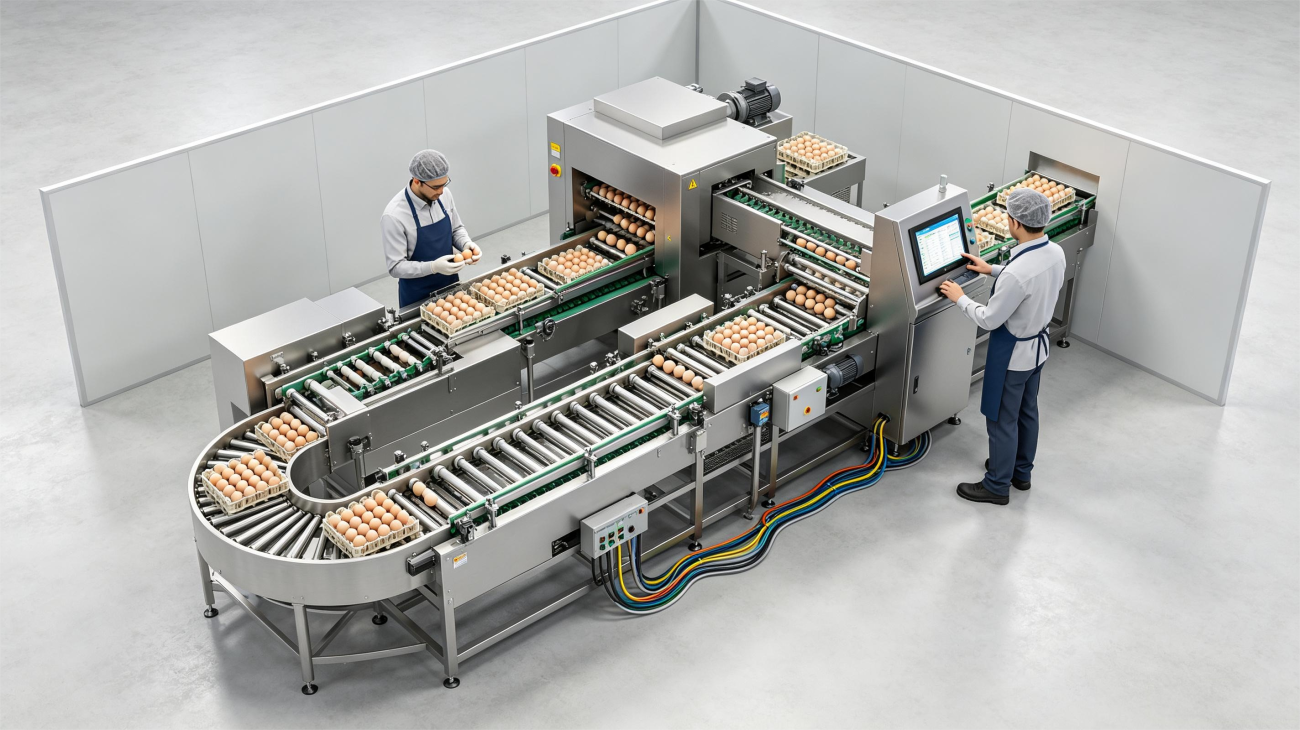
The Model 20 and an integrated egg processing line are not directly equivalent products. One is a standalone washing machine; the other connects several stages of egg handling and processing.
The better choice depends on what your farm already has and what it needs to achieve.
| Farm Situation | Standalone Egg Washer | Integrated Processing Line |
|---|---|---|
| Existing collection and grading equipment | Often suitable | May require unnecessary replacement |
| Need to add washing capacity | Suitable | Worth considering if other stages also need upgrading |
| New large-scale layer farm | Requires separate upstream and downstream planning | Can connect multiple processing stages |
| High daily egg output | Check whether one machine meets the processing schedule | Can be configured around required workflow and capacity |
| Need to reduce manual egg transfers | Limited if other stages remain manual | Can connect collection, conveying, inspection, grading and packing |
| Future production expansion | May require additional equipment later | Can be planned around expansion requirements |
For a farm that already has reliable egg collection and grading equipment, investing in a standalone washer may be the more economical decision.
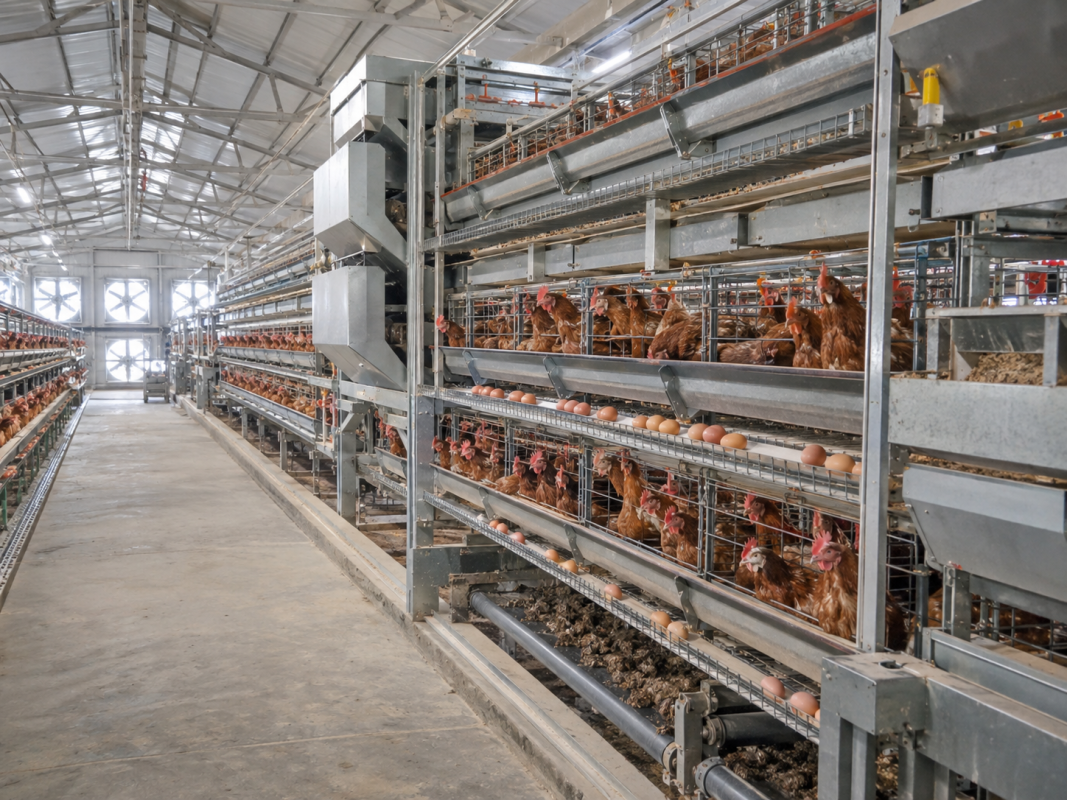
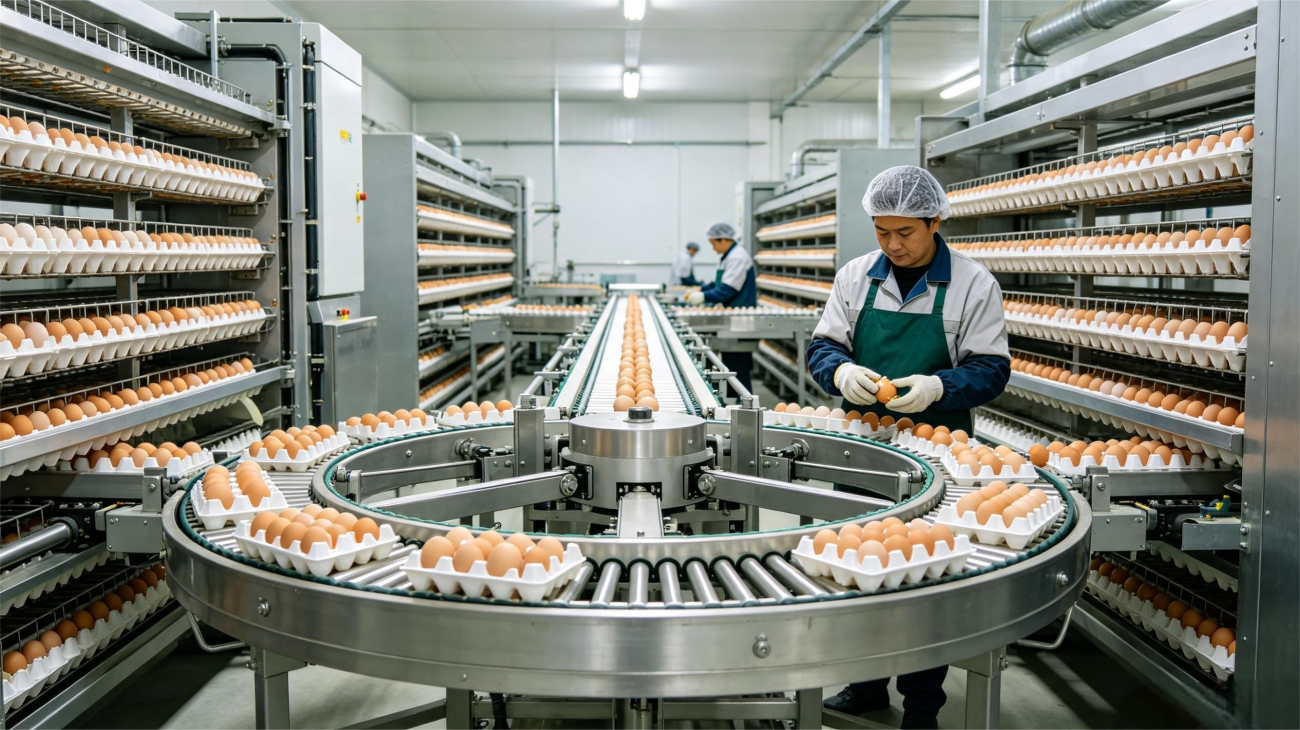
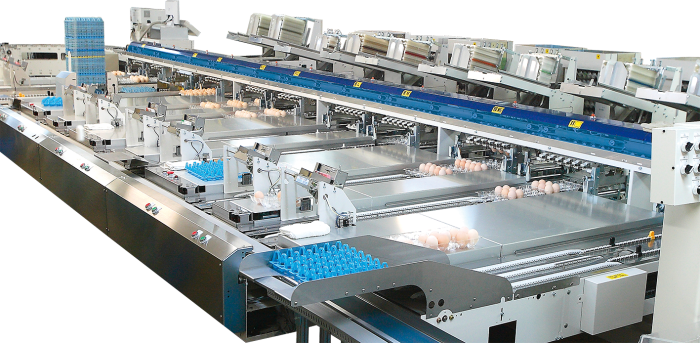
For a new large-scale layer farm or an operation upgrading several processing stages at once, an integrated line may offer better workflow coordination. Guangxing can provide equipment solutions covering automatic egg collection, conveying, crack detection, grading and packing, subject to the project’s required configuration.
You can learn more about Guangxing’s automatic egg collection systems and egg grading and packaging equipment on our website:

6. How Should You Calculate the Required Egg Processing Capacity?
The right processing capacity should be based on daily egg production and the number of hours available for processing—not simply the total number of birds on the farm.
Using the Model 20’s published maximum capacity of 8,640 eggs per hour, the theoretical processing volume would be:
| Processing Hours per Day | Theoretical Output |
|---|---|
| 4 hours | 34,560 eggs |
| 6 hours | 51,840 eggs |
| 8 hours | 69,120 eggs |
| 10 hours | 86,400 eggs |
These figures show theoretical throughput only; real output is not guaranteed.
For example, a farm producing 60,000 eggs per day would theoretically need about seven hours of operation at the published maximum rate. In practice, the schedule should also account for loading, cleaning, downtime, product transfers and downstream processing capacity.
For farms producing 150,000 or 200,000 eggs per day, one machine may not provide enough operating flexibility. Multiple machines or a higher-capacity integrated system may need to be evaluated.
Running several standalone machines in parallel can increase processing capacity, but it may also require more operators, separate water connections, additional electrical capacity and more maintenance coordination.
A practical equipment plan should therefore consider:
- Daily egg production and expected growth.
- Available processing hours and labour shifts.
- Peak-season production requirements.
- Washing, grading and packing capacity.
- Workshop layout and conveyor connections.
- Water, electricity and drainage infrastructure.
As a rule of thumb, size your system around daily egg yield, available processing hours, and future expansion, not simply total bird count.
7. What Can a Large Layer Farm Learn from Guangxing’s 313,000-Layer Project?
A large egg production operation needs more than individual machines. Egg collection, conveying, processing, packing and farm management must work together.
One example is Guangxing’s project for Guiyang Agricultural Investment in Qingzhen, China. The project was designed for approximately 313,000 laying hens, with reported daily egg production of around 210,000 eggs.
The project included four layer houses, two pullet houses, an egg processing workshop and manure treatment facilities. Guangxing supplied poultry farm equipment covering automatic feeding and drinking, egg collection, manure removal, ventilation, cooling and environmental control.
The egg processing workflow included automatic egg collection and conveying, sorting, washing, grading and packing, together with defective egg detection and removal.
The key lesson for investors is that processing capacity must match the farm’s actual egg output. A standalone washer can fix one bottleneck, but it cannot make up for shortages in egg collection, conveying or packing capacity upstream or downstream.
For large projects, the equipment layout should be planned around the complete production workflow.
You can view the full project profile here: Guiyang Agricultural Investment Project.
8. What Should You Prepare Before Requesting an Egg Processing Equipment Quotation?
To receive a useful quotation, provide suppliers with enough information to recommend a suitable configuration.
Prepare the following details:
- Farm size: Current number of laying hens and planned expansion.
- Daily egg production: Average and peak daily egg output.
- Processing schedule: Available working hours and shifts per day.
- Existing equipment: Egg collection, conveyors, washing, grading and packing systems already installed.
- Utilities: Available voltage, frequency, water supply and drainage conditions.
- Workshop layout: Building dimensions, equipment installation area and material flow.
- Target market: Destination country and local requirements for egg hygiene, grading standards and packaging.
Ask each supplier to provide an itemized quotation, equipment layout, processing capacity, utility requirements, delivery terms and after-sales support arrangements.
These details help you avoid buying a machine that hits its advertised capacity yet fails to fit your farm’s real workflow.
Final Thoughts
The National Poultry Equipment Model 20 is a standalone egg washer listed at $21,000, with a published maximum capacity of 8,640 eggs per hour. It may be suitable for farms that already have collection and grading equipment and need an additional washing stage.
For new commercial layer farms or large operations upgrading several processing stages, an integrated egg processing line may be worth evaluating. Your choice should be guided by daily egg output, labour needs, on-site utilities, workshop layout and growth plans, rather than the upfront price of a single machine.
Planning a new layer farm or upgrading your egg processing operation?
Send us your daily egg output, flock size, power and water availability, and workshop layout. Our team can prepare custom layout drawings and itemized quotations for integrated egg collection, washing, crack detection, grading and packing solutions.
Contact Guangxing Poultry Equipment Group
- Website: https://guangxiniot.com/
- WhatsApp: +852 4609 0144
- Phone / WeChat: +86 178 7666 8787