


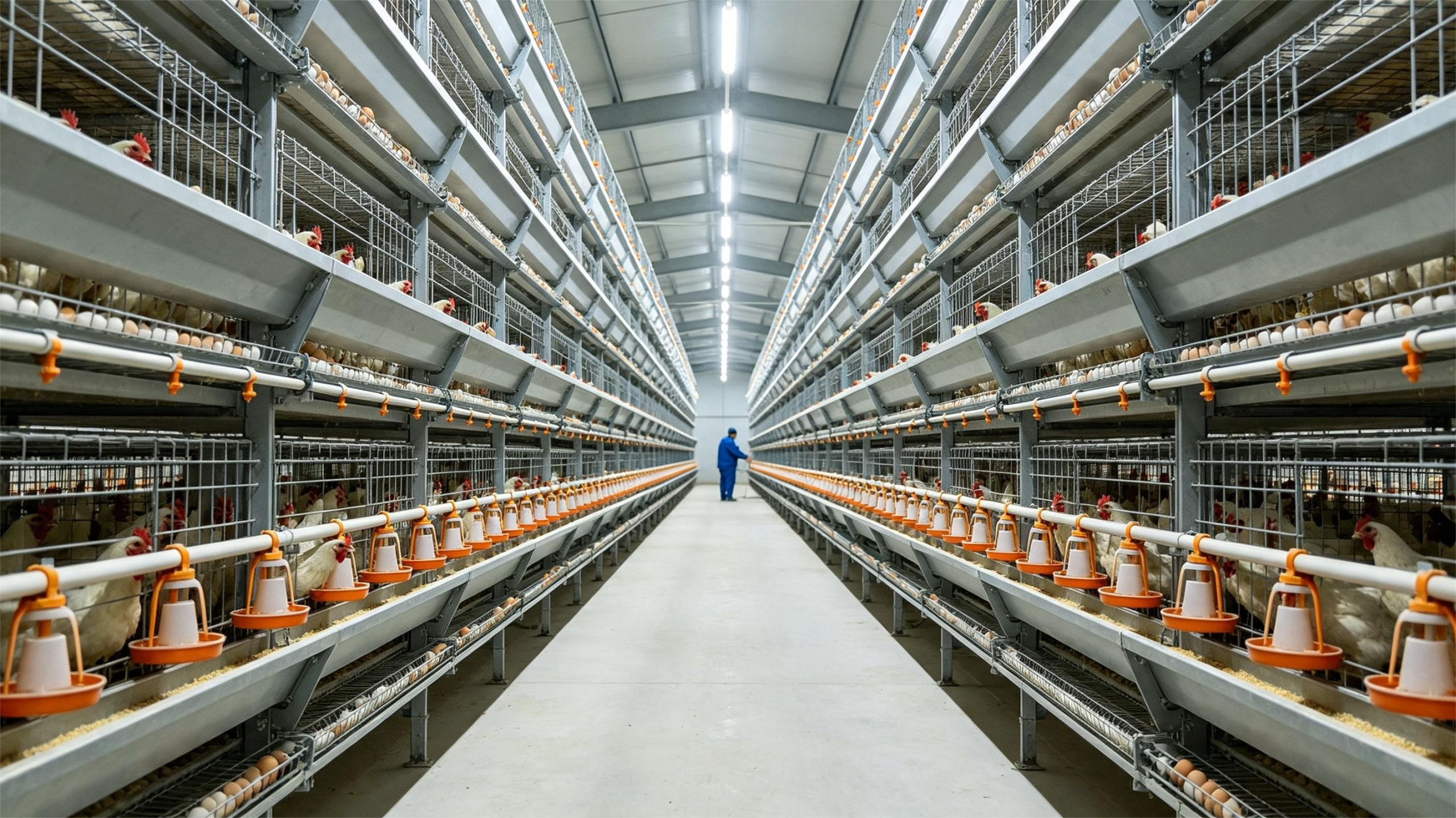
Nigeria's proposed $900 million poultry investment programme with Chinese partners could mark a major step towards larger, more integrated poultry production in West Africa. Beyond the investment headline, the plan raises important questions: how can large farms operate reliably, how can local producers benefit, and what role can Chinese agricultural technology play in Africa's food security?
For Chinese poultry equipment manufacturer Guangzhou Guangxing Poultry Equipment Group , the opportunity is not simply to export more machines. It is to apply practical farming technology to challenges involving feed efficiency, high temperatures, animal health, environmental protection and local technical skills.
1. What Has Nigeria Announced?
In March 2026, Nigerian media reported a proposed $900 million partnership with Chinese investors to establish six integrated poultry production projects, one in each of the country's six geopolitical zones. According to BusinessDay Nigeria , the plan envisages approximately one million laying hens and 300,000 broilers per hub, with each hub targeting one million eggs per day.
The proposed production centres would also include hatchery operations, feed production, poultry processing and dedicated power infrastructure. Each was associated with approximately 10,000 hectares for maize and soybean cultivation. In other words, this is intended to be an integrated agricultural production model, rather than six ordinary poultry houses.
The distinction matters. Producing more birds and eggs requires reliable feed supply, veterinary services, transport, storage and market access. A large poultry investment can fail commercially if housing capacity expands faster than these supporting systems.
Chinese-Nigerian poultry cooperation has also appeared in separate initiatives. In October 2026, the Federal University of Agriculture, Abeokuta reported discussions with Chinese investors over a proposed seven-hectare commercial hatchery. This is a distinct proposal, not confirmed as part of the $900 million programme, but it illustrates broader interest in breeding and poultry infrastructure.
2. Why Nigeria Needs More Than New Poultry Houses
Nigeria has substantial domestic demand for poultry meat and eggs, but farm expansion faces challenges that cannot be solved through investment capital alone. Feed availability, energy reliability, disease outbreaks and financing affect the daily economics of commercial producers.
Feed costs and production efficiency
Feed is one of the largest operating expenses in poultry production. The proposed maize and soybean estates are intended to reduce exposure to expensive or unreliable feed supplies. However, growing more feed is only one part of the solution. Farms must also measure consumption, reduce spillage and ensure even distribution.
Automatic feed delivery, correctly designed troughs and appropriate storage systems may reduce avoidable losses. Any expected savings should be evaluated against the farm's existing feeding records rather than assumed from an equipment brochure.
Heat, water and electricity
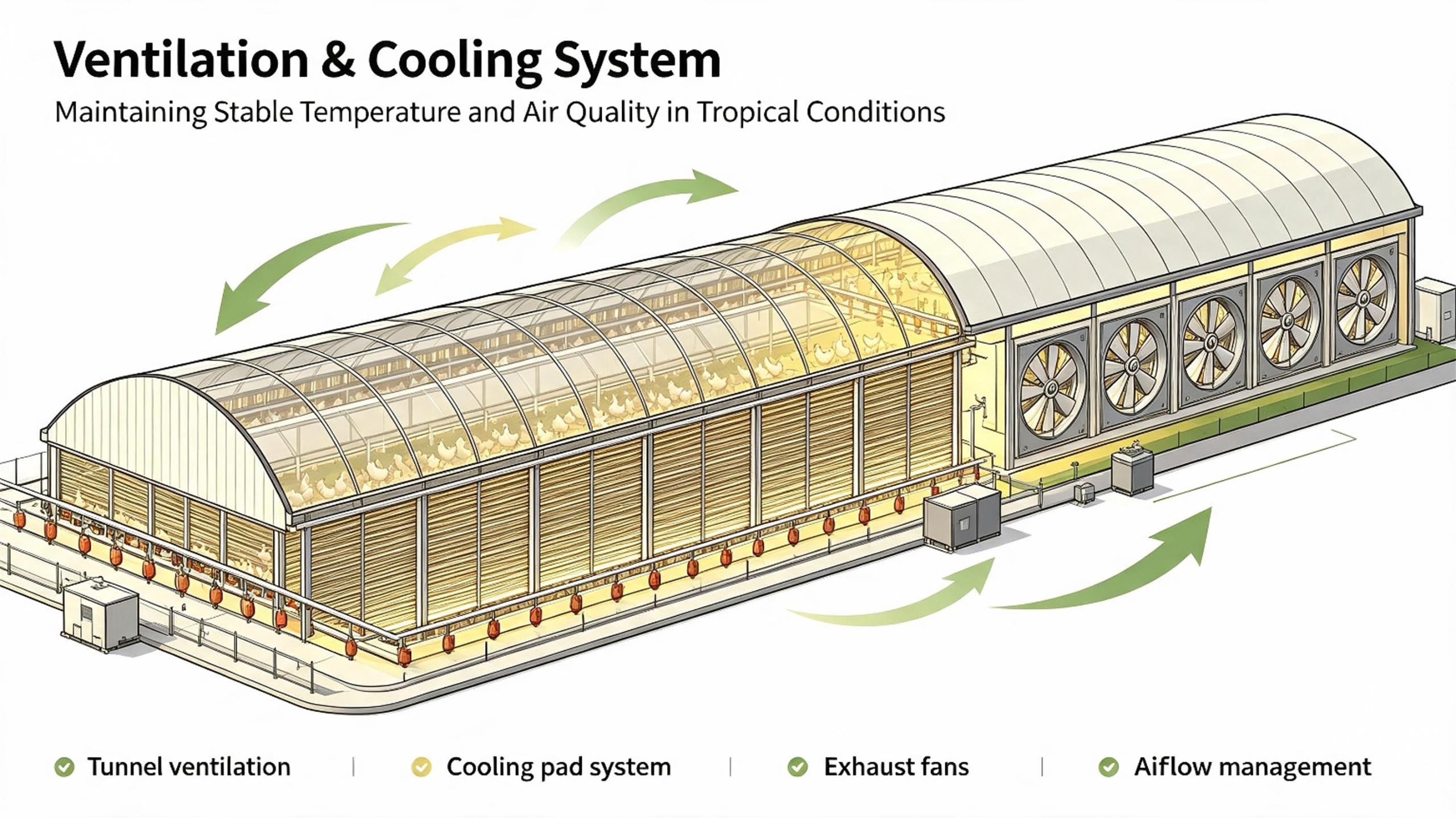
Poultry house conditions vary significantly between Nigeria's humid southern regions and hotter, drier northern areas. Ventilation design therefore needs to reflect local climate, bird density, housing method and water availability.
An interruption to ventilation during hot weather can quickly threaten bird welfare and production. Large farms need properly sized fans, alarms, reliable water supply and emergency electricity. Cooling pads can be useful in suitable conditions, but their effectiveness depends on humidity, water quality and system design.
Animal health and biosecurity
In May 2026, the Nigerian government and the UN Food and Agriculture Organization launched a programme addressing highly pathogenic avian influenza. The FAO announcement highlighted surveillance, diagnosis, farm biosecurity and risk communication.
Equipment can help make cleaning, manure removal and controlled movement more manageable. Yet automation does not replace veterinary oversight, vaccination policies, entry controls or a properly developed disease prevention plan.
3. What Equipment Would a One-Million-Layer Poultry Farm Need?
A million-layer operation cannot be designed by simply multiplying the equipment list of a small farm. Its housing, utilities and egg handling operations need to be divided into manageable production units with clear biosecurity boundaries.
Consider an illustrative arrangement of 20 production units, each holding 50,000 laying hens. This is a planning example, not a disclosed layout for the Nigerian investment programme. Actual house numbers, dimensions and stocking arrangements depend on local requirements and project engineering.
| Production requirement | Equipment or system | Why it matters |
|---|---|---|
| Layer housing | H-type cage systems or other locally permitted housing | Organized production and house-level management |
| Feed distribution | Feed silos, conveyors and automatic feeding lines | Consistent feeding and measurable consumption |
| Drinking water | Filtration, storage, pressure control and nipple lines | Reliable drinking supply and hygiene |
| Egg collection | Egg belts and central collecting conveyors | Reduced manual handling and smoother egg transport |
| Egg processing | Grading, tray packing and optional processing equipment | Commercial sorting and dispatch |
| House environment | Fans, cooling, sensors and alarm controls | Air quality, heat control and emergency response |
| Manure management | Removal belts, storage and treatment systems | Hygiene and responsible waste management |
One million eggs per day: the handling challenge
If one production hub achieves the stated target of one million eggs daily, a processing operation running for ten effective hours would need an average handling capacity of 100,000 eggs per hour.
This theoretical calculation excludes peak collection volumes, cleaning, downtime, reject handling and reserve capacity. An engineering design should therefore evaluate multiple processing lines, buffer storage and realistic machine utilization rather than treating the average figure as a final specification. It also must not be confused with the nominal capacity of an individual machine.

Guangxing supplies H-type automatic layer cage equipment and central egg collection systems . For processing, the company also offers egg washing, grading and packaging equipment . The appropriate number of machines must be established from actual production schedules and verified equipment specifications.
4. How Does This Connect with the UN's Sustainable Livestock Agenda?
Food security is about more than increasing agricultural output. It also depends on affordable nutrition, viable rural livelihoods, responsible resource use and resilient food production systems.
The United Nations' Sustainable Development Goal 2 calls for ending hunger, improving nutrition and promoting sustainable agriculture. Goal 12 addresses responsible consumption and production, including more efficient resource use and waste reduction.
The FAO's approach to sustainable livestock transformation connects productivity with animal health, environmental responsibility and inclusive development. Its guiding priorities are better production, better nutrition, a better environment and a better life.
These principles offer a useful framework for poultry investment in Nigeria. A well-designed farm should not measure success only by the number of birds housed. It should also monitor feed consumption, water quality, animal welfare, egg losses, energy requirements and manure management.
In September 2026, FAO launched a global Sustainable Livestock Transformation and One Health knowledge hub . Such initiatives reinforce the importance of evidence-based approaches to animal production and health.
This article aligns Guangxing's proposed technical contribution with those public development principles. It does not imply that Guangxing is endorsed by or affiliated with the United Nations or FAO.
5. How Chinese Poultry Equipment Manufacturers Can Contribute
Chinese manufacturers have experience supplying automated poultry farming systems for different farm sizes and climates. But successful cooperation with African producers must go beyond shipping machines. It requires site-specific engineering, installation guidance, practical operator training and access to spare parts.
Established in 1988, Guangzhou Guangxing Poultry Equipment Group develops and manufactures poultry housing, automatic feeding and drinking, egg collection, manure removal and environmental control equipment. Its product range makes it possible to discuss integrated farm configurations rather than isolated cage purchases.
A real Chinese project reference: Guangxi Two-Million-Layer Farm
Guangxing's published project portfolio describes an intelligent layer farming project in Guangxi, China, with a reported capacity of two million laying hens. The equipment scope includes multi-tier layer housing, feeding and drinking, environmental monitoring, central egg collection and manure management.
The importance of this reference is not that Nigerian farms should copy the same building design. It demonstrates how different production systems can be coordinated at a large commercial scale.
Explore Guangxing's Guangxi ProjectEnvironmental responsibility: turning poultry manure into a managed resource
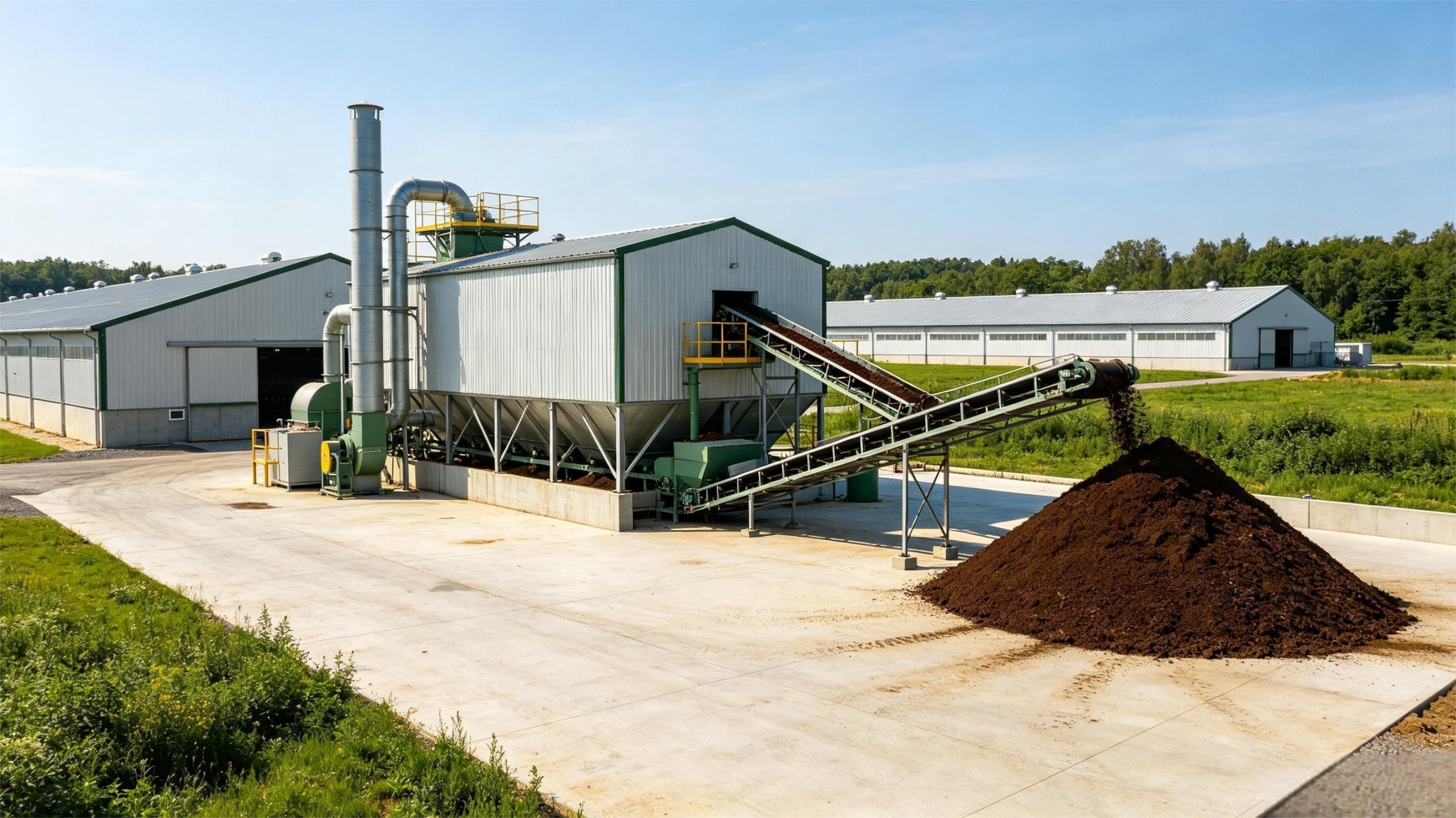
Large layer farms generate substantial amounts of manure. Poor handling can create odour, fly problems, nutrient runoff and biosecurity risks. Waste treatment should therefore be considered at the design stage, not added only after the farm is operating.
Planning a poultry manure treatment system
Depending on manure quantity, moisture, available land and local environmental requirements, farms may consider mechanical collection, controlled storage and composting.
Guangxing's 11FFG-100 manure composting system is one equipment option for aerobic organic waste treatment. Final capacity should be calculated from the actual waste stream.
In another published reference, Guangxing describes a manure treatment installation for a 920,000-layer farm using multiple fermentation units. It illustrates modular treatment planning and the need to match waste processing capacity to daily manure generation.
View the 920,000-Layer Manure Treatment Project
Local skills are part of a sustainable solution
For Chinese-African agricultural cooperation to deliver lasting value, local farmers, technicians and operators must be able to run and maintain the systems. Training should cover routine inspections, safe operation, cleaning, fault diagnosis and replacement of critical components.
Guangxing aims to contribute through customized equipment configurations, installation guidance, operator training and technical support according to project requirements. Local partners remain essential for construction, veterinary services, utilities, regulatory compliance and ongoing farm management.
6. What Can Smaller Nigerian Farms Learn from Large Integrated Projects?
The proposed investment has not been welcomed without concern. In March 2026, Nairametrics reported objections from poultry industry stakeholders who feared that large, externally supported projects could place additional pressure on domestic producers already facing high costs.
These concerns deserve attention. Modernizing Nigerian poultry farming should create opportunities for smaller producers as well as major investors. It should not require every farm to imitate a million-bird operation.
| Farm scale | Practical equipment priority | Investment approach |
|---|---|---|
| 5,000–20,000 layers | A-type cages, reliable drinking and basic manure management | Improve essential operations first |
| 20,000–50,000 layers | Mechanized feeding, egg collection and controlled ventilation | Compare phased automation options |
| 50,000+ layers | Integrated housing, central collection and advanced control | Develop a coordinated expansion plan |
| Commercial broiler farms | Automatic feed and water lines, climate control and emergency power | Match equipment to houses and production cycles |
For example, a farm planning 20,000 layers may benefit more from dependable ventilation, properly configured drinking lines and reduced feed spillage than from purchasing expensive central equipment before it has sufficient production capacity.
Guangxing has prepared a dedicated 20,000-layer farm solution for Nigeria , including layout and equipment considerations. Larger broiler investors can also review the company's 200,000-broiler farm planning guide .
Before committing to an equipment purchase, farm owners should compare full installed costs, feed and electricity requirements, maintenance access, expected production performance and cash flow. The cheapest quotation does not always represent the lowest operating cost.
7. The Future of Nigerian Poultry Farming: Investment, Inclusion and Practical Technology
Nigeria's proposed $900 million poultry development programme represents an ambitious direction for agricultural investment. Its eventual impact will depend on financing, implementation, food market conditions, energy supply, animal health and the participation of domestic producers.
The opportunity for Chinese manufacturers is equally clear. Useful agricultural cooperation should be measured not merely by the number of machines exported, but by whether farms can produce food more reliably, protect animal health, reduce avoidable waste and develop local technical capability.
Guangxing's contribution is focused on poultry farming equipment and technical solutions. We believe Chinese manufacturing experience can support African agricultural development when equipment is adapted to local needs, supported by training and integrated with responsible farm planning.
For investors, the immediate priority is to translate production targets into a credible farm design: bird numbers, housing units, water supply, ventilation, backup electricity, egg handling, manure management and operating budgets.
Planning a Poultry Farm in Nigeria?
Whether you are developing a 20,000-layer farm, expanding to 50,000 birds or evaluating a multi-house commercial project, Guangxing can help prepare equipment configurations and preliminary farm layouts.
Share your farm location, land area, target bird capacity, housing preference and available utilities. Our team can discuss feeding, drinking, ventilation, egg collection and manure management requirements for your project.
Request a Farm Equipment Quotation Contact Guangxing on WhatsAppFrequently Asked Questions
Has Nigeria completed the $900 million poultry project?
The March 2026 announcement describes a proposed investment and production targets. It should not be interpreted as proof that all six facilities are constructed or operating. Project milestones require separate verification.
Is Guangxing participating in the Nigerian government project?
Guangxing is not presented here as an announced contractor or supplier for the programme. The company is discussing the equipment requirements of similar poultry developments and its existing technical capabilities.
What equipment should a commercial Nigerian poultry farm prioritize?
Core priorities include dependable drinking water, feeding equipment, ventilation, biosecurity provisions and emergency power. Layer operations may also need cage systems, egg collection, grading and manure removal, depending on their size and production method.
Can Chinese poultry equipment support smaller farms?
Yes. Different levels of mechanization can be considered according to farm size, labour availability, energy reliability and investment capacity. A phased equipment plan is often more practical than purchasing a fully integrated system immediately.
Sources and Editorial Note
This article combines independent reporting on Nigeria's proposed poultry investment, United Nations and FAO publications, and Guangxing's published technical information. Illustrative equipment layouts and calculations are not official specifications for the Nigerian programme. All photographs are illustrative or from Guangxing's published project references.
- BusinessDay, March 25, 2026: Nigeria's $900m poultry investment proposal .
- Nairametrics, March 26, 2026: Industry reactions to the proposed partnership .
- FAO, May 7, 2026: Nigeria's avian influenza prevention programme .
- United Nations: Sustainable Development Goal 2 and Sustainable Development Goal 12 .
- FAO: Sustainable Livestock Transformation .
- FUNAAB, October 20, 2026: Proposed Chinese-Nigerian commercial hatchery project .