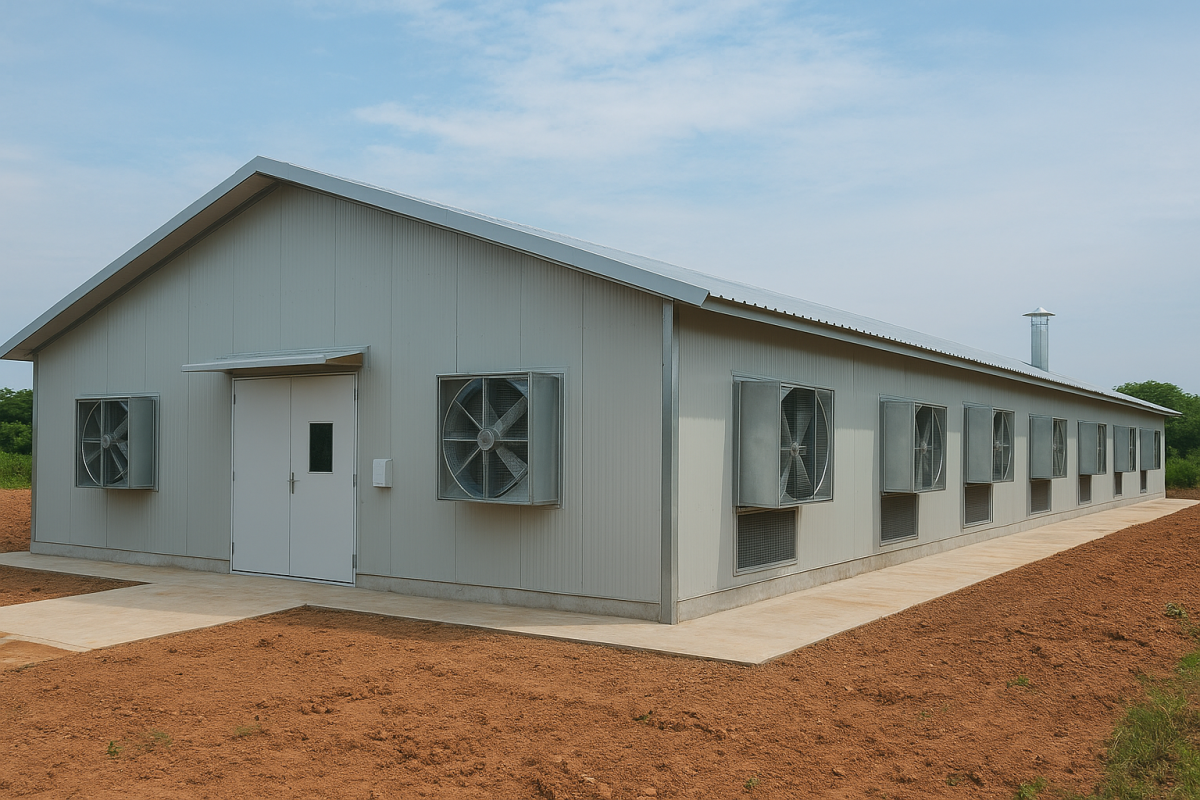
- If you are planning a layer farm in Nigeria, the number of birds is only the starting point.
- Two farms with the same capacity can require very different equipment. A 10,000-layer farm with reliable power, limited labor and an enclosed poultry house may need much more automation than another 10,000-layer farm using an open-sided house with inexpensive local labor.
That is why we normally look at capacity, poultry house design, labor, electricity, water and future expansion together before recommending equipment.
This guide focuses on practical configurations for farms with approximately 1,000, 5,000, 20,000 and 50,000 layers.
If you are raising broilers instead of layers, the equipment logic is different. You can refer to our Nigeria Broiler Farm Solutions separately.
1. A Quick Way to Choose the Right System
Farm Size | Cage System | Automation | More Important Investment |
1,000 layers | A-type | Low | Drinking, cage quality, ventilation |
5,000 layers | A-type | Low–medium | Feeding, manure removal, water |
20,000 layers | A-type or H-type | Medium–high | Feeding, manure, egg collection, ventilation |
50,000 layers | H-type usually preferred | High | Full system integration and backup power |
The important point is that these are not fixed formulas.
- For example, a 20,000-layer farm does not automatically need H-type cages. If land is sufficient, labor is available and the buyer wants to control initial investment, an A-type system may still make sense.
- On the other hand, if the goal is to keep more birds in limited house space and reduce daily labor, H-type equipment becomes more attractive.

2. 1,000 Layers: Keep the System Simple
- For around 1,000 layers, we normally would not recommend building the project around heavy automation.
- A practical configuration can include:
- A-type layer cages
- Nipple drinking lines
- Manual or simple feeding
- Manual egg collection
- Natural ventilation with additional fans when necessary
- Simple manure handling
- At this size, spending heavily on automatic egg collection or complicated control systems often does not produce enough operational benefit.
The money is usually better spent on good cage materials, reliable drinking water, ventilation and disease-control conditions.
- One point is worth considering, however:
- If the farm is expected to expand to 5,000 or 10,000 birds within a short period, the first poultry house should not be planned as an isolated small project.
- Leave room for additional houses, water storage, feed access and electrical capacity.
3. 5,000 Layers: The First Important Turning Point
- At about 5,000 layers, daily work starts to become noticeably heavier.
- Feed has to be moved every day. Manure volume increases. Egg handling takes more time. A system that works comfortably with 1,000 birds may begin to create unnecessary labor at 5,000 birds.
For this reason, 5,000 layers is often the first point where we recommend considering selective automation.
- A reasonable setup may include:
- A-type layer cages
- Automatic nipple drinking
- Feed trolley or automatic feeding
- Mechanical manure removal
- Manual egg collection
- Fans and, where necessary, cooling assistance
- Automatic egg collection is still optional at this stage.
- For many projects, improving feeding and manure handling saves more labor than adding an egg conveyor first.
- This is an important budget decision.
- Do not automate everything simply because the farm is becoming commercial. Automate the jobs that take the most time every day.
4. 20,000 Layers: Manual Management Starts to Become Expensive
- A 20,000-layer farm should no longer be designed like a small farm multiplied several times.
- At this capacity, feeding, manure handling, egg collection and ventilation begin to affect one another.
- If each process depends heavily on workers, management becomes difficult, especially during labor shortages or peak production periods.
- A typical project may consider:
- A-type or H-type layer cages
- Automatic feeding
- Automatic nipple drinking
- Mechanical or belt manure removal
- Automatic egg collection
- Stronger ventilation
- Environmental monitoring
- Backup power
- This is also where cage selection becomes more important.
- A-type cages can remain suitable when:
- land is not limited
- the house is open-sided
- labor is relatively available
- the buyer wants lower initial investment
- gradual expansion is preferred
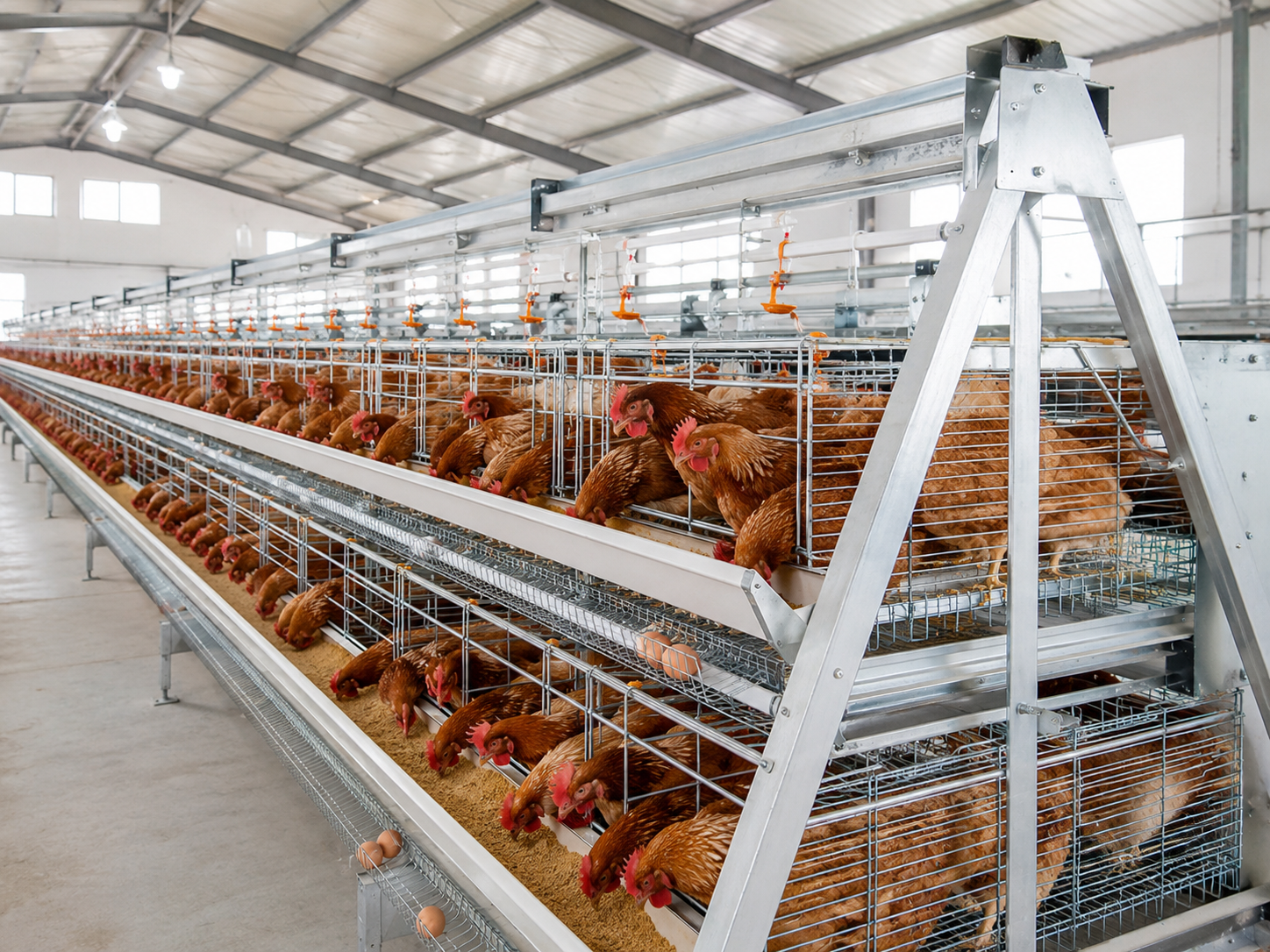
- H-type cages become more attractive when:
- house area is limited
- higher stocking density is required
- labor reduction is important
- automatic manure removal and egg collection are planned
- the farm is designed as a long-term commercial operation
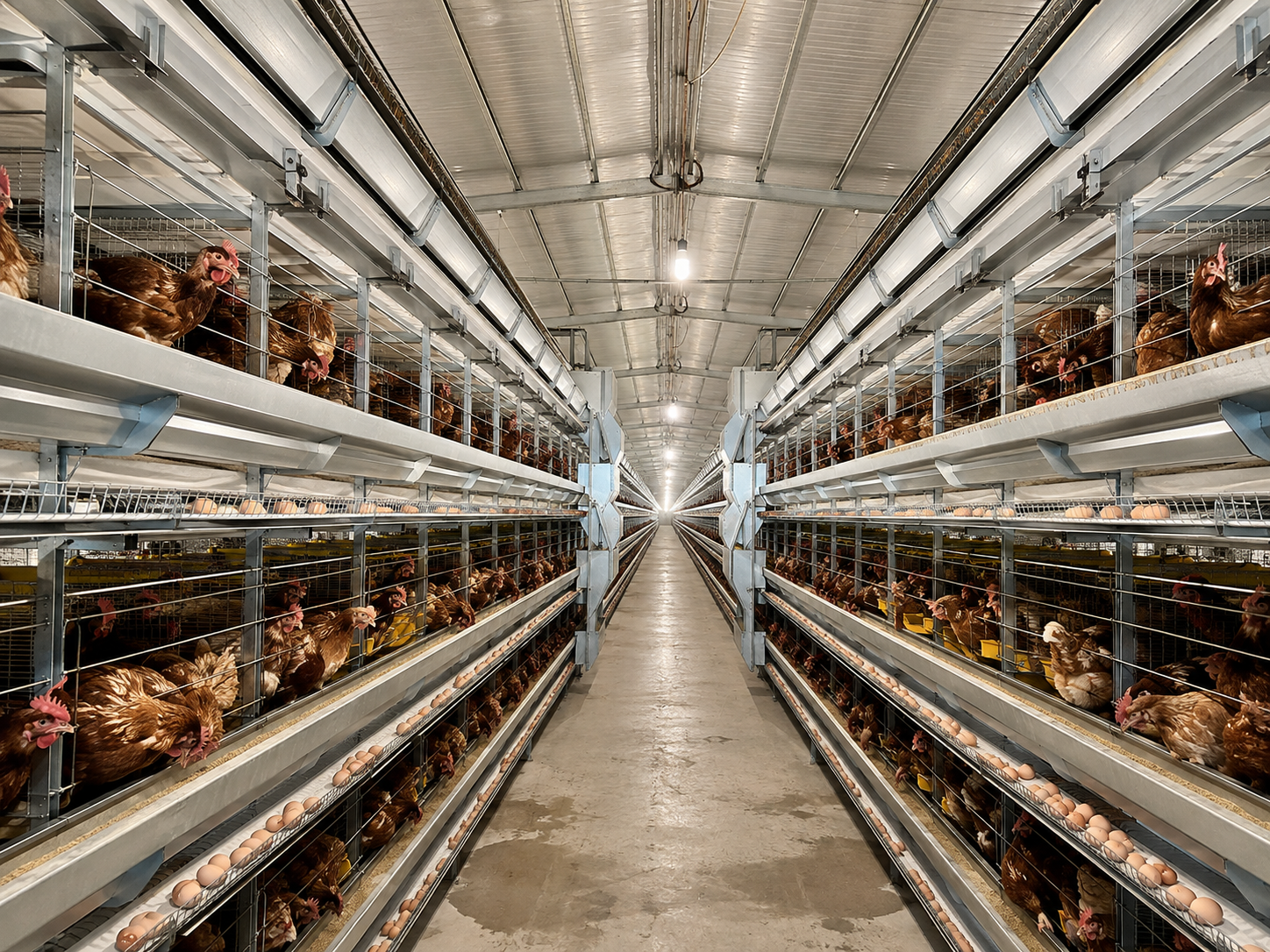
- The cage should therefore be selected together with the poultry house, not after the building is completed.
5. 50,000 Layers: Treat It as One Production System
- At 50,000 layers, the biggest risk is usually not choosing the wrong individual machine.
- The bigger risk is that several systems do not work well together.
- A project at this level normally needs coordinated planning for:
- H-type cage layout
- feed storage and feed delivery
- automatic feeding
- nipple drinking
- manure belts
- egg collection
- ventilation
- cooling
- lighting
- environmental control
- alarms
- water storage
- backup power
- For example, adding more cage tiers increases bird capacity, but it also increases heat load, ventilation demand, manure volume and water consumption.
- This is why simply asking, “How many birds can this cage hold?” is not enough.
- At 50,000 birds, the better question is:
Can the poultry house, ventilation, feeding, manure system, electricity and water support this stocking level every day?
- That is the difference between buying equipment and designing a commercial poultry farm.

6. Do Not Build the Poultry House Too Early
- One of the most expensive mistakes we see in poultry projects is finishing the house first and choosing the cage later.
- The better order is:
Target capacity → cage type → cage rows → aisle width → feeding/manure system → ventilation → final house dimensions
- A small difference in internal width can determine whether an extra cage row fits.
- Column positions can interfere with feeding equipment.
- Insufficient height can limit H-type cage tiers.
- A door in the wrong position may block an egg conveyor or manure outlet.
- These are small details on a drawing, but expensive problems after construction.
- If the house has not been built, finalize the equipment layout first.
If it has already been built, provide the internal usable dimensions, not only the outside dimensions.
7. Nigeria Projects: Three Points Often Missed
Backup power is part of the equipment plan
- A small farm can continue operating manually during a temporary power cut.
- A highly automated farm cannot.
- Ventilation fans, feed motors, egg conveyors, manure belts and water pumps may all depend on electricity.
- For larger enclosed houses, backup power should be considered during equipment planning, not after commissioning.
Water pressure matters as much as water availability
- Having a borehole does not automatically mean the drinking system will work correctly.
- For nipple drinkers, water usually needs storage, filtration and pressure regulation.
- A more reliable arrangement is:
Water source → storage tank → filtration → pressure regulator → drinking line
Cooling equipment cannot replace ventilation design
- Cooling pads are useful, but they do not solve every heat problem.
- If the exhaust capacity, air speed or air inlet arrangement is wrong, adding a larger cooling pad will not correct the basic ventilation problem.
- Ventilation and cooling should therefore be calculated as one system.
8. What We Need Before Preparing a Quotation
- For a useful quotation, please provide:
- Project location in Nigeria
- Layer or broiler
- Target bird capacity
- Existing house or new construction
- Internal house length, width and height
- Preferred automation level
- Electricity and backup power conditions
- Water source
- Whether future expansion is planned
- Equipment only or complete farm solution
- With these details, it is much easier to prepare a realistic cage layout and equipment list.
- Without them, a quotation is usually only a price reference.
9. Planning a Poultry Farm in Nigeria?
- If you already know your target capacity, send us the bird number and poultry house dimensions first.
We can then help determine whether an A-type cage, H-type cage, semi-automatic system or fully automatic system is more suitable for the project.
- For new farms, we recommend confirming the cage layout before poultry house construction.
- For existing houses, send the internal dimensions, photos and column layout if available.