


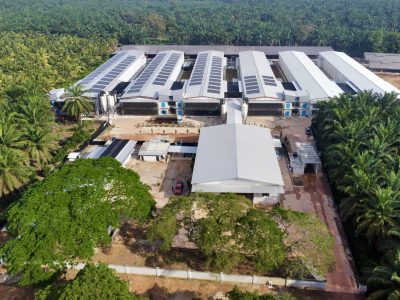
Six million laying hens cannot be managed by simply installing more cages.
At this scale, feed, water, egg collection, manure removal, ventilation, and management must operate as one coordinated system. The same production logic also needs to be repeated across multiple houses without redesigning the entire farm each time.
This was the significance of the Malaysia Teo Seng 6 million layer project recorded by Guangzhou Guangxing Poultry Equipment Group.
The project was not only about increasing capacity. It represented the transition from managing separate poultry houses to operating a standardized egg production network.
The Customer Behind the Project
Teo Seng is one of Malaysia’s major integrated layer farming businesses. Its operations extend beyond raising laying hens and include feed production, egg trays, egg processing, animal health-related products, and organic fertilizer.
This integrated model creates different equipment requirements.
A multi-million-bird producer cannot solve problems house by house. Feed, egg handling, manure treatment, biosecurity, labor, and maintenance are interconnected.
The central question was therefore not simply, “How many cages can fit inside one house?”
It was:
“How can a layer farming system support millions of birds while remaining manageable, hygienic, repeatable, and ready for expansion?”
The Real Challenge Behind a Six-Million-Layer Farm
Large capacity magnifies small operational problems.
Uneven feeding, unstable water pressure, conveyor bottlenecks, or delayed manure removal can affect thousands of birds and interrupt the wider production chain.
Malaysia’s tropical climate adds another challenge. High temperature, humidity, and year-round ventilation demands make corrosion resistance, airflow, drainage, electrical reliability, and maintenance access essential.
A farm of this scale also cannot depend on manual feeding, egg collection, or manure removal. Automation becomes basic production infrastructure.
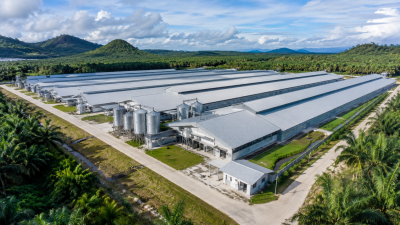
Designing the Farm as One Connected System
The key lesson from the project is system integration.
The cage, feeder, drinker, egg belt, manure belt, ventilation equipment, and control system cannot be treated as unrelated products. They must be planned around the daily movement of feed, water, eggs, manure, air, workers, and production information.
Multi-Tier Layer Cage System
Multi-tier cages use vertical space to increase bird capacity while organizing production by row and level. For a commercial project, the structure must provide strength, reliable egg rolling, inspection access, and compatibility with automatic systems.
Maximum density alone is not the goal. The system must still be ventilated, inspected, maintained, and managed efficiently.
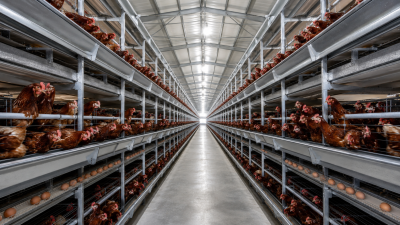
Automatic Feeding and Drinking
At six-million-bird scale, even small amounts of feed waste become significant. Automatic feeding distributes feed on schedule, supporting consistent intake and reducing manual work.
Nipple drinkers, filtration, and pressure regulation provide clean water to each level. Preventing leakage is especially important in a humid climate.
Uniform feed and water distribution also helps farm managers maintain more consistent flock performance between cage rows and poultry houses.
Automatic Egg Collection
A farm producing eggs every day at industrial scale needs a coordinated collection route.
Egg belts move eggs from the cage rows to a central point, reducing handling and protecting quality. Row belts, elevators, cross conveyors, and central lines must work together without bottlenecks.
For a large egg producer, collection speed is only one consideration. Gentle transfer, reliable synchronization, convenient cleaning, and connection with downstream grading or packing equipment are equally important.
Automatic Manure Removal
Manure belts beneath the cage levels separate hens from waste and allow manure to be removed at planned intervals. This supports better air quality and cleaner production conditions.
With suitable treatment, manure can also become raw material for organic fertilizer.
This turns manure management from a daily cleaning problem into part of the farm’s wider resource utilization process.
Ventilation and Environmental Control
Automation inside the cages cannot compensate for a poorly controlled house environment.
Fans, cooling systems, sensors, lighting, and controls must match house dimensions, bird density, and local weather. In Malaysia, the system must remove heat and moisture while maintaining airflow across every cage level.
Environmental control must therefore be designed together with the cage arrangement. A suitable average house temperature does not always mean that every tier receives the same airflow.
The Business Value Goes Beyond Capacity
The most visible feature of the Teo Seng project is its six-million-layer scale. However, capacity creates value only when it can be controlled reliably.
An integrated automated system offers several practical gains.
First, it reduces dependence on repetitive manual work. Employees can spend more time inspecting flocks, checking equipment, maintaining biosecurity, and responding to abnormal conditions.
Second, it improves standardization. Feeding, egg collection, manure removal, and climate control can follow defined procedures across multiple houses.
Third, it supports cleaner production. Less manual contact, regular manure removal, and controlled movement through the farm help strengthen biosecurity.
Standard equipment also makes production data easier to compare and simplifies maintenance through shared components, procedures, and spare parts.
For farm management, this creates better visibility. Differences in feed intake, water consumption, egg output, mortality, and house environment can be identified earlier.
Scalable Design: Plan the First House for the Next Houses
One of the strongest lessons from this Malaysia layer farm project is scalability.
Large farms are easier to operate when a proven house model can be repeated. A scalable design may use compatible cage dimensions, standard feeding and drinking components, common control logic, shared spare parts, and similar worker training.
Once the first production unit has been verified, later houses become easier to install and manage.
This does not mean every house must be identical. Orientation, land shape, ventilation load, construction conditions, and power supply may differ. The principle is to standardize what should remain consistent and customize what genuinely depends on the site.
That balance reduces risk and allows the farm to expand in phases.
It also prevents each new poultry house from becoming a separate engineering experiment. Workers can use familiar operating procedures, maintenance teams can manage a common spare-parts inventory, and managers can compare performance across similar production units.

Why the Equipment Supplier Matters
A six-million-layer project involves much more than cage manufacturing.
The supplier must coordinate building layout, airflow, conveyors, manure routes, shipping, installation, commissioning, training, spare parts, and after-sales support.
For this reason, equipment should not be selected on cage price alone.
A low quotation becomes expensive when systems do not connect, climate is ignored, or parts and support are unavailable.
A better purchasing question is:
“Can this supplier help us operate the complete system reliably over many production cycles?”
The Guangxing case demonstrates why large-project experience and integrated planning matter to an industrial egg producer.
A qualified supplier should be able to study the customer’s capacity target, land conditions, production process, local climate, and expansion plan before recommending equipment.
✅ Smart Solution:
Before building your farm, it is essential to design a scientifically optimized system.
👉 Recommended reading:
Poultry Farm Equipment for 50,000 Chickens
https://guangxiniot.com/poultry-farm-equipment-for-50000-chickens/
What This Project Means for Other Egg Producers
Most investors will not begin with six million layers. However, the same planning principles apply to farms with 50,000, 100,000, 500,000, or one million birds.
Do not begin with a cage model from a catalog. Begin with the production target.
Consider:
How many houses will be built in the first phase?
Is future expansion planned?
How will feed enter the farm?
Where will eggs be collected, graded, and packed?
How will manure leave the site?
What are the local temperature and humidity conditions?
How reliable are electricity and water?
How many trained workers are available?
What level of automation can the farm maintain?
These answers determine the cage configuration, environmental system, automation level, and development schedule.
A farm with inexpensive labor and unstable electricity may require a different solution from a highly automated export-oriented egg producer. The correct system is the one that matches the customer’s operating conditions and long-term business plan.

Conclusion
The Malaysia Teo Seng 6 million layer project shows what industrial egg farming really requires.
It requires more than high stocking density. It needs connected equipment systems, reliable automation, tropical climate adaptation, organized egg and manure flows, and a design that can be repeated as the business grows.
The strongest poultry projects are not built around one impressive machine. They are built around a clear production process.
For investors planning a new commercial layer farm or expanding an existing operation, the first step is a system-level plan. Provide Guangxing with your target capacity, poultry-house dimensions, climate information, and automation requirements to receive a customized layout and project proposal.
Because at commercial scale, the goal is not simply to house more hens.
The goal is to build an egg production system that remains efficient, manageable, and scalable for years to come.
Frequently Asked Questions
What equipment is required for a large commercial layer farm?
A complete system normally includes layer cages, automatic feeding, nipple drinking, egg collection, manure removal, ventilation, cooling, lighting, environmental monitoring, and electrical controls. Larger projects may also need egg grading, packing, feed storage, manure treatment, and backup power.
Are multi-tier layer cages suitable for Malaysia?
They can be suitable when corrosion protection, ventilation, cooling, cage layout, and maintenance access are designed for Malaysia’s heat and humidity.
Can an automatic layer farm be expanded in phases?
Yes. Phased expansion is practical when the first houses use repeatable layouts, compatible components, common control logic, and standardized operating procedures.
What information is needed for a customized quotation?
The supplier needs the target capacity, house dimensions, project location, climate, power and water conditions, desired automation level, egg-handling plan, manure strategy, and expansion goals.