A poultry farm owner sends an inquiry asking for the price of a 100 m³ chicken manure fermentation tank.
That’s a reasonable place to start. The problem comes when the supplier asks how much fresh manure the farm produces each day, and the buyer only knows the number of chickens.
Without the manure volume, moisture content and treatment requirements, nobody can say whether a 100 m³ tank is the right choice.
The more useful question isn’t always which fermentation tank to buy. It’s whether the farm is ready to install and operate one.
A tank can be properly manufactured and still become an expensive mistake if the loading system doesn’t fit the site, the manure is too wet, or spare parts are difficult to obtain.
This chicken manure fermentation tank buying guide covers twelve things worth checking before placing an order.
Start With the Manure, Not the Tank Size
1. A 100 m³ Tank Doesn’t Process 100 m³ of Manure Every Day
This is one of the easiest specifications to misunderstand.
When a supplier describes a tank as 50 m³ or 100 m³, that number refers to its vessel capacity. It doesn’t tell you how much fresh manure the equipment processes every day.
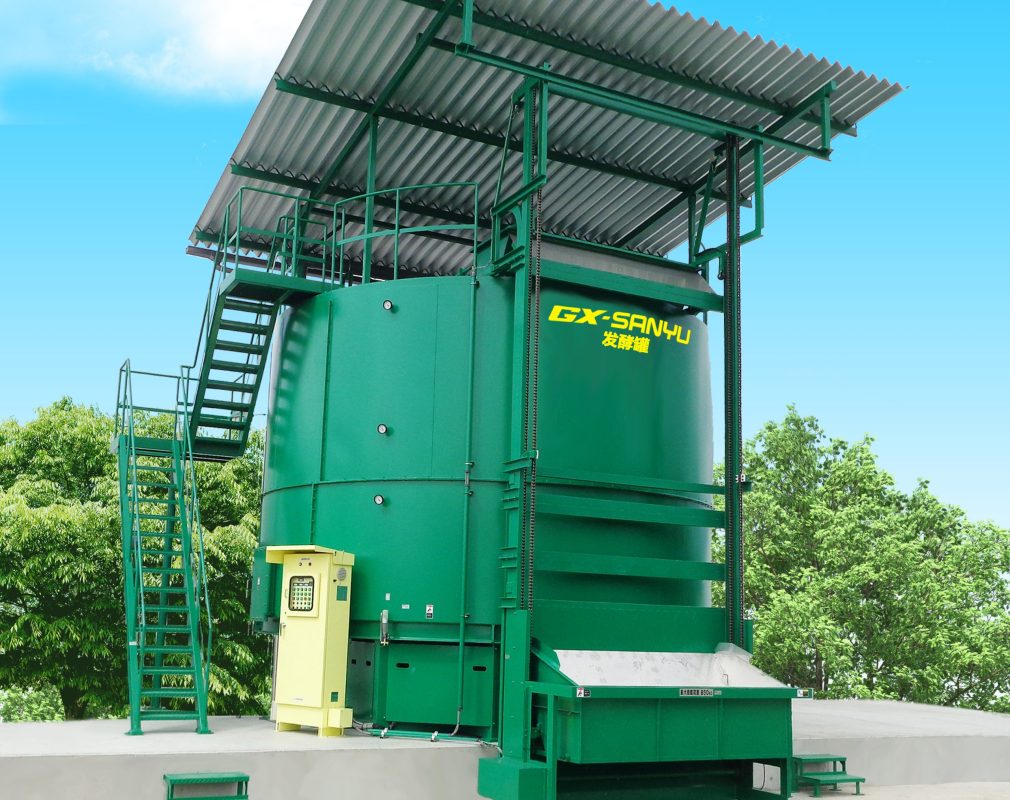
Take the GX-SANYU 11FFG-100 vertical fermentation tank. Its published specifications list an effective volume of 100 m³, with a typical fermentation cycle of around seven days in the referenced project.
That doesn’t mean the machine can process 100 m³ of fresh manure each day. It also doesn’t mean that dividing 100 by seven will give you the correct daily capacity.
The actual figure comes down to the loading arrangement, usable volume, manure density and how long the material stays inside the tank.
Before asking for a model recommendation, establish a few basic figures:
- Fresh manure production in tons per day
- Incoming moisture content
- Material density and any added bulking agents
- Expected fermentation cycle
- Planned expansion of the poultry farm
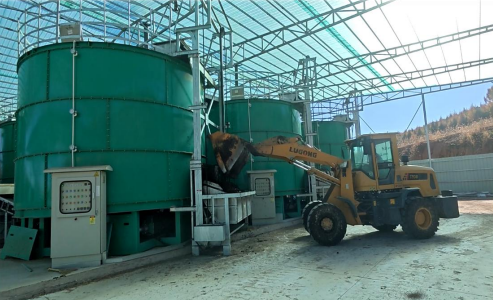
If the farm removes manure from its houses every two or three days, tell the supplier that too. The loading equipment needs to handle the collection schedule, not just the daily average.

2. The Condition of the Manure Matters More Than Many Buyers Expect
Not all chicken manure behaves the same way.
Material collected from manure belts is different from litter-based manure mixed with bedding. Water leaks, cleaning practices and the time manure spends on collection belts can also change its moisture content.
Wet, compacted manure is harder to aerate. Very dry material may need moisture adjustment before biological treatment.
In some installations, operators add carbon-rich material to improve the mixture.
Penn State Extension discusses these issues in its guide to composting poultry manure to reduce pathogen spread, particularly the relationship between moisture, oxygen and carbon balance.
A manure sample or recent moisture measurement tells the equipment supplier much more than a photograph of the poultry house.
It’s also worth checking whether plastic, stones, wire or other foreign objects can enter the collection system. They don’t belong in a mechanical mixer.
3. Think About Next Year’s Farm, Not Just Today’s
Imagine a farm currently running 60,000 layers, with plans to expand to 100,000.
Buying equipment only for the current manure output may save money now. It can also leave the farm short of treatment capacity after the next poultry house is built.
That doesn’t necessarily mean installing a much larger tank immediately.
A better approach may be to leave enough room for another unit and design the loading route so additional equipment can be connected later.
Expansion is much easier to plan before the concrete is poured.
Read the Quotation Carefully
4. Find Out What You’re Actually Paying For
Two suppliers offer the same size fermentation tank, but one price is significantly lower.
Before deciding which offer is better, compare the equipment lists.
Does the quotation include the manure elevator? What about the blowers, hydraulic mixing system, electrical cabinet and exhaust deodorization equipment?
Some manufacturers quote a bare tank. Others include much of the supporting equipment.
Neither quotation is necessarily wrong. They’re simply not quoting the same job.
For a complete installation, ask who supplies the foundation drawings, loading equipment, control system, exhaust pipes and commissioning service.
For a closer look at the expenses beyond the equipment purchase, read our chicken manure fermentation tank cost and ROI guide.
5. Don’t Choose Tank Materials Based on Paint Color
The outside of a fermentation tank may look excellent in a factory photograph.
What matters more is what happens inside.
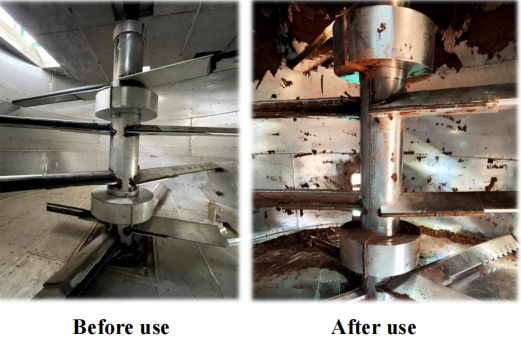
The material comes into contact with moisture, organic compounds and potentially corrosive gases. Mixing shafts, blades, internal surfaces and fasteners need materials or protective treatments appropriate for that environment.
Ask which components are stainless steel and which are coated carbon steel.
You may see suppliers advertising 304 stainless steel. It’s a widely used material, but that alone doesn’t guarantee corrosion resistance under every operating condition.
The supplier should be able to explain the material choices and how the equipment is maintained over time.
6. Shipping the Tank Is Not the Same as Installing It
For overseas buyers, this distinction matters.
A supplier might quote an attractive FOB price. That does not include all the costs of getting the equipment installed at your farm.
Ocean freight, import charges, inland transportation, cranes, foundations and local electrical work can change the total considerably.
Even if equipment is supplied under DDP terms, installation and commissioning aren’t automatically included. Those services need their own agreed scope.
Ask who will supervise installation, what equipment the local contractor must provide and which tests will be completed before final acceptance.
You don’t want those questions coming up after the containers arrive.
Make Sure the System Can Work at Your Site
7. Climate Changes the Way a Fermentation System Operates
A tank installed in a cold climate has different requirements from one operating in a hot, humid region.
In colder conditions, insulation and heat management become more important. A facility exposed to heavy rain needs proper protection around the manure loading area.
For coastal farms, corrosion protection deserves particular attention.
And don’t overlook electricity.
Check the available voltage, frequency and power supply capacity before ordering. If the farm has frequent power interruptions, discuss what happens when mixing or aeration stops unexpectedly.
These details should be settled during equipment selection, not during installation.
8. Spare Parts Should Be Discussed Before the First Shipment
A fermentation tank contains moving parts. At some point, a component will need attention or replacement.
That’s normal.
The bigger problem for an overseas farm is waiting for a replacement while manure continues arriving from the poultry houses.
Ask the supplier which parts are most likely to need replacement during normal operation.
For example, you may need spare seals, bearings, sensors or components for the mixing and loading systems.
Find out whether your maintenance staff can replace them using the supplied instructions.
A spare-parts kit and clear maintenance documentation are worth including in the purchasing discussion.
9. Ask About Electricity Consumption Under Real Operating Conditions
Manufacturers often provide installed power figures. Buyers sometimes use those numbers to estimate electricity bills.
That’s not always accurate.
The GX-SANYU 11FFG-100, for example, has published figures of 37.64 kW installed power and 21 kW reported operating power for the referenced configuration.
That doesn’t tell you how many hours every component runs each day.
The loading system, blowers, mixing equipment and any additional heating equipment may operate on different schedules.
Ask for expected electricity consumption in kWh per day or per ton of incoming manure, with the assumptions clearly stated.
Also include maintenance, labor and material preparation in the operating budget.
Our fermentation tank cost and ROI guide includes practical examples of electricity costs, cost per ton and payback calculations.
Think Beyond the Fermentation Tank
10. What Happens to the Material After Fermentation?
This question is sometimes left until too late.
The material discharged from a fermentation tank is not automatically finished commercial organic fertilizer.
Depending on the intended use, it may need further curing, screening, testing, granulation or packaging.
If the farm plans to sell the treated material, it should first find out what local fertilizer processors or agricultural buyers will accept.
That decision also affects the equipment layout.
You may need storage space or additional machinery after the fermentation tank, and those costs belong in the original project budget.
11. Check Local Environmental Requirements
An enclosed fermentation tank can help manage odor by collecting exhaust air for treatment.
It doesn’t make local environmental regulations disappear.
Depending on the location, the project may need approval for waste treatment, odor emissions, wastewater handling or fertilizer production.
The loading and discharge areas should also be designed so contaminated water doesn’t flow into surrounding land or drainage channels.
If environmental approval is required, it’s better to understand the conditions before buying the equipment.
12. Check Whether the Tank Actually Fits the Site
A vertical fermentation tank saves space compared with many traditional composting layouts, but it still needs room for installation and maintenance.
There’s the tank itself, the elevator, access platforms, exhaust equipment and enough clearance for workers and service vehicles.
The reference installation layout for the 11FFG-100 lists a footprint of approximately 8,000 × 8,500 mm.
Treat that as a reference dimension rather than a finished foundation design.
The site engineer still needs to confirm ground conditions, foundation loads, drainage and equipment access.
And one practical question deserves attention: where will fresh manure go if the treatment equipment is shut down for maintenance?
Some form of temporary storage or an alternative handling arrangement may be necessary.
What Can a Large Poultry Project Teach Us?
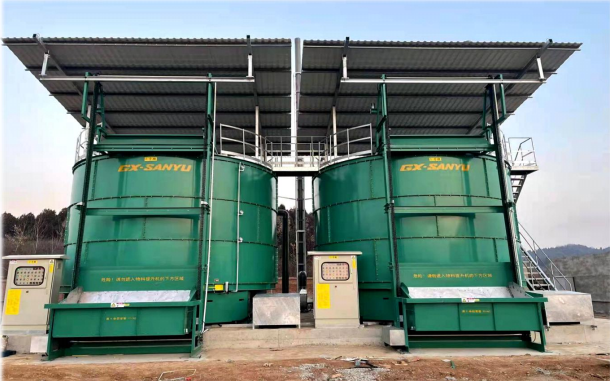
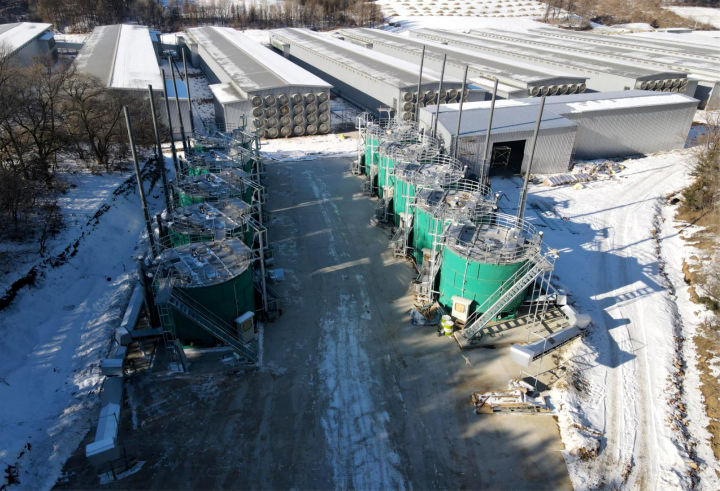
Guangxing’s manure treatment project for a farm designed to accommodate 920,000 laying hens uses ten GX-SANYU 11FFG-100 vertical aerobic fermentation tanks.
Each tank has an effective volume of 100 m³.
According to the published project information, incoming manure moisture is approximately 65–70%, with a typical treatment cycle of around seven days. Discharge moisture is reported at 30–40%.
The installation combines automatic manure loading, mixing, aeration, heat exchange and exhaust deodorization.
The more interesting detail is the use of multiple tanks.
With separate units, the farm can organize treatment and maintenance across the system rather than relying on a single vessel.
It also demonstrates why manure collection and fermentation equipment need to be designed together.
The tanks must be capable of handling the material collected from the poultry houses, and the loading arrangement must fit the farm’s operating schedule.
See Guangxing’s 920,000-Layer Manure Treatment Project
What Information Should You Send When Requesting a Quotation?
You don’t need a complete engineering drawing to start a conversation with a supplier.
A few basic details are enough for an initial assessment.
| Information | What the Supplier Needs |
|---|---|
| Poultry farm | Number and type of birds |
| Manure quantity | Fresh manure collected per day |
| Moisture | Recent measurement, if available |
| Collection | Manure belts, scrapers or other method |
| Location | Country and climate |
| Site | Available installation area |
| Final material | Intended use after treatment |
| Services | Installation and commissioning needs |
Photos of the collection area and a simple site drawing can help avoid misunderstandings, especially when planning an overseas project.
Frequently Asked Questions
How do I calculate the size of a chicken manure fermentation tank?
Start with daily manure production, moisture content, bulk density and the intended treatment cycle. The supplier should confirm daily throughput for the proposed equipment under those conditions.
Is one 100 m³ tank enough for a 100,000-layer farm?
Bird capacity alone isn’t enough to answer that. The daily manure quantity, material condition and actual processing capacity need to be checked.
What should a complete quotation include?
At minimum, clarify the fermentation vessel, mixing and aeration equipment, loading system, controls, exhaust treatment, shipping terms, installation and commissioning responsibilities.
Can fermented manure be sold directly as organic fertilizer?
That depends on the material’s quality and local regulations. Further curing or processing may be needed before commercial sale.
Before You Place an Order
Buying a chicken manure fermentation tank isn’t just about finding a manufacturer with the right model.
The equipment has to match the manure coming from your farm, fit the installation site and remain practical to operate over the years.
If you’re comparing suppliers, get the daily treatment capacity, equipment scope and after-sales arrangements in writing before making your decision.
Guangzhou Guangxing Poultry Equipment Group supplies the GX-SANYU 11FFG-100 vertical aerobic fermentation system and supporting manure collection and treatment equipment.
If you’re preparing a poultry manure treatment project, send us your farm capacity, daily manure output, moisture content and site location.
Our team can review the information and discuss the equipment configuration needed for your project.