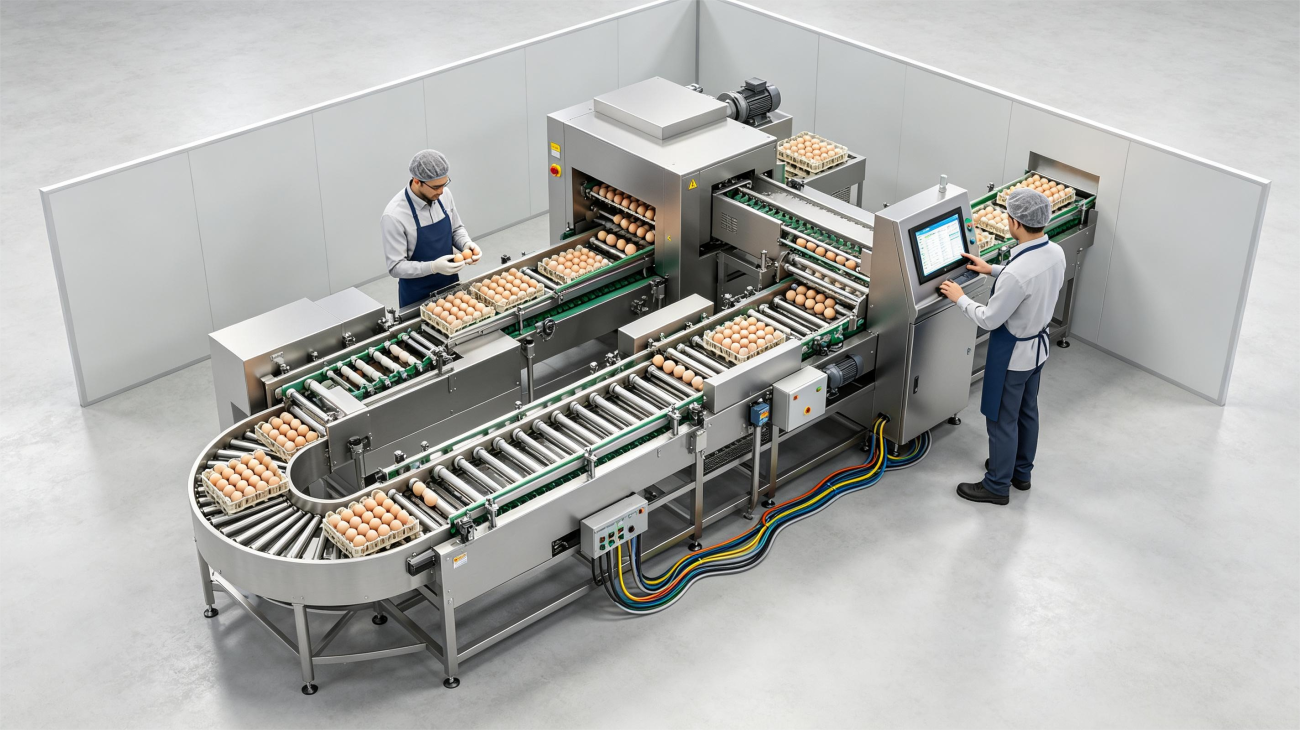
A hairline crack on an egg may be almost invisible under normal lighting, but once eggs move through washing, grading and packing at several thousand eggs per hour, manual inspection becomes increasingly difficult.
That is why many commercial layer farms and egg packing centers start looking for an egg crack detector manufacturer when they upgrade their grading line.
The machine itself, however, is only part of the decision.
Some manufacturers use acoustic or vibration-based inspection. Others are moving toward camera-based vision systems. Some sell crack detection as an independent module, while others integrate it into a complete egg grading and packing line.
For a buyer, these differences matter much more than the appearance of the machine.
What Does an Egg Crack Detector Actually Do?
An egg crack detector checks the eggshell for cracks that may be difficult for workers to identify consistently.
The challenge is that not every defective egg looks obviously broken.
There may be:
- Hairline cracks
- Small shell fractures
- Impact cracks
- Weak shell areas
- Open cracks
- Other shell defects
In an automated egg handling line, the inspection system needs to identify these defects while eggs continue moving through the equipment.
Cracked eggs can then be separated before they reach final grading or packing.
For farms processing a relatively small number of eggs, manual candling may still be practical. But as production increases, inspection consistency usually becomes a bigger problem. Operator fatigue, line speed and changing shell colors can all affect manual judgment.
This is where automatic inspection becomes useful.
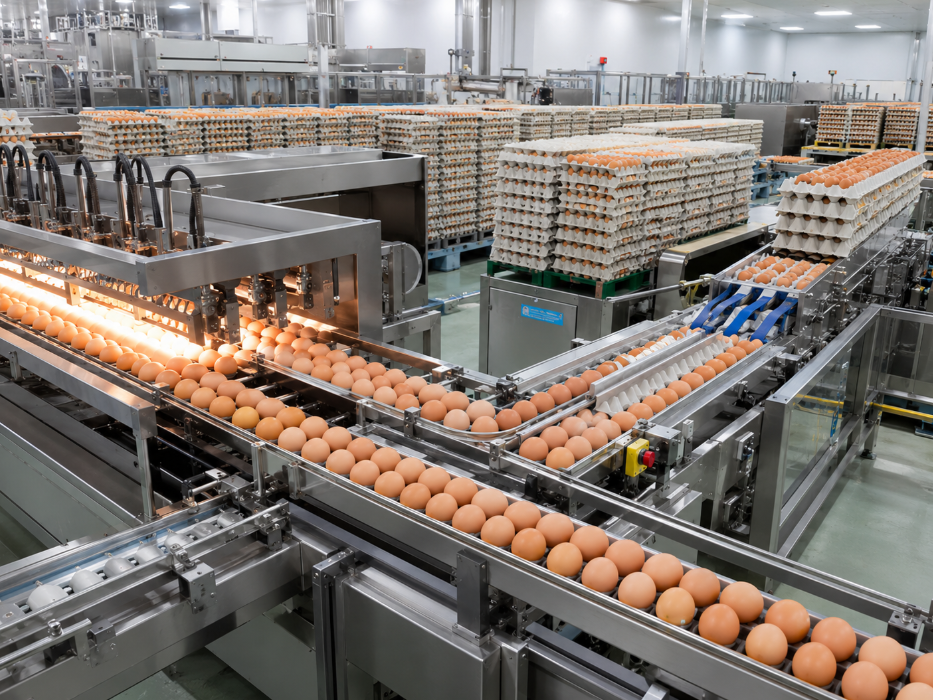
Egg Crack Detector Manufacturers to Know
There is no single machine that is right for every poultry farm. The following manufacturers represent several different approaches to egg inspection.
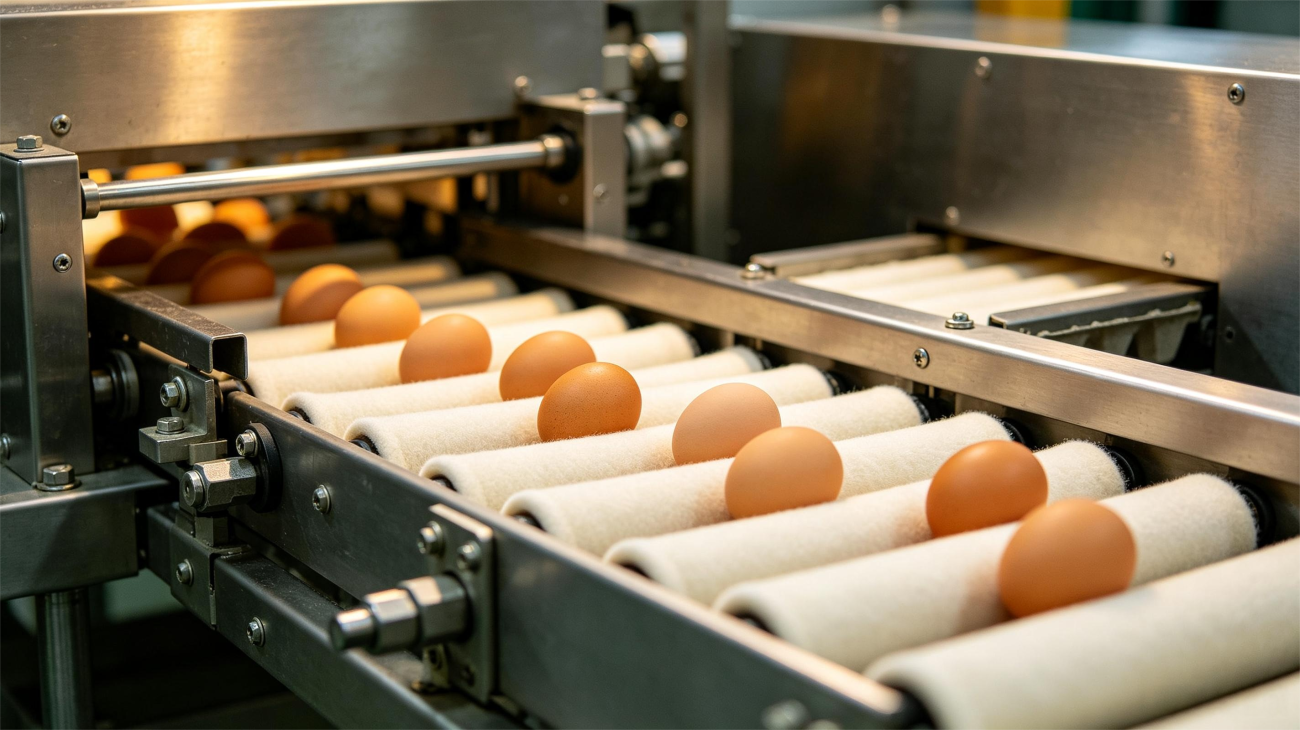
1. Moba
Moba is a Netherlands-based manufacturer well known for commercial egg grading and packing systems.
Its traditional crack detection system uses acoustic inspection to scan the eggshell for cracks. According to Moba, the system can detect both large and very small cracks and can be integrated with several of its egg graders.
Moba has also introduced the Vision Shell Inspector, which uses vision technology and artificial intelligence for contactless crack detection and weighing.
This is an important development for large grading centers because contactless inspection can reduce the number of components touching the egg.
For buyers, Moba is more relevant when the crack detector is part of a larger, high-capacity egg grading project rather than a simple standalone machine.
2. SANOVO Technology Group
SANOVO provides egg grading, handling and processing equipment for commercial egg producers.
Its grading systems can include detection for cracks, dirt, leaks and other quality issues. For example, the Alpha 100 is rated at up to 36,000 eggs per hour, while larger OptiGrader models reach significantly higher capacities.
SANOVO has also developed the VisionAI Detector, which combines camera-based inspection with vision weighing and crack detection.
The system scans each egg from multiple angles without relying on mechanical contact for crack inspection. SANOVO states that its system uses high-resolution cameras and 360-degree scanning to analyze the egg surface.
This type of solution is aimed mainly at professional grading centers where inspection accuracy, hygiene and large throughput are major priorities.
3. NABEL
Japan-based NABEL manufactures egg grading, packing and inspection equipment.
Its MEX grading series can be equipped with an automatic crack detector using acoustic analysis technology. The MEX3000, for example, is listed with a maximum capacity of 30,000 eggs per hour.
NABEL also offers inspection equipment for packed eggs. Its Pack All Checker uses cameras and sensing technology to identify problems such as cracks, contamination, leaks and missing eggs after packing.
For buyers, this shows an important point: crack detection does not always have to take place at exactly the same position in every egg processing line.
The correct inspection point depends on how the eggs are washed, graded, transferred and packed.
4. Kyowa Machinery
Kyowa Machinery is another Japanese manufacturer specializing in egg processing machinery.
One of its products is the CEX Crack Egg Detector.
Instead of relying only on conventional acoustic resonance analysis, the system uses vibration analysis. A tactile sensor lightly contacts the shell, and the detector analyzes the rebound characteristics to distinguish normal eggs from cracked eggs. Public product information states that the sensor performs multiple light contacts around each egg during inspection.
Kyowa’s approach is especially interesting for buyers who want crack inspection equipment that can potentially be integrated into an existing grading system rather than replacing the complete line.
5. Guangzhou Guangxing Poultry Equipment Group
Guangzhou Guangxing supplies poultry farming systems as well as egg collection, grading, packing and inspection equipment.
Its Egg Crack Detector Machine is designed as part of an egg quality inspection solution.
The crack inspection section uses shell vibration feedback. A tactile sensor lightly taps the shell and evaluates differences in rebound behavior between sound and cracked eggs. According to the published product information, the sensor checks the shell multiple times while the egg passes through the inspection area.
The system can also be combined with additional inspection modules.
Guangxing’s product range includes:
- Cracked egg inspection
- Dirty shell inspection
- Abnormal internal egg inspection
The dirty egg inspection section uses CCD cameras and image recognition to identify contamination on the shell. The abnormal egg inspection section uses visible and near-infrared light to help identify certain internal defects.
For farms already planning an automatic egg collection and grading project, this type of integrated approach can simplify equipment matching.
Acoustic, Vibration or Vision Detection?
This is one of the most important questions to ask an egg crack detector manufacturer.
There are several ways to identify shell cracks.
Acoustic Detection
Traditional systems analyze the sound or vibration response of the shell after controlled contact.
This technology has been used in commercial grading machines for many years.
Its main advantages are established industrial use and relatively mature integration with grading equipment.
Maintenance and environmental noise, however, should be discussed with the supplier because the mechanical inspection method can influence system design.
Vibration Analysis
Vibration-based systems also evaluate the physical response of the shell, but the inspection method may use light controlled contact instead of stronger acoustic tapping.
The purpose is the same: distinguish how an intact shell responds compared with a cracked shell.
For retrofitting existing grading lines, compact vibration inspection modules can sometimes be easier to integrate.
Vision-Based Crack Detection
The newest high-end systems increasingly use cameras, image processing and machine-learning algorithms.
The main attraction is contactless inspection.
There are fewer inspection components physically touching the shell, which may simplify cleaning and maintenance.
But buyers should not automatically assume that the newest technology is always the best investment.
A large egg grading center processing hundreds of thousands of eggs per hour has very different requirements from a layer farm packing 20,000 or 30,000 eggs per hour.
What Should You Ask an Egg Crack Detector Manufacturer?
When asking for a quotation, simply saying:
“I need an egg crack detector.”
is usually not enough.
A serious supplier will need more information.
Your Actual Egg Throughput
Tell the manufacturer how many eggs you process per hour.
Do not choose the inspection capacity based only on today’s production.
If your layer population or grading volume is expected to increase, leave reasonable spare capacity.
Existing Equipment
If you already have:
- An egg washer
- Egg grader
- Egg conveyor
- Automatic collection system
- Packing machine
send the supplier the model, dimensions and line layout.
This is especially important when adding a crack detector to an existing line.
Egg Type
Tell the supplier whether you mainly handle:
- White eggs
- Brown eggs
- Mixed shell colors
- Different egg sizes
Shell characteristics can influence inspection configuration.
What Defects You Want to Remove
Crack detection is not the same as complete egg quality inspection.
You may also need to identify:
- Dirty shells
- Leaking eggs
- Blood spots
- Abnormal internal eggs
- Broken eggs
If several inspection functions are required, buying separate machines may not always be the most practical solution.
Standalone Detector or Complete Egg Grading Line?
This is where many farms overspend.
If you already have a reliable grader, replacing the entire machine simply to add crack detection may not make economic sense.
Ask whether an inspection module can be retrofitted.
On the other hand, if you are building a new layer farm with automatic egg collection, purchasing the detector together with the grading and packing line can make integration easier.
The conveyors, electrical controls, rejection system and production capacity can then be designed as one system.
For example, Guangxing supplies an Egg Crack Detector Machine alongside automatic egg collection and grading equipment, which can be useful when planning a complete farm-to-packing workflow.
Do Not Compare Only the Machine Price
Two quotations for egg crack detection equipment may look very different.
One may appear much cheaper.
But before comparing prices, check whether both quotations include the same scope.
Ask about:
- Inspection capacity
- Detection method
- Reject mechanism
- Conveyor interface
- Control system
- Installation requirements
- Spare parts
- Training
- Remote technical support
- Shipping
- Commissioning
- Warranty
Also ask how easy the inspection section is to clean.
Egg processing equipment works in an environment where shell fragments, dust, broken egg material and moisture can quickly become maintenance problems.
A detector that performs well but requires constant cleaning or adjustment can create more labor than expected.
Which Manufacturer Should You Choose?
There is no universal answer.
Large commercial grading centers may focus heavily on extremely high throughput, automated quality control and advanced vision inspection.
A medium-sized poultry farm may care more about straightforward maintenance, compatibility with an existing grader and reasonable investment.
A new layer project may benefit from buying egg collection, inspection, grading and packing equipment from a supplier that can coordinate the complete line.
Before selecting an egg crack detector manufacturer, prepare three pieces of information first:
- Your required eggs-per-hour capacity.
- Your current or planned egg handling line.
- The defects you actually need to detect.
With those details, manufacturers can provide a much more useful technical proposal than a simple machine price.
FAQ
What is an egg crack detector?
An egg crack detector is an inspection device used to identify eggs with shell cracks during automated egg handling, grading or packing.
Can an egg crack detector find hairline cracks?
Commercial systems are designed to identify small shell cracks, although actual detection performance depends on the inspection technology, egg condition and equipment configuration.
Can a crack detector be added to an existing egg grader?
Some systems are designed for retrofit installation. Compatibility depends on the grader model, conveyor arrangement, available installation space and control system.
What is the difference between acoustic and vision crack detection?
Acoustic or vibration systems evaluate the physical response of the shell after controlled contact. Vision systems use cameras and image-analysis technology to inspect the shell without the same type of mechanical contact.
Do poultry farms need an egg crack detector?
Small farms selling eggs locally may still rely on manual inspection. Automatic crack detection becomes more useful as egg volume increases and consistent quality inspection becomes difficult to maintain manually.
What information should I send when requesting a quotation?
Provide your hourly egg capacity, layer farm size, egg color, existing grading equipment, required inspection functions, voltage and available installation space.