


Introduction: Why Watering Systems Matter in Poultry Farming
Water is the most essential nutrient for poultry. Birds consume nearly twice as much water as feed, and any disruption in water supply can immediately affect growth, egg production, and overall flock health.
As poultry farming moves toward large-scale, high-density, and automated production, traditional open drinkers are increasingly replaced by nipple drinker systems. Designed to provide clean, controlled, and efficient water access, nipple drinkers have become the standard watering solution in modern poultry houses.
In this article, we will explain how nipple drinker systems work, their key benefits, application scenarios, and why they are a must-have component in modern poultry equipment setups.
What Is a Nipple Drinker System?
A nipple drinker system is an automatic poultry watering system that delivers water through stainless steel or plastic nipples, which release water only when pecked by birds.
This system is widely used in:
Broiler farms
Layer cage systems
Breeder farms
Cage-free and aviary systems
Main Components of a Nipple Drinker System:
Nipple drinkers (stainless steel or plastic)
Water pipes (PVC or galvanized)
Pressure regulators
Water tanks or medicators
Hanging or lifting devices
Optional drip cups
The system ensures a continuous and hygienic water supply with minimal waste.
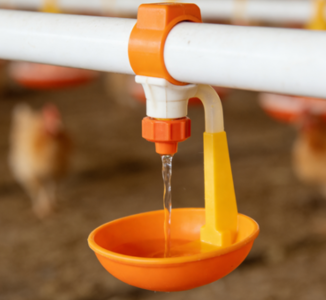
How Nipple Drinker Systems Work
When a bird pecks or pushes the nipple pin:
The nipple valve opens
A small amount of fresh water is released
Water flow stops immediately once pecking ends
This on-demand water delivery prevents overflow, keeping litter dry and reducing bacterial growth.
Key Advantages of Nipple Drinker Systems
1. Clean and Hygienic Water Supply
Unlike open drinkers, nipple drinkers:
Prevent birds from stepping into water
Reduce fecal contamination
Minimize algae and bacterial growth
Clean water directly contributes to improved bird health and better feed conversion rates.
2. Significant Water Saving
Nipple drinker systems can reduce water waste by 30–50%, thanks to:
Controlled water release
Optional drip cups to catch excess droplets
This is especially important in regions facing water scarcity or high utility costs.
3. Improved Litter and House Environment
Dry litter conditions help:
Reduce ammonia levels
Lower incidence of footpad dermatitis
Improve air quality inside poultry houses
A better environment leads to healthier birds and higher productivity.
4. Suitable for All Poultry Production Systems
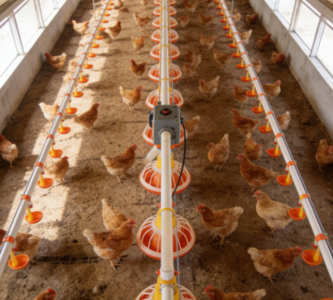
Nipple drinkers are extremely versatile and can be used in:
Cage systems (layers and breeders)
Floor-raised broiler houses
Cage-free and aviary systems
They can also be easily integrated with automated feeding and manure removal systems.
5. Easy Height Adjustment for Different Growth Stages
With lifting or hanging devices, nipple lines can be adjusted according to bird age:
Day-old chicks
Growing broilers
Adult layers or breeders
Proper height adjustment ensures optimal water intake and reduces stress.

Nipple Drinker vs Traditional Watering Systems
| Feature | Nipple Drinker | Bell Drinker / Open Drinker |
| Water Hygiene | Excellent | Poor |
| Water Waste | Very Low | High |
| Labor Requirement | Minimal | High |
| Suitability for Automation | High | Low |
| Disease Risk | Low | High |
This comparison explains why nipple drinkers have become the preferred choice for modern poultry farms.
Technical Features to Consider When Choosing a Nipple Drinker
When selecting a nipple drinker system supplier, pay attention to:
✔ Nipple Sensitivity
Suitable activation force for chicks and adult birds.
✔ Material Quality
Food-grade stainless steel nipples ensure durability and corrosion resistance.
✔ Anti-Leakage Design
Prevents continuous dripping and water loss.
✔ Water Pressure Control
Stable flow across long pipelines and large poultry houses.
✔ Easy Cleaning and Maintenance
Reduces downtime and operating costs.
Integration with Automated Poultry Equipment
A nipple drinker system works best when integrated with:
Automatic feeding systems
Climate control and ventilation systems
Manure removal systems
Farm management software
Together, these systems create a fully automated and efficient poultry farming environment.
Ideal Applications and Farm Sizes
Nipple drinker systems are ideal for:
Small to medium poultry farms upgrading hygiene
Large commercial poultry houses
Turnkey poultry farm projects
Export-oriented poultry production facilities
They are widely used across:
Asia
Africa
Middle East
Europe
South America
Why Choose Guangxing Nipple Drinker Systems?
As a professional poultry equipment manufacturer and exporter, Guangxing offers reliable and customizable nipple drinker solutions.
Guangxing Advantages:
High-quality materials and strict quality control
Compatible with various poultry cage and floor systems
Custom designs based on farm layout and bird type
Professional technical support and after-sales service
Extensive global project experience
Our nipple drinker systems are designed to deliver consistent performance, water efficiency, and long service life.
Return on Investment: Is It Worth the Upgrade?
Although nipple drinker systems require higher initial investment compared to traditional drinkers, the long-term benefits include:
Reduced water and labor costs
Lower disease treatment expenses
Improved growth rate and egg production
Faster return on investment
Most poultry farms recover the investment within 1–2 production cycles.
Conclusion: A Smarter Way to Water Poultry
A nipple drinker system is no longer a luxury—it is a necessity for modern poultry farms. By providing clean water, saving resources, and supporting automation, nipple drinkers play a critical role in improving productivity and sustainability.
If you are planning to build or upgrade a poultry farm, investing in a high-quality nipple drinker system is a smart and future-proof decision.
📩 Contact Guangxing for Professional Nipple Drinker Solutions
Looking for a reliable nipple drinker system supplier?
Contact Guangxing today to get customized poultry watering solutions.
👉 Website: guangxiniot.com
👉 Email: [email protected]


