


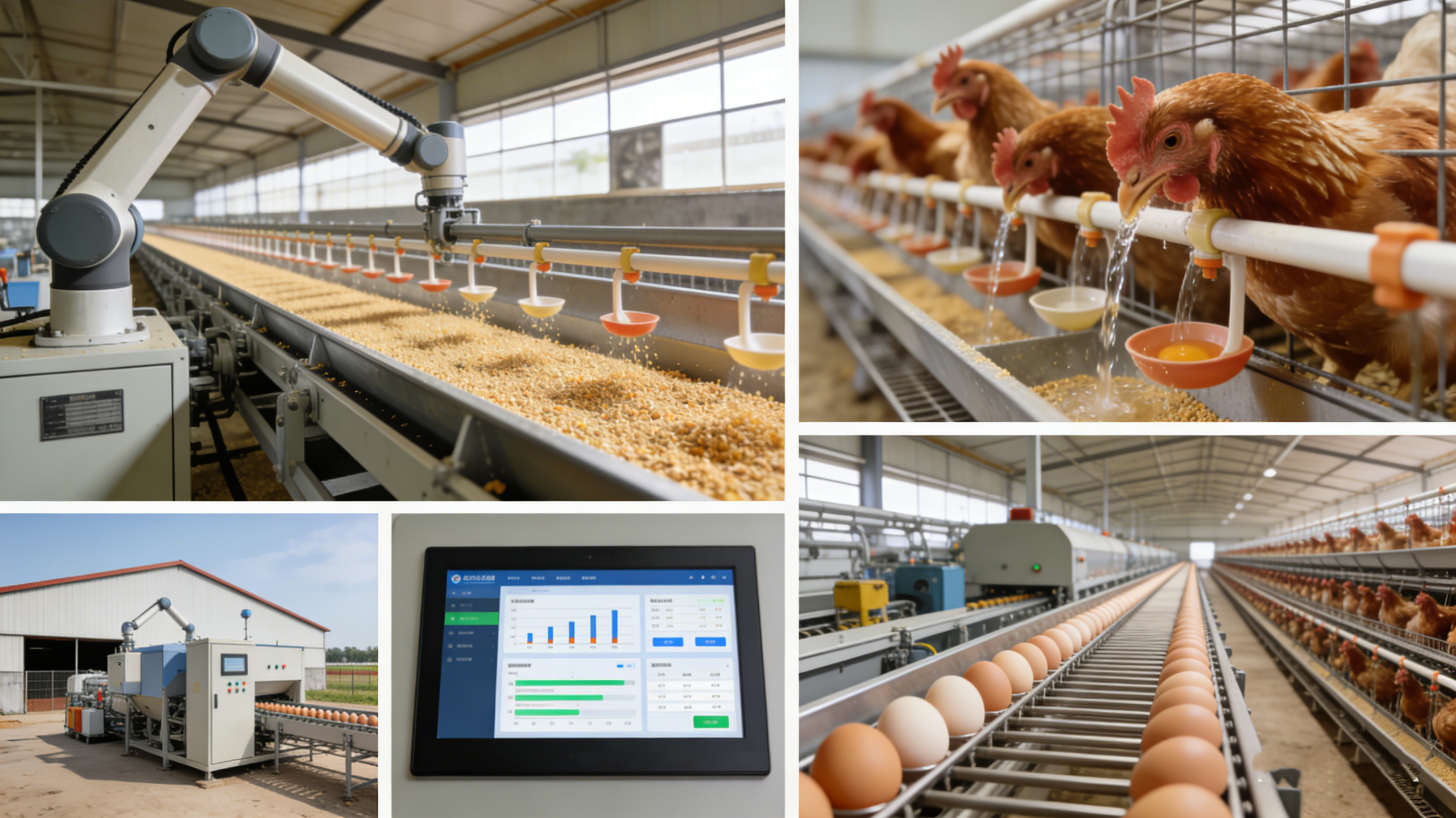
The global poultry farming industry is steadily advancing toward large-scale and high-efficiency operations. An increasing number of farmers are now investing in modern equipment to enhance productivity, reduce labor costs, and better ensure animal welfare. During the critical phase of establishing poultry farms, a core decision remains unavoidable: should one opt for semi-automatic or fully automatic poultry farming systems? Both systems are widely used in commercial poultry production, but they differ significantly in terms of investment costs, automation levels, and applicable farm sizes. This guide provides a detailed comparative analysis of semi-automatic and fully automatic poultry farming systems, aiming to offer practical references for farmers and help them identify the most suitable development solution tailored to their farm’s specific conditions.
What Is a Semi-Automatic Poultry Farming System?
A semi-automatic poultry farming system combines manual labor with basic automation equipment. It is designed to improve efficiency compared to traditional farming while keeping the initial investment relatively low.
Typical semi-automatic poultry equipment includes:
Poultry cage systems (A-type cages)
Semi-automatic feeding equipment
Nipple drinking systems
Manual egg collection
Manual manure removal
In this system, some tasks such as feeding and watering are assisted by equipment, but farm workers still handle certain operations manually.
Semi-automatic systems are commonly used by small and medium-scale poultry farms.

What Is a Fully Automatic Poultry Farming System?
A fully automatic poultry farming system integrates advanced automation technologies to manage nearly all farm operations.
These systems typically include:
H-type multi-tier cage systems
Automatic feeding systems
Automatic egg collection systems
Automatic manure removal systems
Environmental control systems
Climate control and ventilation equipment
Smart monitoring and control systems
With these technologies, poultry farms can significantly reduce manual labor while improving production efficiency and management accuracy.
Fully automated systems are usually installed in large commercial poultry farms.
Key Differences Between Semi-Automatic and Fully Automatic Systems
The main differences between these two systems lie in investment cost, labor requirements, efficiency, and production scale.
| Feature | Semi-Automatic System | Fully Automatic System |
| Initial investment | Lower | Higher |
| Labor requirement | Medium | Low |
| Production efficiency | Moderate | High |
| Farm scale | Small / Medium | Large commercial |
| Automation level | Partial | Full |
| Management complexity | Simple | Advanced |
While semi-automatic systems require more labor, they are often easier to operate and more affordable for new farmers.
Fully automatic systems, on the other hand, offer higher efficiency and better scalability for large farms.
Cost Comparison: Semi-Automatic vs Fully Automatic Poultry Farms
Investment cost is one of the most important factors when choosing poultry equipment.
Semi-Automatic Poultry Farm (Example)
Farm size: 10,000 layers
Estimated equipment cost:
$8,000 – $15,000
Equipment usually includes:
A-type layer cages
Nipple drinking system
Basic feeding equipment
Labor requirement: 4–6 workers
Fully Automatic Poultry Farm (Example)
Farm size: 10,000 layers
Estimated equipment cost:
$25,000 – $45,000
Equipment usually includes:
H-type automatic layer cage system
Automatic feeding system
Automatic egg collection
Automatic manure removal
Environmental control system
Labor requirement: 1–2 workers
Although the investment is higher, automation can significantly reduce labor costs and improve long-term profitability.

Advantages of Semi-Automatic Poultry Systems
Semi-automatic poultry farming systems offer several benefits, especially for farmers starting their poultry business.
Lower Initial Investment
The equipment cost is significantly lower compared to fully automated systems.
Easier Operation
Semi-automatic systems are easier to install and operate, making them suitable for farmers with limited technical experience.
Flexible Expansion
Farmers can gradually upgrade their equipment as the farm grows.
Advantages of Fully Automatic Poultry Systems
Fully automatic poultry farming systems are designed for high-efficiency commercial production.
Reduced Labor Costs
Automation dramatically reduces the number of workers required for daily farm operations.
Higher Production Efficiency
Automated feeding and egg collection systems improve production efficiency and reduce feed waste.
Better Farm Management
Environmental control systems maintain optimal temperature, humidity, and ventilation, improving poultry health.
Large-Scale Production Capability
Multi-tier cage systems maximize space utilization and allow farms to raise tens of thousands of birds in a single house.
Which Poultry Farming System Is Best for Your Farm?
Choosing the right poultry farming system depends on several factors.
Choose a Semi-Automatic System If:
You are starting a small or medium poultry farm
Your investment budget is limited
Labor costs in your region are relatively low
You plan to expand gradually
Choose a Fully Automatic System If:
You are building a large commercial poultry farm
Labor costs are high in your region
You want to maximize production efficiency
You prefer advanced technology and smart farm management
Many modern poultry farms start with semi-automatic equipment and upgrade to full automation as production increases
The Growing Trend of Automated Poultry Farming
Across regions such as Africa, the Middle East, and Southeast Asia, poultry farming is rapidly transitioning toward automation.
This trend is driven by several factors:
Increasing demand for poultry meat and eggs
Rising labor costs
Need for higher biosecurity standards
Improved farm management efficiency
As a result, more investors are adopting fully automated poultry farming systems for new commercial poultry projects.
Why Choosing the Right Poultry Equipment Supplier Matters
Regardless of whether you choose a semi-automatic or fully automatic system, selecting a reliable poultry equipment supplier is crucial.
A professional supplier should provide:
Customized poultry farm design
High-quality cage systems
Installation guidance
Technical support
After-sales service
Working with an experienced manufacturer ensures that your poultry farm operates efficiently and profitably.
FAQ: Poultry Farming Systems
1. What is the difference between A-type and H-type poultry cages?
A-type cages are typically used in semi-automatic systems, while H-type cages are designed for fully automated poultry farms with higher production capacity.
2. How long does poultry farming equipment last?
High-quality hot-dip galvanized poultry cages can last 15–20 years, making them a long-term investment for poultry farms.
3. Can a semi-automatic farm be upgraded to a fully automatic system?
Yes. Many farms start with semi-automatic equipment and gradually upgrade to automatic feeding, egg collection, and manure removal systems.
Conclusion
Both semi-automatic and fully automatic poultry farming systems have their own advantages. The right choice depends on your farm size, investment budget, and long-term production goals.
Semi-automatic systems are ideal for small and medium poultry farms, while fully automated systems offer the best efficiency for large commercial poultry operations.
If you are planning to build or upgrade a poultry farm, investing in the right poultry equipment will significantly improve productivity and profitability.
✅ Looking for reliable poultry farming equipment?
Guangxing provides complete poultry farming solutions, including:
Layer chicken cage systems
Broiler cage systems
Automatic feeding systems
Environmental control systems
Turnkey poultry farm projects
👉 Visit guangxiniot.com to learn more or contact our team for a customized poultry farm solution.


