


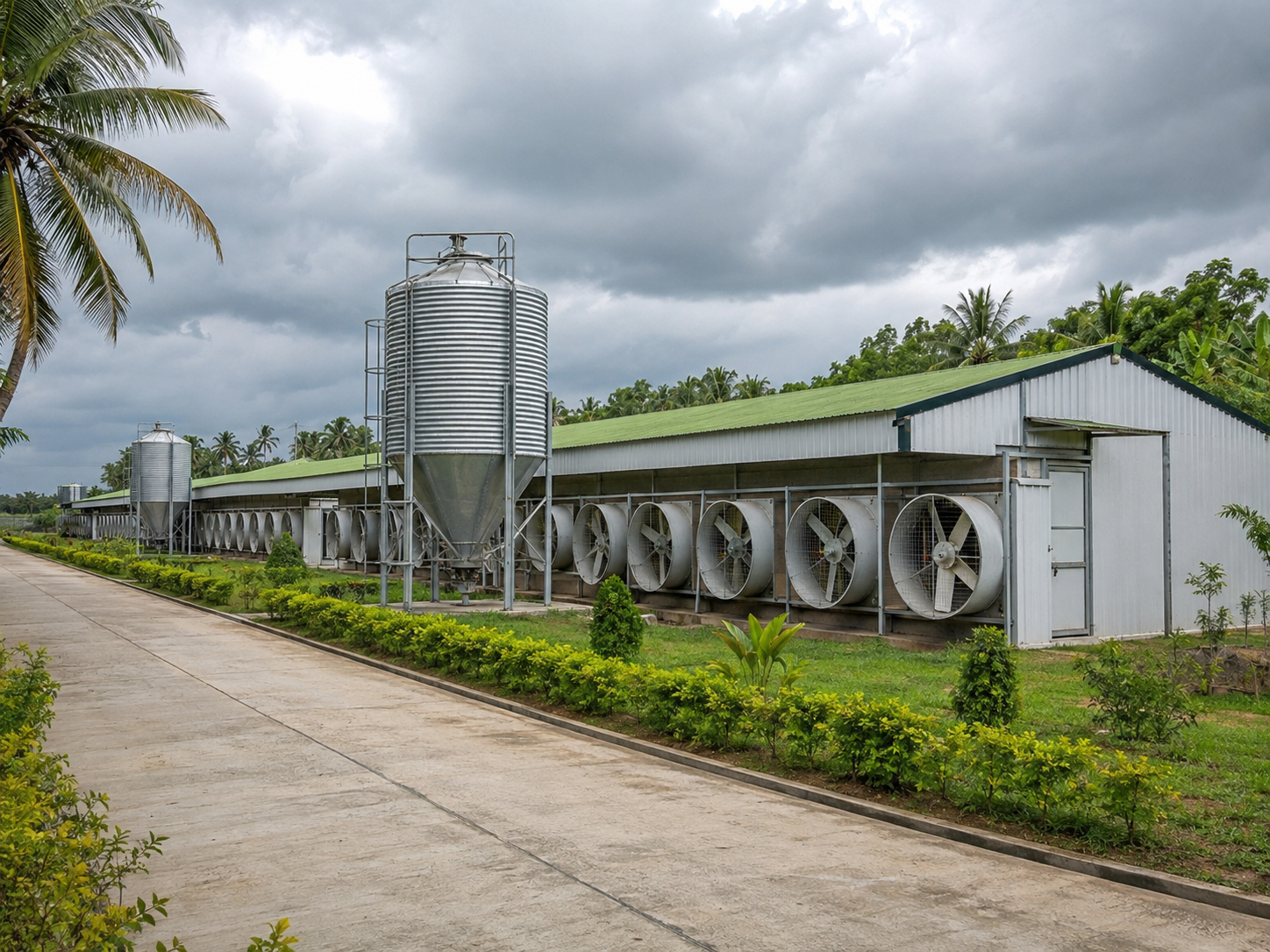
If you are searching for poultry equipment manufacturers in West Bengal, you are probably planning a new poultry farm, expanding an existing project, or comparing equipment suppliers before making an investment.
At this stage, price is important, but it should not be the only factor.
A poultry farm may operate for many years. Cage quality, feeding efficiency, drinking systems, manure removal, ventilation, cooling and after-sales support can all affect long-term operating costs.
This is particularly important in West Bengal, where poultry equipment must work under hot summers, high humidity and seasonal monsoon conditions.
According to information published by the Government of West Bengal, the climate of West Bengal varies considerably across different regions.
For poultry farms, these conditions make ventilation, cooling, corrosion protection and manure management important parts of equipment selection.
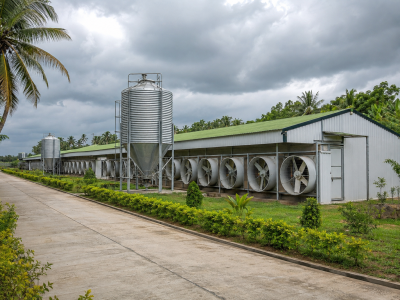
What Poultry Equipment Is Needed in West Bengal?
The equipment configuration depends mainly on the type of poultry, farm capacity and desired automation level.
A 10,000-layer farm may use a relatively simple semi-automatic system, while a 100,000-layer commercial farm usually requires much higher automation.
Common equipment includes:
- layer or broiler cages
- automatic feeding systems
- nipple drinking systems
- manure removal equipment
- egg collection systems
- exhaust fans
- cooling pads
- environmental control systems
- feed silos
- feed conveying equipment
The most suitable configuration should be selected according to the actual poultry house rather than purchasing individual machines separately.
A-Type Layer Cage for Small and Medium Farms
A-type layer cages remain a practical option for many small and medium-sized farms.
Their stepped structure provides relatively open airflow and simple daily management.
They are often suitable for farms where labor is still available and the owner wants to keep the initial equipment investment under control.
An A-type system can be combined with:
automatic nipple drinking,
trolley or automatic feeding,
mechanical manure removal,
ventilation fans.
For farms with around 5,000 to 20,000 layers, this type of system can offer a reasonable balance between cost and efficiency.
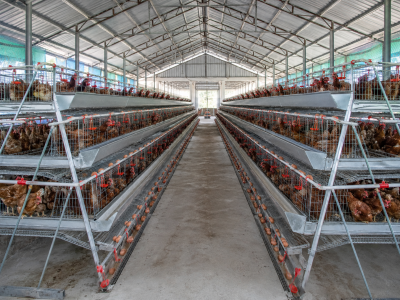
H-Type Layer Cage for Larger Commercial Projects
For larger poultry farms, H-type multi-tier cages can use poultry house space more efficiently.
Compared with basic cage systems, an H-type system can integrate more automation, including:
automatic feeding,
automatic nipple drinking,
manure belt removal,
automatic egg collection,
environmental control.
This reduces daily manual work and makes centralized management easier.
The initial investment is normally higher, so H-type systems are usually more suitable for farms where bird capacity, labor costs and production efficiency justify the additional automation.
For projects above 30,000 or 50,000 birds, it is worth comparing both A-type and H-type solutions before making a decision.
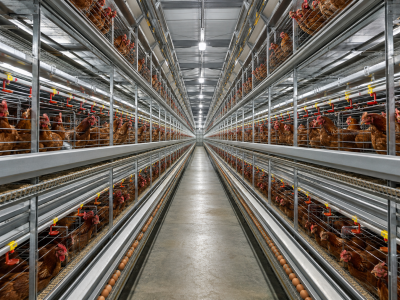
Feeding and Drinking Systems
Feeding becomes a major labor issue as poultry capacity increases.
Manual feeding may still be practical on a small farm, but on a commercial farm with tens of thousands of birds, automatic feeding can reduce labor and improve feed distribution.
A complete feeding system may include:
- feed silo
- feed conveying line
- travelling feeding machine
- chain feeding system
- feed trough
- control panel
The system should be designed according to poultry house length, cage arrangement and daily feed requirements.
Water supply is equally important.
A commercial nipple drinking system normally includes nipples, pipes, pressure regulators, filtration and water-control components.
Where water quality is uncertain, filtration should be considered from the beginning.
For larger farms, water tanks and pressure-control equipment can also improve supply stability.
Manure Removal in a Hot and Humid Climate
Manure management is especially important in warm and humid environments.
If manure remains inside the poultry house for too long, moisture and ammonia can become difficult to control.
Modern poultry farms may use manure belts or mechanical removal systems to move manure out of the house more frequently.
When comparing equipment suppliers, buyers should also ask what happens after manure leaves the cage system.
For example:
Where will manure be stored?
How frequently will it be removed?
Will it be composted or fermented?
How far is the manure storage area from the poultry houses?
These questions affect farm hygiene, labor and overall site planning.

Why Ventilation Matters in West Bengal
A poultry system suitable for a dry climate may not perform the same way in West Bengal.
In hot weather, chickens produce significant body heat. Without enough airflow, poultry house temperature can rise quickly.
Small open-sided houses may rely partly on natural ventilation, but large commercial houses usually need mechanical ventilation.
Typical systems include:
exhaust fans,
air inlets,
cooling pads,
temperature sensors,
humidity sensors,
environmental controllers.
For enclosed poultry houses, tunnel ventilation is commonly used to create controlled airflow through the building.
However, simply installing more fans does not automatically solve heat problems.
Fan capacity, house dimensions, air speed, stocking density and cooling-pad area need to work together.
High humidity should also be considered because evaporative cooling becomes less effective when the air already contains a large amount of moisture.
Corrosion Protection Should Not Be Ignored
Humidity, manure gases and regular washing can gradually damage poorly protected steel equipment.
This is why poultry buyers should check more than cage dimensions and wire thickness.
Ask the supplier about:
- galvanization method
- cage wire protection
- frame protection
- bolts and connectors
- equipment used near manure areas
- expected maintenance
Hot-dip galvanized cage components are commonly used to improve corrosion resistance and extend service life.
A slightly lower equipment price may not provide real savings if cages or structural parts require early replacement.
Local Supplier or International Poultry Equipment Manufacturer?
Many buyers naturally begin by searching for local poultry equipment manufacturers in West Bengal or suppliers in Kolkata.
Local suppliers can offer several advantages, including easier communication, faster transportation and convenient spare-parts support.
However, medium and large poultry projects can also compare suppliers from other parts of India and international manufacturers.
The decision should be based on the complete project rather than supplier location alone.
Important factors include:
| Factor | What to Compare |
|---|---|
| Equipment cost | Complete system price |
| Cage quality | Material and galvanization |
| Automation | Manual, semi or fully automatic |
| Farm design | Whether layout support is included |
| Climate system | Ventilation and cooling design |
| Installation | On-site or remote guidance |
| Spare parts | Availability and delivery |
| Experience | Completed poultry projects |
| Expansion | Possibility of future growth |
One common mistake is comparing only the cage price.
A quotation may appear inexpensive because it does not include ventilation, egg collection, electrical control, feed conveying, installation accessories or freight.
For this reason, buyers should compare quotations line by line.
Poultry Equipment Price in West Bengal
There is no single standard price for poultry equipment in West Bengal.
The cost depends on several factors:
bird capacity,
poultry type,
cage system,
automation level,
poultry house size,
feeding method,
manure removal system,
egg collection,
ventilation,
environmental control,
shipping and installation.
For example, a 10,000-layer farm using A-type cages and semi-automatic feeding will cost much less than a 10,000-layer project using H-type cages with automatic feeding, manure removal and egg collection.
The best way to obtain a realistic quotation is to provide the supplier with actual farm information.

What Information Should You Send to a Manufacturer?
Before requesting a quotation, prepare at least the following information:
Poultry type:
Layer, broiler, breeder or pullet.
Bird capacity:
For example, 10,000, 30,000, 50,000 or 100,000 birds.
Poultry house size:
Length × width × height.
Number of houses:
Existing or planned.
Project location:
District or nearest city in West Bengal.
Automation level:
Basic, semi-automatic or fully automatic.
Power supply:
Grid power and backup generator availability.
Water supply:
Source, storage and water quality.
With this information, manufacturers can recommend a more accurate equipment layout instead of giving only a general cage price.
How to Choose a Poultry Equipment Manufacturer
Before placing an order, ask several practical questions.
What material is used?
Check cage wire, frame structure and galvanization.
What is included in the quotation?
Confirm whether the price includes feeding, drinking, manure removal, egg collection, ventilation, control equipment and accessories.
Who installs the equipment?
Some manufacturers only deliver equipment. Others provide installation drawings, remote support or engineers for site installation.
What spare parts are available?
Motors, reducers, chains, bearings, nipple drinkers and controllers will eventually require maintenance.
Spare-parts support should be considered before the farm starts operating.
Can the system be expanded?
A farm that begins with 20,000 birds may later expand to 50,000 or more.
A good layout should leave room for future development.
Government Poultry Resources in West Bengal
The Animal Resources Development Department of the Government of West Bengal is responsible for livestock and poultry-related programmes and policies in the state.
Before investing in a poultry project, farm owners should check current local regulations, government programmes and project requirements.
Poultry Equipment Supplier for West Bengal – Guangzhou Guangxing
For West Bengal poultry investors comparing international manufacturers, Guangzhou Guangxing Poultry Equipment Group provides equipment for layer, broiler, breeder and pullet farms.
The available systems include:
- A-type layer cages
- H-type layer cages
- broiler cage systems
- automatic feeding
- nipple drinking
- manure removal
- egg collection
- ventilation and cooling
- environmental control
- feed silos
- complete poultry farm solutions
Guangxing is based in Guangzhou, China, so it should be considered an international poultry equipment manufacturer supplying poultry projects rather than a local West Bengal manufacturer.
Equipment configurations can be designed according to bird capacity, poultry house size, climate, available land and automation requirements.
Planning a Poultry Farm in West Bengal?
If you are preparing a new layer, broiler, breeder or pullet project in West Bengal, send us the basic farm information:
- Poultry type
- Number of birds
- Poultry house dimensions
- Project location
- Required automation level
Based on this information, Guangxing can recommend a suitable equipment configuration and poultry house layout.
Instead of asking only:
“How much does a chicken cage cost?”
A more useful question is:
“Which poultry equipment system is suitable for my farm size, local climate and long-term production plan?”
Once that question is clear, equipment selection and project budgeting become much easier.
Get a Poultry Equipment Plan for Your West Bengal Farm
Planning a new layer, broiler, breeder or pullet farm in West Bengal?
Instead of choosing equipment only by cage price, it is better to start with your farm capacity, poultry house size, climate conditions and required automation level. These details help determine which cage system, feeding equipment, drinking system, manure removal and ventilation solution will be more suitable for your project.
Guangzhou Guangxing can provide poultry equipment recommendations based on your actual farm information.
Tell Us About Your Project
Please complete the form below. The more project details you provide, the more accurately we can recommend an equipment configuration.