


I. Project Overview
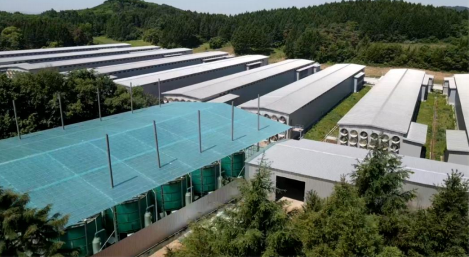
The Guangzhou Conghua 1.5 Million Pullet Automated Rearing Project is located in Aotou Town, Conghua District, Guangzhou, Guangdong Province. It is an important component of the No. 1 Layer Hen Industrial Park in Conghua District. Designed to meet the demand for large-scale brooding, rearing, and standardized pullet supply, the project has established a modern, fully enclosed, automated, and intelligent pullet-rearing base.
The base adopts a multi-tier brooding and rearing cage system equipped with automatic feeding, automatic drinking, automatic manure removal, poultry-house ventilation, environmental control, and automatic temperature-control facilities. These systems enable centralized management of feed supply, drinking water, manure removal, and indoor environmental conditions throughout the pullet-rearing process.
According to publicly available information, the base was designed to accommodate 1.76 million pullets. By 2021, it had established an annual rearing capacity of approximately 1.5 million pullets, making it one of the larger modern pullet-rearing bases in China.
Guangzhou Guangxing participated in the construction of the project’s automated poultry-rearing equipment and supporting systems. Through the systematic configuration of rearing equipment, environmental control facilities, and poultry-house production processes, the project helps reduce manual operations, improve consistency in pullet-rearing conditions, and provide healthy, uniform, and standardized pullets for downstream commercial layer farms.

II. Basic Project Information
| Item | Details |
|---|---|
| Project Name | Guangzhou Conghua 1.5 Million Pullet Automated Rearing Project |
| Project Location | Xincun Village, Aotou Town, Conghua District, Guangzhou, Guangdong Province |
| Project Type | Layer Chick Brooding, Rearing, and Pullet Production Base |
| Construction Start | 2019 |
| Designed Rearing Capacity | 1.76 million pullets |
| Completed Capacity | Approximately 1.5 million pullets, based on data available as of 2021 |
| Project Investment | Publicly available information indicates that more than RMB 100 million had been invested |
| Rearing Model | Fully enclosed, automated, and intelligent multi-tier cage-rearing system |
| Main Functions | Brooding, rearing, pullet supply, and resource utilization of poultry manure |
According to the project construction plan, the site covers a total area of approximately 523,030 square metres, equivalent to about 784.5 mu. Agricultural facility land accounts for approximately 56,485 square metres.
Based on the building schedule included in the construction plan, the industrial park is designed with multiple standardized poultry houses and supporting functional areas, including disinfection passages, boiler rooms, power distribution rooms, employee dormitories, wastewater treatment facilities, feed storage and processing areas, organic fertilizer production facilities, and internal roads.
III. Automated Rearing Systems
1. Multi-Tier Brooding and Rearing Cage Equipment
The project adopts six-tier, five-row automated brooding and rearing equipment. Its multi-tier vertical arrangement improves the utilization of poultry-house space and allows pullets of different ages to be managed in separate zones according to standardized rearing requirements.
The cages, feed troughs, drinking water lines, and manure-conveying systems are centrally arranged, making it easier for staff to conduct inspections, vaccinations, flock transfers, and equipment maintenance.
Compared with traditional floor-rearing systems, this design reduces the need for workers to enter the flock frequently, thereby lowering bird stress and reducing biosecurity risks.
2. Automatic Feeding System
The automatic feeding system distributes feed evenly to troughs on different tiers and rows according to preset feeding times and quantities. It reduces uneven feed distribution and feed waste commonly associated with manual feeding.
A stable and consistent feed supply helps control pullet body weight and flock uniformity, creating a sound foundation for production performance after the birds enter the laying stage.
3. Automatic Drinking System
The poultry houses are equipped with nipple drinking systems that continuously provide clean drinking water to birds of different ages.
The enclosed water supply pipelines help reduce water contamination and wet floors while minimizing water waste and lowering the moisture content of poultry manure.
4. Automatic Manure-Removal System
A manure belt is installed beneath each tier of the rearing equipment. Manure is regularly conveyed to the end of the poultry house and then transferred outside through a central manure-collection system for centralized treatment.
According to publicly available information, the base uses an automated central manure-collection system to prevent poultry manure from falling onto the floor. The collected manure is used for organic fertilizer production or other resource-recovery applications, reducing the impact of long-term manure accumulation on the poultry-house environment.
5. Ventilation and Environmental Control System
The base adopts fully enclosed poultry houses equipped with fans, air inlets, temperature and humidity sensors, and environmental control equipment.
These systems centrally regulate indoor temperature, humidity, ventilation volume, and air quality.
The project also combines air-source heat pump technology with floor heating to maintain relatively stable indoor temperatures during the brooding stage. This reduces the impact of seasonal changes and day-to-night temperature fluctuations on chick growth.
6. Biosecurity Facilities
The industrial park is planned with disinfection passages, changing rooms, production management zones, and internal roads.
By separating the movement and management of personnel, vehicles, and materials, the project helps reduce the risk of external pathogens entering the rearing area.
The combination of fully enclosed poultry houses and automated equipment also reduces the frequency of direct contact between workers and the birds. Staff responsibilities have therefore shifted from manual feeding and manure removal to equipment inspection, data monitoring, and abnormal-condition handling.
IV. Resource Utilization of Poultry Manure
In addition to automated pullet-rearing facilities, the project incorporates manure collection, transportation, and resource utilization into the overall planning of the industrial park.
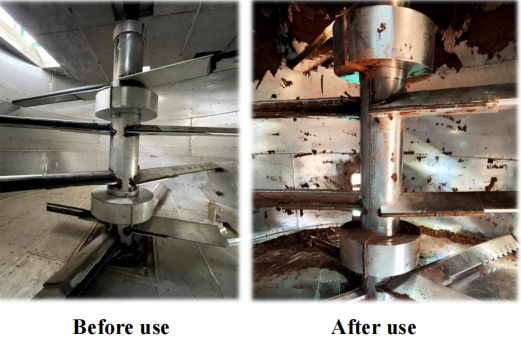
Poultry manure is transferred outside the houses through manure belts and central conveying equipment. After fermentation, insect bioconversion, or organic fertilizer processing, the manure can be converted into organic fertilizer raw materials and other reusable products.
The No. 1 Layer Hen Industrial Park has identified poultry-manure resource utilization as an important development direction. By integrating layer farming with surrounding agricultural planting activities, the park aims to establish a circular agricultural model covering:
Poultry farming — manure treatment — organic fertilizer production — agricultural planting.
V. Project Achievements
Through the integration of multi-tier automated rearing equipment and intelligent environmental control systems, the project has achieved standardized operation throughout the pullet brooding and rearing process.
The automatic feeding, automatic drinking, and automatic manure-removal systems have reduced repetitive manual work. Fully enclosed poultry houses and automatic temperature-control systems have improved consistency in rearing conditions among different houses. Centralized manure collection and resource-utilization facilities have also improved poultry-house hygiene and reduced manure-treatment pressure.
After establishing large-scale pullet production capacity, the base is able to supply commercial layer farms in Guangdong Province and surrounding areas with pullets featuring consistent batch quality, uniform body weight, and stable health conditions.
The project supports the transformation of the layer industry from scattered and labour-intensive farming toward standardized, intensive, and automated production.