


Why Choose High Efficiency Cages for Caged Laying Hens Farming?
- This article introduces some precautions for raising laying hens, as well as the convenience that equipping efficient egg chicken cages can bring to your daily chicken farming.
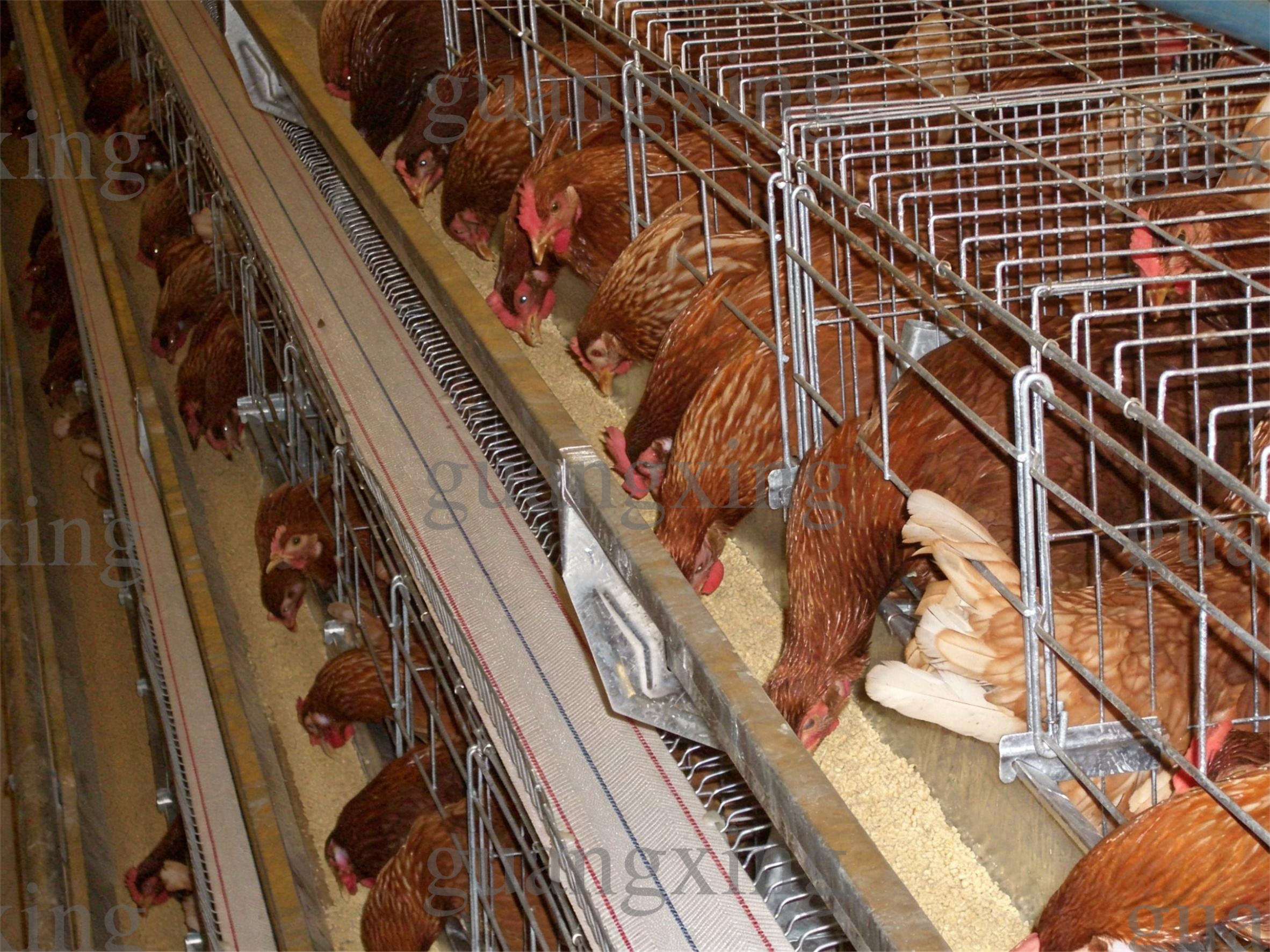
1、What Are Caged Laying Hens?
- Cage rearing of laying hens is currently the most mainstream and efficient breeding mode for commercial egg production.
- The difference between it and the free range mode is that the cage raised egg laying chicken system achieves standardized breeding environment.
- It can centrally manage a set of processes such as feeding, drinking water, cleaning manure, and egg picking, greatly improving breeding efficiency and egg production.
2、Key Points for Raising Cage Raised Laying Hens
1.1 Selection of Cages
- The currently commonly used chicken cages are stacked/stepped.
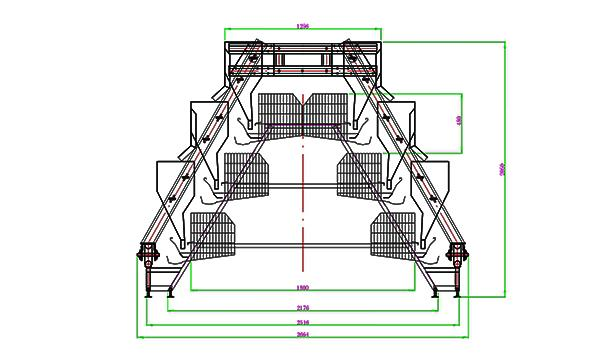
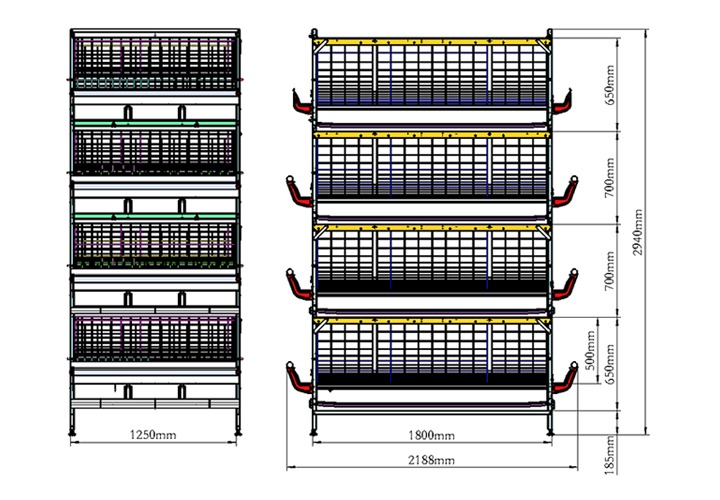
- Keep 3-4 adult laying hens in a single cage, with each one occupying no less than 450cm ² of cage area, to avoid crowding and pecking habits.
- The bottom slope of the cage is 8 ° -10 ° to ensure that the eggs roll smoothly into the egg collecting trough.
- The wire at the bottom of the cage is free of burrs to prevent injury to the chicken feet.
- Ensure that the equipment is equipped with automatic feeding troughs, water dispensers, and egg collection troughs.
- Leave a passage between the cages for easy cleaning, egg picking, and inspection.
- The bottom chicken cage should be at least 30cm above the ground, moisture-proof, rodent proof, and easy to clean feces.
1.2 Environmental Control
- Since the temperature ranges from 18 to 25℃, caged laying hens will maintain the highest egg production rate.
- When the temperature exceeds 30℃, feed intake and egg production will decrease. Enhance ventilation and install fans or water curtains, and prevent chicken cages from direct sunlight.
- Keep the temperature no lower than 5℃. Seal air leaks and prevent cold wind from blowing directly onto chickens. Raise the temperature moderately when necessary.
- Keep the air circulating at all times to remove harmful gases such as ammonia and hydrogen sulfide.
- In winter and spring, maintain a balance between heat preservation and ventilation. Open windows or turn on fans for ventilation when the temperature is high at noon. For enclosed chicken houses, ensure ventilation equipment operates around the clock.
- Provide a stable light duration of 14 to 16 hours every day. Keep the light-on and light-off times fixed, and do not alter them arbitrarily.
- The light inside the cages is even, with an intensity of 10 to 20 lux (approximately equivalent to a 3-watt bulb per square meter).
- Turn on the lights gradually, so as to prevent sudden bright light or darkness from startling the flock.
1.3 Feeding
- Use compound feed for laying hens throughout the rearing period to ensure sufficient calcium, phosphorus and crude protein, so as to maintain eggshell quality and laying rate.
- Feed three times a day at fixed times in the morning, noon and evening. Keep the troughs supplied with feed continuously without excess accumulation, and make sure no moldy feed is used.
- During the peak laying period, you may add extra shell powder and limestone powder in the evening to prevent soft-shelled eggs and thin-shelled eggs.
- It takes 5 to 7 days to gradually switch feeds to reduce stress.
- Clean and room-temperature drinking water is available all day. Water drinkers are cleaned daily and disinfected once a week.
- Change water frequently in summer to stop it from deteriorate, and prevent the water from freezing in winter. Besides, insufficient water intake will directly cause lower egg production.
1.4 Daily Operation Procedures
- Collect eggs 2 to 3 times a day in a timely manner to prevent pecked and broken eggs. Handle them gently and store them by category.
- Check the flock three times a day in the morning, noon and evening to observe their mental state, feed intake, feces and breathing. Separate and deal with weak, sick and dead chickens individually.
- Before laying begins, cage the chickens according to their weight and physical condition. During the middle and later stages of breeding, promptly eliminate non-laying and sick or injured chickens to cut breeding costs.
1.5 Disease Prevention and Epidemic Control
- Disinfect the surroundings and passages of the henhouse twice a week.
- Disinfect the chicken house while chickens are present once a week, avoiding the peak egg-laying period.
- Change shoes and hats when entering and leaving the breeding area.
- Since diseases may spread easily, no outsiders are allowed to enter the chicken houses.
- In accordance with local epidemic prevention requirements, vaccinate chickens on schedule against core vaccines such as Newcastle disease, avian influenza and infectious bronchitis. For laying hens, vaccines with mild stress effects shall be given priority during the laying period.
- Perform internal and external deworming every 2 to 3 months.
1.6 Stress Prevention and Control
- Noise, strong light, temperature differences, cage transfer, feed replacement and unauthorized entry of outsiders can all cause stress, leading directly to reduced egg production and even complete production stoppage.
- Keep quiet inside the farm, as loud noises and frequent vehicle access will disturb the flock.
- When seasons change or the weather changes abruptly, add multivitamins to the drinking water to relieve stress.
1.7 Eliminate
- The normal laying cycle of laying hens is about 10 to 12 months.
- When the laying rate drops below 60%, eliminate the chickens in batches and introduce new ones.
- Before culling the chickens, thoroughly clean, disinfect and set aside the empty cages in advance, so that you can safely introduce new chickens later.
3、Core Advantages of Caged Laying Hen Farming System
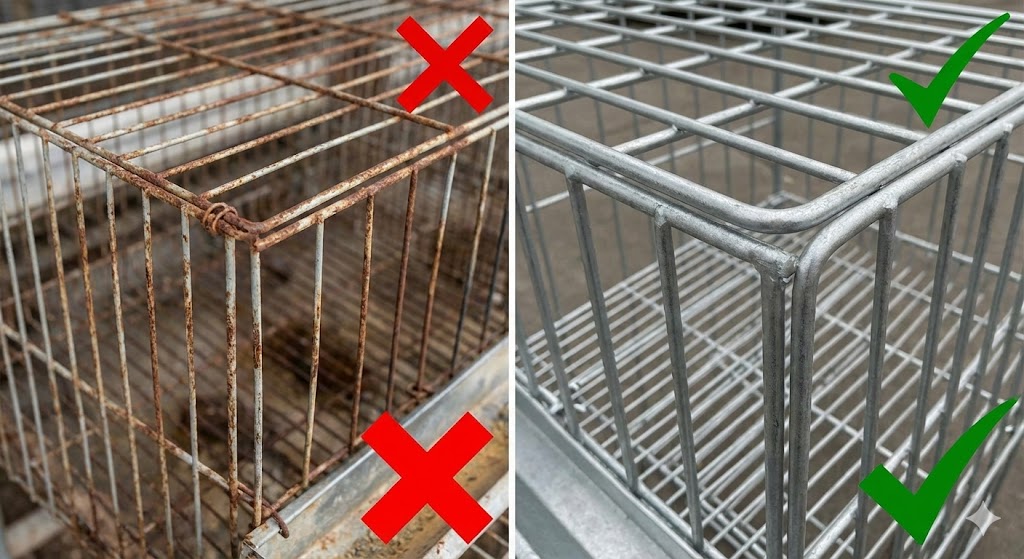
- The equipment is made of hot-dip galvanized steel, and the cage raised egg laying chicken equipment is corrosion-resistant, rust proof, sturdy and durable, with a service life of over 15 years.

- The equipment has fully automatic feeding, drinking and cleaning functions.
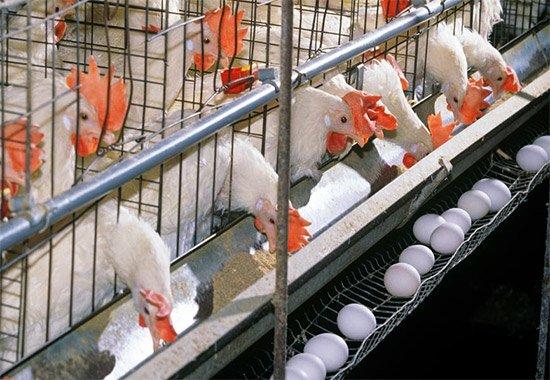
- The cage breeding system for laying hens significantly reduces manual input and lowers the difficulty of breeding management.
- The independent cage space can avoid crowding and cross infection of chickens, effectively reduce the incidence rate, and ensure stable egg quality and continuous high egg production.
4、Applicable Scenarios & Farming Regions
- Our equipment is widely used in large, medium and small chicken farms in African countries such as Nigeria, Ghana, Kenya, Tanzania and Southeast Asia.
- We can provide customized cage specifications and a one-stop cage breeding solution for laying hens, helping customers maximize their breeding profits.
5、FAQs About Caged Laying Hens System
What are the advantages of caged laying hens breeding?
- Caged laying hens breeding features high breeding density, high egg production efficiency, low labor cost, as well as easy daily management, low disease infection rate and stable egg quality, so it is the best choice for commercial large-scale egg farming.
Is your caged laying hens cage suitable for tropical climate?
- Yes. Our layer cages adopt high-temperature and corrosion-resistant galvanized process, with reasonable ventilation design. The caged laying hens equipment can adapt to high temperature and humid tropical climates in Africa and Southeast Asia, stable for long-term outdoor and indoor breeding.
Can you provide customized caged laying hens equipment?
- We support full customization of cage tiers, size, and automation configuration. We provide exclusive caged laying hens farming solutions according to customers' farm scale, budget and breeding needs.
Contact Us
- If you want to know more about this device, you can contact us and we can provide a detailed understanding of it.
- Phone:178 7666 8787
- Address: No. 2, Guangxing Road, Baiyun District, Guangzhou City, Guangdong Province, China.