


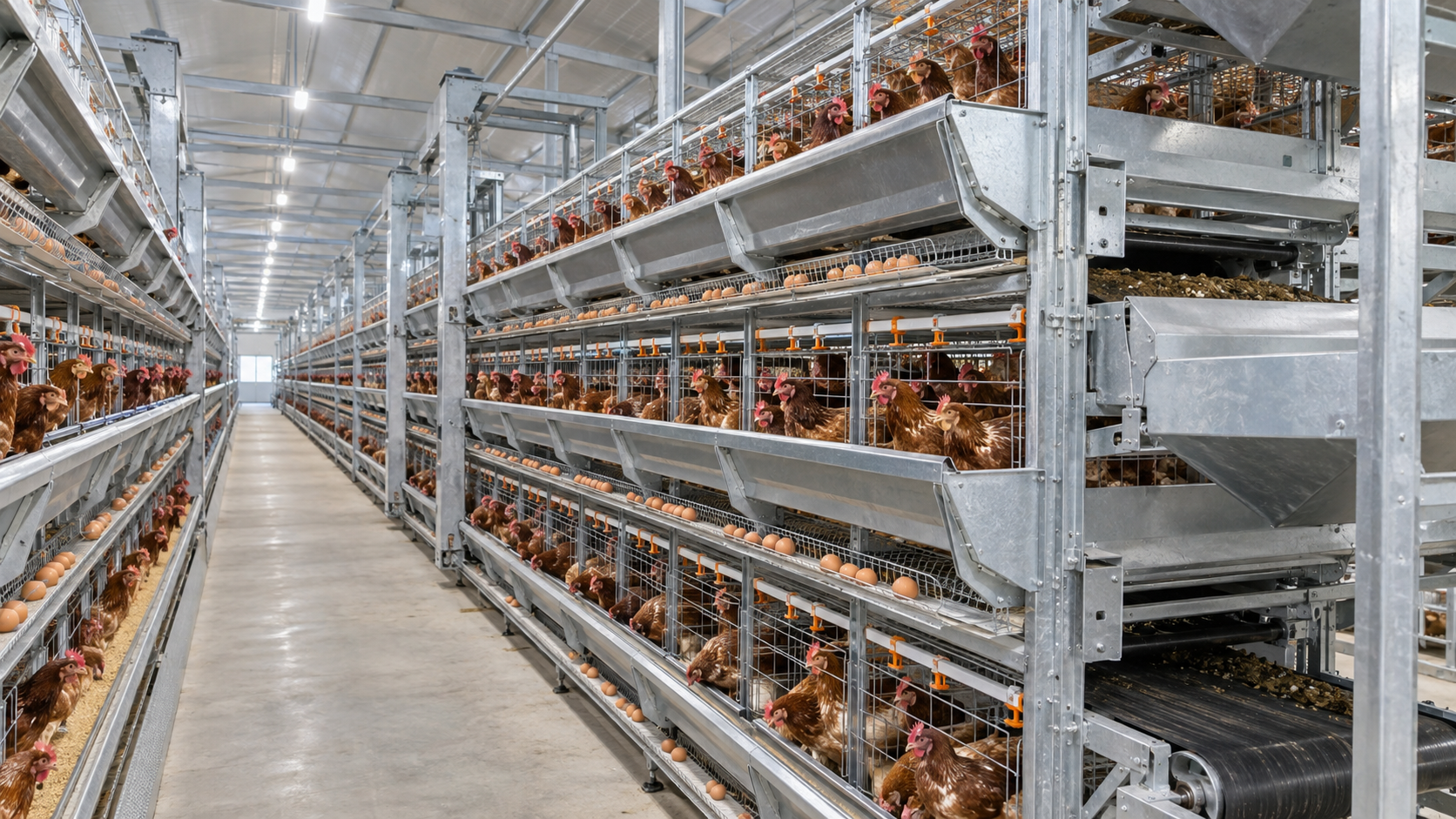
If you are looking for a Big Dutchman poultry equipment price list, you may have already noticed how difficult it is to find a reliable price for a complete poultry house.
Big Dutchman provides detailed information about its equipment, but the official product pages reviewed for this article do not show a standard price list for complete layer farming systems. The final quotation depends on the cage model, bird capacity, building layout and equipment included.
Consider a 20,000-layer farm in Nigeria. One quotation may cover cages, feeding troughs and drinking lines. Another may include automatic feeding, egg collection, manure removal and environmental controls.
Both quotations may be designed for the same number of hens, yet their prices could differ considerably.
Before comparing manufacturers, it helps to understand what each equipment package contains and how it will operate on the farm.
What Can Published Big Dutchman Prices Tell Us?
Big Dutchman occasionally publishes the value of major equipment contracts, although these figures are not the same as a product price list.
One example comes from Latvia.
On July 31, 2024, Big Dutchman announced that APF Holdings had signed a €4 million equipment contract for two new cage-free aviary houses.
The project included NATURA Step aviary equipment, EggTrax egg belt drives, EggCellent egg elevators and BFN Fusion farm management software.
This is a published contract value, but it does not represent the price of a conventional layer cage system.
Aviary housing uses different equipment from traditional cages. In this case, the contract also covered several systems beyond the housing structure.
Therefore, the €4 million figure cannot be used to estimate the cost of a Big Dutchman SuperTripleDeck cage or a 20,000-layer cage farm in Nigeria.
What it does show is how many components can form part of a large poultry equipment order.
When reviewing a quotation, buyers need to distinguish between the cage structure, feeding and drinking equipment, egg collection, manure removal and environmental controls.
Source: Big Dutchman – APF Holdings Equipment Contract, July 2024
Which Big Dutchman Layer Cage Systems Are Worth Considering?
Big Dutchman supplies equipment for different egg production methods.
Some systems serve conventional cage farms, while others are intended for cage-free production. They have different building requirements and cannot be compared on price alone.
SuperTripleDeck for Tropical Poultry Houses
The Big Dutchman SuperTripleDeck is particularly relevant to farms operating in warm climates.
It uses a three-tier cage structure developed with natural ventilation in mind. According to Big Dutchman’s product information, the open design allows air to move between tiers without solid barriers.
The manufacturer also describes a zinc-aluminium coating for corrosion protection.
Another feature is the possibility of introducing automation in stages.
The published system information describes three levels of equipment:
- Automatic chain feeding.
- Automatic feeding combined with egg belt collection.
- Automatic feeding and egg collection, together with mechanized manure removal.
This gives farmers the option of starting with a simpler arrangement and adding equipment as the operation develops.
For farms in Nigeria, Ghana or Kenya, phased investment may be useful when available capital is limited.
However, even a cage system developed for tropical conditions needs a suitable poultry house.
Roof design, building orientation, ventilation openings and local weather conditions all influence airflow.
NATURA Aviary Systems
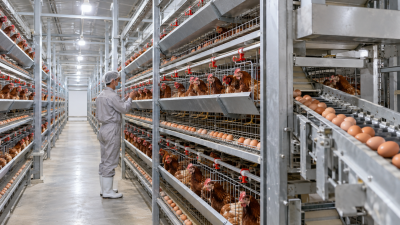
Big Dutchman’s NATURA range serves a different type of egg farm.
These systems support cage-free production, where laying hens can move within an aviary environment.
They involve different housing structures and egg collection arrangements from conventional cages.
A buyer considering NATURA should therefore compare it with other appropriate aviary systems, rather than using A-type or H-type cage prices as a reference.
The production method should be decided before equipment quotations are requested.
How Would You Compare Equipment for a 20,000-Layer Farm?
Suppose a farmer plans to house 20,000 laying hens.
The poultry house may already exist, or the building may still be under construction.
In either case, the supplier needs more information than the number of birds.
The building dimensions determine how many cage rows will fit, how much space remains for maintenance and where conveyors and feeding equipment can be installed.
A useful quotation should explain how the equipment will work together.
Equipment Quotation Checklist for 20,000 Layers
| Equipment | What to confirm |
|---|---|
| Layer cages | Model, tiers, dimensions, capacity and materials |
| Feeding | Feed delivery, feeding mechanism, motors and controls |
| Drinking | Nipple lines, regulators, filters and connections |
| Egg collection | Row belts, elevators, central conveyors and collection point |
| Manure removal | Internal belts, cross-conveyors and discharge arrangement |
| Ventilation | Fans, cooling equipment, air inlets and controllers |
| Electrical equipment | Power requirements, panels and protective devices |
| Installation | Drawings, supervision, local labor and commissioning |
| Spare parts | Included components, replacement prices and availability |
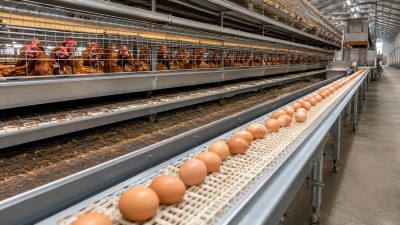
Two suppliers may describe an automatic egg collection system in their quotations, but that does not mean they are offering the same equipment.
One system may transport eggs to the end of each cage row. Another may include a central conveyor leading towards the packing area.
The same applies to manure removal.
An internal manure belt does not necessarily include the equipment needed to discharge manure outside the poultry house.
Before comparing prices, ask each supplier to identify the complete collection and discharge routes.
A detailed equipment list and layout drawing can reveal these differences before they become installation problems.
How Do European and Chinese Layer Cage Options Differ?
When evaluating European and Chinese poultry equipment, the country of manufacture is only one part of the decision.
The more useful comparison is between specific equipment designs.
Big Dutchman’s SuperTripleDeck uses a three-tier structure developed for tropical conditions, with different levels of automation.
Guangxing’s A-frame layer cage uses a stepped arrangement. Its published product range includes three- and four-tier configurations with feeding, drinking and egg collection options.
Both are used in commercial egg production, but their structures and specifications are not identical.
Corrosion protection is one area worth examining closely.
Big Dutchman describes a zinc-aluminium coating for SuperTripleDeck. Guangxing describes hot-dip galvanized components for its A-frame cages.
These descriptions are useful, but they are not enough to establish which product will last longer.
Coating thickness or coating mass, applicable standards, manufacturing methods and operating conditions all matter.
Even when two suppliers use the same general coating description, the actual specifications may differ.
A poultry house near the coast may face greater exposure to salt and moisture than an inland farm. Cleaning practices, manure conditions and maintenance also affect the environment around the equipment.
Buyers should request material and coating specifications for the actual models being offered.
They should also check whether the supplier’s warranty places any conditions on corrosion, cleaning chemicals or exposure to particular environments.
When Does an H-Type Cage Make More Sense?
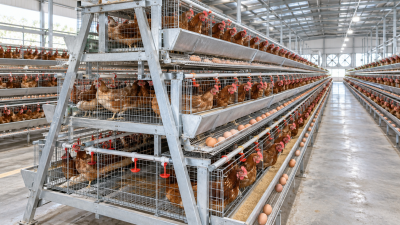
For larger farms, an H-type cage system may be worth considering.
Guangxing’s H-type automatic layer cage system uses vertically stacked cages with integrated feeding, drinking, egg collection and manure removal.
This arrangement can be useful when a project needs to make more intensive use of building space and coordinate several automated processes.
However, the building must provide adequate height, access and ventilation.
Airflow between cage levels deserves attention, particularly in mechanically ventilated houses.
If electricity fails, the consequences depend on bird density, weather conditions, ventilation design and emergency arrangements.
For that reason, the cage system should be selected together with the building layout and environmental control plan.
What Costs Are Easy to Miss When Importing Equipment to Nigeria?
The factory equipment price is not always the amount a farm owner will spend before the system begins operating.
For Nigerian buyers, the total budget may also include shipping, port charges, customs procedures, construction, installation and maintenance preparations.
These costs should be considered before placing an order.
Shipping and Port Expenses
Start by checking the delivery terms.
An EXW quotation generally leaves the buyer responsible for extensive transport arrangements.
Under FOB, the seller delivers the goods on board the vessel at the named shipment port. Under CIF, the seller arranges and pays for freight and the required minimum insurance to the named destination port, although risk normally transfers earlier.
The exact responsibilities depend on the agreed Incoterm and named location.
For containerized shipments, FCA may sometimes be more appropriate than FOB because the cargo is often handed over to a carrier or terminal before being loaded onto the vessel.
Even when the quotation is CIF, the buyer may still need to arrange import clearance, pay applicable duties and taxes, and transport the equipment inland.
Terminal handling, storage, demurrage and container detention may also become relevant, depending on the shipment and clearance process.
Before ordering, a licensed local clearing agent should review the required documents and current import requirements.
A small documentation problem can become expensive if it delays cargo collection.
Electricity and Generator Costs
Electricity is another area that deserves attention before an automated poultry house is built.
Automatic feeding and egg collection equipment require power. In a mechanically ventilated house, however, ventilation may be the most urgent concern during an outage.
A backup generator provides additional protection, but it also creates ongoing expenses.
Fuel consumption depends on generator efficiency, load and operating hours. Servicing, testing and fuel availability also affect the running cost.
For farms in remote locations, arranging dependable fuel delivery and maintenance support should form part of the operating plan.
The equipment supplier should provide electrical load information so that a qualified engineer can assess the generator, protective devices and changeover arrangements.
It is particularly important to identify essential loads and understand which systems must continue operating during a power interruption.
Building Dimensions and Installation
Problems can also arise when the completed poultry house does not match the equipment drawings.
Cage rows, conveyors and access aisles rely on specific dimensions.
Changes to floor levels, structural columns or internal width can make installation more difficult.
Before equipment is shipped, the farm owner and construction team should check the actual building against the approved layout.
The positions of ventilation openings, doors, feeding equipment and manure discharge points should also be confirmed.
This is especially important when the equipment comes from overseas but a local team handles installation.
The quotation should explain whether the manufacturer supplies drawings only, remote technical guidance, on-site supervision or commissioning services.
These arrangements vary by supplier and project.
Warranty, Spare Parts and After-Sales Costs
Warranty terms deserve the same attention as equipment specifications.
A warranty may cover a defective component without covering every cost of replacing it on a farm overseas.
For example, a buyer may still need to pay for international freight, customs clearance, local labor or a technician’s travel expenses.
Some service arrangements also involve accommodation and other on-site expenses.
The responsibilities should be stated in the contract rather than assumed.
Before ordering, ask the supplier to confirm:
- Which components and failures the warranty covers.
- Whether replacement parts are supplied free of charge.
- Who pays for shipping and import charges on replacement parts.
- Whether labor, technician travel and accommodation are included.
- Where spare parts are stored and how replacements are dispatched.
- Which critical components should be kept at the farm.
These questions apply to European and Chinese manufacturers alike.
For farms far from the supplier, a suitable stock of essential spare parts may be more useful than relying entirely on emergency shipments.
Is It Better to Install All Automation at Once?
There is no single answer.
A farm with limited initial capital may prefer to begin with essential equipment and add automation later.
Big Dutchman’s SuperTripleDeck is one example of a system whose manufacturer describes a staged approach.
However, installing equipment in two stages does not always produce the lowest total cost.
Additional conveyors, motors, controllers, electrical work and installation labor may be needed later.
Control-system compatibility also matters.
A controller suitable for the original equipment may not support every future motor, sensor or conveyor. In some cases, the farm may need additional control modules or replacement components.
Buyers should confirm these details before purchasing the initial system.
An upgrade may also require temporary equipment shutdowns.
If the farm already has laying hens, arrangements must be made for feeding, egg collection or manure removal while installation work takes place.
Before choosing a phased investment, ask the supplier which components can remain in service, what must be added or replaced, and whether the building has enough space for future equipment.
The initial saving should be considered alongside these later expenses.
What Can Buyers Learn from Actual Poultry Projects?
Project references can help buyers understand how equipment works in a real farm, although they rarely provide a direct price comparison.
The Big Dutchman contract in Latvia is an example of integrated equipment supplied for a cage-free aviary project.
A different example is Guangxing’s Guiyang Agricultural Investment Project in Qingzhen, China.
According to Guangxing’s published project information, the development includes four layer houses, two pullet-rearing houses, an egg processing workshop and manure-treatment facilities.
The company reports supplying equipment for feeding, drinking, egg collection, manure removal, ventilation and environmental control.
The project entered operation in December 2023.
These projects differ in scale, location and production method. Neither provides a valid basis for claiming that one manufacturer offers lower prices or better performance.
Their practical value is in showing how the major equipment systems connect.
Feed must reach the birds, eggs need a collection route, manure must leave the poultry house, and the indoor environment must remain suitable for the flock.
These connections are easier to plan before construction than to change after installation.
What Should You Prepare Before Asking for a Quotation?
A short project brief can make the quotation process much more efficient.
Start with the number and type of birds, farm location, building dimensions and preferred housing system.
Explain whether the poultry house already exists or is still being planned.
Then identify the equipment you expect to automate, along with the available electrical supply and any future expansion plans.
With this information, suppliers can prepare a preliminary layout and identify the main equipment quantities.
Ask them to provide an itemized equipment list, delivery terms, installation responsibilities and any exclusions from the price.
For more guidance, see our poultry farm equipment price and quotation comparison guide.
The aim is to obtain quotations that describe workable equipment arrangements, rather than several totals that cannot be compared fairly.
Frequently Asked Questions
Does Big Dutchman have a public poultry equipment price list?
The official product pages reviewed do not provide a standard price list for complete poultry farm systems. Buyers need a quotation based on the selected equipment, capacity and project requirements.
How much does Big Dutchman SuperTripleDeck cost in Nigeria?
No verified standard Nigerian price was identified in the reviewed official information. A reliable quotation needs to specify the cage configuration, automation level and delivery scope.
Can I compare Big Dutchman and Chinese poultry cages by price per bird?
Price per bird can be a useful initial reference when both quotations cover comparable equipment and services. It becomes misleading when one package includes more automation or installation work than another.
How long does it take to deliver poultry equipment to Nigeria?
Delivery depends on manufacturing schedules, equipment customization, shipping arrangements and local import procedures. Suppliers should provide separate estimates for production, transport and installation.
Does a poultry equipment warranty include overseas repairs?
Not necessarily. Warranty coverage may differ from the cost of providing on-site service. Buyers should confirm responsibility for replacement parts, international shipping, technician travel, accommodation and labor.
Can I add automatic egg collection after installing the cages?
Some cage systems allow later upgrades, but compatibility must be confirmed. Available space, conveyor arrangements, drives, electrical capacity and existing controllers all need to be checked.
Understanding the Real Cost of Poultry Equipment
A Big Dutchman poultry equipment price list can provide a starting point, but it cannot replace a quotation based on the actual farm.
A basic cage package and a fully automated poultry-house system involve different equipment, installation work and long-term operating requirements.
For farms in Nigeria and other African markets, shipping, electricity, construction and maintenance can also influence the final investment.
Whether the equipment comes from Big Dutchman, Guangxing or another manufacturer, the most useful comparison begins with the building layout and a clear list of what each supplier will provide.
Once those details are available, buyers can assess the equipment on its technical suitability, full project cost and practical requirements for day-to-day operation.