


- If you’re a commercial pig farmer, livestock farm manager, or agricultural equipment buyer planning a farm upgrade or new pigpen construction, one of your top concerns is definitely: how much do gestation stalls generally cost?
Gestation stalls (also known as sow gestation crates) are core housing equipment for modern pig farms, directly affecting sow management efficiency, animal welfare compliance, and long-term farm operating costs.
- The pricing of gestation stalls varies drastically based on
- materials
- configurations
- automation levels
- purchase volume
- regional market differences
- In this 2026 updated cost guide, we’ll break down the exact price ranges, key cost factors, hidden expenses, and money-saving tips to help you make a cost-effective purchasing decision for your pig farm.
1、General Gestation Stalls Cost Range (2026 Global Market)
- To answer the core question “how much do gestation stalls generally cost” directly, we sorted out the latest mainstream global market prices for new and used gestation stalls.
- It includes basic standard models to high-end automation versions.
- It is suitable for small and medium-sized commercial pig farms.
1.1 Basic Manual Gestation Stalls
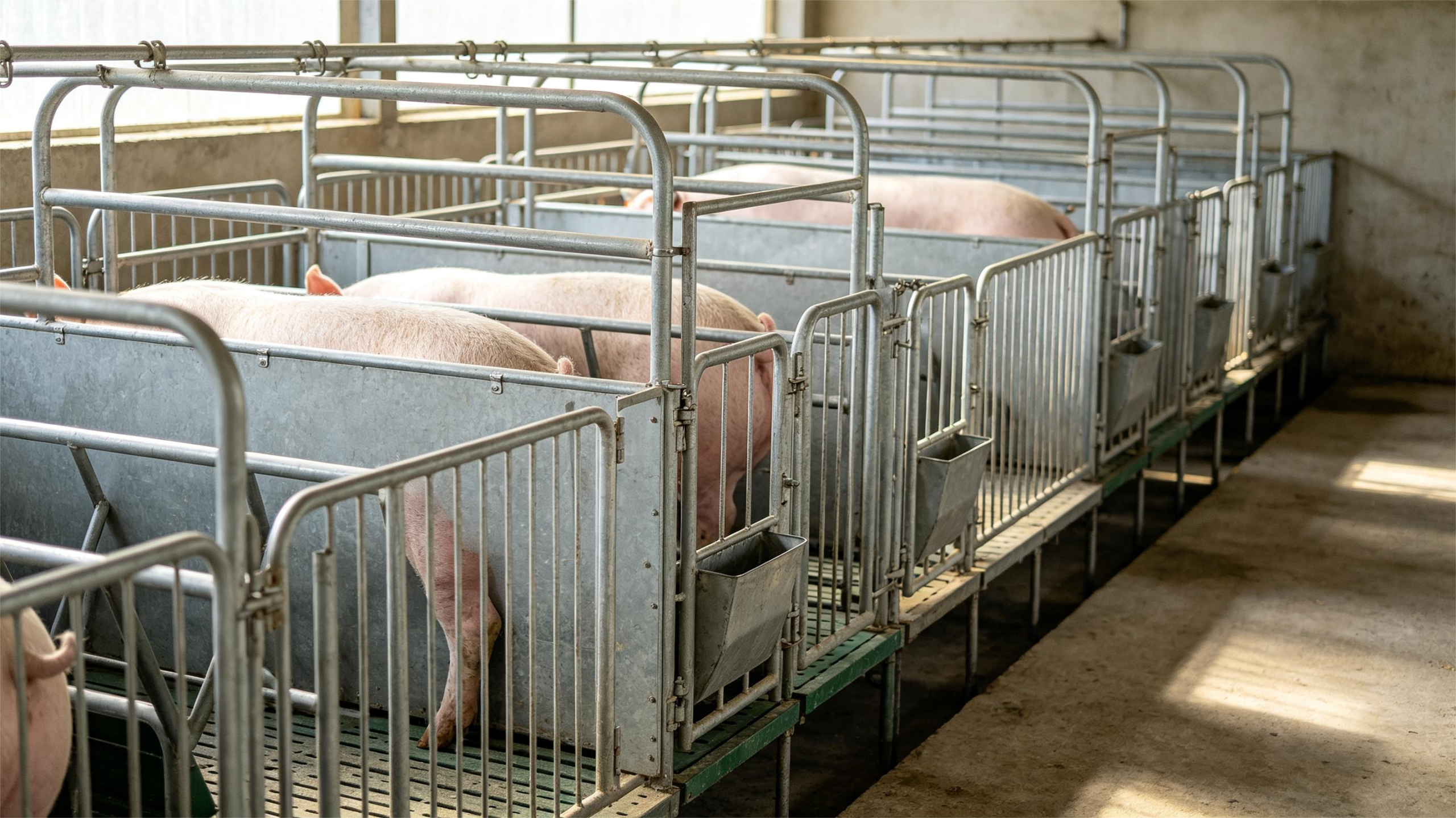
- This model is ideal for small-scale family farms, budget-limited pig farm upgrades, and regions dominated by manual breeding management.
- It delivers basic practical performance with the lowest upfront investment.
- 2026 FOB Price Range: $69 – $120 per unit
1.2 Standard Heavy-Duty Hot-Dip Galvanized Gestation Stalls

- Suitable for medium and large-scale standardized pig farms and long-term breeding projects.
- With a service life of 15–20 years and almost zero daily maintenance cost, it effectively reduces long-term equipment replacement and operating costs.
- 2026 FOB Price Range:$120 – $280 per unit
1.3 Automated Intelligent Gestation Stalls

- Mainly applicable for large-scale modern breeding bases and high-efficiency labor-saving pig farm projects.
- Although the upfront procurement cost is higher, it has outstanding cost advantages in long-term labor saving and yield improvement, suitable for standardized large-scale breeding investment.
- 2026 FOB Price Range: $300 – $600+ per unit
1.4 Used and Refurbished Gestation Stalls
- Low upfront investment and quick delivery.
- However, the equipment has short service life, unstable performance and no formal quality warranty.
- It is only recommended for short-term temporary use, not for long-term standardized large-scale farm construction.
- 2026 FOB Price Range: $30 – $80 per unit
2、Core Factors Affecting Gestation Stall Prices
- Many farmers find that the same type of gestation stalls have different prices from different suppliers.
- Multiple hidden factors determine the final quotation.
- Understanding these pricing rules helps buyers avoid overpaying and select cost-effective equipment.
2.1 Galvanizing Material and Craft Differences
- Galvanizing technology is the core factor that determines stall durability and service life.
- Hot-dip galvanized and cold galvanized are the two mainstream manufacturing processes on the market, with huge differences in anti-rust performance, service life and long-term cost performance.

- Cold galvanized stalls feature low cost but thin protective layers, which are prone to oxidation, rust and structural deformation after 3–5 years of use.
- In contrast, hot-dip galvanized stalls form a thick and uniform zinc layer on the steel surface, providing full anti-corrosion protection.
- They can withstand harsh high-humidity livestock breeding environments for 15–20 years with almost no daily maintenance.
2.2 Purchase Quantity and Customization Costs
- Bulk orders (50+ units) can enjoy obvious factory wholesale discounts, with the unit price reduced by 10%–20% compared with small-batch purchases.
- Special size customization, logo printing, and special environmental adaptation modifications will also generate additional customization fees.
2.3 Logistics and Installation Fees
- Most factory quotations are FOB prices excluding freight and installation fees.
- Cross-border logistics, sea freight, tariff costs, and on-site installation labor fees will add 15%–30% of the total cost.
- It is recommended to confirm the quotation inclusion items with suppliers in advance.
3、Hidden Long-Term Costs of Gestation Stalls
- Many buyers only focus on upfront purchase cost while ignoring long-term hidden expenses, which are the key reason for increased farm operating costs.
- Low-grade cheap gestation stalls seem cost-effective at first, but they bring continuous hidden losses in three core dimensions: maintenance, compliance and labor.
- Low-quality stalls rust and deform easily, requiring annual repair and part replacement costs.
- Substandard products cannot meet updated animal welfare standards, leading to rectification risks.
- Meanwhile, unstable facilities rely heavily on manual inspection and maintenance, greatly raising long-term labor costs.
4、Is High-Priced Gestation Stall Worth Buying?
- For small farms with short-term breeding plans, basic low-priced gestation stalls can meet daily breeding needs and control upfront investment.
- But for medium and large farms focusing on long-term operation and standardized breeding, heavy-duty and intelligent gestation stalls are more cost-effective.
- High-quality gestation stalls can effectively reduce sow fighting and injury rates, improve sow gestation stability and litter rate, reduce equipment failure downtime, and bring stable breeding benefits while saving maintenance and replacement costs.
- It is a typical one-time investment and long-term income agricultural equipment.
5、2026 Cost-Saving Purchasing Tips
5.1 Choose factory direct sales
- Avoid middleman markup, directly cooperate with livestock equipment manufacturers to get the lowest ex-factory price.
5.2 Prioritize hot-dip galvanized materials
- Balance price and service life to avoid frequent replacement losses caused by cheap low-quality products.
5.3 Bulk procurement for discount
- Concentrate purchasing quantity to enjoy wholesale preferential prices and reduce average logistics costs.

5.4 Match configurations on demand
- Do not blindly pursue full intelligence.
- Select reasonable configurations according to farm scale and management mode to avoid redundant cost waste.
6、Recommended Reliable Gestation Stalls
- For cost-effective, long-lasting gestation stalls, choose Guangxing’s hot-dip galvanized models.
- Built with thickened steel, anti-rust treatment and full accessories, they support custom sizes, global exports, 3-year warranty and turnkey farm solutions.

7、Final Thoughts
- To sum up, the answer to how much do gestation stalls generally cost is clear: the global mainstream price of gestation stalls in 2026 ranges from $58 to $600+ per unit.
- The specific cost depends on material technology, functional configuration, automation level and procurement scale.
- When purchasing gestation stalls, farmers should not only compare the unit price, but also comprehensively consider service life, maintenance cost, breeding efficiency and regional compliance standards.
- Choosing high-cost-performance and suitable gestation stall equipment is the key to reducing farm comprehensive operating costs and improving breeding benefits.
8、FAQ
What is the cheapest gestation stall option for small farms?
- Basic hot-dip galvanized manual gestation stalls priced at \$$58–\$$120 per unit are the most suitable and cost-effective choice for small pig farms, with no high minimum order requirements and easy installation.
How long do standard gestation stalls last?
- High-quality hot-dip galvanized gestation stalls have a service life of 15–20 years, while ordinary cold-galvanized products only last 3–5 years.
Do automated gestation stalls really save money in the long run?
- Yes. Although the upfront cost is higher, automated stalls greatly reduce labor costs, reduce feed waste, and improve sow survival and litter rate, bringing significant long-term economic benefits to pig farms.
