


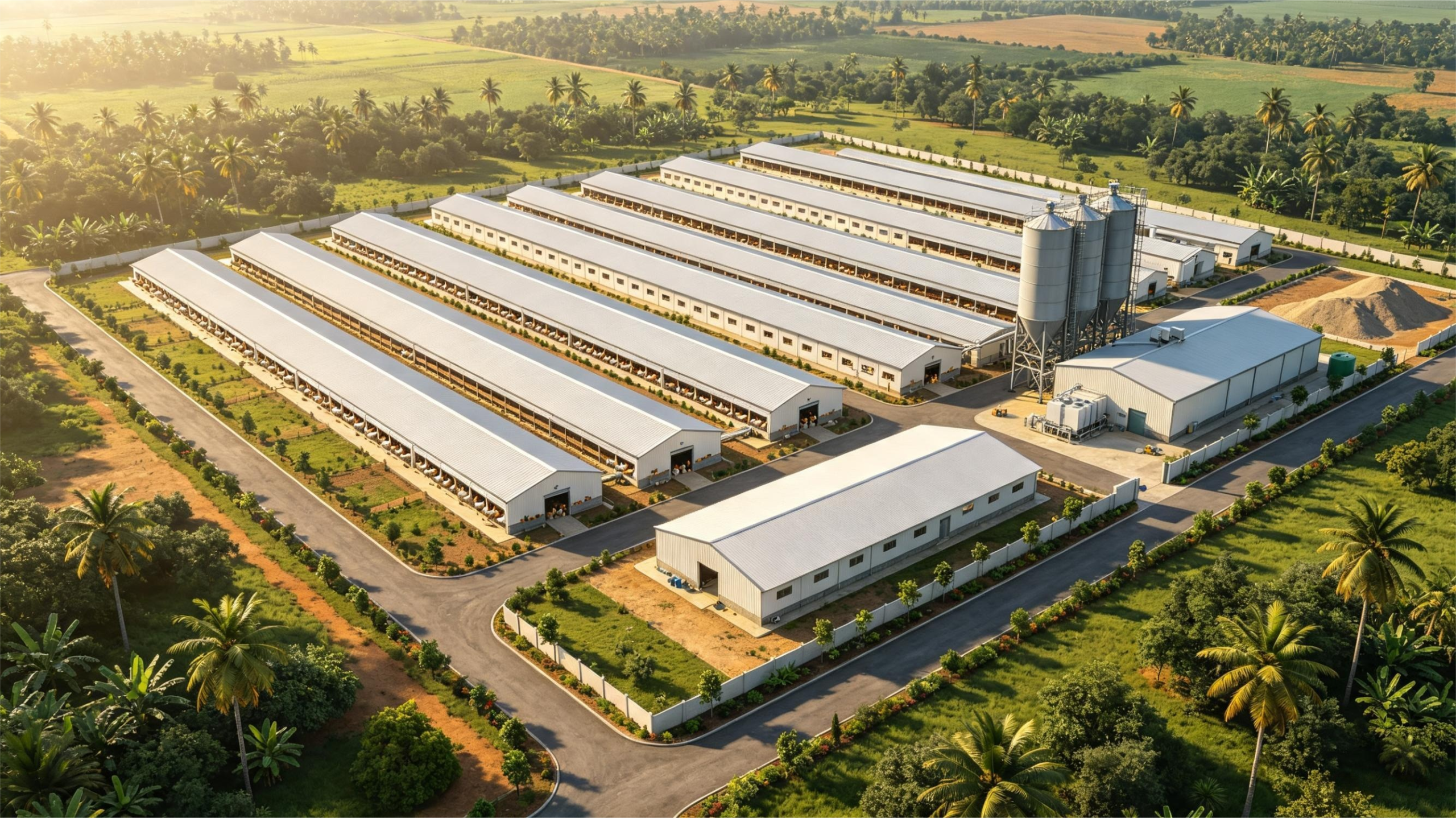
A poultry farm can look affordable on paper until the construction and delivery quotations start coming in.
A supplier quotes the cages, feeding lines and ventilation equipment. Then the local contractor adds drainage work, stronger roof connections and electrical installation. The equipment arrives at a Philippine port, but getting it to the farm is another expense.
For investors planning a poultry farm in the Philippines, the equipment price is only part of the construction budget.
Typhoons, island-to-island transportation, hot weather and unreliable power supply in some locations can all change what a project needs.
Here’s how to estimate the costs without overlooking the work that comes before the first flock arrives.
How Much Does It Cost to Build a Poultry Farm in the Philippines?
The answer depends largely on whether you’re raising layers or broilers, the number of birds and the type of housing.
For a smaller layer operation, existing buildings and basic A-type cages may be sufficient. A new commercial farm with H-type cages, automatic egg collection and environmental controls needs a larger investment.
As an initial reference, Guangxing’s separate study of a 10,000-layer project in the Philippines uses the following planning ranges.
| 10,000-layer farm configuration | Indicative investment |
|---|---|
| Existing house with basic A-frame cages | ₱6.5–9.5 million |
| New open-sided house with partial automation | ₱9–13 million |
| New H-type automated layer farm | ₱13–20 million |
These are preliminary planning estimates published by Guangxing in 2026, not verified market averages or binding quotations. The ranges reflect different scopes and may exclude land, financing, certain taxes and shipping costs.
For the assumptions behind these figures, see our 10,000-Layer Farm Cost Guide for the Philippines.
Broiler farms require a separate estimate. Their equipment, building layouts and production cycles differ from those of layer operations.
Where Does the Construction Budget Go?
Start by separating the construction work from the equipment package.
A poultry equipment quotation may cover cages, feeders and drinkers, but not foundations, site drainage or local electrical installation.
The following checklist can help you compare quotations on the same basis.
| Cost category | Items to budget |
|---|---|
| Land and site preparation | Land, leveling, access roads and drainage |
| Poultry house construction | Foundations, steel frames, roofing and insulation |
| Farming equipment | Cages or floor-rearing equipment, feeding and drinking |
| Automation | Egg collection, manure removal and controllers |
| Ventilation | Fans, air inlets and cooling equipment |
| Utilities | Water supply, electrical work and backup power |
| Logistics | Shipping, port handling, customs and inland transport |
| Installation | Local labor, technical support and commissioning |
| Starting capital | Birds, feed, veterinary supplies and labor |
| Contingency | Allowance for uncertain costs and scope changes |
Use Philippine pesos for your overall project budget. For imported equipment priced in US dollars, record the exchange rate and quotation date.
Otherwise, a quotation that looked affordable when first received may no longer fit the budget by the time the order is placed.
Hidden Budget Pitfalls for Poultry Farms in the Philippines
Some costs are easy to spot. Others only become obvious after the building layout or shipping plan has been agreed upon.
1. Typhoon-Resistant Poultry House Construction
A cheap steel structure is not necessarily a bargain in an area exposed to strong winds.
Roof connections, foundations, bracing and wind loads need to be considered during structural design. Local rainfall and flooding risks also affect site preparation.
For projects in typhoon-exposed regions, ask a qualified local engineer to check the structure against applicable Philippine building and structural requirements.
Replacing damaged roofing or strengthening an unsuitable building after installation can cost considerably more than addressing the design properly.

2. Shipping Across the Philippine Islands
Equipment reaching Manila or Cebu does not mean it has reached the poultry farm.
Projects outside major logistics centers may need additional sea freight, truck transportation, unloading equipment and temporary storage.
Before signing a purchase contract, confirm the named delivery destination and Incoterms.
Also check who pays for customs clearance, port handling and transportation from the port to the farm.
A low FOB equipment price may be attractive, but it doesn’t represent the delivered and installed project cost.

Equipment unloading and inland transportation are additional costs to consider when planning a poultry farm in the Philippines.
3. Backup Power and Water Supply
For an enclosed poultry house relying on mechanical ventilation, a power interruption can quickly become a serious operational problem.
A generator, transfer switch and suitable alarm system should therefore be considered during planning. The required capacity depends on the essential equipment loads and the farm’s operating requirements.
Backup generation is not necessarily a universal legal requirement for every poultry farm in the Philippines, but it is an important risk-control measure for mechanically ventilated houses.
Water storage, filtration and pressure regulation deserve attention as well.
4. Tropical Ventilation and Cooling
A naturally ventilated poultry house and an enclosed, mechanically ventilated house have different construction and operating costs.
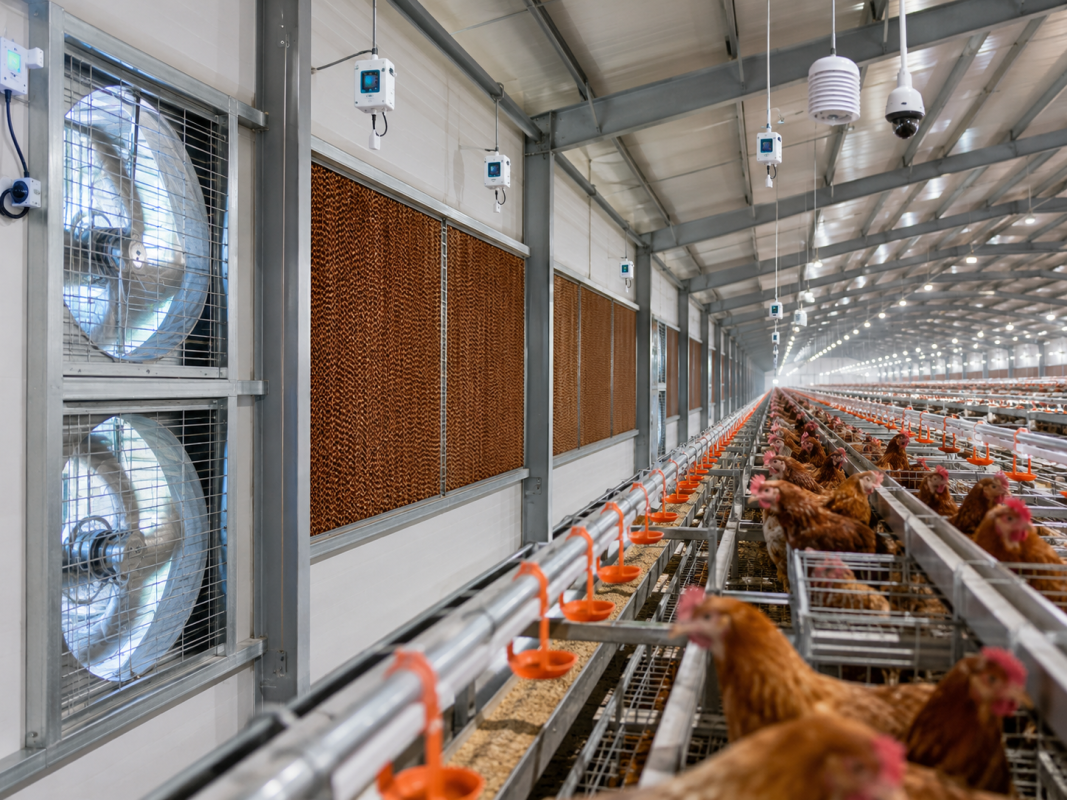
In the Philippines, heat and humidity need to be considered together. Fans, cooling pads, air inlets and controllers should be selected according to local conditions and the expected bird load.
Cooling pads are not automatically the right choice for every site. Their effectiveness depends partly on the outdoor humidity and system design.
Guangxing supplies poultry house environmental control equipment that can be included in an integrated farm proposal.
5. Permits, Drainage and Manure Treatment
Before construction begins, check local land-use, building, farm registration and environmental requirements.
The exact approvals depend on the site, scale and project classification.
Manure is another cost that can be overlooked. A large layer farm produces waste every day, and the farm needs a practical way to collect, store, transport or treat it.
Some projects can use simple collection and off-site disposal. Others may need an on-site treatment system.
If you’re considering equipment for manure processing, see our Chicken Manure Fermentation Tank vs. Drying System Guide.
There is little point buying an expensive treatment machine before confirming how much manure the farm produces and what will happen to the finished material.
Layer Farm or Broiler Farm: Where Should You Spend More?
Layer farms need equipment that can support a long laying cycle, with reliable feeding, drinking and egg collection.
For larger projects, H-type cages and central egg conveyors may reduce repetitive handling work. Smaller farms may find A-type cages and simpler collection arrangements more economical.
Broiler farms have different priorities. Feeding, drinking, ventilation, heating where needed, and preparation between flocks are central to the equipment plan.
Neither farm type benefits from buying automation simply because it is available.
Spend on the systems that solve actual operating problems. A basic cage system with adequate ventilation and dependable water may be a better starting point than an expensive equipment package installed in an unsuitable building.
How to Calculate Your Total Project Budget
Once you have quotations from the equipment supplier and local contractors, use the following calculation:
Total Project Budget = Site Preparation + Construction + Equipment + Utilities + Logistics + Installation + Starting Capital + Contingency
Keep recurring operating costs separate when calculating long-term profitability.
Feed prices, labor, veterinary expenses, electricity and expected selling prices will affect cash flow after the farm begins operating.
For that reason, there is no reliable universal payback period for a commercial poultry farm. A proper calculation needs local production and selling-price assumptions.
How Guangxing Can Help With Your Project
Guangxing manufactures poultry cage systems, feeding and drinking equipment, manure handling systems and supporting farm automation.
For a project in the Philippines, we can review your planned bird capacity and poultry house dimensions to help identify the required equipment and layout.
If you’re still at the planning stage, it makes sense to coordinate the cage arrangement, feeding system, ventilation and manure discharge before the building is finalized.
Changes are easier to make on a drawing than after steel structures and equipment have been manufactured.
Frequently Asked Questions
How much does it cost to build a 10,000-layer farm in the Philippines?
Guangxing’s 2026 preliminary planning examples range from approximately ₱6.5 million to ₱20 million across different housing and automation configurations. These are indicative estimates, not fixed prices. A site-specific quotation is needed for a reliable budget.
What extra costs come with building poultry farms on Philippine islands?
Additional costs may include inter-island freight, port charges, local delivery, unloading and temporary storage. Ask for a delivered-cost calculation rather than comparing equipment prices alone.
Do poultry houses in the Philippines need typhoon-resistant structures?
Buildings should be designed to meet applicable local structural requirements and site-specific wind conditions. The necessary design depends on the project location and should be checked by a qualified engineer.
Is a backup generator mandatory for poultry farms?
Not universally. Requirements depend on the project and applicable rules. For enclosed houses relying on mechanical ventilation, however, backup power is strongly recommended to protect birds during outages.
How long does an automated layer farm take to recover its investment?
There is no fixed payback period. Farm construction costs, egg prices, feed costs, flock performance, financing and operating expenses all affect returns. A project-specific cash flow forecast is needed.
Get Your Philippine Poultry Farm Budget Checklist
Before committing to a poultry house design or equipment purchase, make sure your budget covers the entire project.
Send Guangxing the following details:
- Project location in the Philippines
- Layer or broiler farm
- Planned bird capacity
- Available land or poultry house dimensions
- Preferred automation level
- Existing equipment or building drawings, if available
Our team can review your project brief, help identify the equipment required and discuss a preliminary equipment budget. We can also highlight construction and utility items you’ll need to confirm with local contractors.
Request Your Poultry Farm Budget Checklist and Equipment Quotation
